
Smart AI Blog Summary
Get a quick blog summary from any of the below LLM's
What You'll Learn
The fourth quarter brings its own challenges: shrinking budgets, packed calendars, and delayed decisions. For Key Account Managers, the pressure is to accelerate deals without adding headcount or extending cycles. You need a system that improves conversations, clears red flags, and speeds agreement on next steps.
This guide lays out five field-tested sales enablement strategies for account managers. Each strategy includes a goal, a simple play you can run this week, what to measure, and a short example from regulated industries like pharma, medical devices, banking, and insurance. The ideas are practical, lightweight, and built to work with any strong sales enablement platform. If you want to see how SmartWinnr handles these plays with AI roleplays, microlearning, gamification, and field coaching, check the links at the end.
Strategy 1: Run a “Deal Map Refresh” Sprint for Your Top 10 Opportunities
Goal: Fix the real blockers fast by aligning people, problems, and proof.
Why it works Most late-stage deals stall for the same reasons. A missing stakeholder. A weak problem statement. An untested proof point. A one-page deal map makes gaps impossible to ignore and gives sales leadership a clean view without scheduling yet another lengthy meeting.
How to run it (two days, repeat weekly)
Pick the ten opportunities that can still close this quarter.
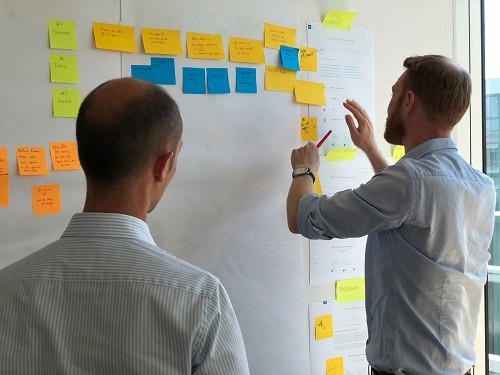
Create a one-page map for each: a.Business problem stated in the customer’s words b.Stakeholders and their interests c.Current proof and what is still unproven d.Next step with a date on the calendar
Share the maps in your sales enablement platform so marketing, success, and product can contribute.
Add a short micro-lesson within your enablement platform’s account workspace that explains the problem and the proof you plan to show.
Use a leaderboard or light points to make “map to next step” a visible weekly habit.
What to measure
Days from “deal map refresh” to the next scheduled step
Number of opportunities with all buying roles identified
Number of deals with a proof activity booked
Industry example Pharma: A KAM rebuilding a hospital deal adds infection control to the map after an AI roleplay reveals new risk concerns. That single addition unlocks a joint meeting and a clear path to a formulary step. For more on pharma use cases, see SmartWinnr’s industry page.
Strategy 2: Install an “Objection Answer System” with AI Roleplays
Goal: Cut back-and-forth by giving every rep fast, consistent answers to the six objections that matter.
Why it works Objections repeat. Answers should too. A shared structure builds confidence, reduces variance, and gives managers a way to coach without guessing.
How to run it (three steps)
Pick your top six objections across late-stage deals.
Use one five-part model for every answer: Acknowledge, Clarify, Evidence, Value tie-back, Next step.
Load each answer into an AI roleplay and require a quick pass before key meetings. Include a screen-share scenario for slide-heavy demos.
What to measure
Time to first pass for each objection scenario
Percentage of late-stage calls where two objections are handled within two minutes
Movement to mutual action plans after the objection call
Industry examples Medical devices: Surgeons interrupt/objects. A two-slide demo roleplay with a forced interruption trains reps to return to the point and close with a clear next step. Banking: A fee objection scenario in the app uses the same five-part model and feeds a short recap email template for the rep to send right after the meeting.
Explore two-way roleplays here.
Strategy 3: Build a “90-Second Executive Summary” Library and Turn it into a Habit
Goal: Win senior attention quickly and set up a next step in the first two minutes.
Why it works Executives rarely need a full deck. They need a crisp summary they can repeat to their peers. When your opener is clear and short, decisions happen sooner.
How to run it
Write three 90-second openers per product or service: one for a time-pressed exec, one for a detail-seeking operator, and one for procurement.
Record exemplary clips from your best reps.
Put those clips next to the analytics in your enablement space and assign a weekly practice sprint with AI roleplays.
Incorporate light gamification. Awarding points for effective openers and scheduled next steps, not simply for video views.
What to measure
Booked next steps inside the first week of contact with a senior sponsor
Average time spent in “introductions” across late-stage calls
Percentage of calls where the rep states outcome, risk of inaction, and next step in two minutes
Industry examples Insurance: A 90-second opener frames suitability, lifetime value, and service metrics, then asks for a policy review date. Diagnostics: An opener for lab managers leads with turnaround time and staffing pressure before any cost discussion.
Strategy 4: Launch a “Proof in 14 Days” Program
Goal: Replace long pilots with small proofs that answer the only questions that matter to your buyer.
Why it works Year-end deals do not have time for sprawling pilots. Two-week proofs force clarity. They also give your customer a safe way to say yes without committing to everything at once.
How to run it
Create two proof tracks: one technical, one business. Each proof has a single question and a single metric.
Publish a one-page playbook in your sales enablement solutions hub: who needs to be involved, what data is required, what the exit criteria are.
Add a short micro-lesson and a two-question quiz so the team knows how to set expectations.
Use AI roleplays to rehearse the “proof setup call” and the “proof readout.”
For motivation, organize a brief internal competition. Points for proof booked and proof closed on time.
What to measure
Number of proofs scheduled and completed in 14 days
Conversion rate from proof to commercial agreement
Percent of proofs with a scheduled readout on day one
Industry examples Banking: A “proof in 14 days” for a cash-management upgrade focuses on reconciliation time and error rates. Pharma field service: A two-week micro-pilot limits scope to a single clinic and measures visit adherence and time to documentation.
Strategy 5: Create a “Win Room Cadence” that Uses Enablement Signals, Not Opinions
Goal: Turn a 30-minute weekly session into decisions about next steps, not a recap of last week’s calls.
Why it works Deal reviews drift when the room lacks common data. Enablement scores, transcripts, and short clips cut debate and point to action.
How to run it
Limit the room to the current Top 10 deals.
For each deal, show three things only:
Skill score trend on the objection or demo that matters this week
The one 30-second clip that proves or disproves readiness
The scheduled customer step with date and participants
Decide one move per deal. Book it before the meeting ends.
Track “red flag to resolved” time as a visible metric.
What to measure
Percentage of Top 10 deals with a booked next step after the win room
Average days from red flag to resolved
Change in stage conversion for deals reviewed at least twice
Industry examples Medical devices: A weekly device “win room” removes two meetings by resolving demo readiness with a thirty-second clip. Insurance: The room uses a standard form for field coaching notes. The manager assigns a targeted roleplay and a single behavior goal for the next live appointment.
A One-Week Rollout Plan You Can Start Today
You do not need a big project plan to put these strategies to work. Use the next seven days to get the basics in place.
Day 1: Pick your Top 10 opportunities. Draft one-page deal maps.
Day 2: List your top six objections. Write answers with the five-part model.
Day 3: Record three 90-second executive openers with a peer.
Day 4: Publish your “proof in 14 days” playbook and sample invite emails.
Day 5: Set up win room dashboards. Add one clip per deal.
Day 6–7: Run quick AI roleplays for the objection set and the opener. Share exemplar clips in your sales enablement platform so the team can model the phrasing.
Keep the rhythm going by repeating this week until the quarter closes.
What to Track in Your Leadership Update
Leaders do not need twenty charts. Bring four numbers and one story.
Time to first pass on the top objection roleplay
Percent of deals with every buying role identified on the map
Proof scheduled and completed inside fourteen days
Red flag to resolved time from the win room
One short story where a practice clip is translated into a cleaner customer call
That is enough to prove that your enablement cadence is moving deals, not just generating activity.
Where SmartWinnr Fits in These Plays
SmartWinnr was built for large, regulated teams that need simple, repeatable enablement rhythms:
Two-way AI roleplays that adapt in real time and handle screen-share questions
Weighted rubrics with visible pass thresholds for consistent grading across regions
Knowledge Hub with microlearning, quizzes, and role-based paths for fast reinforcement
Gamification that rewards steady practice with streaks, points, and light tournaments
Field coaching forms and analytics so managers can coach the few things that change outcomes
Dashboards with skill scores, transcripts, keyword coverage, and exemplar clips
Explore roleplays: Two-Way AI Roleplays Industries: Medical Devices, Insurance, Banking.
Closing Thought
Year-end pressure does not have to create chaos. Use a few focused sales enablement strategies for account managers to make practice frequent, messages consistent, and next steps easy to book. When objection answers, executive openers, short proofs, and win-room decisions run on a weekly drumbeat, deals move. The quarter ends with fewer surprises and more signatures.
Disclaimer: This content reflects industry practices and does not constitute medical, legal, or regulatory advice.
Last Updated: