

Smart AI Blog Summary
Get a quick blog summary from any of the below LLM's
What You'll Learn
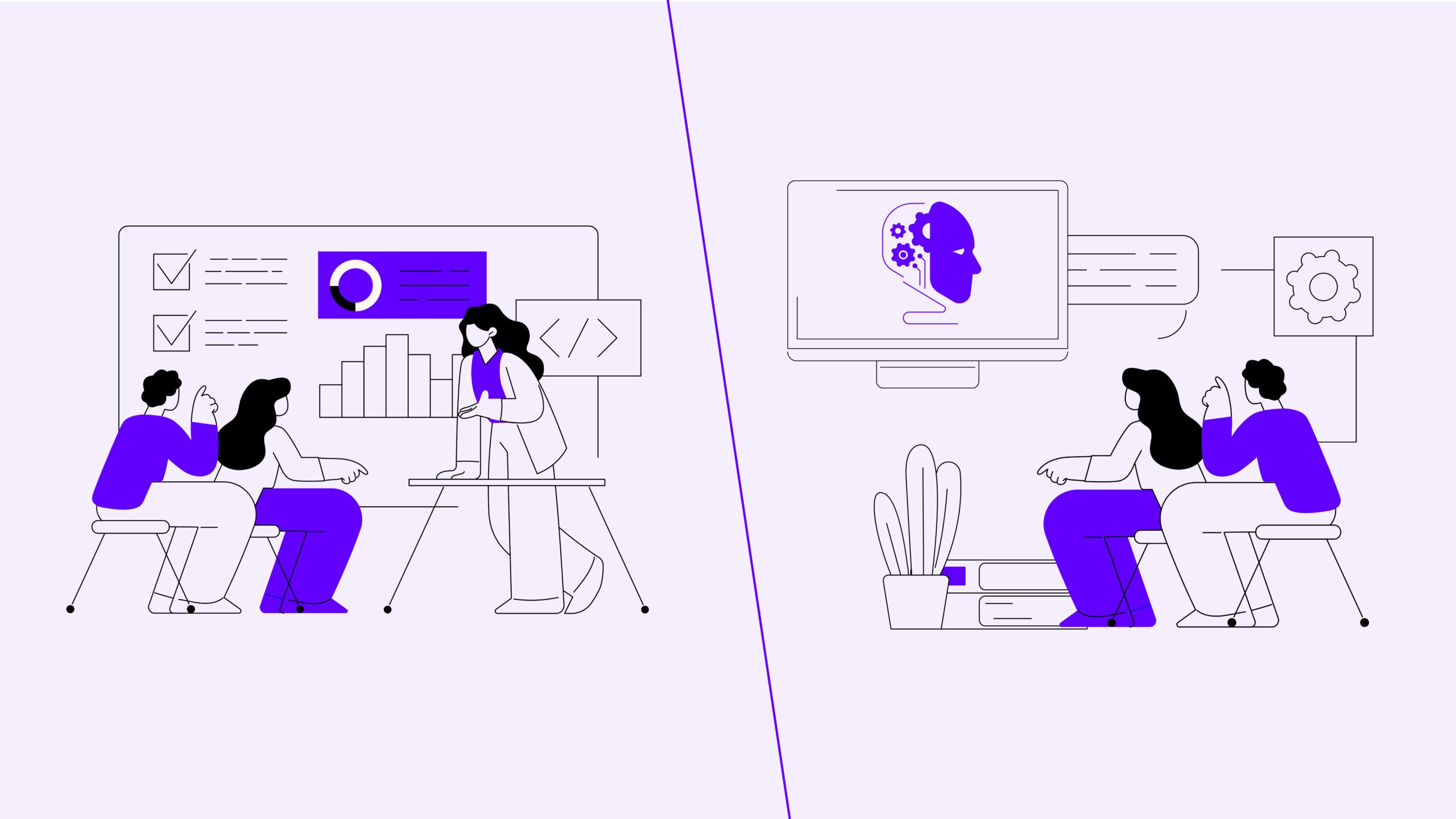
As AI transforms life sciences commercial sales coaching, organizations face a crucial decision: choosing between one-way (presentation coaching) and two-way (conversational coaching) AI approaches. Let's explore how each type can be effectively leveraged to enhance sales coaching outcomes.
Understanding the Two Approaches
One-Way AI Coaching (Presentation Coach)
This fundamental approach allows representatives to practice and perfect their presentations:
Representatives submit their presentations to the AI system
AI analyzes delivery, content, and adherence to key messages
System provides structured feedback based on predefined criteria
Generates detailed sales coaching reports highlighting strengths and areas for improvement
Enables trainers to focus on reps needing additional support
Two-Way AI Coaching (Conversation Coach)
A more advanced approach that simulates real customer interactions:
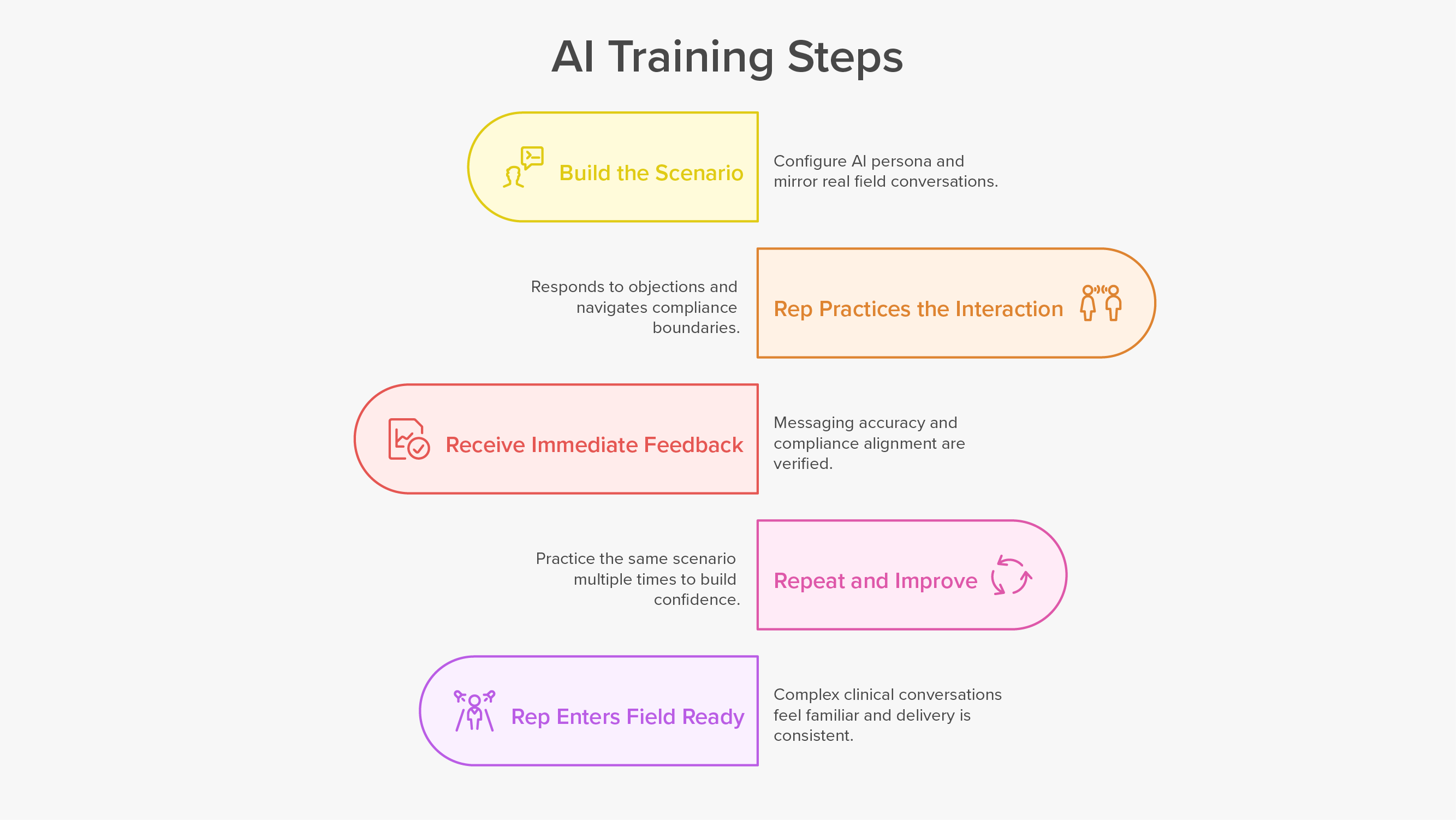
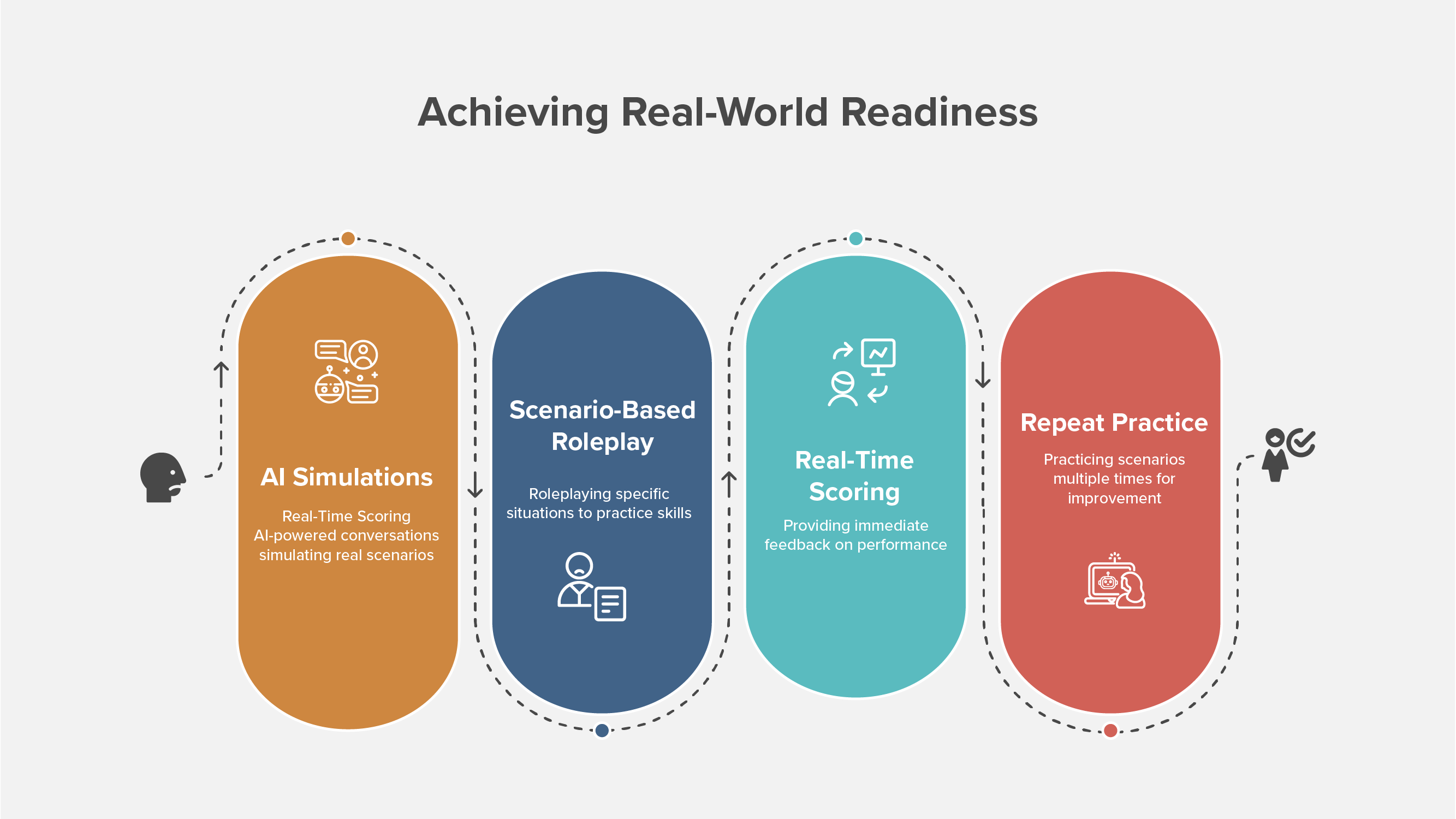
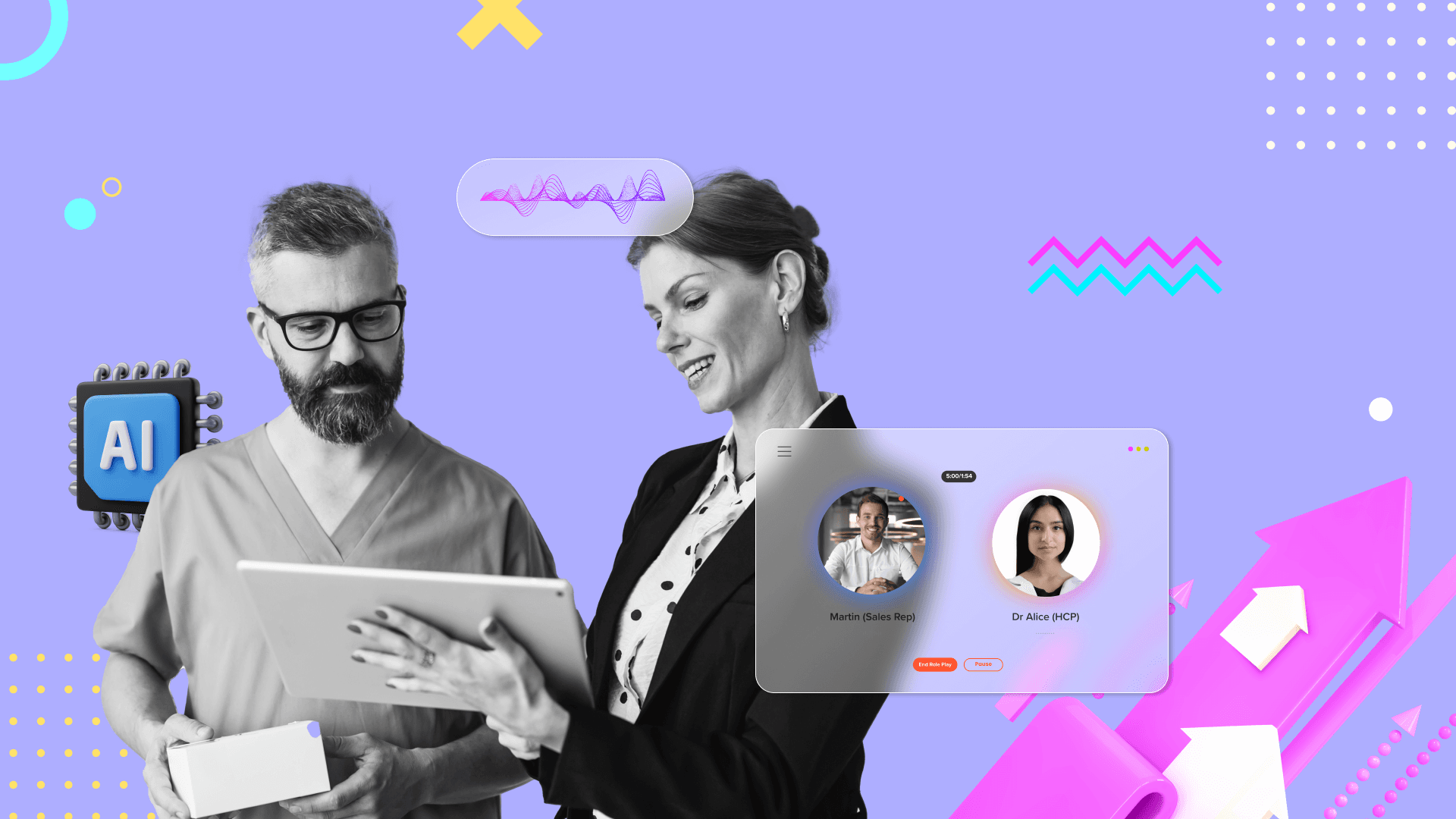
Creates interactive dialogues between representatives and AI avatars
Provides dynamic responses based on rep's communication
Handles objections and questions in real-time
Evaluates the natural flow of conversation
Offers comprehensive feedback on interaction quality and effectiveness
For additional resources on interactive role-play exercises that build conversational skills, check out 5 Sales Role Play Games that Prepare Your Team to Win and learn how these games can boost your team's readiness for various sales situations.
For more insights into how AI role play can revolutionize your team's training, check out Upskill Your Sales Team with AI Role Play Revolution and discover how these approaches can enhance both presentation and conversational skills.
Best Use Cases
One-Way AI Coaching Excels In:
In-service presentations: Perfect for practicing standardized product or procedure demonstrations
New product launches: Ensures consistent messaging across the organization
Technical presentations: Helps maintain accuracy in complex scientific discussions
Basic skill assessment: Ideal for evaluating fundamental presentation abilities
Large-scale evaluations: Efficiently handles multiple submissions simultaneously
For a case example where consistent, standardized messaging is essential, such as recertification, learn how AI role-plays can expedite the process in How to Re-certify Your Medical Reps Faster with AI Role-plays. This approach helps streamline recertification and ensure compliance.
Two-Way AI Coaching Best For:
Complex sales scenarios: Helps reps navigate multi-layered customer discussions
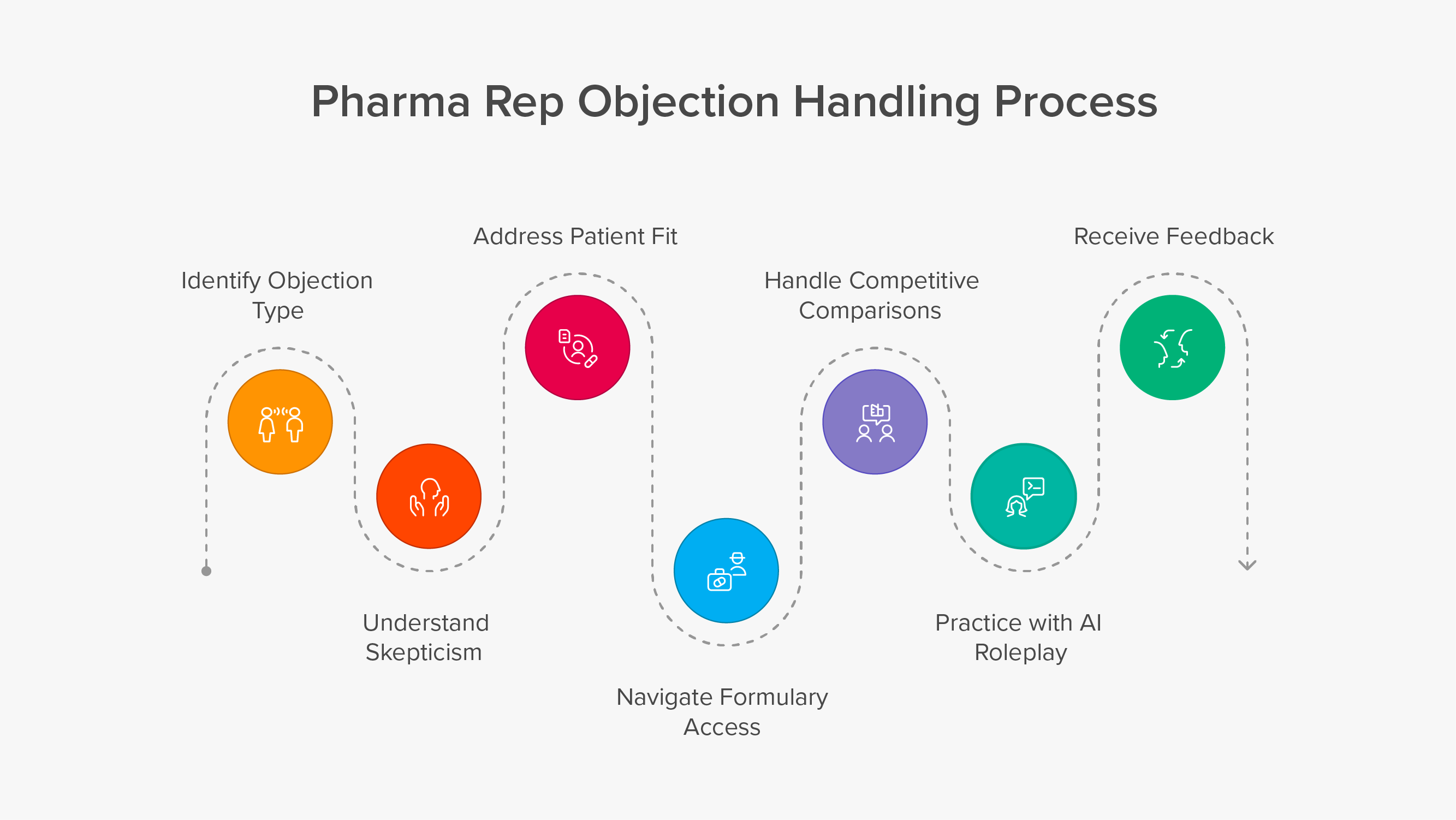
Objection handling: Provides real-time practice with common customer concerns
Clinical discussions: Simulates detailed medical conversations
Building authentic responses: Helps develop natural, confident communication
Advanced skill development: Takes reps beyond basic presentation abilities
For additional scenario ideas to apply two-way coaching in complex sales conversations, check out 8 Sales Role-play Scenarios that will help Prepare your Sales Team to Handle Any Sales Situation. These scenarios can help your team tackle a variety of sales challenges effectively.
For guidance on how to coach your sales team during a new product launch, check out How to Coach Your Sales Team on a New Product Launch? and discover how interactive AI coaching can drive success in product introductions.
Evaluation Methods
One-Way Sales Coaching Evaluation Focus:
The system evaluates:
Message consistency: Ensuring alignment with approved content
Presentation structure: Flow and organization of information
Key point delivery: Coverage of essential messages
Technical accuracy: Correctness of scientific information
Communication clarity: Effectiveness of delivery
Two-Way Sales Coaching Evaluation Elements:
More complex evaluation including:
Conversation flow: Natural progression of dialogue
Response authenticity: Genuine and appropriate reactions
Objection handling: Effectiveness in addressing concerns
Knowledge application: Practical use of product information
Active listening: Demonstration of understanding and empathy
For examples of how AI sales role plays enhance detailing and objection-handling skills, check out How can Trainers Use AI Sales Role Plays to Train MRs Better Detailing and Closing Techniques. These role plays provide reps with the opportunity to practice and refine their responses in realistic scenarios.
Implementation Strategies
Getting Started
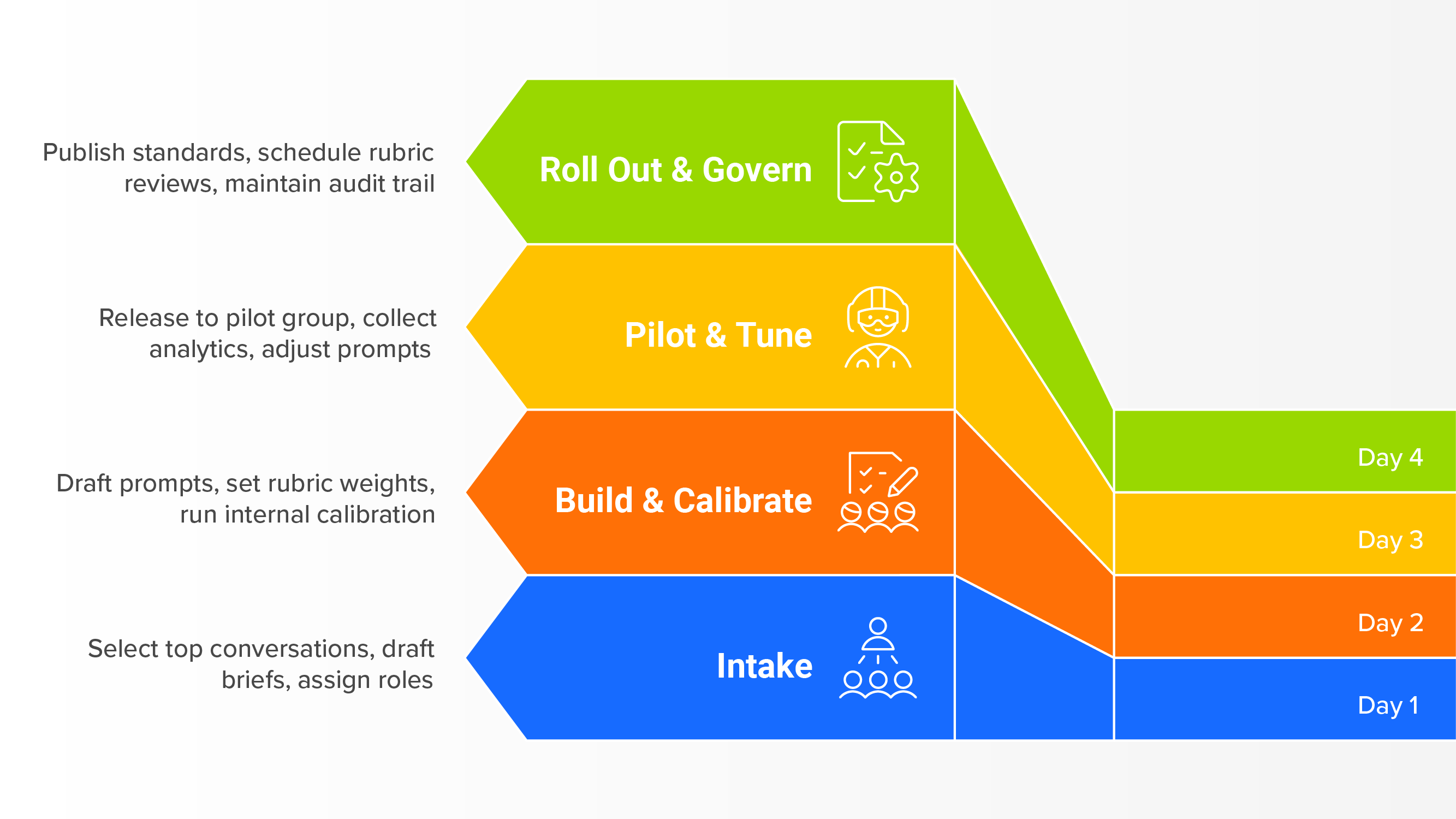
Begin with presentation coaching: a. Builds comfort with AI coaching technology b. Establishes foundational skills c. Creates baseline measurements
Progress to conversation coaching: a. Introduces more complex scenarios b. Builds on established basics c. Develops advanced capabilities
Success Factors
Key elements for successful AI role play implementation:
Clear evaluation rubrics: Define specific success criteria
Learning objectives: Set measurable goals
Pilot testing: Start small and expand based on feedback
Technical support: Ensure smooth user experience
Regular assessment: Monitor and adjust as needed
Benefits and Impact
One-Way Sales Coaching Benefits:
Delivers consistent evaluation through:
Standardized assessment criteria
Efficient feedback delivery
Clear improvement metrics
Time-saving automation
Scalable evaluation process
Two-Way Sales Coaching Advantages:
Creates dynamic learning through:
Interactive practice opportunities
Real-time feedback
Personalized learning paths
Comprehensive skill assessment
Safe experimentation environment
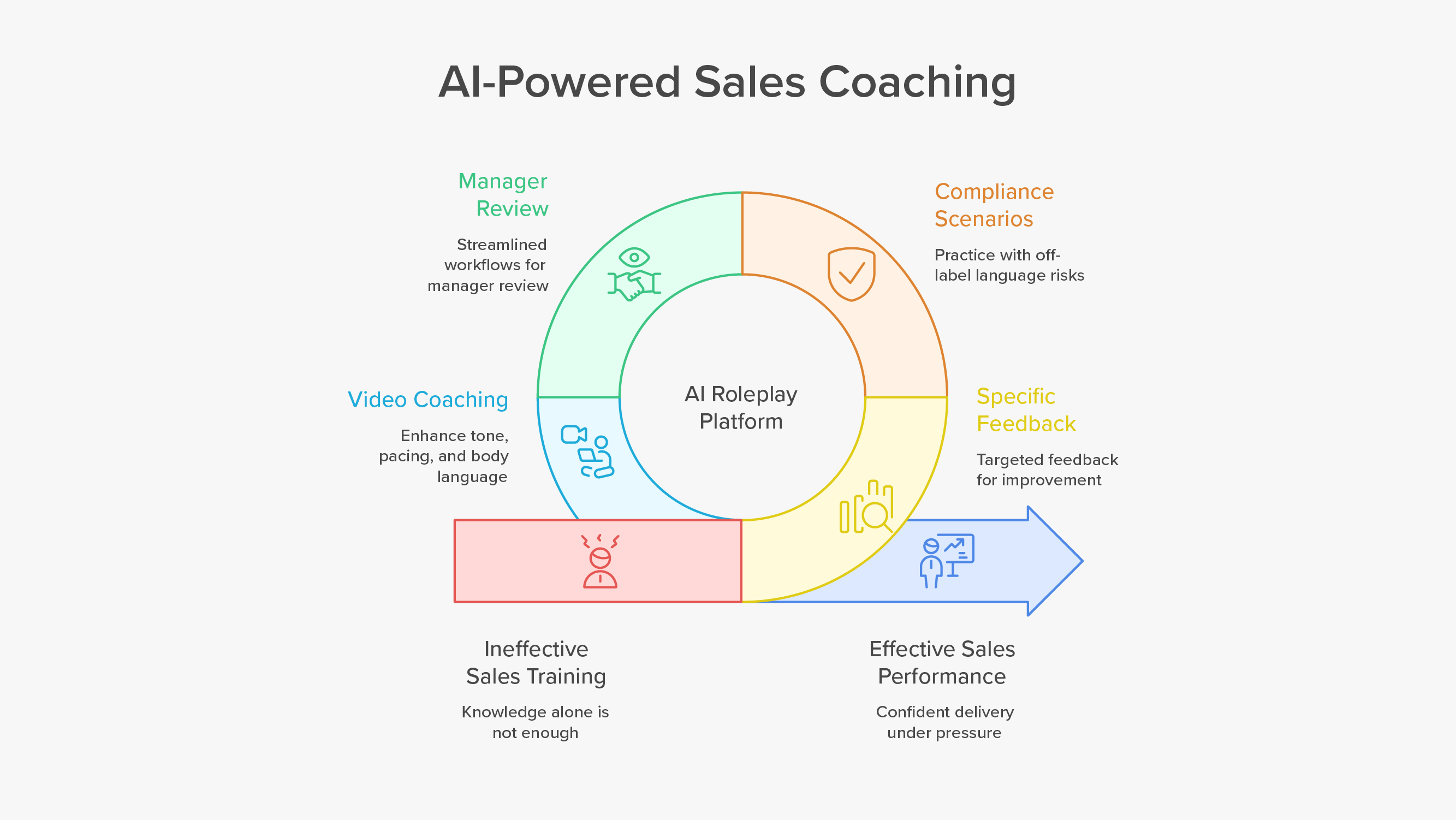
To emphasize the importance of video and field coaching as supportive, real-time feedback methods, explore Video Coaching and Field Coaching for Sales Teams and see how these approaches can drive effective, on-the-ground learning and development for sales reps.
Looking Ahead
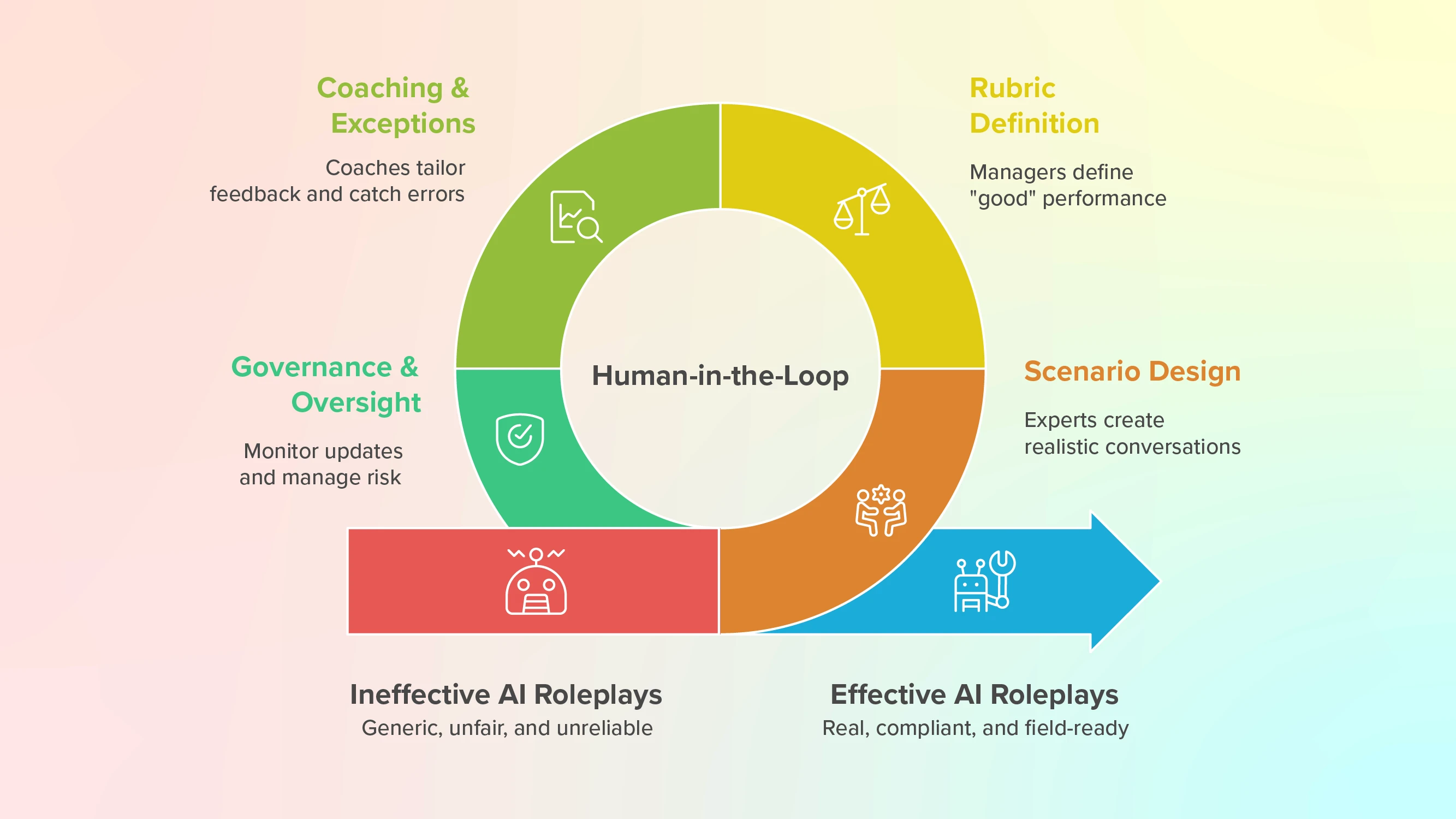
The future of AI coaching lies in creating blended experiences that maximize learning effectiveness. Organizations should:
Regularly assess program effectiveness
Adapt to evolving sales coaching technology
Maintain focus on learning outcomes
Gather continuous feedback
Measure business impact
Success in implementing AI coaching requires understanding each approach’s strengths and aligning them with specific training objectives. By thoughtfully selecting and implementing the right mix of AI coaching tools, organizations can create more effective, engaging, and impactful sales coaching programs that drive real commercial success.
The goal isn't to choose between approaches but to leverage each tool's strengths to create comprehensive training programs that meet diverse learning needs and drive measurable business results. The most successful sales coaching programs will be those that effectively combine both approaches to create a complete learning experience.
Disclaimer: This content reflects industry practices and does not constitute medical, legal, or regulatory advice.
Last Updated: