
Smart AI Blog Summary
Get a quick blog summary from any of the below LLM's
What You'll Learn
A regional sales manager has just wrapped up another week of coaching. Between reviewing customer conversations, preparing teams for a product launch, answering questions from new hires, and conducting one-on-one feedback sessions, the calendar is full. Yet one concern remains.
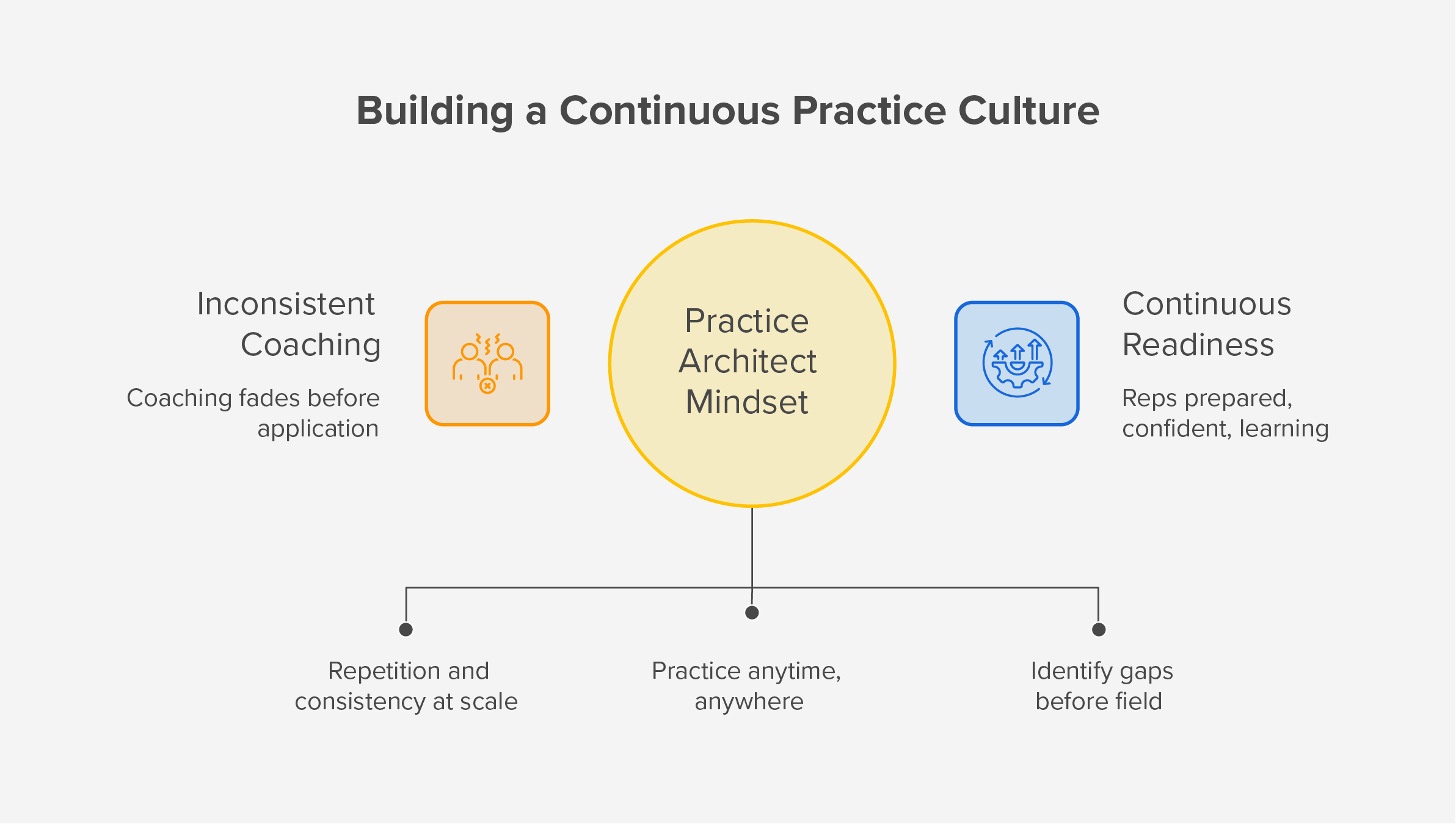
The next challenging customer conversation may not happen for several days or even weeks. By then, much of the coaching may have faded before employees have a chance to apply it in a real-world situation.
This is a familiar challenge across enterprise organizations. Sales teams are more distributed than ever, product portfolios evolve rapidly, and customer expectations continue to rise. Meanwhile, frontline managers are expected to balance coaching with forecasting, hiring, reporting, and operational responsibilities.
Coaching remains one of the most valuable responsibilities of any sales manager. But today's business environment demands something more. Organizations are recognizing that coaching alone cannot consistently prepare employees for increasingly complex customer conversations.
A new role is beginning to emerge.
Instead of serving only as coaches, managers are becoming Practice Architects. They are designing structured opportunities for employees to rehearse critical conversations, reinforce new skills, and build confidence before customer interactions take place.
This shift is changing how enterprise organizations approach sales readiness, manager effectiveness, and continuous enablement.
Why Coaching Alone Is No Longer Enough?
For decades, coaching has been the foundation of employee development. Experienced managers help employees reflect on customer interactions, identify opportunities for improvement, and reinforce behaviors that drive long-term success. Their guidance provides context that technology alone cannot replicate.
What has changed is the environment surrounding those coaching conversations.
Enterprise sales teams now operate in markets defined by constant change. New products launch more frequently, regulations evolve, buying journeys become increasingly digital, and customers expect informed, personalized conversations from the very first interaction.
At the same time, managers are supporting larger and more geographically dispersed teams while taking on responsibilities that extend far beyond coaching. They oversee onboarding, prepare teams for product launches, monitor performance, and manage business priorities that compete for the same limited resource: time.
As coaching sessions become less frequent, organizations face a critical question:
How do employees continue developing their skills between coaching conversations?
The answer is not replacing coaching. It is expanding it through continuous practice.
Why Continuous Practice Matters?
Consider a pharmaceutical sales representative preparing to introduce a newly launched therapy.
The representative has completed product training and demonstrated a solid understanding of the clinical evidence. Their manager has provided coaching on communication techniques, active listening, and responding to physician objections.
Yet the most challenging conversations may not happen until weeks later.
Without opportunities to rehearse those discussions, employees often rely on memory instead of recent experience.
The same challenge exists across industries. Financial advisors prepare for regulatory changes. Medical device representatives introduce new technologies. Customer success managers navigate complex renewals. Insurance advisors respond to evolving customer concerns.
In every case, coaching provides direction, but practice builds confidence.
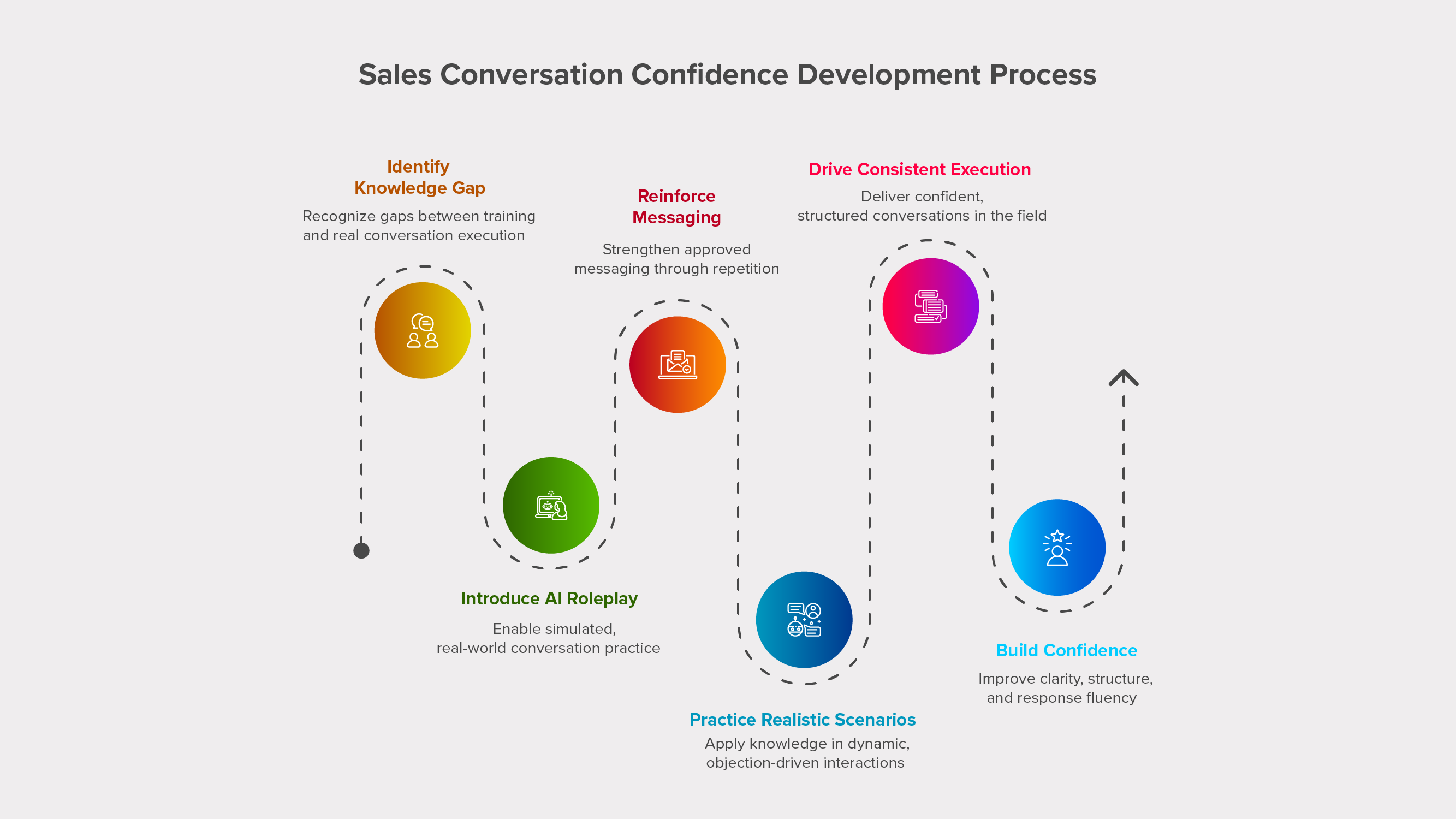
Repeated exposure to realistic scenarios allows employees to organize their thoughts, adapt to different conversation paths, and communicate with greater consistency before engaging with customers. Rather than treating development as something that happens after performance, organizations are beginning to embed practice into everyday work.
The result is a stronger foundation for coaching. Managers spend less time introducing concepts for the first time and more time refining judgment, strengthening communication, and addressing higher-value development opportunities.
That evolution is giving rise to a new kind of leader in enterprise sales: the Practice Architect.
Why Enterprise Teams Need Continuous Practice?
Enterprise organizations have always invested in preparing employees through onboarding, certifications, compliance training, and product education. However, readiness is no longer a milestone achieved at the end of a training program. It has become an ongoing capability.
Customer conversations rarely follow a script. Every interaction is influenced by changing market conditions, customer priorities, competitive pressures, and business context. Employees need more than product knowledge. They need the confidence to adapt in real time while remaining aligned with organizational messaging.
Continuous practice bridges that gap.
Rather than waiting for live customer interactions to expose skill gaps, organizations can help employees rehearse critical conversations before they happen. Managers, in turn, gain earlier visibility into where additional coaching is needed.
Patterns quickly emerge. New hires may need more practice discussing product value. Experienced representatives may require reinforcement around updated compliance requirements. Regional teams may need greater consistency in communicating new messaging.
These insights allow managers to focus coaching where it delivers the greatest impact instead of relying solely on observations from completed customer interactions.
More importantly, practice transforms readiness from a periodic initiative into an everyday habit.
What Industry Research Suggests
The shift toward continuous practice isn't simply a response to evolving sales environments. It reflects a broader transformation in how leading organizations approach workforce development.
The move toward continuous practice reflects a broader shift in enterprise sales enablement.
Latest Gartner insights suggest that organizations driving successful sales transformation are increasingly focusing on sustained behavior change rather than one-time training initiatives. Instead of measuring learning by course completion alone, leading organizations are embedding ongoing reinforcement, coaching, and skill application into everyday work. This evolution reinforces an important reality for sales leaders: effective coaching remains essential, but its impact grows significantly when employees have regular opportunities to practice, receive feedback, and strengthen critical skills before customer conversations take place.
That shift is redefining the role of frontline managers.
The Rise of the Practice Architect
Traditionally, sales managers have measured their effectiveness by the coaching they personally deliver. Practice Architects measure success differently. They focus on creating environments where learning continues even when they are not present.
Instead of asking, "When can I coach my team next?", they ask, "How can my team practice before the next customer conversation?"
This subtle change has a significant impact.
Practice Architects identify the conversations employees find most challenging and build structured opportunities to rehearse them regularly. They encourage reflection after each practice session, helping employees understand not only what they said, but why certain approaches work better in different situations.
They also recognize that development is rarely one-size-fits-all. New hires may require additional onboarding practice, while experienced employees benefit from rehearsing product launches, compliance updates, or high-stakes customer discussions.
By embedding practice into everyday workflows, managers create a culture where employees arrive at coaching sessions having already experimented, reflected, and identified areas where they need support.
As a result, coaching becomes more strategic. Instead of introducing concepts for the first time, managers can focus on judgment, decision-making, communication style, and customer context. Every coaching conversation builds on experience rather than theory.
Technology Enables Scale. Managers Enable Growth
As organizations embrace continuous practice, another challenge emerges: how can managers support hundreds or even thousands of employees without adding to an already demanding workload?
Technology provides the scale. Managers provide the expertise.
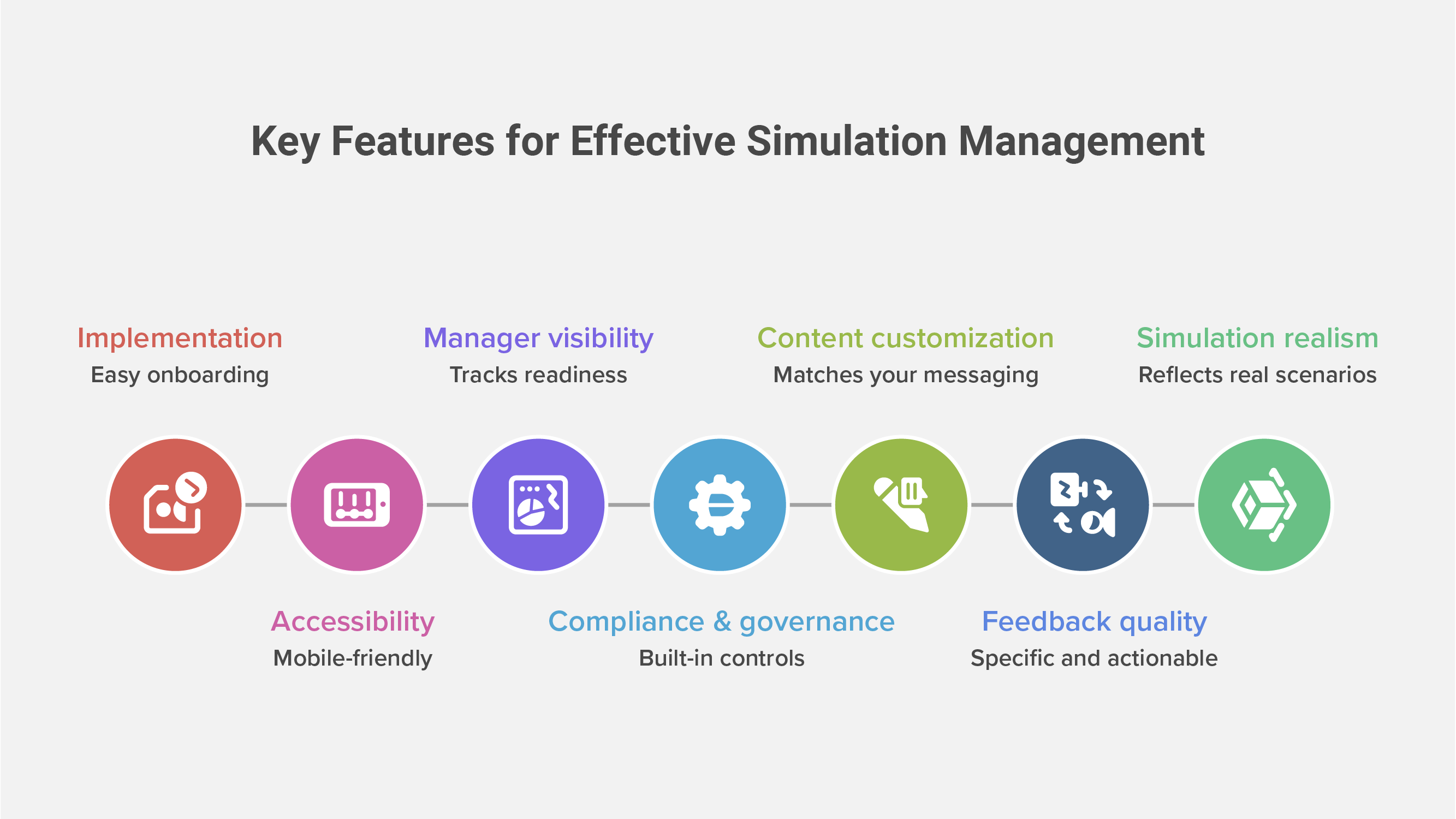
Modern AI-powered roleplay platforms allow employees to practice realistic, role-specific scenarios whenever they need them, whether preparing for a product launch, reinforcing compliance messaging, or handling difficult customer objections. Immediate feedback helps employees refine their communication, while managers gain valuable insights into recurring strengths and development areas across their teams.
This creates a partnership rather than a replacement.
Technology delivers repetition, consistency, and accessibility across distributed teams. Managers continue to provide the judgment, business context, and personalized coaching that only experienced leaders can offer.
Instead of making coaching less important, structured practice makes every coaching conversation more meaningful because employees arrive better prepared, more confident, and ready for deeper discussions.
Building a Culture of Continuous Readiness
Organizations that consistently outperform their peers understand that readiness is not achieved through a single onboarding program or annual certification. It is built through continuous reinforcement.
Whether launching a new therapy, introducing a medical device, navigating regulatory changes, or preparing for complex customer negotiations, employees perform better when they have opportunities to practice before high-stakes conversations occur. Managers benefit from greater visibility into individual and team readiness, while employees develop confidence through repetition rather than first-time experience.
This approach also fosters a healthier learning culture. Practice becomes an opportunity for growth rather than evaluation, encouraging employees to refine their skills without the pressure of real customer consequences. Over time, learning shifts from a scheduled activity to an integral part of everyday work.
Preparing Enterprise Teams for the Future
The future of enterprise sales enablement will not be defined by more training sessions or longer coaching meetings. It will be shaped by organizations that successfully combine experienced managers, continuous practice, and AI-powered technology to create a workforce that is always ready for the next customer conversation.
The Practice Architect does not replace the coach. Instead, they expand what coaching can achieve by creating structured opportunities for employees to apply knowledge, strengthen communication, and build confidence between coaching sessions.
As customer expectations continue to evolve and enterprise teams become increasingly distributed, organizations that invest in continuous practice will be better positioned to develop adaptable, consistent, and high-performing customer-facing teams.
SmartWinnr helps enterprises make this transition through AI Roleplay, coaching workflows, readiness analytics, and personalized practice experiences designed for global teams. By complementing manager-led coaching with scalable, AI-powered practice, organizations can reinforce critical skills, identify coaching opportunities earlier, and improve readiness across every stage of the employee journey.
The role of the sales manager is evolving. The organizations that embrace this evolution today will be the ones building more confident teams, delivering more consistent customer experiences, and creating a lasting competitive advantage tomorrow.
If you're exploring new ways to strengthen enterprise sales readiness, discover how SmartWinnr's AI Roleplay platform helps managers become Practice Architects and empowers teams to practice with purpose before every critical customer conversation.
Disclaimer: This content reflects industry practices and does not constitute medical, legal, or regulatory advice.
Last Updated: