
Smart AI Blog Summary
Get a quick blog summary from any of the below LLM's
What You'll Learn
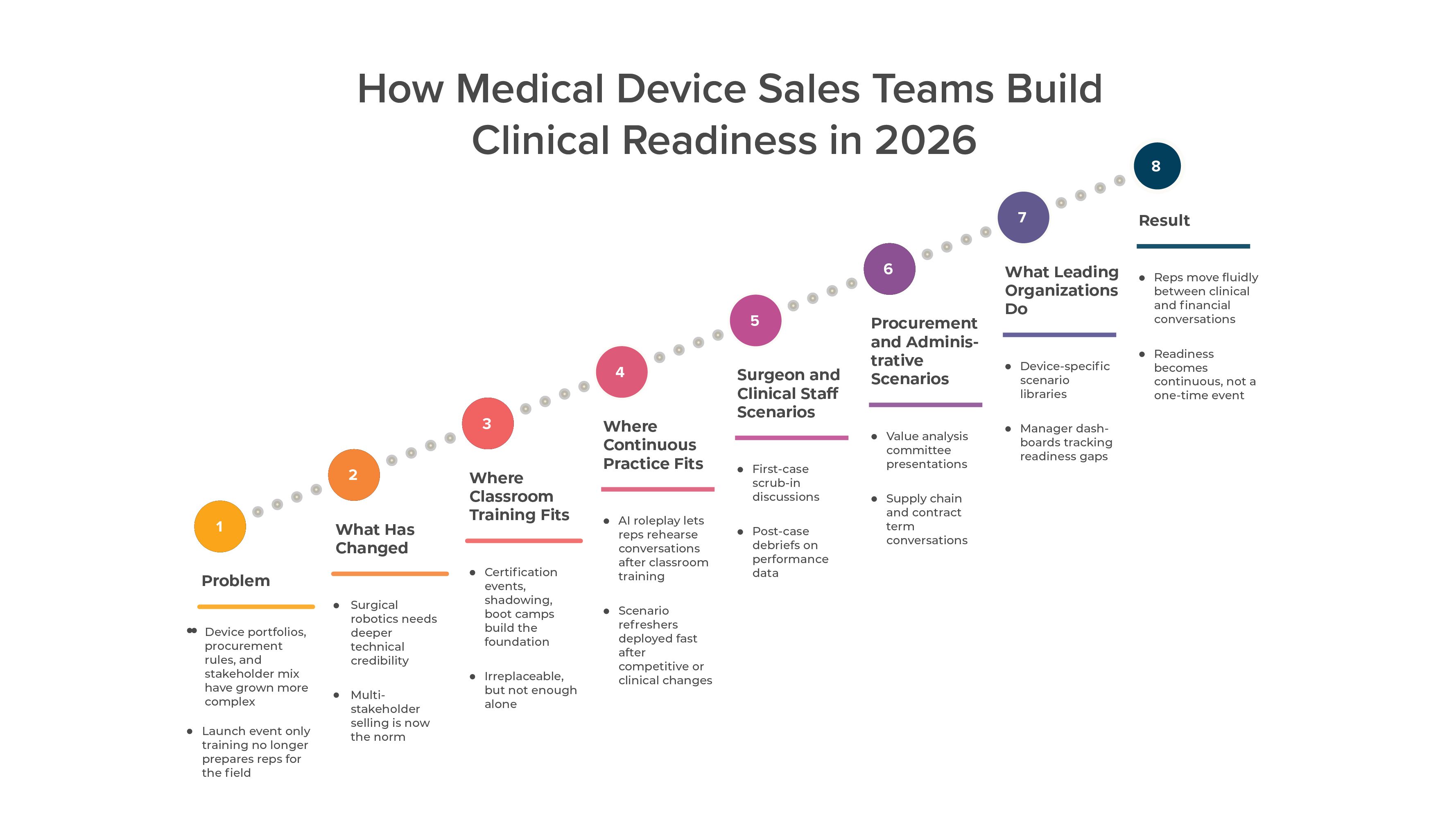
Medical device sales training has always faced a tension that is difficult to resolve with traditional methods alone.
On one side, the product knowledge required is deep, technical, and device specific. A rep selling a surgical stapler needs to understand procedural steps, device mechanics, tissue handling considerations, and the clinical outcomes data that a skeptical surgeon will ask about. That knowledge takes time to build.
On the other side, the conversations reps need to have in the field are unpredictable, multi-stakeholder, and high stakes. A hospital procurement director does not ask the same questions as an OR nurse. A clinical champion who loves the device still needs to navigate an internal value analysis committee. Knowledge alone does not prepare a rep for any of that.
AI simulations are changing how medical device organizations close this gap. Rather than relying entirely on periodic workshops and manager-led roleplay, leading teams are using AI-powered practice environments to build the kind of clinical confidence and conversational agility that only comes from repetition in realistic scenarios.
This guide covers how medical device sales leaders are using AI simulations to build team readiness, what good implementation looks like, and how to make it work across a complex, distributed field force.
Why Field Confidence Goes Beyond Product Knowledge
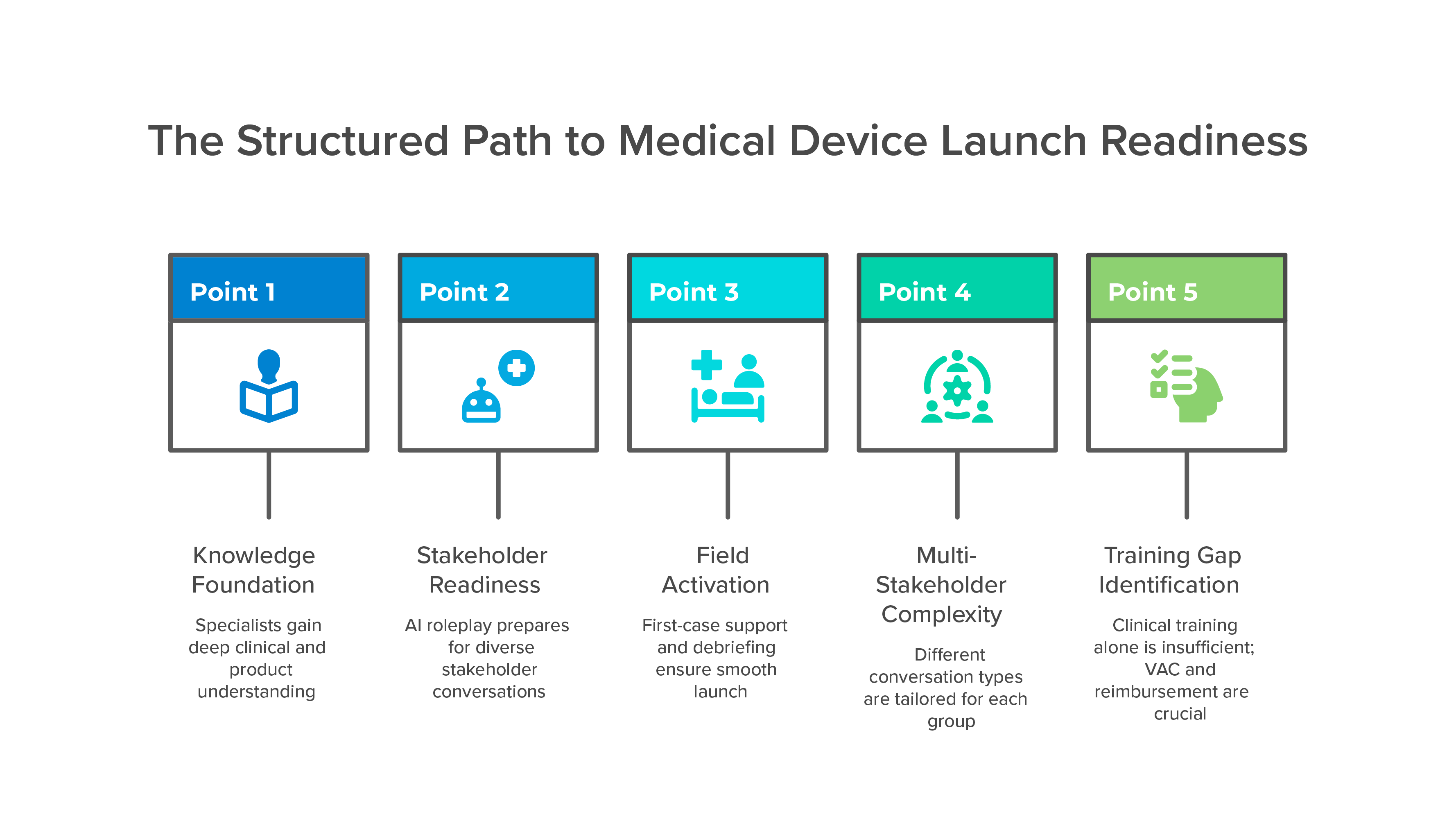
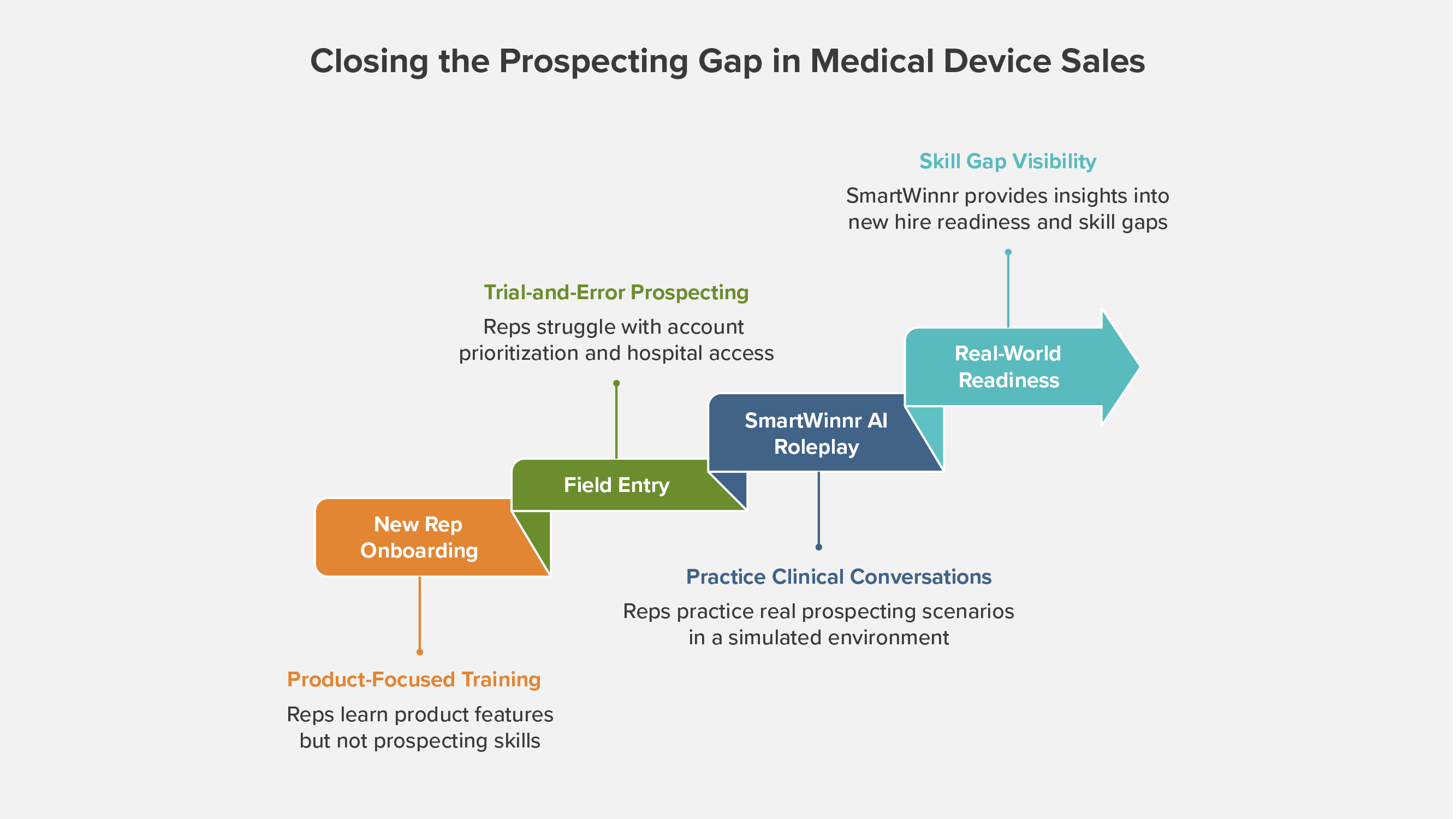
Medical device sales training is typically thorough on the knowledge side. Product certifications, anatomy training, procedural walkthroughs, and IFU reviews are standard in most organizations and genuinely necessary given the clinical complexity of the products involved.
The challenge is that thorough knowledge does not automatically produce confident, capable field performance. A rep who can pass a product certification test can still struggle when a surgeon asks an unexpected question in a pre-op conversation. A rep who knows their device specifications inside out can still lose an opportunity when a procurement director pivots the conversation to total cost of ownership across a hospital system.
According to McKinsey's research on medtech commercial capabilities, companies with the most advanced commercial capabilities achieved growth rates 1.4 times higher than their peers, directly linking the quality of frontline sales engagement to commercial performance at a sector level.
What AI Simulations Actually Do for MedTech Sales Teams
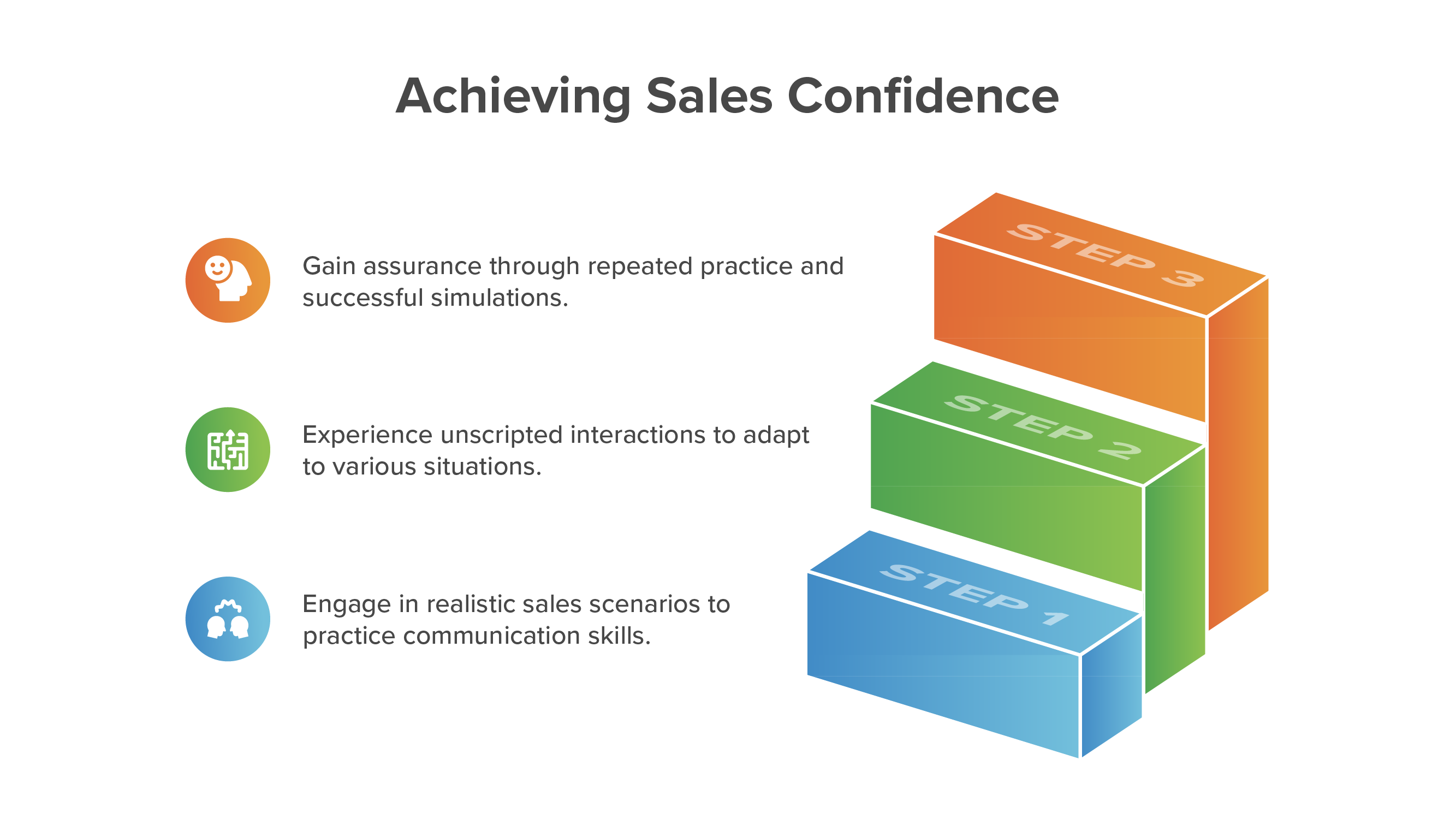
AI simulations in medical device sales are not digital quizzes or e-learning modules dressed up as conversations. They are dynamic practice environments where a rep engages in real-time, unscripted dialogue with an AI persona that responds the way an actual clinical or institutional stakeholder would.
The best implementations in medtech share five qualities that separate genuine field preparation from checkbox training.
Clinically Grounded Personas
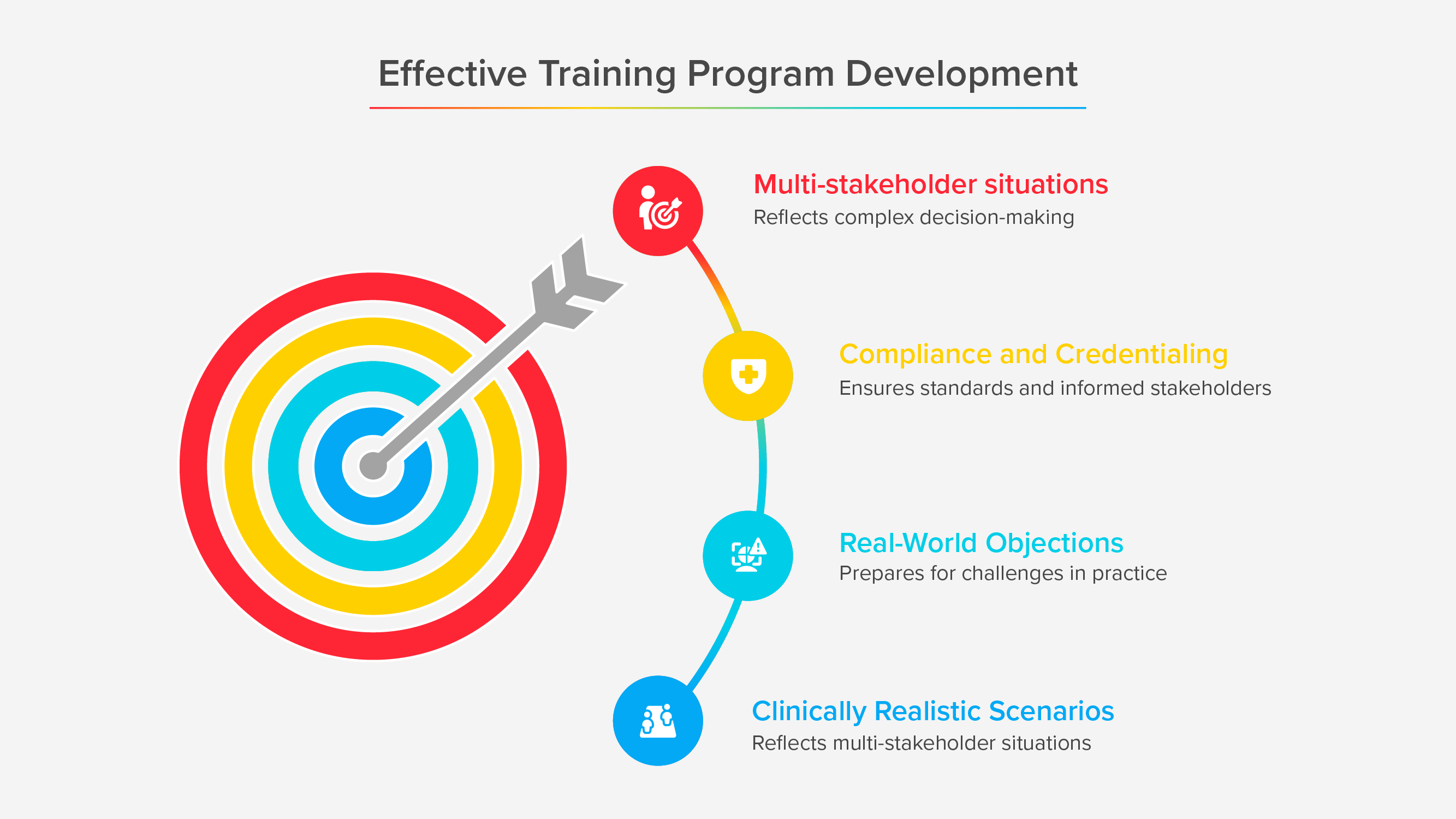
The simulated stakeholder reflects the specific clinical role the rep will encounter in the field. A skeptical orthopedic surgeon questioning implant longevity data behaves very differently from a hospital supply chain director focused on contract standardization. Both are real. Neither is interchangeable. Effective AI simulations are built around the specific buyer types a rep will face, not generic sales personas.
Multi-Stakeholder Simulation
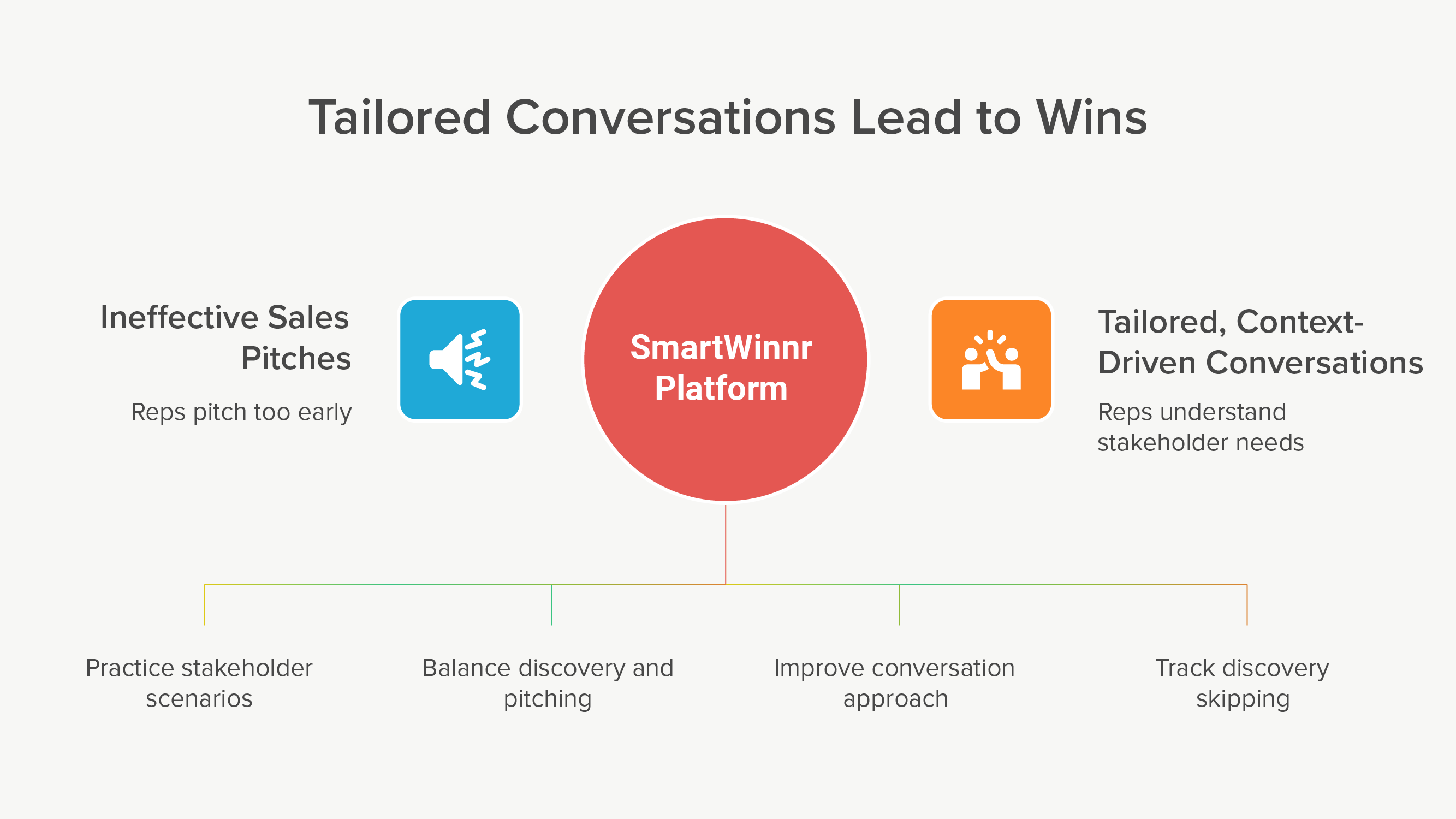
Medical device deals rarely involve a single decision maker. Leading AI simulation platforms can expose reps to the reality of navigating multiple stakeholders simultaneously, a surgeon focused on clinical outcomes, a procurement lead focused on cost, and a biomedical engineer focused on device compatibility, all within a single practice environment.
Procedural and Technical Depth
Device reps are often present in the OR during procedures. The questions they face from surgical teams are technical, immediate, and unforgiving of vague answers. AI simulations that incorporate procedural depth, asking reps to explain device mechanics, demonstrate screen-shared IFU content, and handle real-time clinical questions, build the technical confidence that earns OR access and surgeon trust.
Immediate, Specific Feedback
Feedback that says "good job" does not develop skills. Feedback that says "you acknowledged the clinical question but did not reference the IFU safety data before moving to efficacy" gives the rep something specific to work on. Effective AI simulations deliver behavioral feedback tied to observable moments in the conversation.
Compliance and Credentialing Awareness
Medical device reps operate under FDA communication standards, IFU adherence requirements, and hospital credentialing protocols. AI simulations that build these constraints into the practice environment and flag deviations in real time reinforce compliant selling behavior before it becomes a field exposure.
How Medical Device Sales Leaders Are Putting AI Simulations to Work
The most effective medical device sales leaders are not deploying AI simulations as a standalone tool sitting separately from the rest of their training program.
They are embedding them into specific moments in the rep's development journey where practice has the highest return such as.
New Device Launch Preparation
Every new device launch creates a readiness problem at scale. Reps need to master new clinical messaging, new procedural steps, new competitive positioning, and often new IFU language, all before the first surgeon conversation. AI simulations allow teams to run through launch scenarios repeatedly before a single field interaction happens, ensuring every rep has practiced the conversation, not just read the materials.
A national sales manager at a cardiovascular device company preparing for a new stent system launch used AI simulations to run every rep through three specific scenarios before the launch date: an initial surgeon introduction, a value analysis committee question, and a competitive challenge from a surgeon loyal to an existing product.
By launch day, every rep had completed the scenarios multiple times and received structured feedback. The launch team reported significantly higher confidence scores and fewer requests for manager support in the first two weeks compared to their previous launch.
Clinical Specialist Development
Clinical specialists in medical device companies occupy a unique role. They are often the most technically knowledgeable people on the field team, but their ability to translate that knowledge into conversations that move deals forward varies considerably.
AI simulations built around the specific clinical conversations specialists have, procedural support discussions, evidence-based clinical exchanges with surgeons, and training conversations with OR staff, develop the communication skills that technical expertise alone does not guarantee.
Key Account Manager Readiness
Key account managers in medical device sales navigate some of the most complex stakeholder environments in any commercial role. A single hospital system account can involve clinical, procurement, administrative, and executive stakeholders across multiple service lines.
AI simulations that expose KAMs to multi-stakeholder scenarios, practicing how to align a surgeon champion with a procurement director's cost concerns, for example, develop the institutional selling skills that are difficult to build through any other training method.
What It Takes to Scale AI Simulations Across a MedTech Field Force
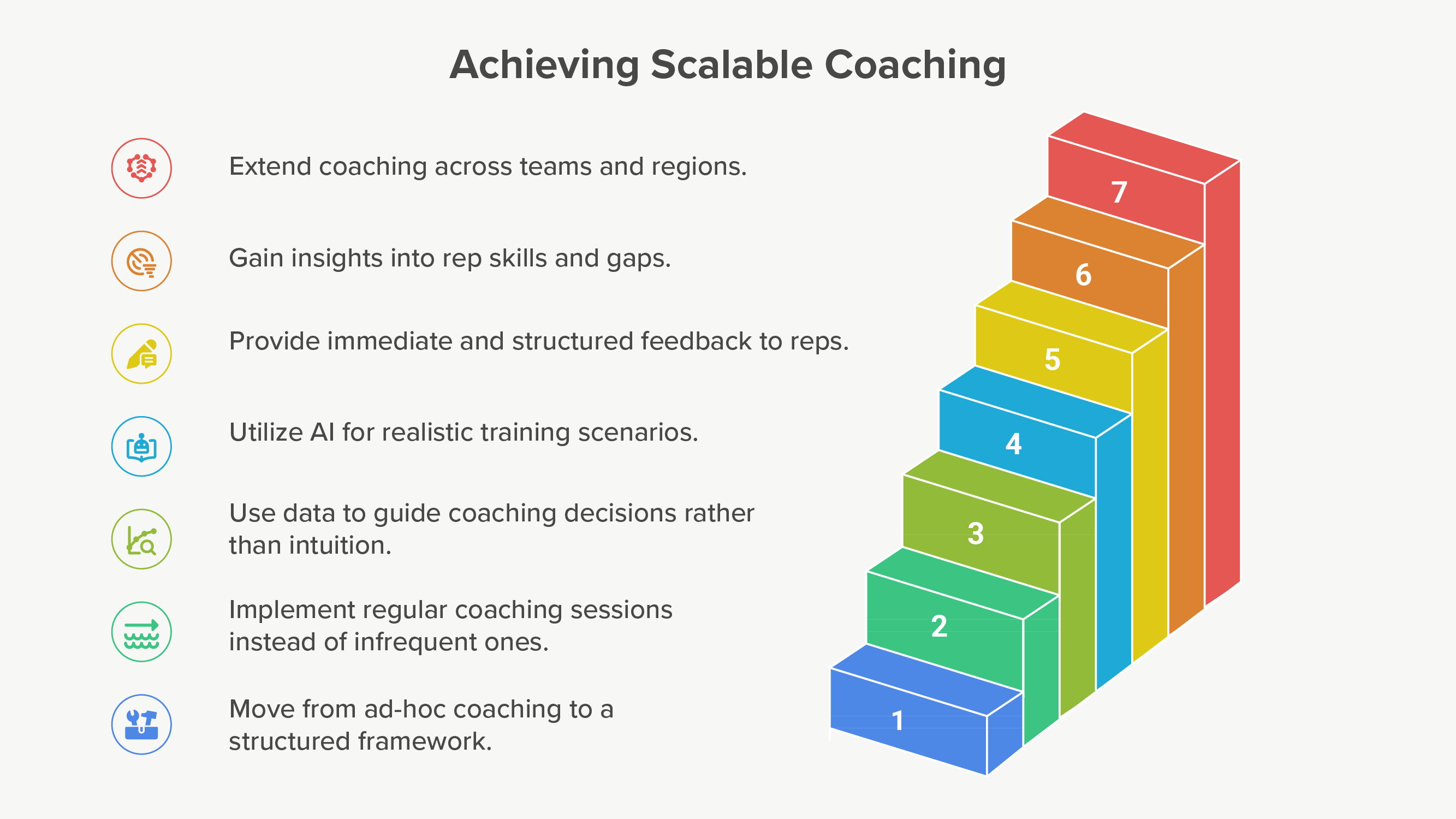
Deploying AI simulations effectively for a team of twenty reps is operationally straightforward. Scaling them consistently across hundreds of reps, multiple device categories, and several regional teams is where most programs either take hold or quietly stall after the pilot phase.
These are the factors that determine which way it goes.
Scenario Design Aligned to Real Field Situations
Generic simulations produce generic practice. Medical device teams need scenarios built around the specific devices their reps sell, the clinical specialists and procurement professionals those reps call on, and the compliance requirements relevant to each device category and indication.
The closer the simulation is to the real conversation, the more the practice transfers into the field.
Consistent Scoring Criteria Across Roles and Regions
Without a shared rubric, feedback quality varies by region, manager, and individual judgment. Effective AI simulation programs in medtech define what good looks like upfront, including both clinical communication criteria and compliance criteria, and apply that standard consistently across every practice session in every territory.
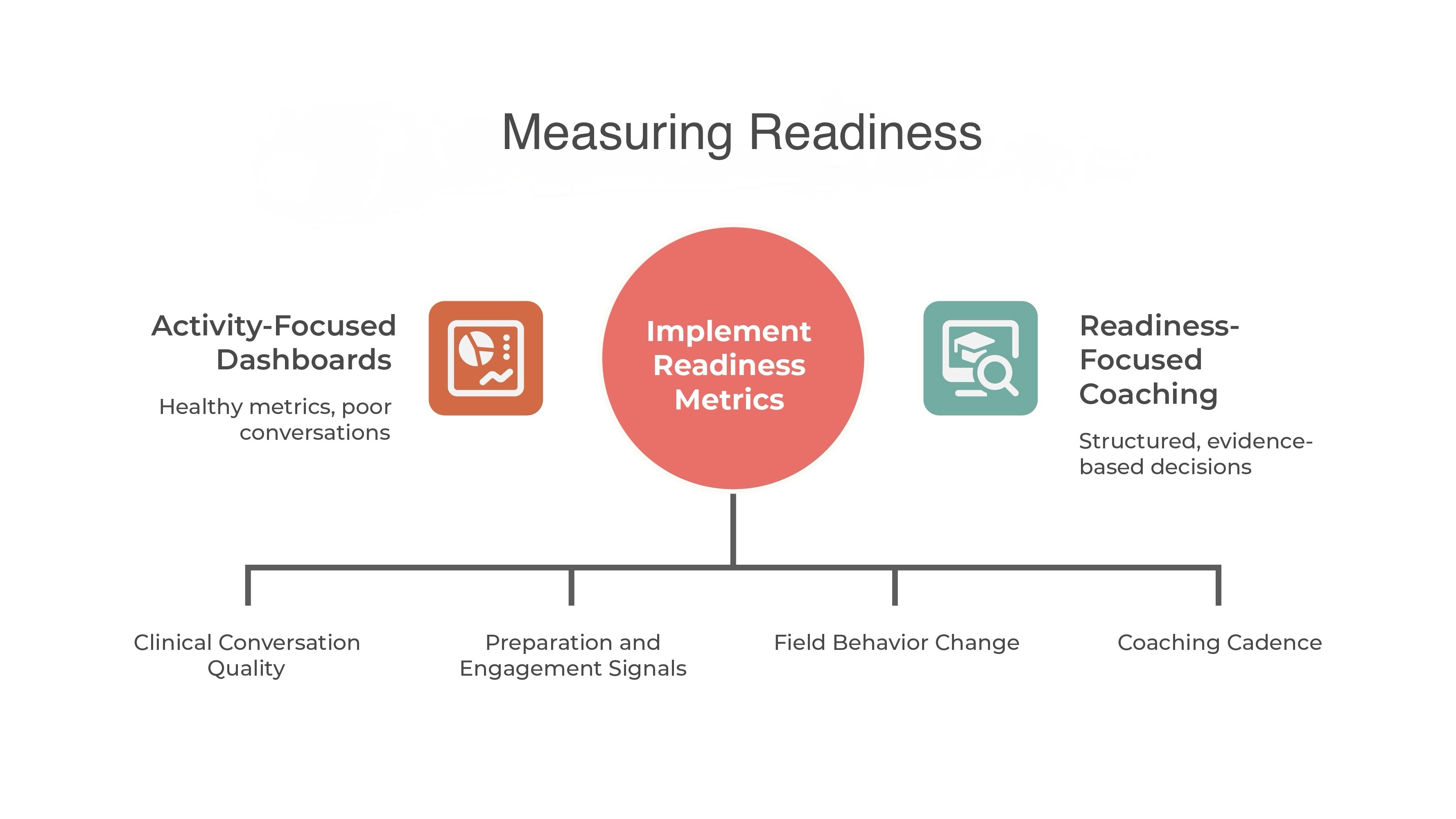
Manager Visibility into Readiness Gaps
AI simulations generate field intelligence that manager observation alone cannot produce.
Which reps are consistently strong on clinical depth conversations.
Where competitive objection handling needs development across a region.
Which new hires are approaching readiness, and which need more structured practice before independent territory work.
That intelligence makes coaching conversations sharper and more targeted.
Building these three practices consistently across a distributed medtech field force is where most organizations hit a practical wall. Doing it well requires the right structure and the right tools.
That is where SmartWinnr comes in.
How SmartWinnr Supports Medical Device Sales Readiness
SmartWinnr Platform is built for the specific demands of regulated commercial teams, including medical device organizations where clinical complexity, multi-stakeholder selling, and compliance requirements shape every field interaction.
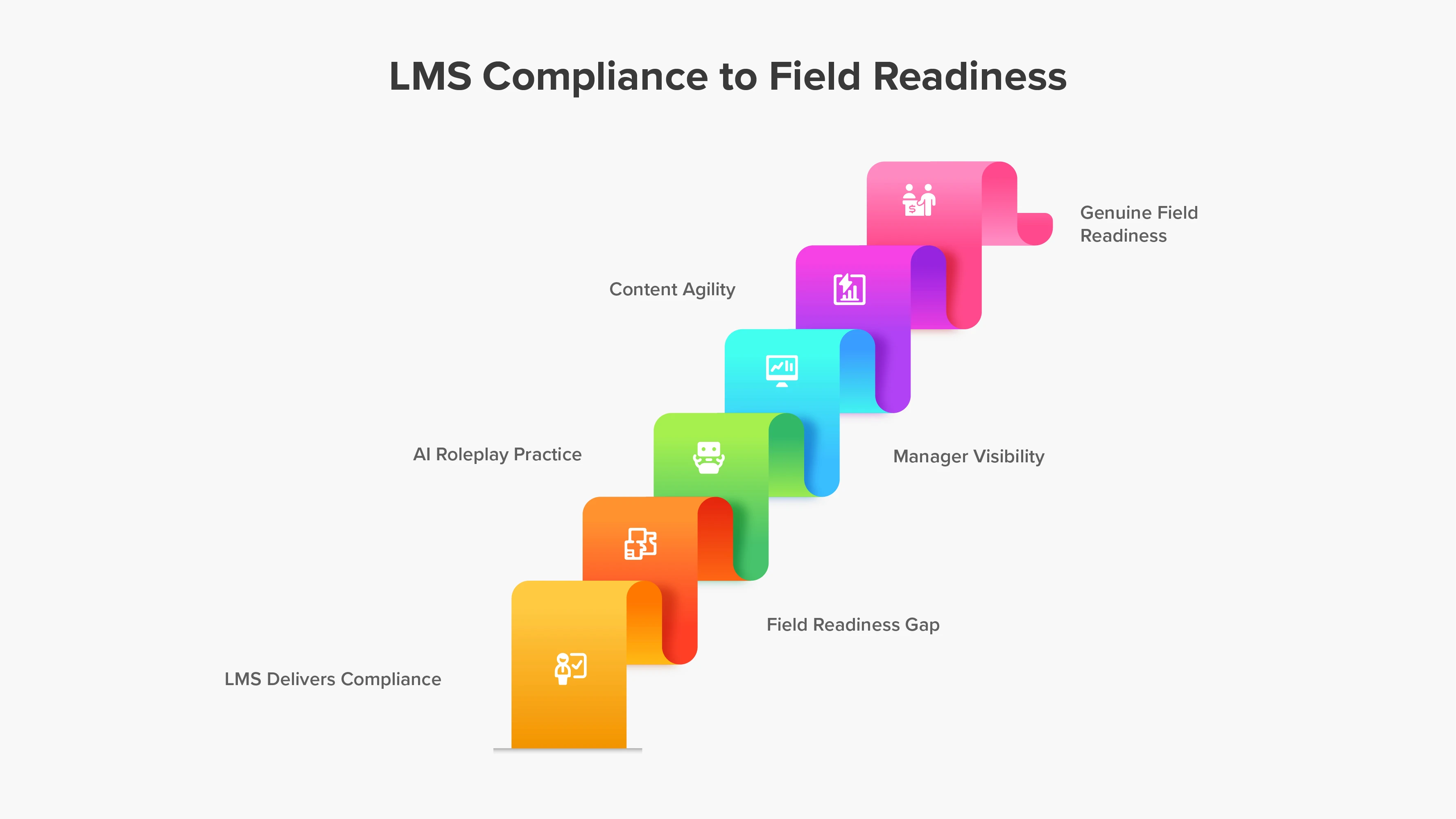
Medical device sales organizations trust SmartWinnr to close the gap between product knowledge and field-ready performance.
Reps practice realistic clinical and institutional conversations through AI simulations that adapt dynamically, challenge technical claims, and enforce IFU and compliance standards in real time. Managers get clear visibility into readiness at an individual and territory level, so coaching is always grounded in data, not assumption.
From new device launches to onboarding new field cohorts, SmartWinnr is purpose built for the complexity, compliance demands, and multi-stakeholder reality of medical device selling.
Request a demo to understand how SmartWinnr supports medical device sales readiness through AI simulations, coaching, and compliant skill reinforcement.
Disclaimer: This content reflects industry practices and does not constitute medical, legal, or regulatory advice.
Last Updated: