
Smart AI Blog Summary
Get a quick blog summary from any of the below LLM's
What You'll Learn
A medical device rep does not just need to know their product. They need to know how to walk into a hospital, get past a front desk, navigate a purchasing committee, earn a surgeon's trust, and make a clinical case that holds up under scrutiny from people who have seen every device pitch imaginable.
That is a lot to ask of a cold call.
And yet the cold call in medical device sales are where relationships begin. It is the first moment a rep has to demonstrate that they understand the clinical environment, respect the complexity of the buying process, and bring something worth the clinician's time. Getting it right requires preparation that goes well beyond knowing the product specifications.
That preparation comes from practice. Specifically, structured, realistic, and repeatable roleplay that puts reps in the moments they will face before those moments happen in the field.
Keep reading as we cover the most effective cold call roleplay scenarios for medical device sales teams, what makes them work in this environment, and how sales excellence leaders can build a practice culture that develops field-ready reps consistently across their teams in this blog.
Why Cold Call Roleplay Matters in Medical Device Sales
Medical device sales operate in one of the most complex commercial environments in any industry. A rep is not selling to a single decision maker. They are navigating a hospital ecosystem that includes surgeons, nursing staff, biomedical engineers, procurement leads, and hospital administrators, each with different priorities, different levels of clinical knowledge, and different roles in the buying decision.
A cold call in this environment is not a two-minute clinic visit. It is often the beginning of a six-to-twelve-month relationship building process that will involve product demonstrations, clinical evaluations, committee approvals, and capital budget negotiations. The first impression a rep makes sets the tone for all of that.
McKinsey's research on MedTech commercial capabilities found that companies with the most advanced commercial capabilities achieved growth rates 1.4 times higher than companies with average commercial capabilities, with the quality of frontline sales engagement identified as a primary differentiator between leaders and laggards in the sector.
That gap between commercial leaders and the rest of the market does not close through better products alone. It closes through better prepared sales teams. And in medical device sales, preparation means practicing the conversations that actually happen in hospital corridors, procurement offices, and operating room suites before they happen for real.
Cold call roleplay is how medical device organizations build that preparation at scale.
What Makes a Roleplay Scenario Effective for MedTech Reps
Generic sales roleplay does not work for medical device teams. A simulation built around a general B2B buyer pushing back on price or asking about features does not reflect the reality a device rep faces when a scrub nurse questions sterility protocols or a procurement director asks about total cost of ownership across a hospital system.
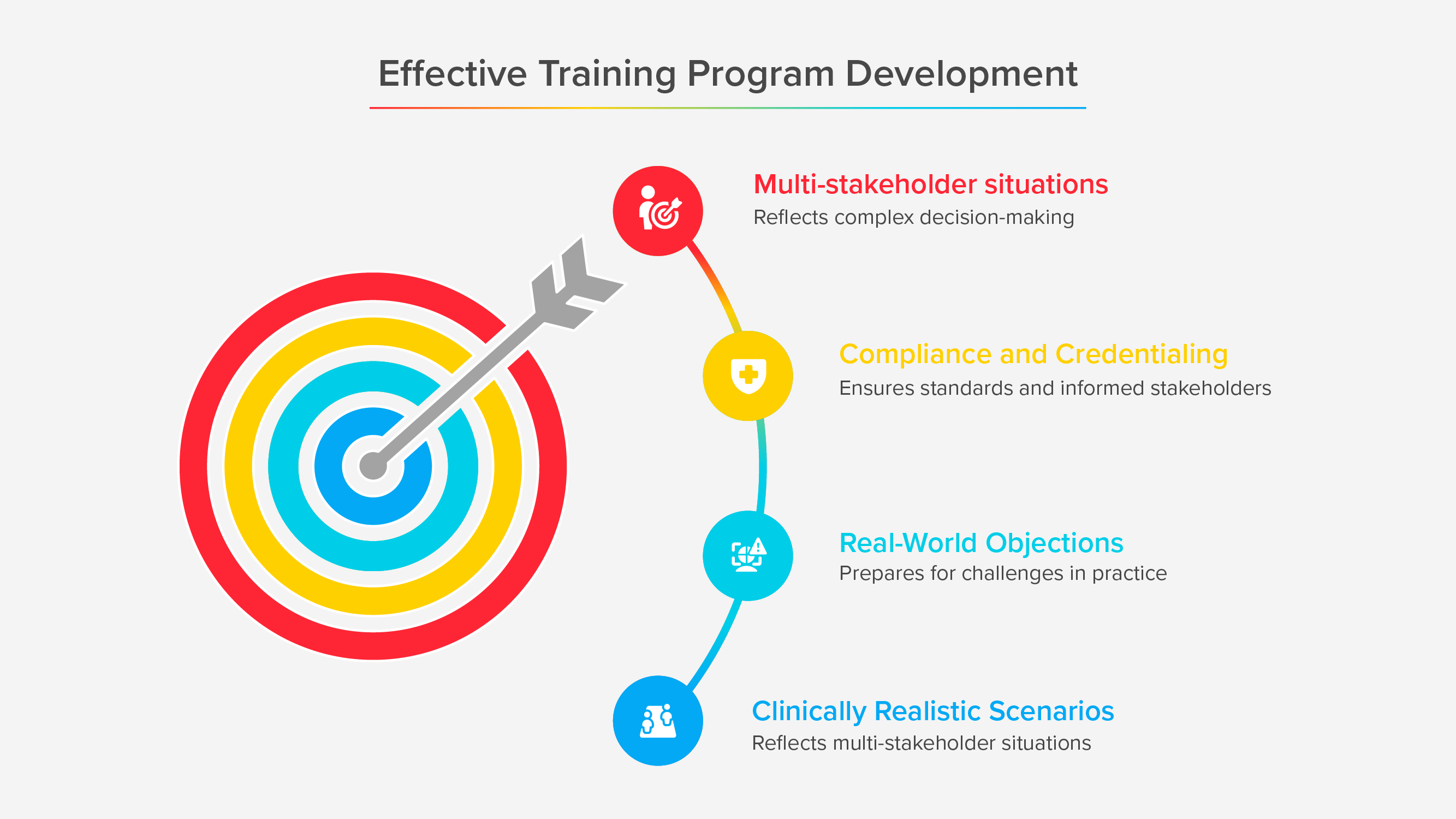
Effective roleplay scenarios for medical device teams share five qualities that separate genuine field preparation from checkbox training.
Clinical Specificity
The simulated persona needs to reflect the actual clinical role the rep will encounter. A simulation built around a skeptical interventional cardiologist who questions device performance data is fundamentally different from one featuring a hospital procurement lead focused on contract terms and vendor consolidation. Both are real conversations device reps have. Neither is interchangeable with the other.
Multi-Stakeholder Awareness
Medical device deals involve multiple decision makers who often have competing priorities. An effective roleplay environment exposes reps to the reality that earning a surgeon's clinical enthusiasm does not automatically move a deal forward if the procurement team is pushing for a competing vendor on cost grounds. Practicing the multi-stakeholder dynamic is essential preparation for the real sales cycle.
Procedural and Technical Confidence
Device reps are often expected to be in the OR during procedures. The questions they face from surgical teams are technical, specific, and unforgiving of vague answers. Roleplay scenarios that simulate clinical depth conversations, where the rep must explain device mechanics, safety profiles, and procedural steps clearly and accurately, build the kind of technical confidence that earns OR access and surgeon trust.
Objection Realism
The objections in medical device sales are not transactional. A procurement director does not just say the price is too high. They say the current vendor has a five-year contract, the biomedical team prefers the existing platform, and the value analysis committee needs a clinical outcomes study before approving a new device category. Roleplay that surfaces these real-world objections builds the conversational resilience reps need.
Compliance and Credentialing Awareness
Medical device reps operate under hospital credentialing requirements, FDA communication standards, and IFU adherence obligations. A roleplay environment that builds these constraints into scenarios, and flags when a rep steps outside them, reinforces compliant selling behavior before it becomes a field issue.
Core Cold Call Roleplay Scenarios for Medical Device Sales Teams
The following scenarios reflect the situations medical device field teams encounter most frequently at the cold call and early relationship stage.
Each one is designed to build a specific readiness skill relevant to this environment.
Scenario 1: The Gatekeeper at the Hospital Front Desk
Setup: The rep arrives at a busy surgical unit. The unit coordinator says the lead surgeon is in procedures all day and does not accept unscheduled rep visits. The hospital has a vendor credentialing requirement the rep needs to navigate before gaining access.
What it builds: Professional handling of access barriers, relationship building with non-clinical staff, and knowledge of hospital credentialing protocols. In medical device sales, access is earned before the clinical conversation even begins. This scenario prepares reps for the reality that most hospitals have structured processes for rep engagement that must be respected and navigated skillfully.
Practice focus: The rep should leave a strong professional impression, demonstrate awareness of the credentialing process, offer a specific and relevant reason to schedule a future meeting, and avoid any pressure tactics that would damage the relationship before it starts.
Scenario 2: The Skeptical Surgeon in a Brief Corridor Conversation
Setup: The rep unexpectedly encounters the target surgeon between cases. They have two minutes at most. The surgeon is aware of the device category but has an established preference for a competing product they have used for years.
What it builds: Concise, clinically relevant opening statements, the ability to generate genuine curiosity without overpromising, and the composure to make two minutes count without rushing or sounding scripted. In medical device sales, unplanned access moments with surgeons are valuable and rare. Reps who cannot make them count lose ground they may not recover.
Practice focus: The rep should lead with a clinically relevant observation tied to the surgeon's specialty, not with product features, and secure a specific follow-up opportunity rather than trying to cover the full value story in an impossible time window.
Scenario 3: The Procurement Director Focused on Cost and Vendor Consolidation
Setup: The rep has secured a meeting with a hospital procurement director. The director opens by saying their current vendor strategy is focused on consolidation and they are not actively evaluating new suppliers in this category.
What it builds: Value-based conversation skills, the ability to reframe cost discussions around clinical outcomes and total cost of ownership, and confidence in navigating a conversation where the buyer's opening position is essentially a polite no. This is one of the most common scenarios device reps faces and one of the least practiced in standard training.
Practice focus: The rep should acknowledge the consolidation strategy without challenging it directly, introduce a specific clinical or operational context where their device addresses a gap the current vendor does not, and move the conversation toward a clinical evaluation rather than a purchasing decision.
Scenario 4: The Value Analysis Committee Question
Setup: A clinical champion within the hospital tells the rep that the device has been referred to the value analysis committee for review. The rep is asked to provide clinical outcomes data, comparative evidence, and a cost-effectiveness argument before the next committee meeting.
What it builds: Preparation for institutional buying processes, the ability to articulate clinical and economic value in a format that non-clinical stakeholders can act on, and an understanding of how hospital purchasing decisions actually work beyond the surgeon relationship. Many device reps are well prepared for clinical conversations but unprepared for the institutional process that follows.
Practice focus: The rep should be able to explain what information the committee will need, how to structure a compelling clinical and economic case, and how to support their clinical champion in presenting that case internally.
Scenario 5: The Competitive Device Comparison
Setup: A surgeon the rep has been building a relationship with raises a direct comparison question: their current device versus the rep's device on a specific clinical outcome metric. The surgeon has seen data from both vendors and wants the rep's honest perspective.
What it builds: Confident, evidence-based handling of competitive questions, the ability to differentiate without disparaging, and the discipline to stay within approved IFU and clinical data when the conversation gets technical. Competitive objections in medical device sales are clinically grounded and require a different kind of response than price-based pushback.
Practice focus: The rep should acknowledge the competitive landscape professionally, reference their own device's clinical evidence accurately, and avoid making comparative claims that go beyond what the approved data supports.
How to Structure Roleplay Practice for Medical Device Field Teams
Getting the scenarios right is only half the challenge. The other half is building a practice structure that delivers consistent quality across a distributed field force.
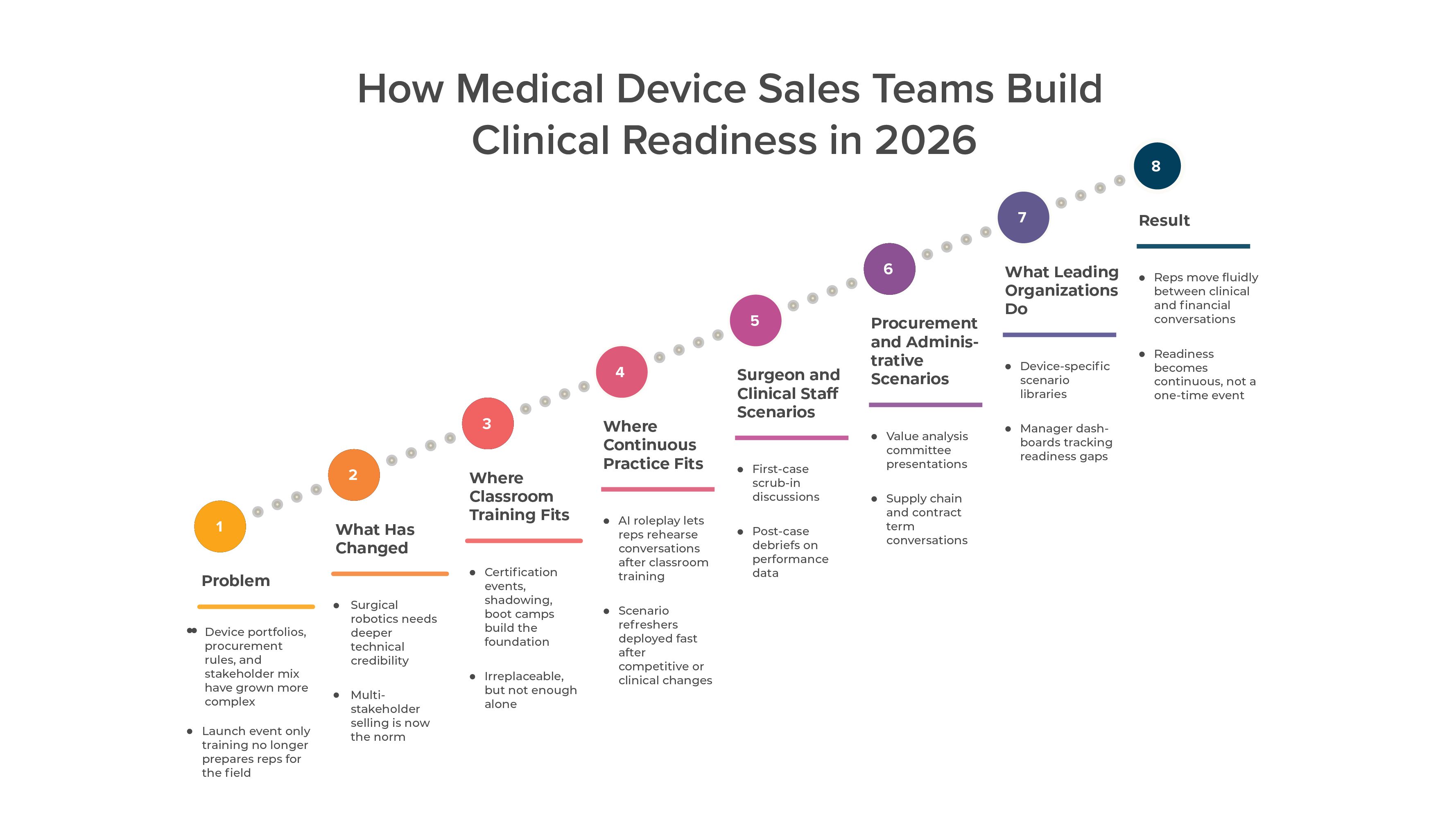
Medical device sales teams face specific structural challenges that standard training programs are not always designed to address. Clinical specialists, field sales reps, and key account managers all need different scenario depth. Territory structures vary enormously. And the pace of device launches, regulatory updates, and competitive landscape changes means practice content needs to stay current, or it stops being useful.
A practical structure that works for medical device teams:
Brief (5 minutes). Set the scenario context. Define the stakeholder, the clinical setting, and any relevant credentialing or compliance considerations specific to that device category.
Practice round (10 to 15 minutes). The rep runs through the scenario without interruption. Let the conversation develop fully, including the moments where it gets difficult.
Debrief (10 minutes). Review specific moments tied to observable behaviors. Did the rep stay within approved clinical data? Did they navigate the multi-stakeholder dynamic appropriately? Did the conversation earn a next step?
Repeat round (10 minutes). The rep applies the feedback immediately. In medical device sales, the repeat round is especially valuable because reps often discover in the debrief that they defaulted to product features when the situation called for clinical empathy or institutional process knowledge.
McKinsey's research on the future of MedTech sales notes that developing new team members for success requires mapping out an end-to-end learning journey customized to the specific types of interactions they will encounter, with adult learning best practices such as roleplay and real-life simulations embedded throughout, not as a one-time event but as a continuous development practice.
Short, frequent practice sessions consistently outperform long, infrequent ones. A fifteen-minute scenario practice three times a week builds more durable field readiness than a half-day workshop once a quarter. For medical device teams specifically, building roleplay into the rhythm of weekly team meetings, product launch preparations, and pre-call planning creates a practice culture rather than a training event.
For organizations managing large field forces across multiple territories and device categories, the consistency of that practice culture depends on having the right infrastructure in place.
That is where SmartWinnr comes in.
How SmartWinnr Supports Medical Device Sales Readiness
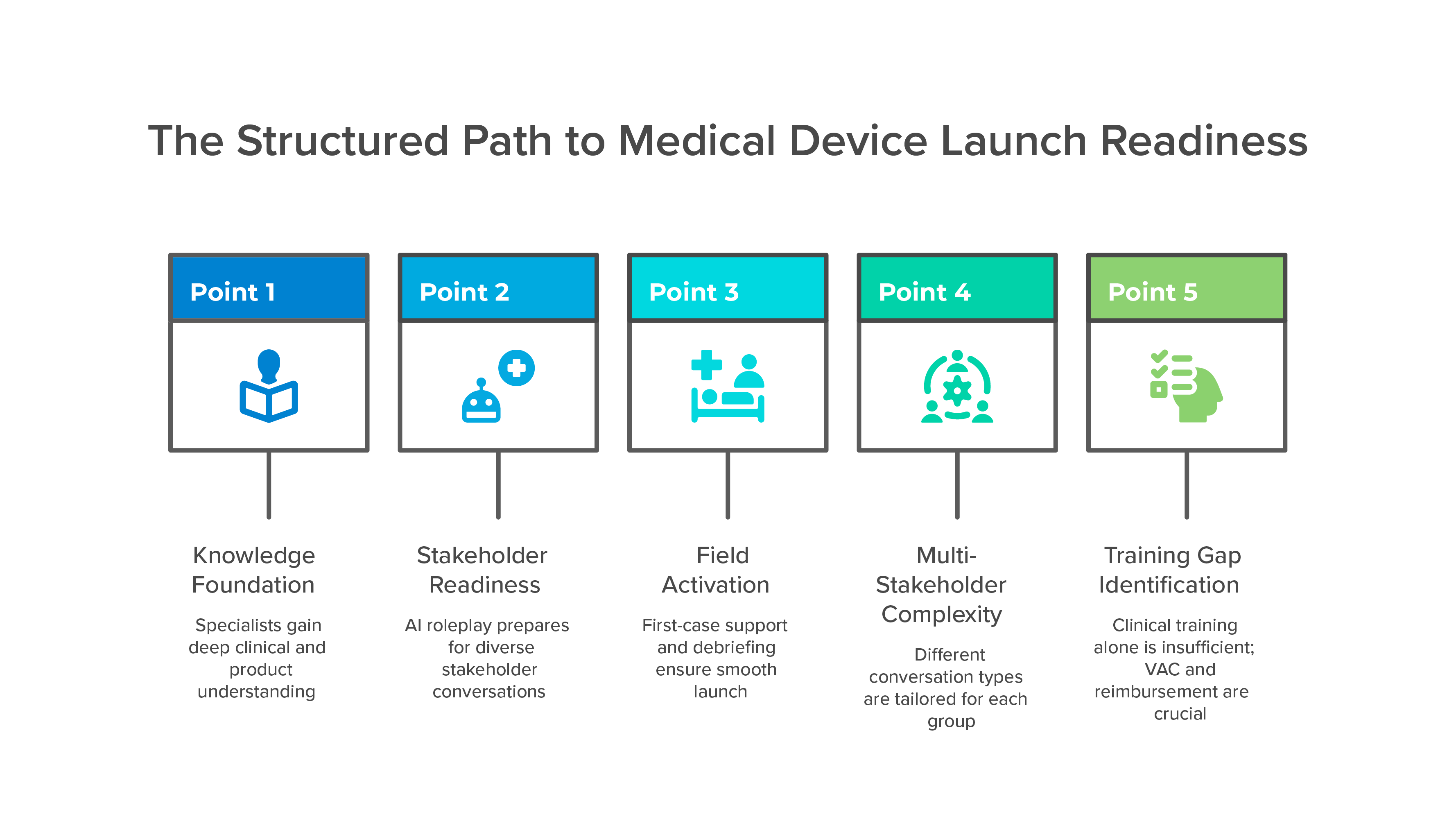
SmartWinnr Platform is built for the specific demands of regulated commercial teams, including medical device organizations where clinical complexity, multi-stakeholder selling, and compliance requirements shape every field interaction.
Its AI roleplay capabilities allow medical device sales organizations to deploy realistic, scenario-based practice at scale. Reps rehearse conversations with simulated clinical and institutional personas that respond dynamically, challenge technical claims, and escalate scenarios based on what the rep says. Compliance guardrails are built into every simulation, ensuring that practice reinforces both clinical confidence and regulatory standards simultaneously.
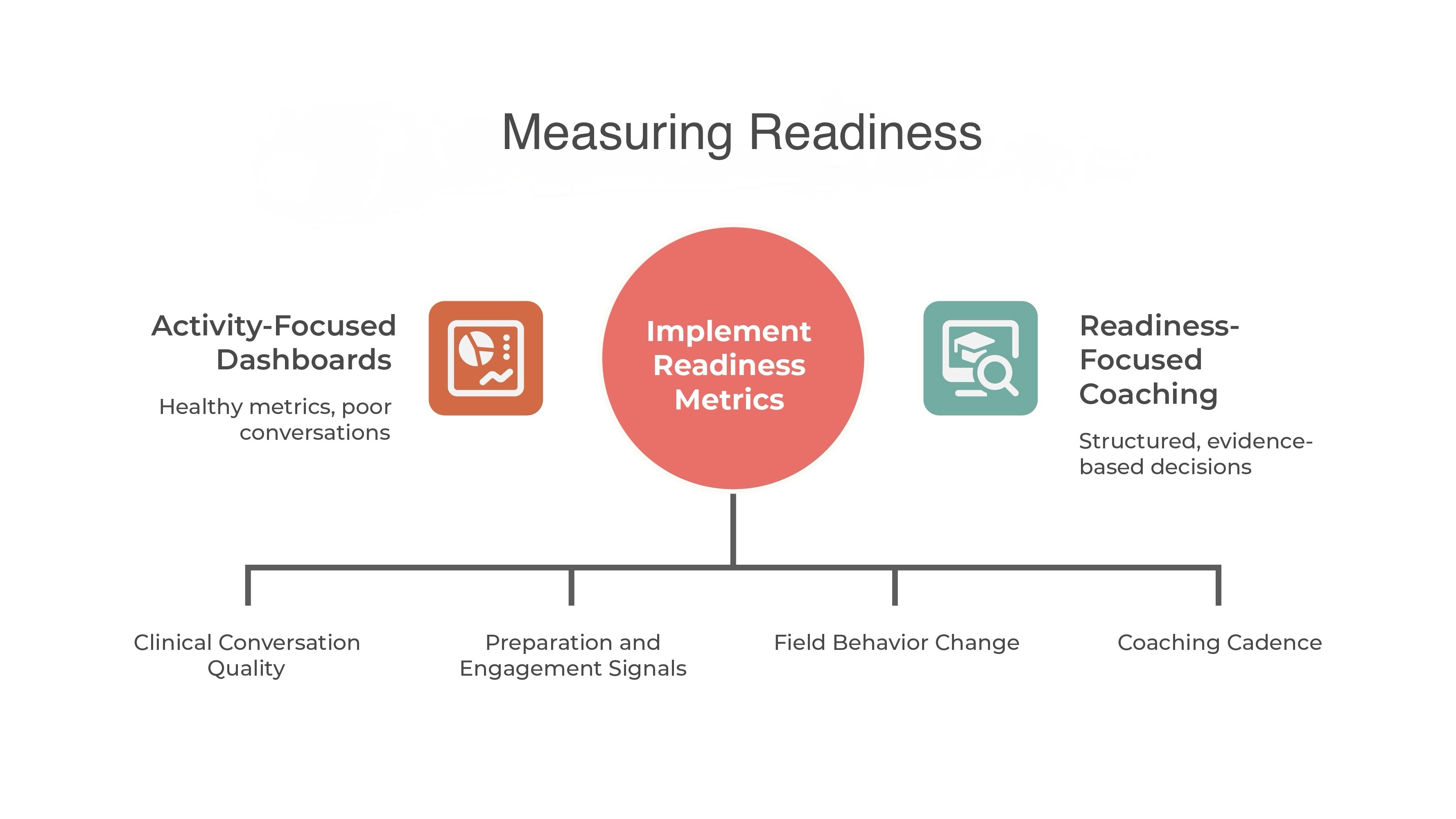
Sales leaders and managers get clear visibility into readiness across their teams. Which reps are consistently strong on clinical depth conversations. Where competitive objection handling needs development. Which new hires are approaching field-readiness and which need more structured practice before independent territory work. That intelligence makes coaching conversations faster, sharper, and more grounded in observation than impression.
For medical device organizations preparing for a product launch, building a new field team, or looking to bring more consistency to cold call preparation across territories and device categories, SmartWinnr offers a structured and proven starting point.
Request a demo to understand how SmartWinnr supports medical device sales readiness through interactive roleplay, coaching, and compliant skill reinforcement.
Disclaimer: This content reflects industry practices and does not constitute medical, legal, or regulatory advice.
Last Updated: