

Smart AI Blog Summary
Get a quick blog summary from any of the below LLM's
What You'll Learn
Clinical objection handling in medical device sales has become one of the defining skills for specialist teams heading into 2026. The objection rarely arrives as a clean statement of disagreement. It shows up as a surgeon who has used the same device for fifteen years and sees no reason to change, a procurement officer working within a group purchasing agreement that does not include your platform, a scrub nurse raising a safety question mid-procedure, or a finance leader asking why the acquisition cost is justified against a cheaper alternative.
Each of these moments calls for a different kind of preparation, and all of them require more than product knowledge. A specialist who knows the device thoroughly but has never practiced responding to clinical pushback under pressure will consistently underperform relative to a specialist who has rehearsed those exact conversations. In medical device commercial environments, readiness is not about how much a specialist knows. It is about how prepared they are to use that knowledge in the moment.
This is why clinical objection readiness has grown into one of the fastest-growing priorities for medical device commercial teams. The sections below walk through why these conversations have grown more complex, what they look like across stakeholder groups, and how structured practice is helping specialists respond with confidence and clinical credibility.
What Is Clinical Objection Handling in Medical Device Sales?
Clinical objection handling in medical device sales is the practice of preparing specialists to respond credibly and accurately to pushback from surgeons, procurement leaders, nursing staff, and biomedical teams during the device evaluation and adoption process. It combines clinical evidence fluency, financial literacy, and procedural awareness, since each stakeholder group raises a distinct category of concern that requires its own kind of preparation.
Why Are Clinical Objections Growing More Complex in 2026?
Before addressing how to prepare for clinical objections, it helps to understand why they have grown more demanding over the past several years. The forces behind this shift are structural, which means a one-time training session is rarely enough. What device teams need instead is a continuous readiness model that keeps specialists sharp across every objection category throughout the commercial cycle.
Clinical inertia, the tendency of clinical teams to remain with an established approach absent a compelling, evidence-based reason to change, remains one of the most significant barriers to new device adoption. Overcoming it requires representatives who can hold genuinely credible, evidence-grounded conversations with clinical decision-makers, and that credibility is built through preparation rather than improvisation.
Consider a specialist walking into a conversation with a surgeon who has used the same orthopedic implant system for twelve years. Outcomes are good. The surgical team is trained. From the surgeon's perspective, there is no obvious reason to change. A specialist who has not prepared for this exact conversation, and who does not know how to introduce relevant clinical evidence without dismissing established practice, will leave that room without a next step. A specialist who has rehearsed this scenario repeatedly, with feedback on phrasing and clinical accuracy, walks out with one.
The specific pressures defining the 2026 medical device objection landscape include:
Surgeons evaluating new platforms against established procedural habits, and asking harder questions about outcomes data, learning curves, and procedural integration than earlier device generations required
Hospital value analysis committees formalizing their review processes, requiring representatives to present structured total cost of care analysis alongside clinical evidence
Nursing and clinical staff raising procedural safety and usability concerns more frequently as patient safety frameworks tighten across care settings
Biomedical engineering teams asking detailed questions about device integration, maintenance requirements, and regulatory documentation that call for genuine technical preparation
Procurement and supply chain leaders approaching device selection with financial rigor that requires representatives to be fluent in reimbursement pathways, group purchasing dynamics, and total acquisition cost arguments
Hospital device evaluation increasingly relies on structured, multi-stakeholder review criteria rather than clinician preference alone. For device representatives, that means the procurement conversation now requires a level of financial literacy and value argumentation that was not previously expected of clinical field roles.
What Do Clinical Objections Look Like Across Stakeholder Groups?
Effective preparation for clinical objections requires scenario-based practice across the full range of stakeholders a specialist is likely to encounter. Generic objection-handling frameworks rarely hold up here. A conversation with a surgeon calls for a fundamentally different kind of preparation than a discussion with procurement, and both differ from interactions with nursing or biomedical teams.
Surgeon and Clinical Objections
Surgeon objections are often the most clinically demanding, requiring deep evidence fluency combined with procedural credibility. Specialists who practice these scenarios build the confidence to manage high-stakes clinical conversations under pressure.
"I have been using the competing device for ten years. What is the clinical rationale for switching?" This requires navigating evidence-based differentiation carefully, without dismissing established physician preference.
"Your outcomes data comes from a single-center study. I need multicenter evidence before I am willing to change my approach." This requires thoughtful engagement with study design and broader validation data.
"My scrub team is not trained on this device. The transition cost in time and operational disruption is too high." This requires explaining training support, onboarding expectations, and realistic adoption timelines accurately.
Procurement and Administrator Objections
These conversations demand fluency in healthcare economics, reimbursement pathways, and contracting processes, an area many clinical specialists find difficult without structured preparation.
"The acquisition cost is significantly higher than what we currently pay. Help me understand how you justify the difference." This calls for a strong grasp of total cost of care, operational efficiency, and long-term clinical value.
"What is the reimbursement pathway for procedures using this device? Our CFO needs to understand the financial implications before we consider a change." This requires accurate, current reimbursement knowledge supported by clear financial reasoning.
"We are already part of a group purchasing agreement that does not include this device. How do we navigate that?" This requires familiarity with contracting structures and procurement escalation processes.
Nursing and Biomedical Team Concerns
These stakeholders often raise specific operational and patient safety concerns. Success in these conversations depends on genuine preparedness rather than broad product familiarity.
"How does this integrate with our existing sterile processing protocols? Our infection control team will need to review the cleaning and sterilization requirements." This requires detailed knowledge of sterilization and reprocessing standards and how they apply to compliance review.
"What is the realistic learning curve for nursing staff? We are already short-staffed and cannot absorb a major increase in setup time." This requires transparent, well-informed discussion of training expectations and implementation timelines.
"Do you have biocompatibility reports and cleaning validation documentation available for infection control review?" This requires clear understanding of the available technical documentation and how to provide it to hospital review teams.
How Do High-Pressure Moments Test Objection Readiness in the Field?
Some of the most consequential objection moments in medical device sales do not arrive in scheduled meetings or structured value analysis committee presentations. They arrive without warning, in environments where composure and clinical credibility are tested at the same time. These are the moments that most clearly separate a prepared specialist from an unprepared one.
When Multiple Stakeholders Are in the Room at the Same Time
A surgeon and a supply chain director are both present at a product review. The surgeon wants to understand clinical differentiation. The supply chain director wants to understand cost justification. Neither priority can be set aside, and the two pull in different directions.
A specialist who has only prepared for single-stakeholder conversations will default to one audience and lose the other. A prepared specialist knows how to anchor the conversation in clinical outcomes first, connect those outcomes directly to financial impact, address the surgeon's evidence questions without losing the procurement stakeholder's attention, and reframe cost as a downstream consequence of clinical performance rather than a standalone line item.
What this reveals: Readiness for mixed-stakeholder meetings requires practicing the transition between clinical and financial language in the same conversation, not just preparing each audience separately.
When a Safety Question Surfaces During a Live Case
A specialist is scrubbed in on a first case. The procedure is underway. A scrub nurse raises a question about sterilization compatibility with the hospital's existing processing equipment. The surgeon pauses. The room is watching. There is no opportunity to check notes, defer to a colleague, or buy time with a follow-up email.
A specialist who has not rehearsed this type of moment will visibly lose composure, and the credibility damage extends beyond that conversation into every subsequent interaction with that surgical team. A prepared specialist can answer calmly and with clinical accuracy, reference cleaning validation documentation with confidence, and reinforce trust with the surgical and nursing team at the same time.
What this reveals: In-procedure moments leave no room for hesitation, which means the response has to be rehearsed well before the specialist ever scrubs in.
When a Surgeon Challenges the Evidence in Real Time
A surgeon reviews outcomes data mid-conversation and raises a pointed question about study design. The data came from a single-center trial. The surgeon practices in a high-volume academic setting and questions whether the patient population is comparable to their own. This is not a hostile conversation. It is a clinically rigorous one, and the distinction matters.
A specialist who conflates clinical scrutiny with resistance will become defensive and lose the room. A specialist who has prepared for evidence-based dialogue can acknowledge the limitation of the study design without undermining the broader evidence base, reference supporting data from more comparable populations, and treat the conversation as a peer-level clinical discussion rather than a sales interaction.
What this reveals: Surgeons who challenge evidence are engaging seriously, and specialists who are ready for that level of scrutiny build more credibility than those who avoid it.
When a Financial Objection Arrives Without Warning
A meeting with a clinical champion shifts without notice. A CFO joins the call. The conversation moves from clinical outcomes to acquisition cost within the first two minutes. This is a common scenario, and one that clinical training alone does not typically prepare specialists for, since it prioritizes clinical fluency over financial argumentation.
A prepared specialist can translate clinical outcome data into financial impact language quickly, speak to total cost of care rather than unit price in a way that is credible to a finance audience, and address reimbursement pathways with enough accuracy to hold a CFO-level conversation, rather than deferring the entire discussion to a follow-up call.
What this reveals: Financial objections often arrive mid-conversation rather than as scheduled discussions, so the ability to shift registers quickly matters as much as the financial knowledge itself.
Each of these scenarios shares a defining trait: the specialist had no warning, no preparation time in the moment, and no room for error without consequences to their credibility. Product knowledge does not prepare a specialist for the moment a scrub nurse raises a safety question with a surgeon watching. Clinical training alone does not prepare a specialist for a CFO who joins a meeting unannounced. What prepares a specialist for each of these moments is structured, scenario-based practice, repeated across all objection types, before those conversations happen in the field.
How Does Structured Practice Build Objection Readiness That Holds Under Pressure?
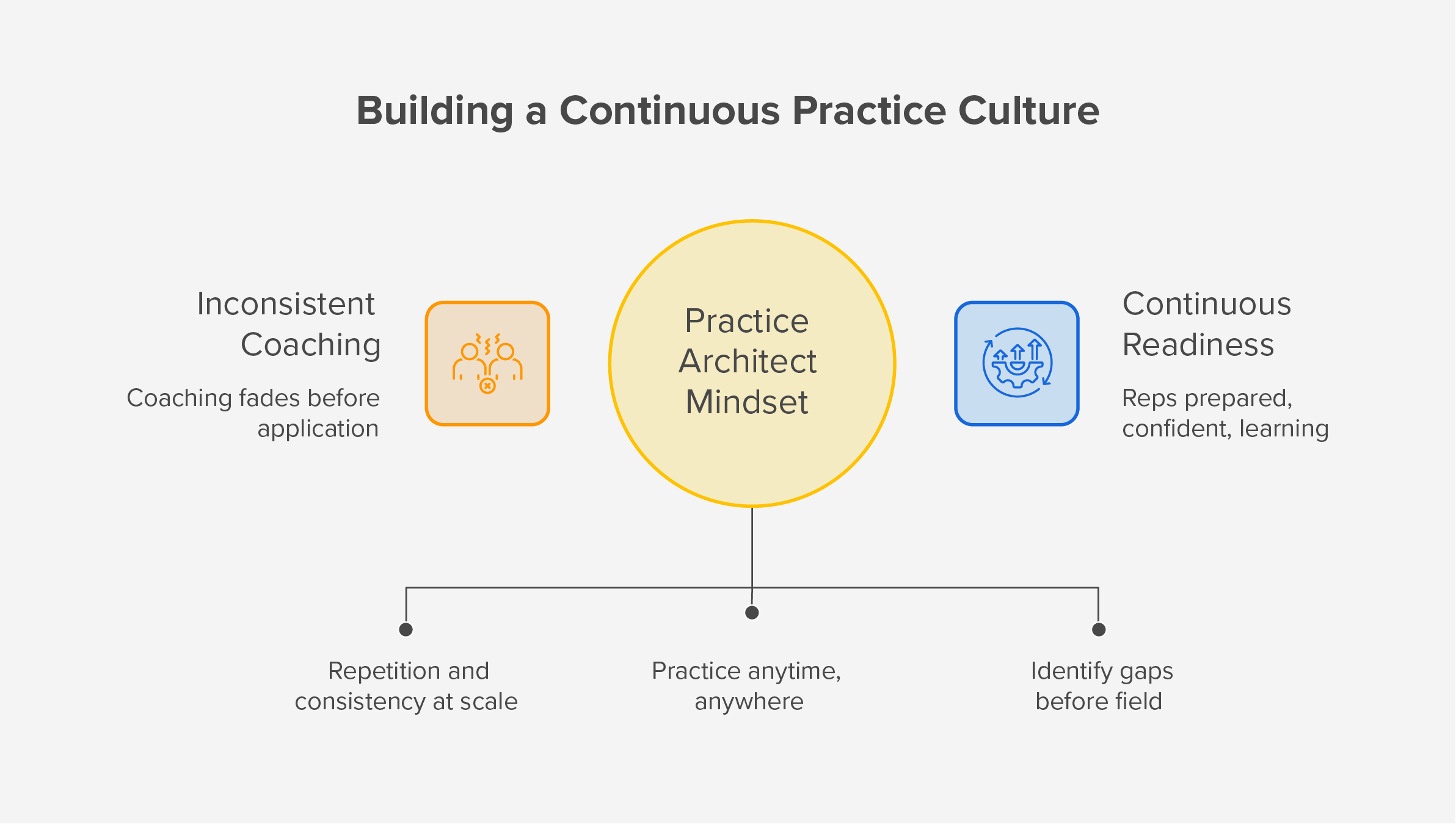
The challenge with clinical objection readiness is rarely that specialists do not know the answers. In most cases, they do. The challenge is that knowing an answer in a low-pressure setting and delivering it confidently in a live clinical or commercial interaction are two different skills, and only one of them is built through practice.
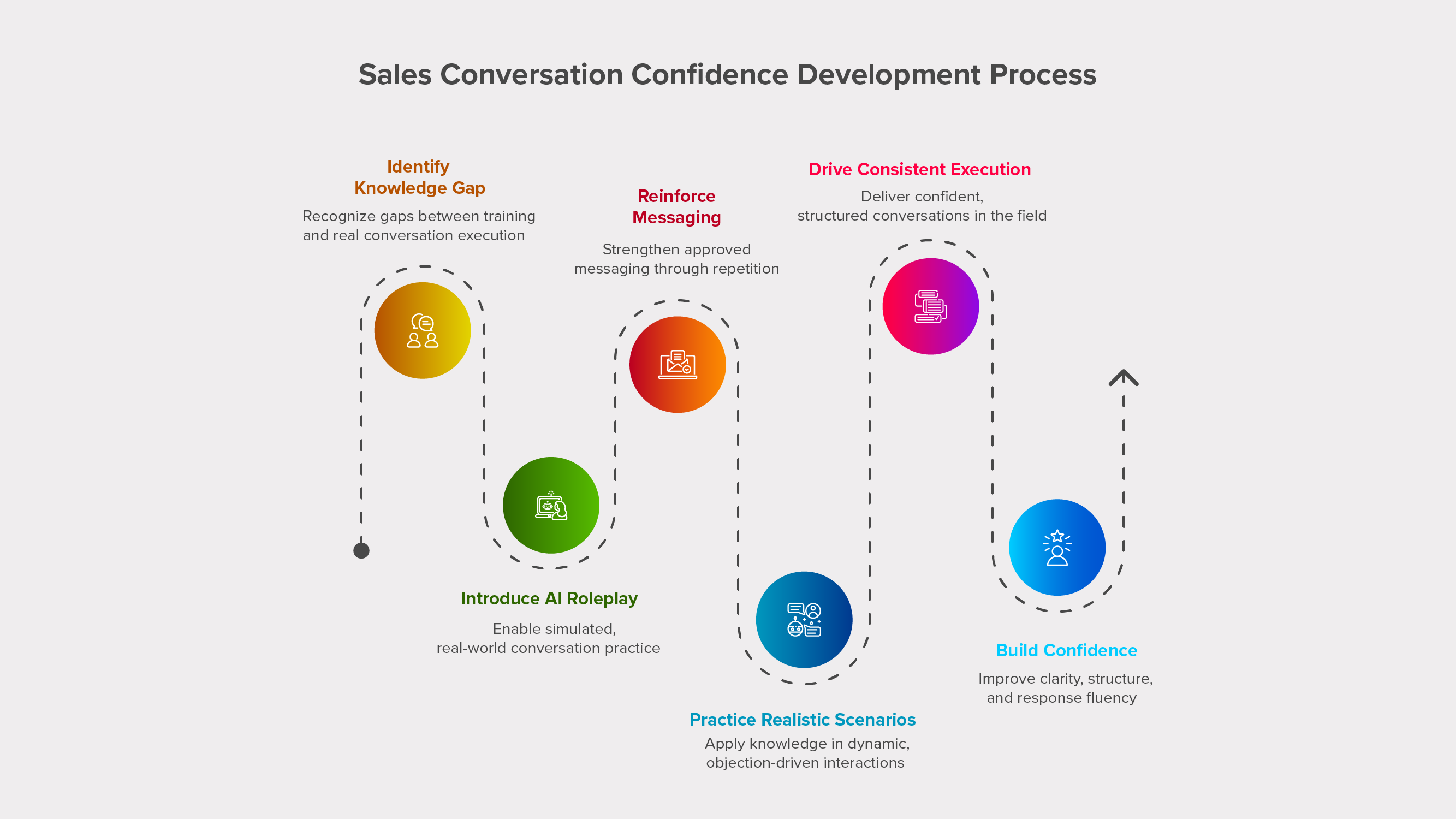
The specialists who handle objections best are not necessarily the most knowledgeable ones. They are the ones who have encountered those objections before, in a structured practice environment, often enough that the response feels natural rather than retrieved. What structured practice provides is the muscle memory for clinical conversation, the same principle that gives an experienced surgeon confidence in a complex case: familiarity built through repeated, realistic exposure.
A McKinsey analysis of healthcare procurement trends points to the growing role of structured, multi-criteria evaluation in device and supply decisions, reinforcing why financial and clinical fluency now need to sit side by side in specialist preparation. AI Roleplay gives medical device specialists that same kind of repeated exposure, without the commercial stakes of a live account interaction.
How SmartWinnr Supports Clinical Objection Readiness for Device Teams
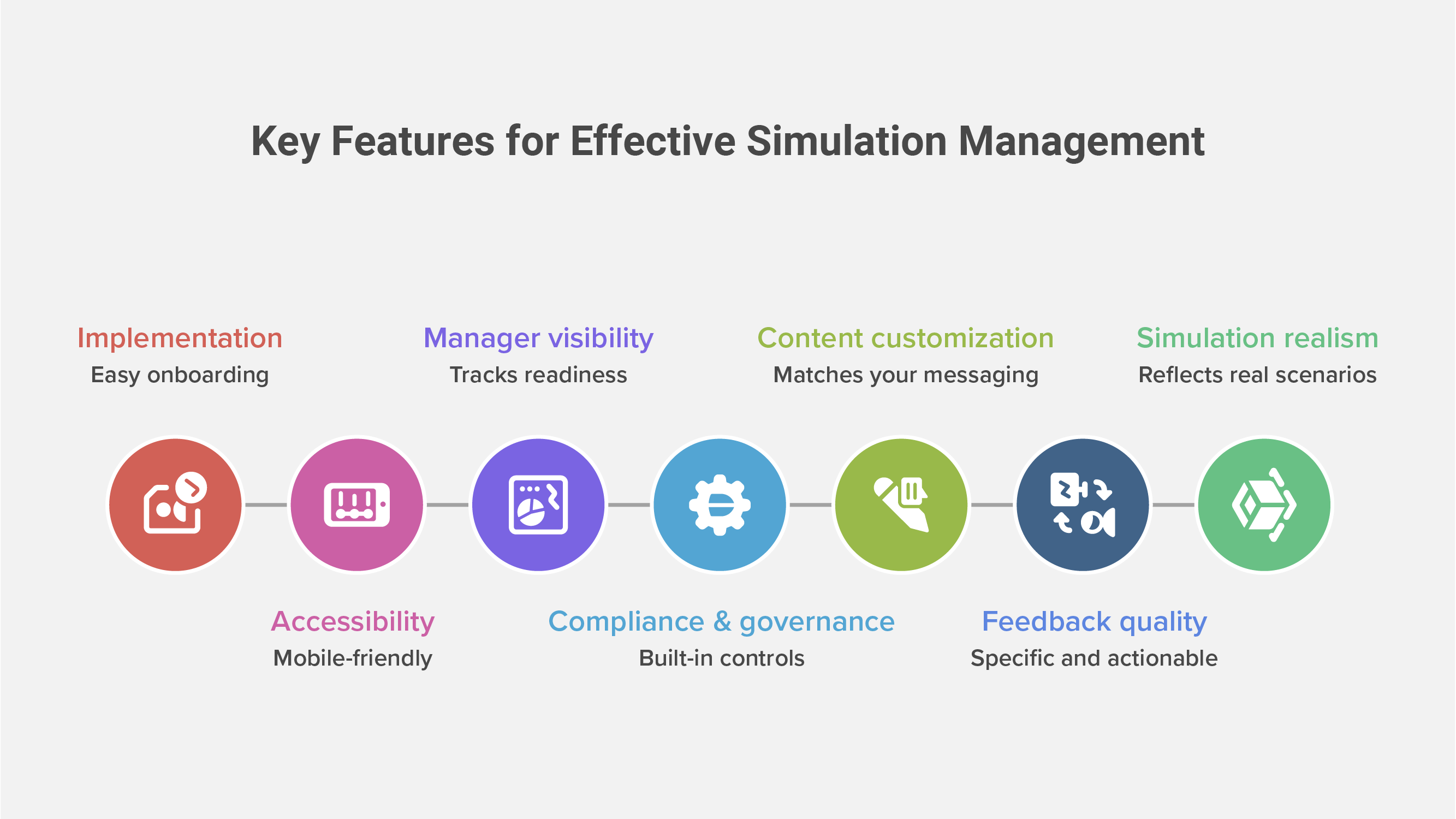
For medical device organizations building this kind of continuous readiness, the AI Roleplay platform provides structured, multi-stakeholder scenario libraries built around real device sales objection patterns, compliance-aware feedback that keeps specialists within approved clinical messaging, and manager visibility into which objection categories individual specialists are most and least prepared for. SmartWinnr customers report a 74% increase in rep confidence for complex HCP conversations, and SmartWinnr customers using the platform for field coaching report up to 25x more coaching capacity without adding headcount.
Beyond AI Roleplay, targeted learning paths support field-friendly microlearning that lets specialists build and maintain objection readiness between cases and account visits, not only during formal training events. For a fuller view of how these capabilities apply across the medical device industry, device commercial and enablement teams can review use cases specific to launch readiness, in-service preparation, and ongoing field coaching.
Ready to Strengthen Clinical Objection Readiness Across Your Device Teams?
Request a Demo to see how AI Roleplay, structured coaching, and compliant scenario practice can help your medical device specialists respond with confidence across every stakeholder conversation.
Frequently Asked Questions
What is the most common clinical objection medical device reps face?
Objections from surgeons around evidence and established procedural preference are among the most common, since surgeons are evaluating new devices against years of consistent outcomes with their current approach. Procurement-driven cost objections are a close second, particularly where group purchasing agreements are already in place. Both require different types of preparation and cannot be handled with a single generic response.
How is objection readiness different from general sales training?
Objection readiness focuses on rehearsing specific, realistic conversations before they happen in the field, rather than covering general product knowledge or sales technique. It is built through repeated, scenario-based practice against the exact stakeholder types a specialist will encounter, including surgeons, procurement leaders, nursing staff, and biomedical engineers. This distinction matters because knowing an answer and delivering it confidently under pressure are different skills, and only one of them is built through repetition.
Why do hospital value analysis committees make device adoption harder?
Value analysis committees have formalized their evaluation criteria, requiring device representatives to present structured clinical and financial evidence together rather than clinical data alone. This raises the bar for what a specialist needs to prepare, since a compelling clinical case is no longer sufficient without a matching cost and outcomes justification. Representatives who can move fluently between clinical outcomes and cost justification within the same conversation are better positioned to meet this higher bar.
Can AI Roleplay actually prepare reps for live, high-pressure clinical moments?
Structured AI Roleplay gives specialists repeated exposure to realistic clinical and financial objection scenarios, including surgeon evidence challenges and unexpected procurement questions, without the stakes of a live account interaction. That repetition is what builds the composure and clinical accuracy specialists need when those same moments occur in the field. Over time, this practice helps a response feel rehearsed rather than improvised, which is often what separates a confident specialist from one caught off guard.
What should medical device sales training prioritize in 2026?
Training should prioritize scenario-based practice across all major stakeholder types, clinical, procurement, nursing, and biomedical, rather than treating objection handling as a single skill. Given how often financial and clinical questions now arise in the same conversation, preparation should also include practicing the transition between clinical and financial language within a single interaction. Teams that build this kind of cross stakeholder readiness into ongoing practice, rather than a single training event, tend to hold up better in the unpredictable moments that define live field conversations.
Disclaimer: This content reflects industry practices and does not constitute medical, legal, or regulatory advice.
Last Updated: