
Smart AI Blog Summary
Get a quick blog summary from any of the below LLM's
What You'll Learn
Objection handling is among the most practice-dependent skills in pharmaceutical sales. The ability to respond accurately, confidently, and within approved messaging frameworks to a challenging clinical question, a formulary access concern, or a skeptical comparison to a competitive product is not built through reviewing response frameworks or watching objection handling demonstrations.
It is built through repeated practice in conditions that simulate the pressure, unpredictability, and specificity of real field interactions.
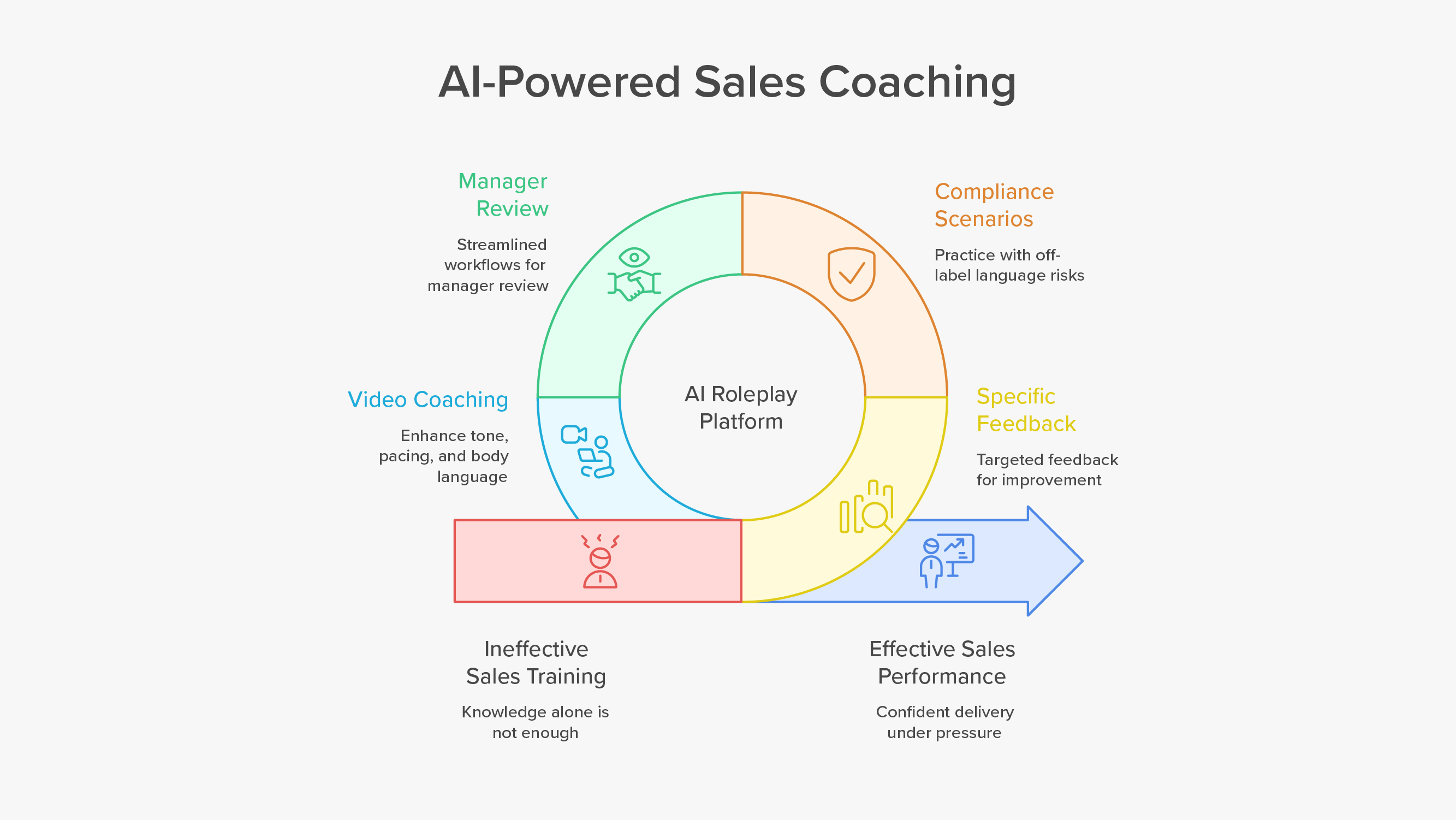
AI roleplay platforms have become the primary mechanism through which pharma sales teams scale this practice beyond what manager-led coaching can deliver.
But the range of platforms available varies significantly in their suitability for the specific demands of pharmaceutical sales objection handling, particularly in terms of scenario configurability, compliance alignment, and the quality of feedback they provide.
This article offers a structured framework for evaluating AI roleplay platforms in this context, covering the criteria that most directly determine whether a platform will produce the readiness outcomes it promises.
Why Objection Handling Requires Dedicated Practice
Objection handling occupies a specific cognitive and communicative space in pharmaceutical sales interactions.
Unlike the proactive delivery of product messages, where a representative can prepare and rehearse a relatively stable sequence of content, handling objections operates under very different conditions.
The representative must listen carefully to an objection they may not have anticipated, retrieve the relevant knowledge and messaging framework, and structure a response in real time while remaining within compliance boundaries.
That response must then be delivered with confidence and credibility, without dismissing or undermining the customer’s concern.
Each of these steps requires a different capability, and the need to perform them simultaneously, in real time, under the social pressure of a customer interaction, is what makes objection handling disproportionately dependent on practice for its development.
Reading about how to handle a formulary access objection builds theoretical awareness. Practicing it ten times in a realistic simulation builds the cognitive fluency and emotional composure that effective objection handling requires in the field.
For pharmaceutical sales, there is a compliance overlay that adds further complexity. A sales rep who responds to a clinical objection by reaching for language that is accurate but not within the approved messaging framework for that objection type has created a compliance risk, even if their intent was to address the customer's concern helpfully.
Developing the reflexive precision to respond within approved frameworks under pressure requires practice that specifically trains for that compliance dimension, not just for general communication effectiveness.
The Specific Objection Types Pharma Reps Encounter
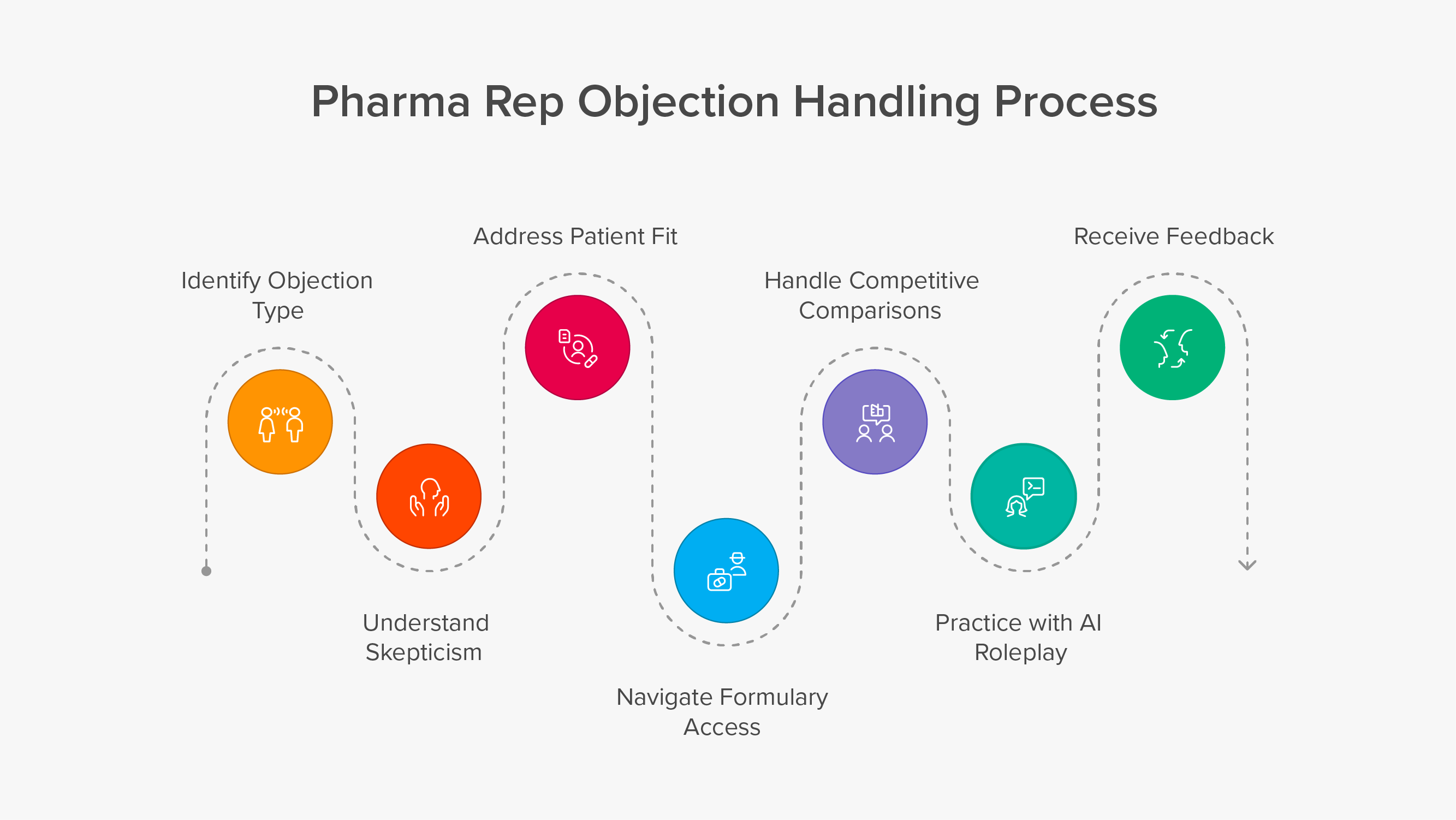
Understanding the specific objection landscape that your representatives face is the starting point for building an effective AI roleplay practice program.
Pharma sales objections fall broadly into several categories, each of which requires a distinct response approach and draws on different areas of knowledge.
Clinical efficacy objections involve questions or skepticism about the product's clinical evidence: the size and design of pivotal trials, the relevance of the patient population studied, the magnitude and durability of the effect, and the interpretation of safety data.
These objections require precise, accurate responses grounded in clinical data, within the boundaries of the product's approved labeling.
Patient population fit objections reflect uncertainty about which patients are most appropriate for the product. Representatives must be able to communicate the patient selection criteria clearly and accurately without suggesting uses beyond the approved indication.
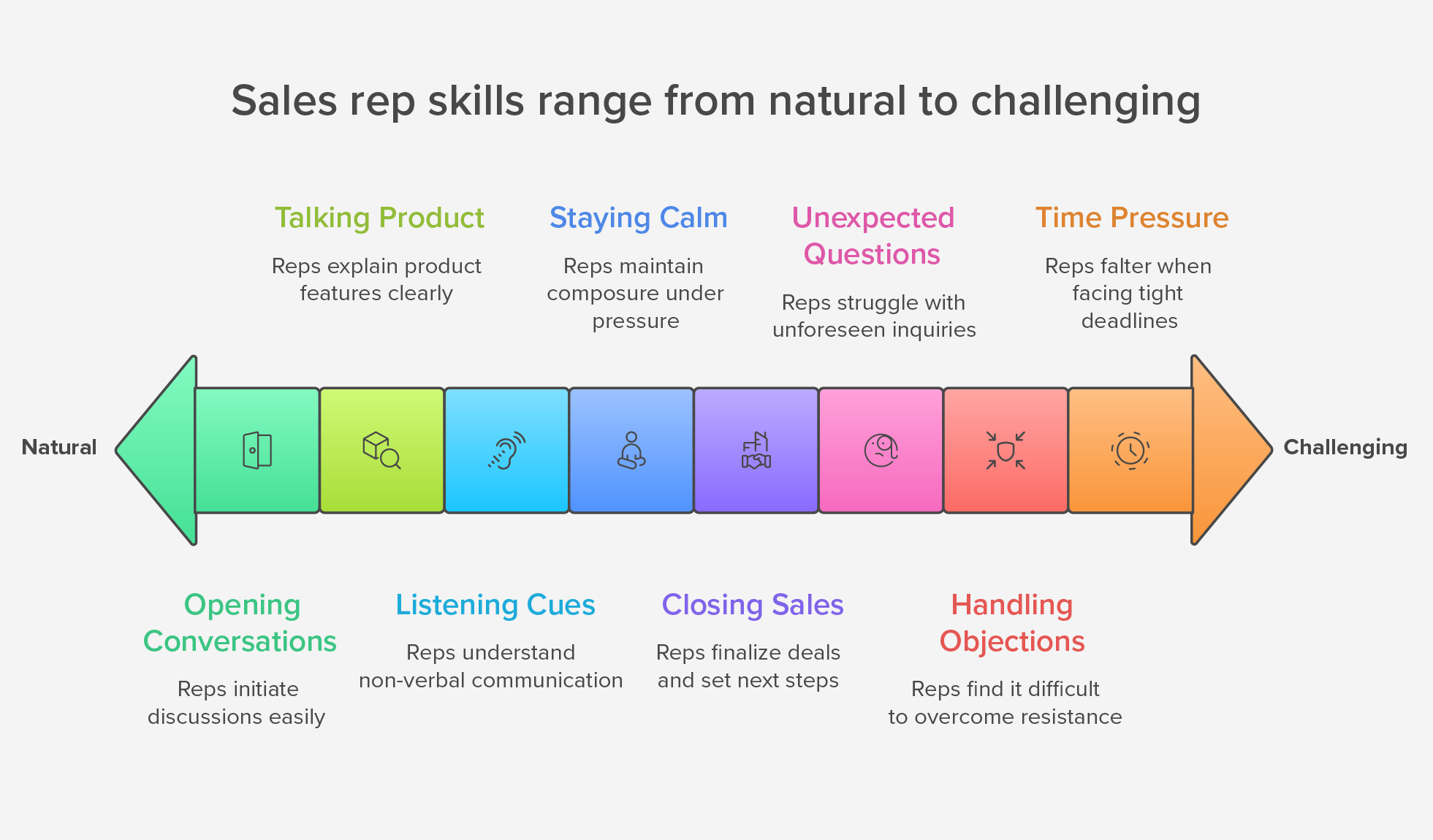
Formulary and access objections are a category that many representatives find particularly challenging because they involve variables outside the representative's direct control:
Payer coverage
Prior authorization requirements
Comparative formulary positioning
Effective responses acknowledge the access context while directing the conversation toward the support resources available.
Comparative objections involve implicit or explicit comparisons to competitive products. These require careful navigation to ensure that any comparative statements stay within approved parameters and do not introduce regulatory risk.
How AI Roleplay Supports Objection Handling Preparation
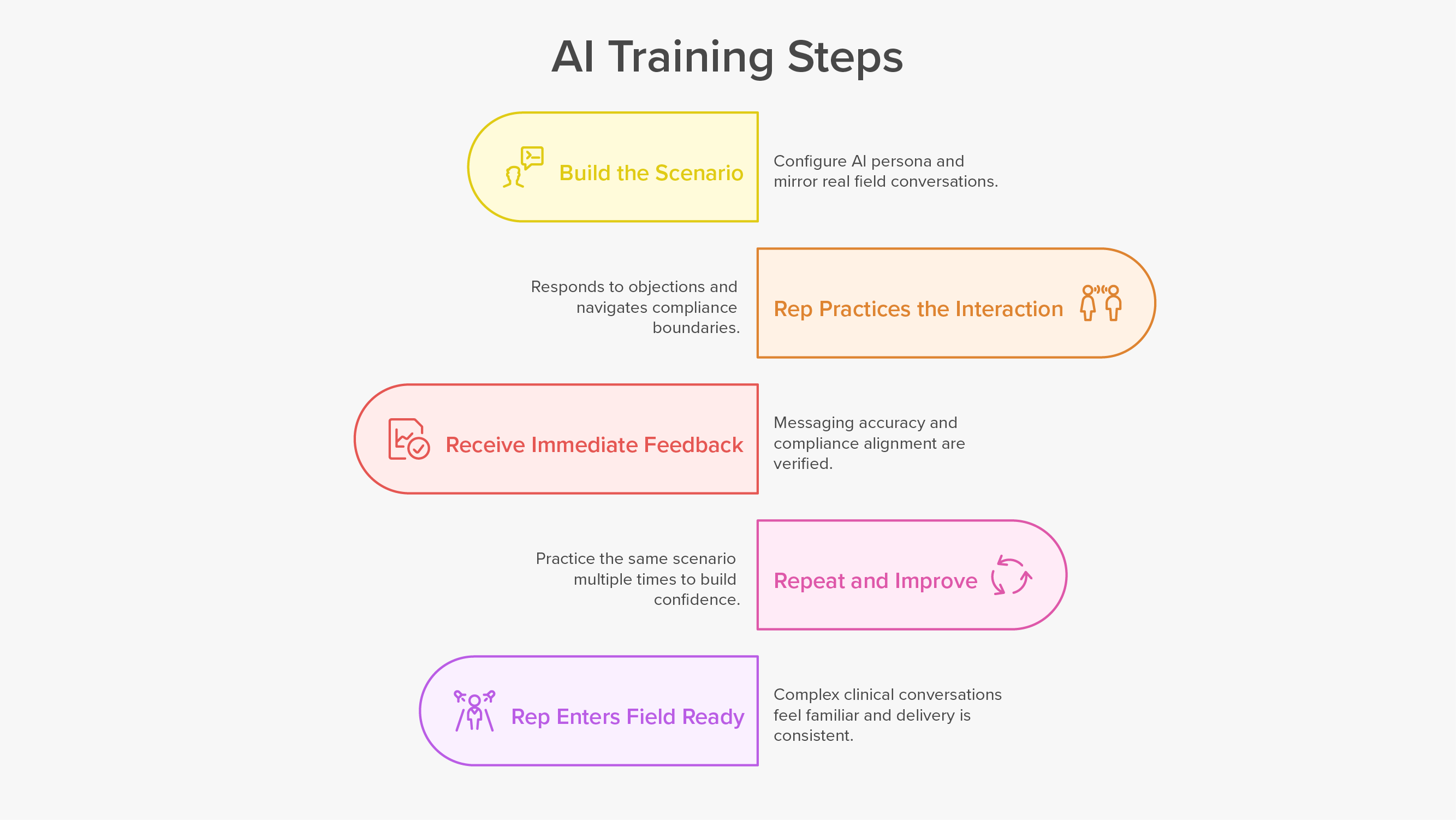
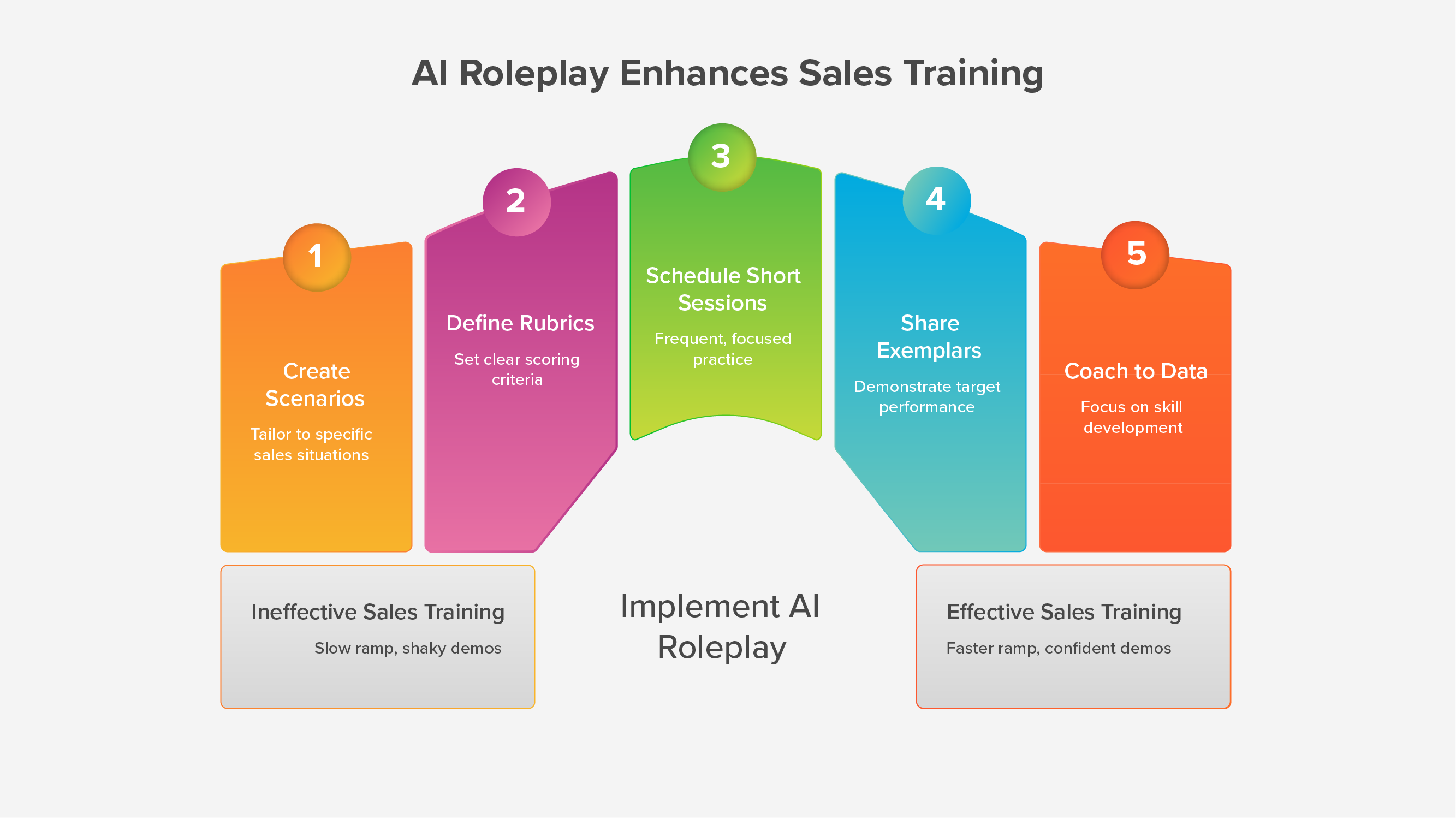
AI roleplay platforms address the practice constraint that limits the depth of objection handling preparation available through manager coaching alone. A representative who has thirty minutes of coaching time per week with their manager can engage with objection scenarios in that session.
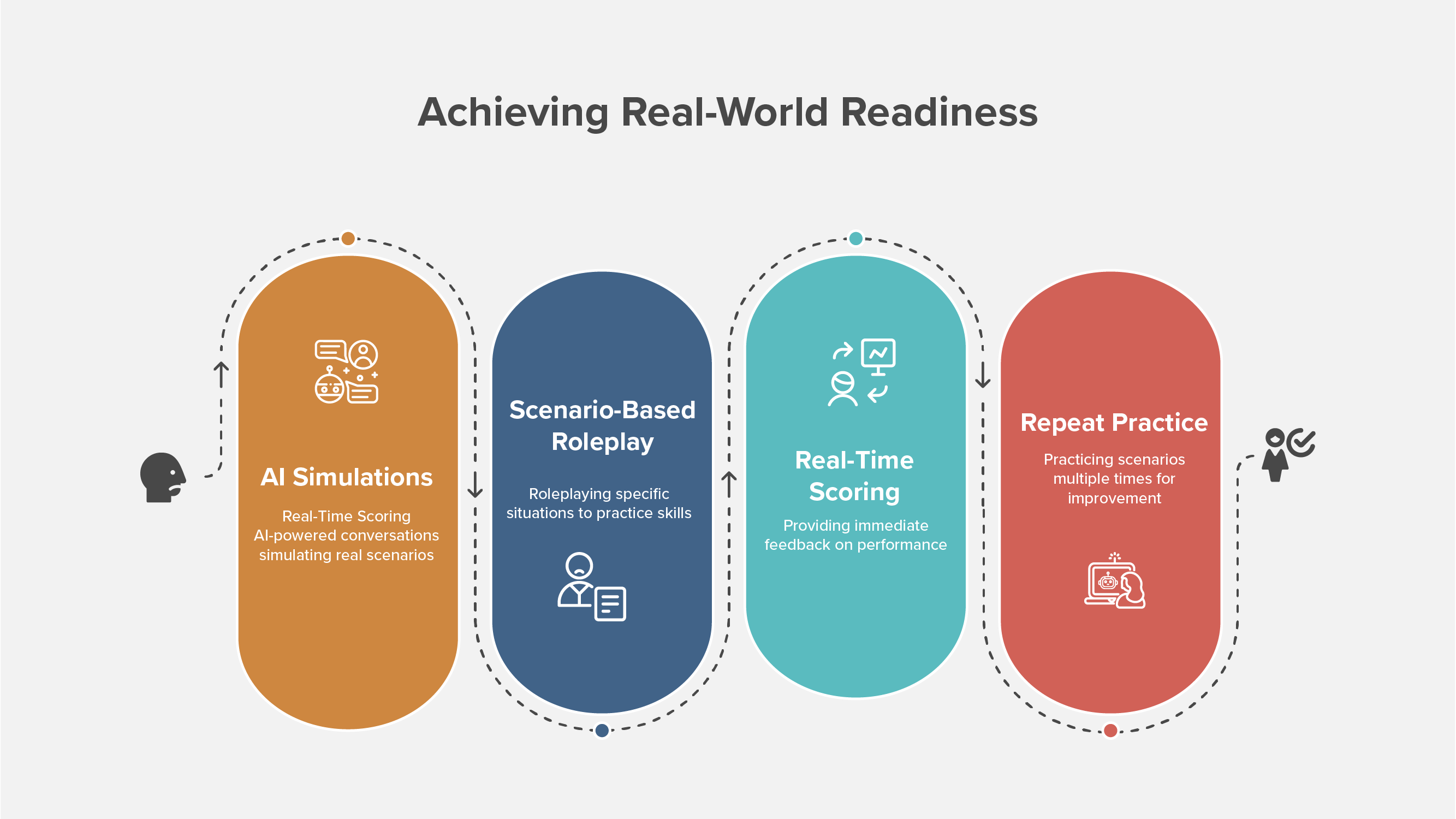
A representative with access to an AI simulation platform can practice the same scenario fifteen times in a single evening, receiving specific feedback after each attempt and adjusting their approach progressively.
This practice density is the core value proposition. Objection handling skill develops through repetition in a way that is quantitative, not just qualitative. The representative who has practiced a complex clinical objection thirty times before their first real encounter with it will perform differently from one who has practiced it twice.
AI simulations make the volume of practice required for genuine fluency achievable within the timelines of commercial training programs.
The feedback quality of the AI system determines how much developmental value each practice repetition actually produces. Feedback that identifies specifically what the representative addressed well and precisely where their response fell short of the standard gives them concrete direction for improvement on their next attempt.
Generic feedback that returns only an aggregate score provides practice volume without coaching quality, which produces slower and less directed development.
Evaluation Criteria for Pharma Objection Handling Platforms
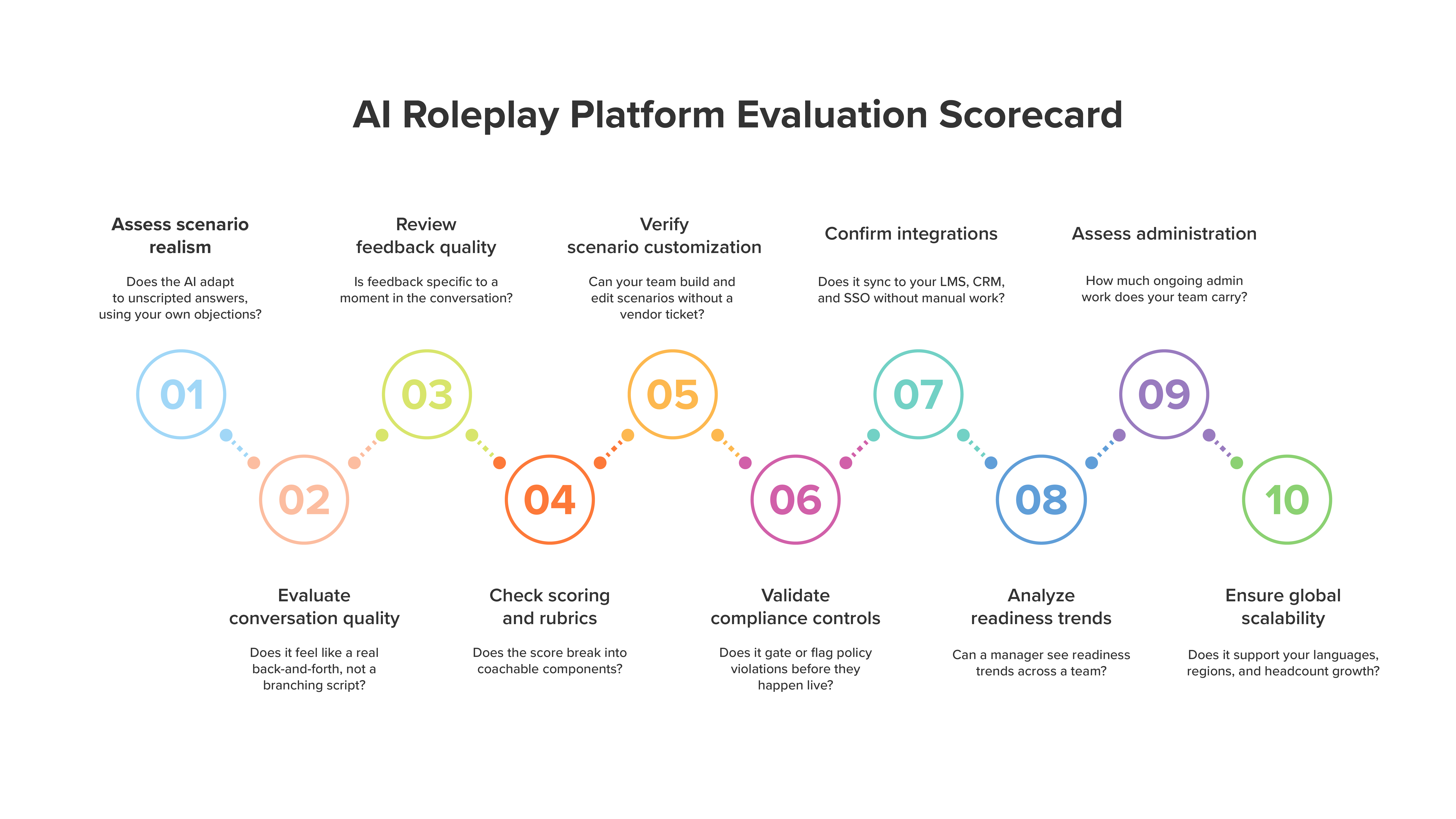
Scenario Specificity: Can scenarios reflect the exact objection types, customer profiles, and product context of your field environment?
Feedback Quality: Does the AI provide specific, element-level commentary that identifies what to do differently on the next attempt?
Compliance Evaluation: Does the feedback logic assess responses against approved messaging criteria as well as communication quality?
Repetition Support: Can representatives practice the same scenario multiple times with improvement tracking across attempts?
Objection Library Access: Does the platform support scenario development across all relevant objection types?
Manager Visibility: Can training managers review objection handling performance data for coaching and gap identification?
Voice Practice: Does the platform support spoken response practice as well as text-based simulation?
Compliance Considerations Specific to Objection Handling
Objection handling practice in pharma carries compliance implications that are more significant than in general sales training. Responses to clinical objections, comparative questions, and access discussions all involve content areas where the boundary between approved communication and regulatory risk is narrow.
An AI feedback system that evaluates only the communication quality of a response, without assessing its compliance with approved messaging criteria, may positively reinforce responses that include off-label language, unsupported comparative claims, or messaging that has not been cleared for the specific objection type.
Organizations evaluating AI roleplay platforms should specifically test how the feedback logic handles responses that venture outside approved messaging boundaries.
Request demonstration scenarios in which a representative's response includes language that would be non-compliant in your environment and observe whether the platform's feedback identifies this as a development area or overlooks it in favor of general communication quality evaluation.
The answer to this test will reveal more about platform suitability for the regulated pharma context than any feature description.
Piloting and Validating Platform Effectiveness
Before committing to full deployment, organizations should pilot AI roleplay platforms for objection handling with a representative sample of their field team. The pilot should be structured to generate both quantitative and qualitative data: quantitative data from pre- and post-pilot knowledge and performance assessments, and qualitative data from representative and manager feedback on scenario realism, feedback quality, and usability.
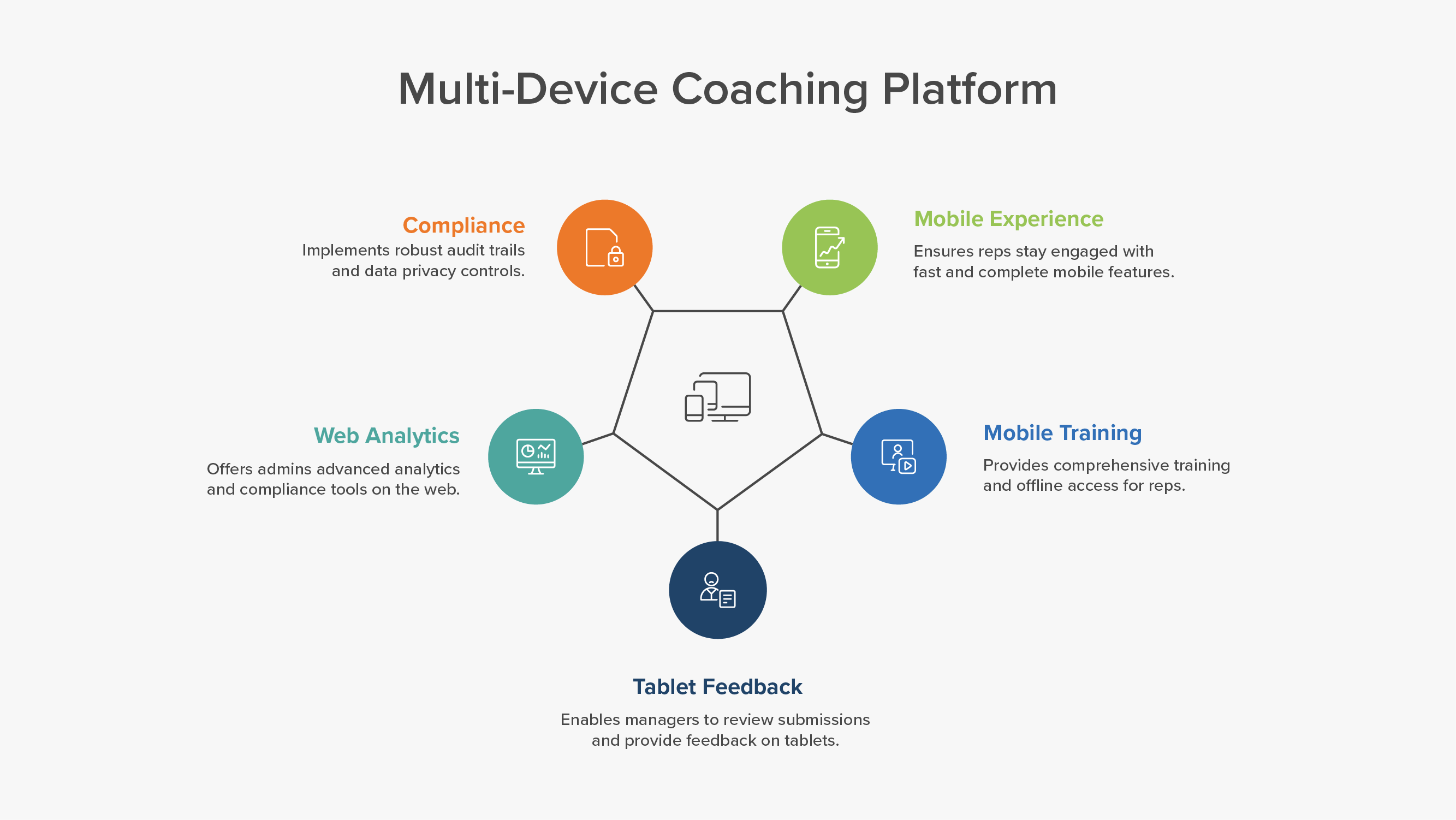
Specifically test the platform across the device types of your representatives use in the field, and in connectivity conditions that reflect their typical working environment.
A platform that performs well on a desktop in a training room may behave differently on a smartphone during a field day.
This real-world testing is essential for making a deployment decision based on actual rather than optimal conditions.
Taken together, this approach provides a clearer benchmark for what effective objection handling platforms should deliver under real field conditions.
And this where SmartWinnr platform comes into picture.
How SmartWinnr Supports Pharma Objection Handling Practice
SmartWinnr’s AI-powered roleplay simulations are built to support objection handling practice with the scenario specificity, compliance awareness, and feedback quality that pharma sales environments require.
Training teams can build scenario libraries that reflect the specific objection types of their sales rep's encounter, with feedback logic configured to evaluate responses against both communication effectiveness and approved messaging criteria.
The platform's manager visibility features give training leaders access to objection handling performance data that supports coaching conversations and early identification of the gaps most likely to affect field performance.
SmartWinnr's voice and text simulation capabilities support the kind of practice that builds the spoken communication fluency that objection handling in face-to-face specialist interactions requires.
Explore SmartWinnr: Request a demo to explore how SmartWinnr supports pharma sales objection handling practice through AI-powered roleplay simulations.
Disclaimer: This content reflects industry practices and does not constitute medical, legal, or regulatory advice.
Last Updated: