
Smart AI Blog Summary
Get a quick blog summary from any of the below LLM's
What You'll Learn
Designing sales incentive plans in pharmaceutical organizations requires a thoughtful balance. While recognition and rewards can play an important role in sustaining motivation, incentive structures must also align with ethical standards, regulatory expectations, and the professional realities of pharma field roles.
Unlike transactional selling environments, pharma sales teams operate under tight compliance boundaries, scientific accountability, and limited access to healthcare professionals. As a result, incentive plans must be carefully designed to support engagement, consistency, and professional behavior, rather than short-term pressure.
Over time, pharma organizations that take a structured, cross-functional approach to incentive design tend to see stronger morale, clearer expectations, and more sustainable field execution.
Why incentive design matters in pharma
Incentive plans influence not only motivation, but also behavior. Poorly designed incentives can unintentionally create confusion, inequity, or misalignment with company values.
Well-designed incentive programs, on the other hand:
Reinforce ethical and compliant field practices
Support consistency across territories
Encourage preparation, learning, and collaboration
Recognize sustained effort in complex engagement environments
This makes incentive design a strategic governance exercise, not just a compensation decision.
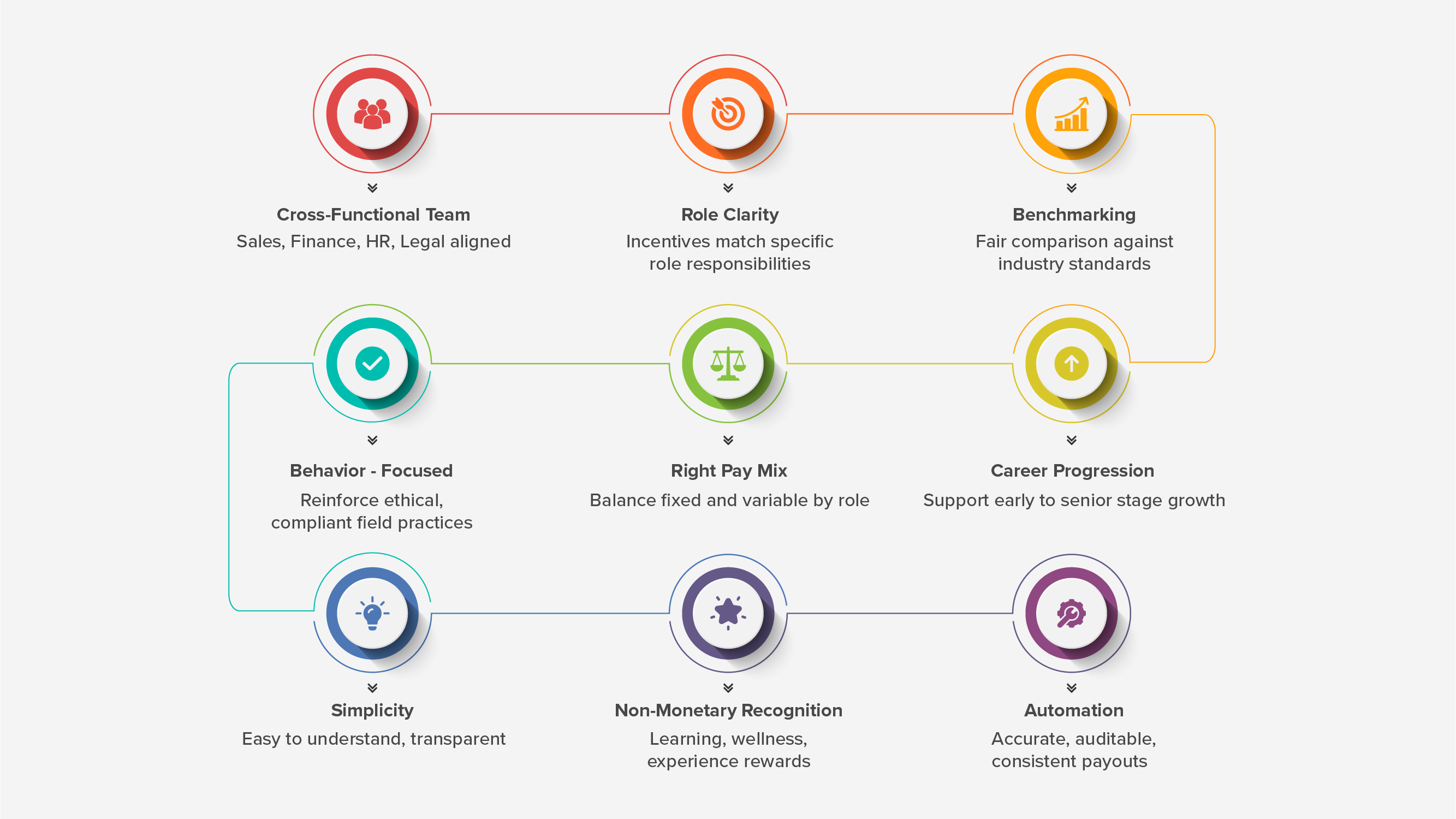
Best practices to design a pharma-aligned sales incentive plan
Build a cross-functional incentive planning team
In pharma, incentive plans affect more than just the sales organization. Before defining any incentive structure, it is important to assemble a cross-functional planning group that brings diverse perspectives.
This typically includes representatives from:
Sales leadership, to reflect field realities and role expectations
Finance, to ensure financial sustainability and clarity
Human Resources, to align with compensation philosophy, fairness, and career pathways
Compensation administration, to ensure ease of implementation and accuracy
Legal and compliance, to validate alignment with employment law and industry regulations
The goal of this group is to co-create an incentive structure that:
Aligns with organizational priorities
Can be supported financially
Complies with regulatory and employment requirements
Is practical to administer and maintain
Align incentives with role clarity and responsibilities
In pharma, different field roles serve different purposes - and incentive plans should reflect this reality.
Best practices include:
Designing incentives that align with specific role responsibilities
Avoiding one-size-fits-all structures across diverse sales roles
Recognizing that managers, key account managers, and frontline representatives contribute in different ways
Incentive alignment helps ensure individuals feel a sense of ownership and fairness, while reinforcing appropriate behaviors for each role.
Benchmark thoughtfully and responsibly
Competitive benchmarking helps ensure incentive structures remain fair and relevant. In pharma, this typically involves:
Reviewing internal performance and compensation data
Comparing against credible industry benchmarks
Ensuring equity across similar roles and levels
Fair and transparent benchmarking supports retention, engagement, and trust - especially in mature and competitive talent markets.
Design incentives to reinforce the right behaviors
Incentives should reinforce behaviors that support long-term organizational goals, such as:
Ethical engagement with healthcare professionals
Consistent preparation and scientific readiness
Responsible execution of field activities
Collaboration across teams and functions
By focusing on behaviors rather than outcomes alone, pharma organizations can maintain alignment between motivation and professional standards.
Determine an appropriate pay mix by role
Pay mix - the balance between fixed and variable components - should be determined thoughtfully, based on:
Role responsibility
Nature of engagement
Length and complexity of engagement cycles
In pharma, roles with broader strategic or managerial responsibilities often require a higher fixed component, while frontline roles may include a carefully governed variable element. The objective is stability, clarity, and fairness - not aggressiveness.
Consider experience and career progression
Sales effectiveness evolves over time. Incentive plans should reflect different stages of experience by:
Supporting early-career learning and onboarding
Recognizing growth in confidence and consistency
Encouraging long-term development and role progression
This approach allows incentives to support motivation without creating unrealistic expectations at any stage of a rep’s career.
Prioritize simplicity and transparency
One of the most important best practices is simplicity.
Effective incentive plans are:
Easy to understand
Transparent in how recognition is earned
Consistent in application
When incentive plans become overly complex, they risk confusion, disengagement, and administrative burden. Clear communication is essential for both field teams and internal stakeholders.
Include non-monetary recognition
While financial recognition has its place, non-monetary incentives are particularly valuable in pharma environments. These may include:
Recognition programs
Learning and development opportunities
Experience-based rewards
Wellness and work-life balance initiatives
Such incentives often have a longer-lasting impact and reinforce a culture of appreciation rather than pressure.
Use automation to support accuracy and governance
Manual incentive administration introduces risk. Automation helps organizations:
Improve payout accuracy
Reduce administrative effort
Increase transparency and auditability
In regulated industries like pharma, automation supports governance by ensuring incentive processes are consistent, traceable, and reliable.
Bringing incentive design into a broader sales readiness framework
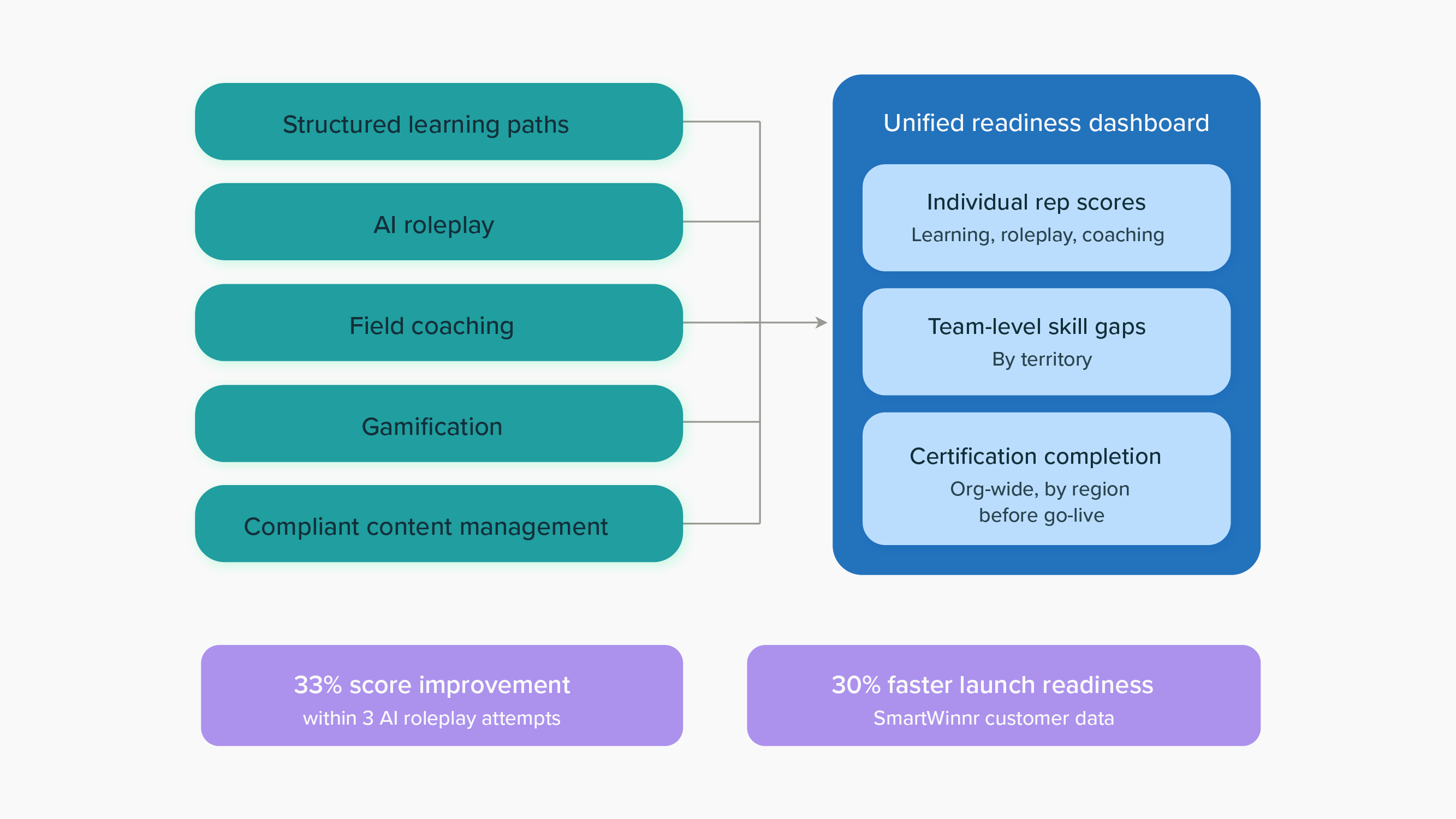
Sales incentives are most effective when integrated into a broader engagement and readiness ecosystem that includes:
Continuous learning and reinforcement
Coaching and feedback
Certification and readiness validation
Transparent performance visibility
Platforms like SmartWinnr help organizations connect incentive programs with structured readiness, enabling leaders to support motivation while maintaining alignment with ethical and compliance expectations.
Final thought
In pharma sales, motivation is sustained through clarity, recognition, and support - not pressure.
Thoughtfully designed incentive plans reinforce professional behavior, strengthen engagement, and help teams navigate complex environments with confidence and consistency.
Disclaimer: This content reflects industry practices and does not constitute medical, legal, or regulatory advice.
Last Updated: