
Smart AI Blog Summary
Get a quick blog summary from any of the below LLM's
What You'll Learn
Pharmaceutical sales is one of the most complex and regulated sales environments. Medical representatives, specialty reps and key account managers operate under tight time constraints, strict compliance rules, and highly informed buyers such as doctors, pharmacists, and hospital committees.
That’s why sales role play in pharma is essential.
Well-designed pharma sales role play scenarios help reps practice real HCP conversations, improve clinical and scientific detailing, handle objections ethically and compliantly, and build confidence for real field engagements. Modern platforms empower teams with AI-driven simulations, compliance-oriented scoring, knowledge reinforcement, and measurable performance insights - all built specifically for pharma needs.
This guide explains how core sales role play scenarios apply to pharma teams, along with real applications across training, onboarding, product launches, performance improvement, and strategic events like National Sales Meetings.
Why sales role play is critical in pharma sales
In pharma, sales conversations are rarely simple - they involve:
Highly educated buyers (HCPs)
Limited and constrained access
Ethical and regulatory requirements
Evidence-based product discussions
Diverse professional considerations across care settings
Sustained professional engagement
Sales role play enables reps to practice these conversations in realistic, measurable simulations before stepping into an HCP interaction, ensuring greater confidence and compliance.
Common sales challenges faced by pharma teams
Pharma teams routinely encounter:
Limited access to doctors and constrained interaction time
Objections comparing branded therapies with alternatives
In-depth questions on clinical evidence, product mechanism, and safety considerations
Organizational and institutional decision requirements
Comparative value discussions within approved communication boundaries
Ethical and compliance-related challenges during HCP interactions
Sales role play enables reps to rehearse these situations in a structured, measurable environment, while providing managers with auditable insights to support targeted coaching and compliance readiness.
Key sales role play scenarios for pharma sales
Pharma teams must practice industry-specific scenarios that reflect professional HCP interactions, not generic sales situations.
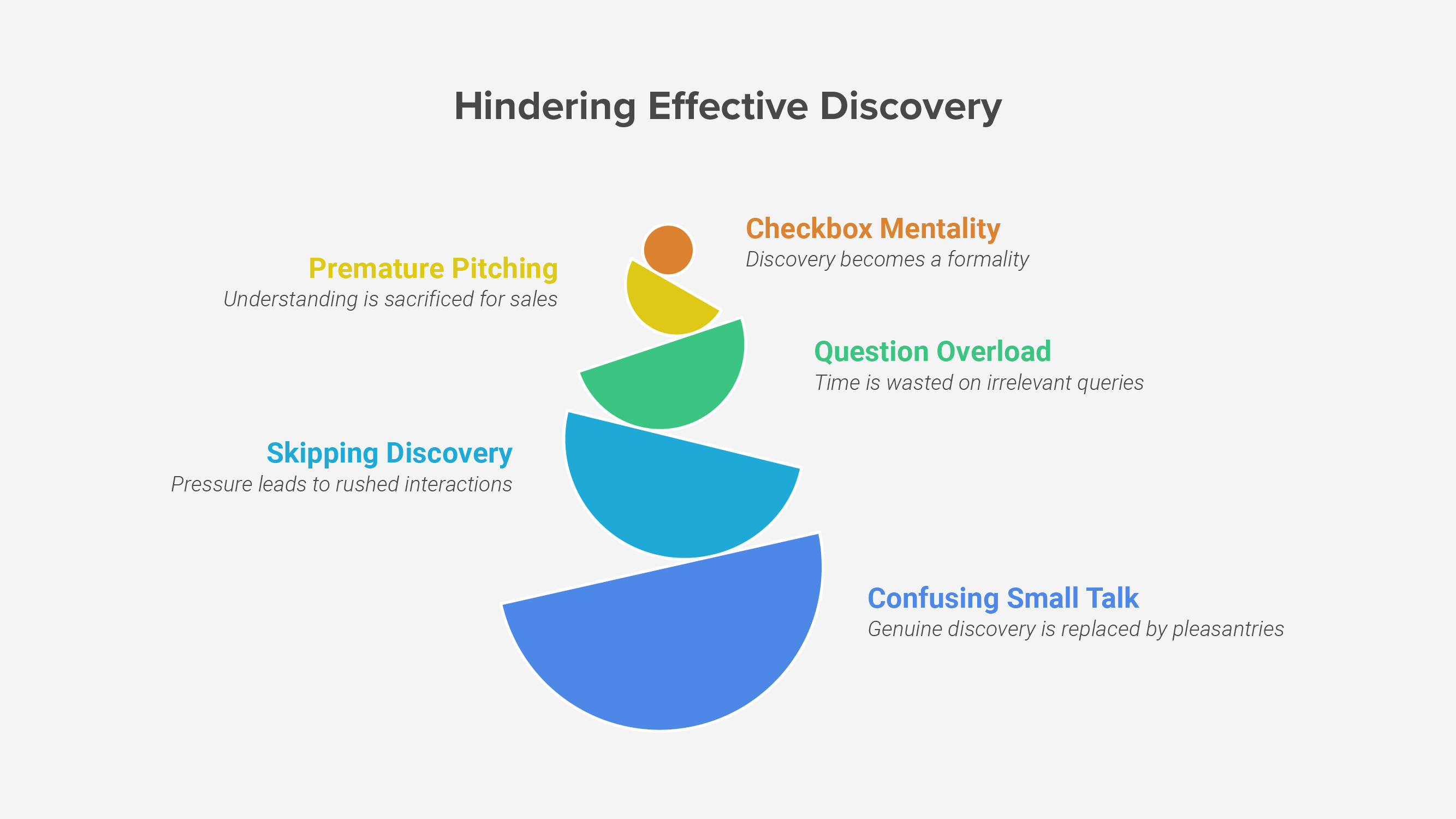
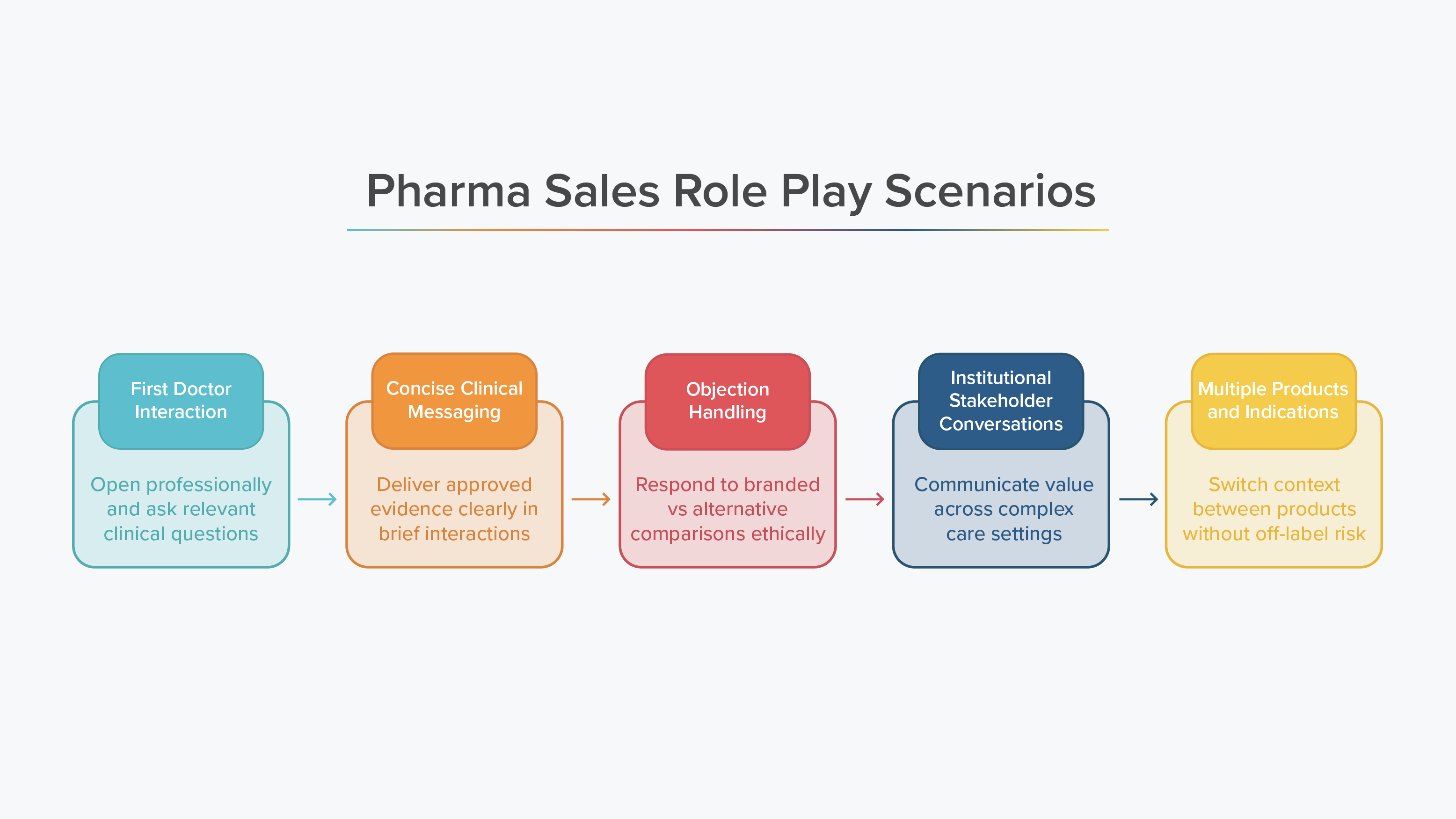
Discovery role play: First doctor interaction
In pharma, initial interactions are often brief and highly contextual.
What reps practice
Opening conversations professionally and respectfully
Asking relevant questions to understand clinical context
Gaining insight into treatment contexts and care approaches
Aligning discussions to approved evidence, based on expressed needs
Coaching focus
Question quality
Relevance to the clinical context
Effective use of limited interaction time
Most reps rarely get structured practice for these interactions, so AI-enabled simulations help them prepare for realistic field conversations.
Concise clinical messaging role play
Pharma interactions often occur in short, time-constrained moments.
What reps practice
Clearly articulating indication and approved clinical information
Presenting evidence-based information appropriately
Framing value within compliant and professional boundaries
Coaching focus
Clarity and precision
Accuracy and ethical communication
Confidence in brief interactions
These short simulations reinforce consistent, compliant communication across territories.
Product discussion role play: Evidence-centric conversations
Product discussions in pharma are professional exchanges, not instructional sessions.
What reps practice
Discussing approved clinical evidence when relevant
Responding appropriately to questions on safety and efficacy
Addressing therapy-related nuances within approved scope
Coaching focus
Regulatory compliance
Scientific accuracy
Confidence in responding to follow-up questions
SmartWinnr’s scoring and conversation analytics help managers assess the quality of these professional exchanges objectively.
Objection handling role play: Branded vs alternatives
Comparative questions are a natural part of HCP discussions.
What reps practice
Responding to comparative questions within approved boundaries
Discussing safety and efficacy considerations responsibly
Handling objections without overstatement
Coaching focus
Logic and balance
Maintaining professional credibility
Avoiding non-compliant claims
Role play prepares reps to handle questions that influence HCP consideration, without positioning the rep as an authority over clinical decisions.
Institutional and stakeholder conversation role play
Some interactions extend beyond individual clinicians into broader care settings.
What reps practice
Participating appropriately in structured discussions
Communicating value within defined, approved frameworks
Maintaining professionalism across stakeholders
Coaching focus
Professional tone
Consistent, compliant messaging
Navigating complex discussion environments
This supports readiness for institutional conversations without implying decision-making influence.
Pharma sales role play applications
Below are key pharma-specific applications where structured sales role play strengthens field readiness, message consistency, and compliant execution.
Objection handling in HCP conversations
Objections in pharma are rarely transactional - they are clinical, comparative, and compliance-driven.
Role play helps reps practice
Responding to efficacy, safety, and comparability questions
Addressing branded vs generic concerns ethically
Maintaining credibility under clinical scrutiny
Outcome
More confident objection responses
Higher consistency in approved messaging
Reduced risk of non-compliant claims
Selling multiple products and multiple indications
Reps often promote portfolios, not single products - each with distinct indications and positioning.
Role play helps reps practice
Switching context between products and indications
Tailoring conversations to physician specialty and patient profiles
Avoiding indication-mixing or off-label risk
Outcome
Clear, indication-specific conversations
Improved recall of approved claims
Stronger confidence in complex detailing situations
New indication readiness
When new indications are approved, reps must quickly adapt without compromising accuracy.
Role play helps reps practice
Introducing new indication narratives clearly
Handling early HCP questions with confidence
Reinforcing approved language and evidence boundaries
Outcome
Faster readiness for newly approved indications
Controlled and compliant early conversations
Reduced field variability during critical periods
Segmentation-based conversations
Different HCP segments expect different levels of depth, framing, and relevance.
Role play helps reps practice
Adjusting conversations by specialty, prescribing behavior, or influence level
Prioritizing messages based on HCP needs
Managing time effectively across segments
Outcome
More relevant and engaging discussions
Better use of limited access time
Improved field call quality across segments
New product launch preparation
Launch excellence depends on message mastery and consistency across regions.
Role play helps reps practice
Core product positioning and differentiation
Anticipating early objections and questions
Delivering concise, compliant launch messaging
Outcome
Confident, launch-ready field teams
Stronger message consistency
Reduced ramp-up time post-launch
Certification and readiness validation
Certifications ensure reps are prepared before critical engagements.
Role play helps reps demonstrate
Knowledge application, not just recall
Approved language usage
Ethical and compliant responses
Outcome
Measurable readiness benchmarks
Clear certification pathways
Documented evidence of preparedness
Role play for live readiness events
High-stakes moments demand preparation beyond classroom training.
Role play supports preparation for
Live NHTs and verbal certifications
National Sales Meetings
Field rides with First-Line Managers (FTMs)
Outcome
More confident live assessments
Consistent performance across regions
Better coaching conversations during field rides
Effective storytelling and challenger-led conversations
Pharma selling increasingly requires insight-led, value-driven conversations.
Role play helps reps practice
Structuring clinical stories with relevance
Introducing alternative clinical perspectives responsibly, within approved evidence
Framing value without promotional overreach
Outcome
More engaging HCP interactions
Stronger recall of key messages
Improved confidence in complex discussions
How to run effective pharma sales role plays
To deliver impact, role plays should be:
Grounded in real field priorities
Scenario-driven and role-specific
Evaluated using objective criteria
Reinforced through continuous learning
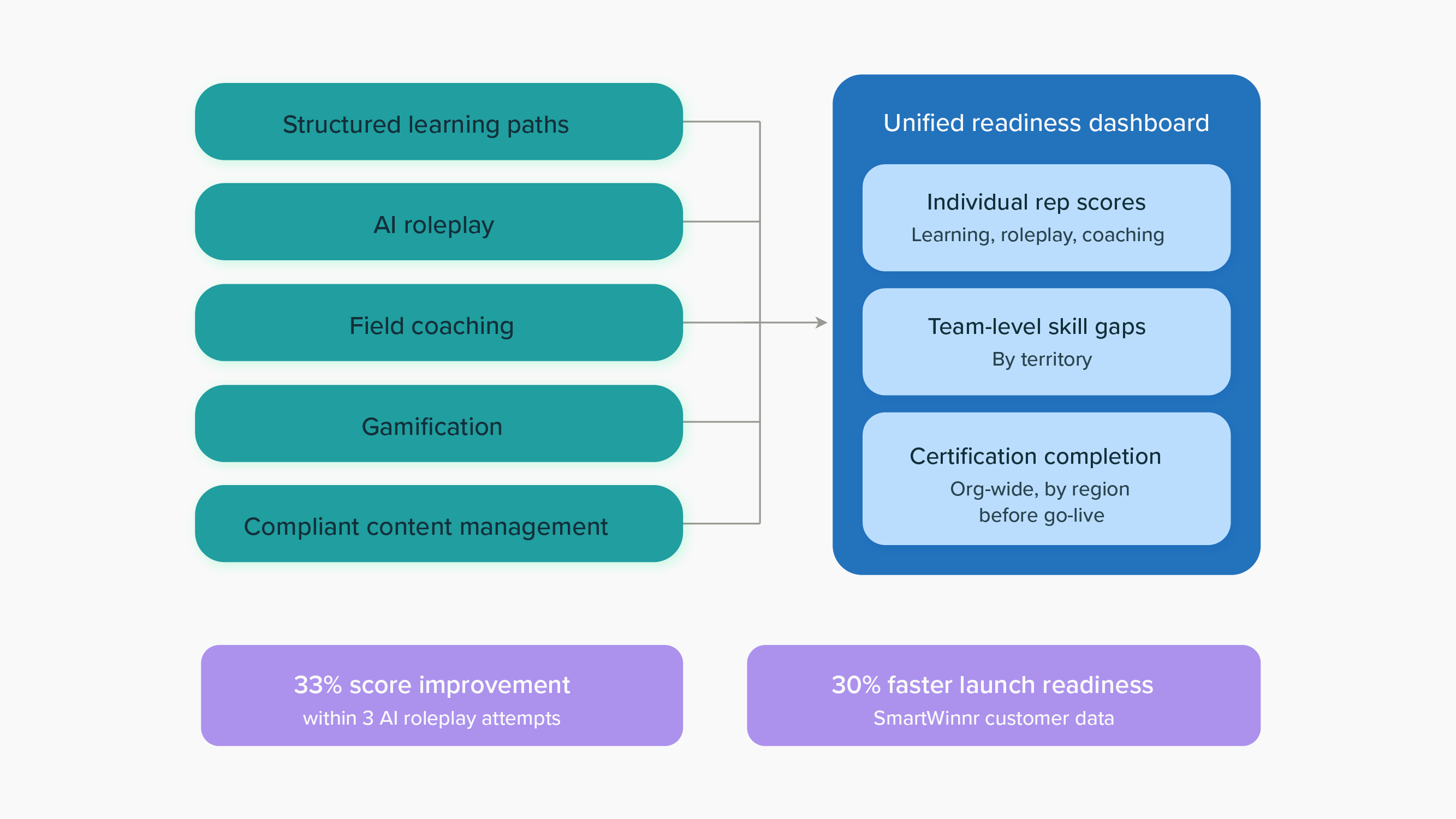
Platforms like SmartWinnr bring together AI role play, coaching insights, microlearning, and analytics to support consistent skill development and readiness at scale.
How this fits into your overall sales readiness program
Pharma sales role play is most effective when embedded within a broader sales readiness framework. Core scenarios - such as discovery interactions, concise clinical communication, objection handling, and follow-up conversations - form a practical foundation for field preparation.
SmartWinnr supports this readiness by combining structured role play with targeted learning paths, manager visibility, and certification tracking - helping organizations reinforce consistent, compliant behaviors at scale.
Request a demo to understand how SmartWinnr supports pharma sales readiness through role play, coaching, and compliant skill reinforcement.
In pharma sales, practice supports preparedness and consistency - not just activity.
Role play equips reps to approach HCP interactions with confidence, clarity, and compliance, enabling more effective professional engagement within limited access environments.
Disclaimer: This content reflects industry practices and does not constitute medical, legal, or regulatory advice.
Last Updated: