
Smart AI Blog Summary
Get a quick blog summary from any of the below LLM's
What You'll Learn
Onboarding in pharmaceutical sales is more than orientation - it is a critical readiness phase. New hires must quickly gain confidence in scientific context, compliance expectations, and professional field conduct, all while adapting to time-constrained HCP interactions.
A structured onboarding program helps new pharma sales professionals feel supported, prepared, and aligned - before they ever step into a live field interaction.
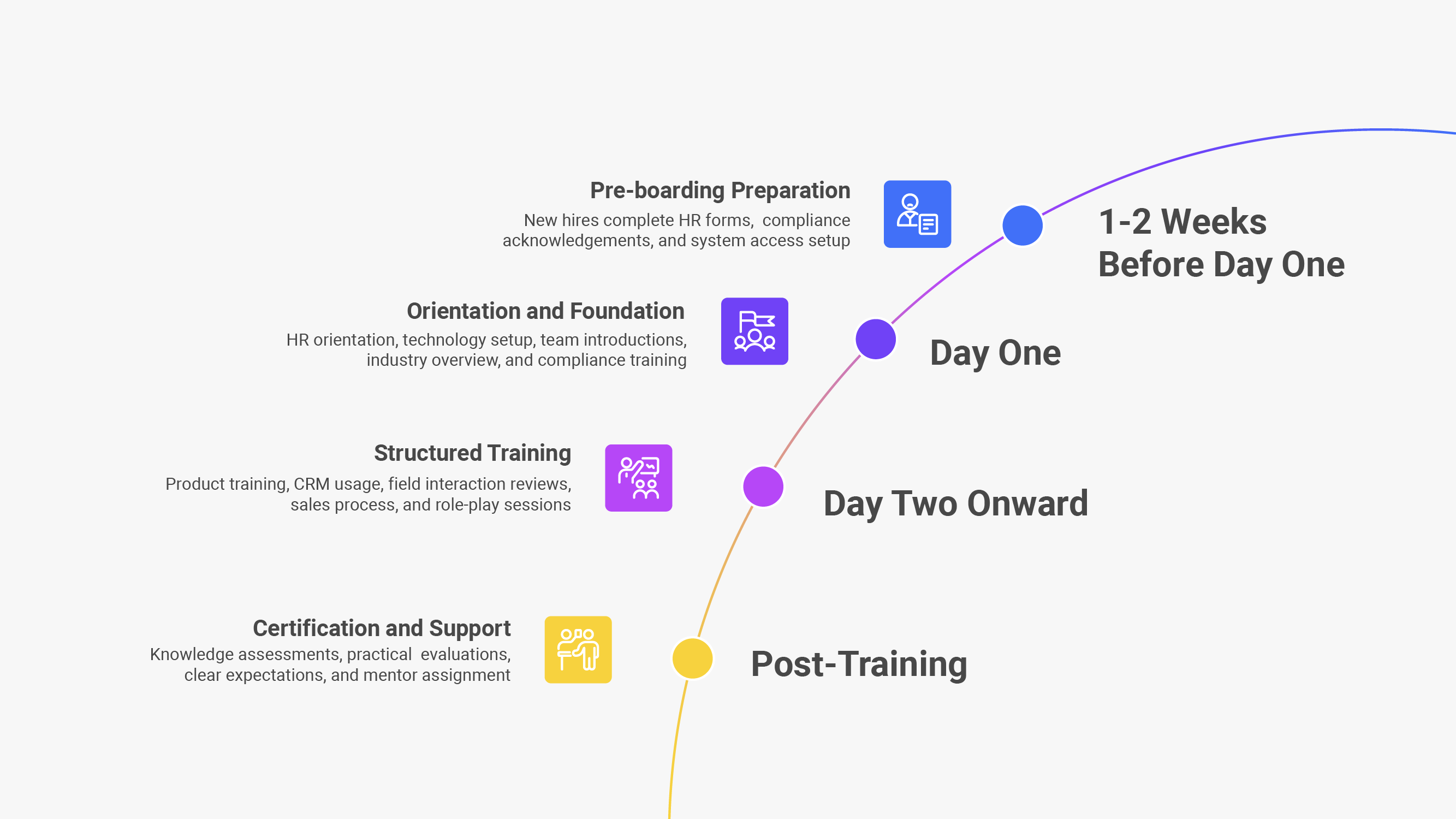
Before day one: Pre-onboarding preparation
Effective onboarding begins before a new hire’s first day. Pre-boarding reduces anxiety, builds early connection, and allows valuable onboarding time to be spent on learning - not administration.
Pre-boarding activities
One to two weeks before joining, new hires should complete essential pre-boarding activities, including:
Employment and HR documentation
Compliance acknowledgements
Access setup for internal systems
In addition, sharing introductory content - such as:
Company overview materials
Publicly available corporate information
Stories highlighting team impact and values
High-level compliance and ethics principles
helps new hires build familiarity with the organization and its culture before day one.
Email and administrative readiness
First impressions matter. Ensuring operational readiness demonstrates organizational care and professionalism.
Before day one:
Email access should be activated
New hire agendas should be shared
Key contacts and onboarding schedules should be communicated
This ensures new hires feel guided and supported - even if managers are managing busy schedules.
Day one: Orientation and foundation
The first day should focus on context-setting, not information overload. The goal is to provide clarity, structure, and reassurance.
Orientation and welcome
Day one typically includes:
HR orientation and documentation
Workplace or virtual environment overview
Technology setup
Introductions to team members and support functions
This establishes a sense of belonging and direction.
Industry and therapeutic context overview
For new hires - especially those new to pharma - it is important to provide:
A high-level overview of the pharmaceutical industry
Key trends and regulatory considerations
The role of pharma sales within healthcare ecosystems
This context supports professional credibility and confidence.
Company mission, values, and culture
Understanding organizational purpose is foundational. New hires should be introduced to:
Company mission and long-term vision
Core values and ethical principles
Expectations around professionalism and conduct
This alignment helps guide decision-making and field behavior.
Role expectations and readiness milestones
Rather than focusing solely on targets, onboarding should clearly communicate:
Role responsibilities
Readiness milestones
Learning and development expectations
Structured 30-, 60-, and 90-day readiness plans help new hires progress confidently without feeling overwhelmed.
Code of conduct and compliance foundations
Compliance is non-negotiable in pharma. Early onboarding must include:
Code of conduct training
Overview of applicable regulations and guidelines
Expectations for ethical HCP engagement
This sets the tone for all future interactions.
High-level product and portfolio overview
New hires should receive a broad introduction to:
Product portfolio and therapeutic areas
Approved positioning at a high level
Detailed scientific training follows later - this step builds familiarity and curiosity.
Employee benefits and support systems
Transparency builds trust. Onboarding should include clarity on:
Compensation structure (at a high level)
Incentive philosophy (where applicable)
Leave policies and wellbeing benefits
Growth and development opportunities
After day one: Structured training and readiness development
From day two onward, onboarding shifts toward capability building and confidence development.
. Product and scientific training
Training should enable new hires to:
Understand approved scientific information
Communicate clearly within defined boundaries
Answer common questions accurately
Assessments help gauge readiness and identify coaching needs.
CRM and system training
New hires should be trained on:
CRM usage and data hygiene
Logging interactions appropriately
Using digital tools responsibly
Certification (where applicable) helps ensure consistency and accuracy.
Field interaction reviews
Listening to real or simulated interactions helps new hires:
Observe different communication styles
Understand best practices
Learn from varied experience levels
This reinforces learning through observation.
Sales process and engagement flow
Rather than conversion metrics, onboarding should explain:
Engagement stages
Expected field activities
Internal collaboration and follow-up norms
This provides clarity without pressure.
HCP interaction preparation
New hires should be trained on:
Preparing for HCP interactions
Researching within approved boundaries
Understanding engagement etiquette
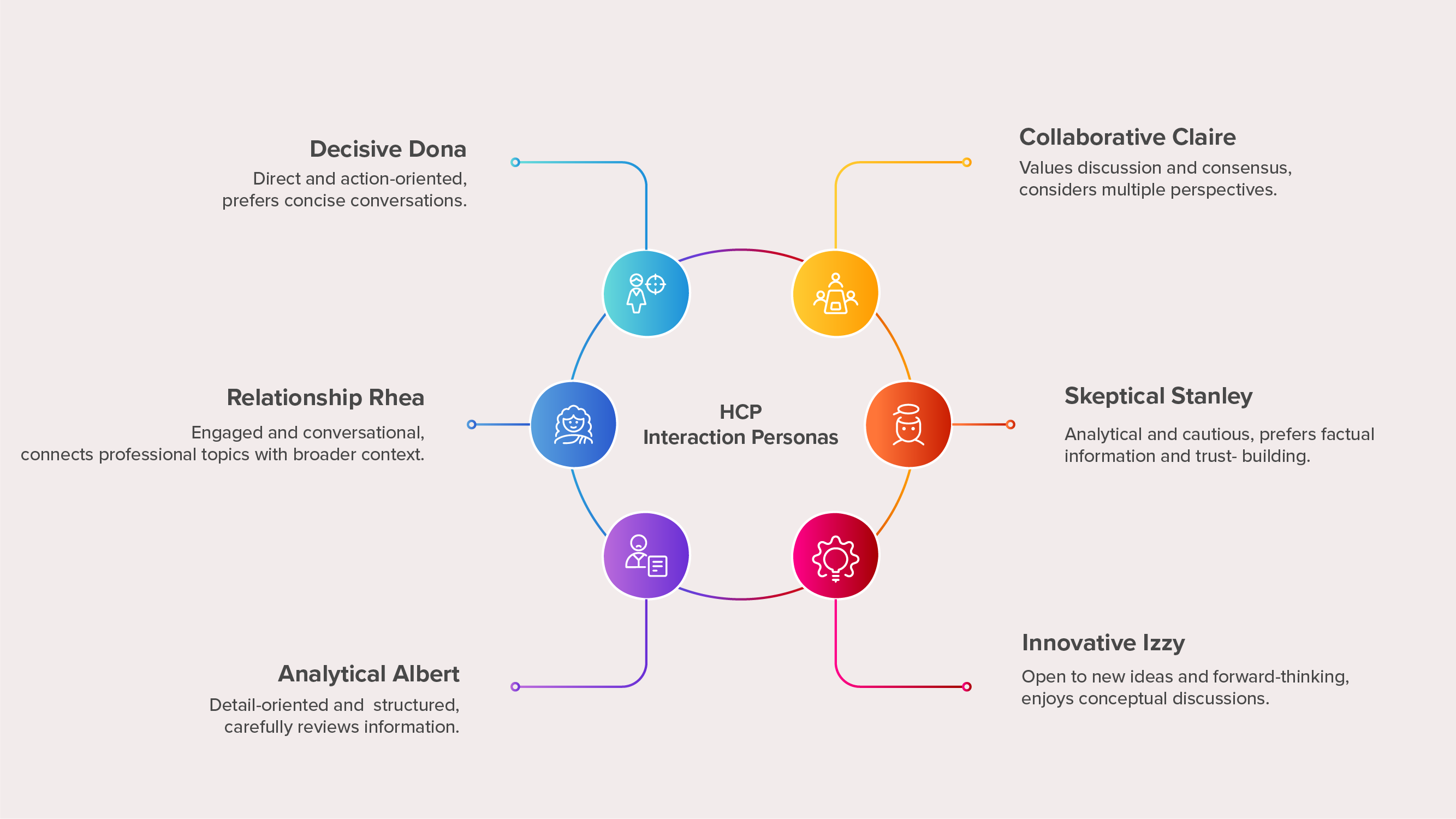
Buyer persona and interaction style training
Introducing HCP interaction personas helps new hires:
Adapt communication style
Anticipate preferences
Maintain relevance and professionalism
This training supports confidence in diverse interactions.
Competitive landscape awareness
Provide balanced insight into:
Market landscape
Differentiation within approved scope
Appropriate responses to comparative questions
Honest, compliant framing builds credibility.
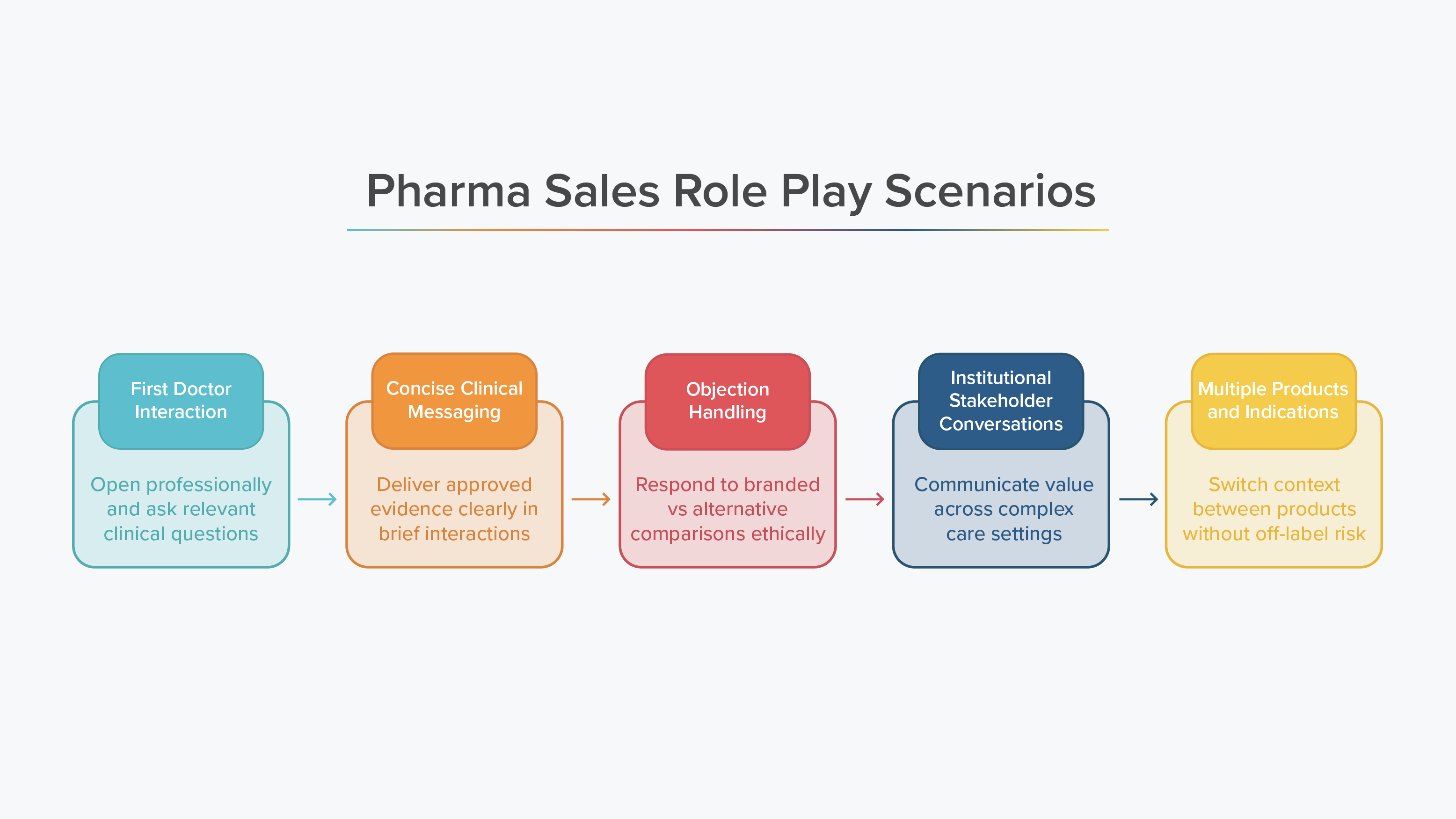
Role play and practice sessions
Structured role play allows new hires to practice:
Discovery-style conversations
Product discussions
Objection handling
Feedback should emphasize strengths first, followed by constructive guidance.
Technology and tools training
New hires should demonstrate proficiency with:
Communication tools
Presentation platforms
Basic troubleshooting
This ensures readiness for live interactions.
Objection handling and professional negotiation
Training should focus on:
Responding to questions responsibly
Understanding internal boundaries
Maintaining professionalism
Customer onboarding awareness (if applicable)
Where applicable, new hires should understand:
Handoffs and internal collaboration
Expectations post-engagement
Role-, territory-, or segment-specific training
Supplementary training ensures relevance based on:
Role type
Geography
Therapeutic focus
Leadership and management training (if applicable)
New leaders may require additional preparation in:
Coaching
Team management
Ethical leadership
Post-training: Certification and ongoing support
Training certification and readiness validation
Before entering the field, new hires should complete:
Knowledge assessments
Practical role play evaluations
This confirms readiness and identifies areas for further development.
Clear expectations and ongoing goals
Post-certification, establish:
Clear expectations
Support mechanisms
Ongoing development milestones
Assign a mentor
Mentorship supports:
Confidence building
Knowledge sharing
Emotional support during ramp-up
This creates a strong foundation for long-term success.
Final thought
Effective onboarding in pharma sales builds confidence before competence.
By focusing on preparation, compliance, and structured learning, organizations enable new hires to step into the field feeling supported, capable, and aligned - setting the stage for consistent, professional engagement over time.
Ready to accelerate pharma sales onboarding? Book a demo
Disclaimer: This content reflects industry practices and does not constitute medical, legal, or regulatory advice.
Last Updated: