
Smart AI Blog Summary
Get a quick blog summary from any of the below LLM's
What You'll Learn
Sales enablement is the function that connects what your reps know to what they do in front of a buyer. For heads of sales training, L&D, and commercial excellence, it is the operating layer that turns product messaging, certification programs, and manager coaching into field performance you can measure.
The function has grown well past shared content libraries. In large commercial organizations, sales enablement now owns onboarding design, launch readiness, certification cadence, coaching structure, and the reporting that tells leadership whether any of it moved a number.
What follows is a working definition, the four areas an enablement team owns, how the function differs from sales training, what changes in regulated industries, and the metrics that hold up in a leadership review.
What is sales enablement?
Sales enablement is the ongoing process of equipping sales teams with the content, training, coaching, and data they need to engage buyers effectively, then measuring whether that support changes field behavior and business results.
Two words in that definition do the heavy lifting. Ongoing separates enablement from a one-week onboarding class. Measuring separates it from content distribution.
A mature enablement function is judged on outputs, not activity. Not how many modules were published, but whether reps can hold the conversation the business needs them to hold, consistently, across every territory.
Why does sales enablement matter for revenue teams?
Buyers are running more of the purchase on their own. A Gartner survey of 646 B2B buyers conducted between August and September 2025 found that 67% prefer a rep-free experience, and 45% reported using AI during a recent purchase.
That changes the math on readiness. When a buying group holds fewer live conversations with your reps, each remaining conversation carries more weight, and there is less room to recover from a weak one.
The same Gartner research points at what those conversations need to deliver. Buyers with high decision confidence are twice as likely to report a high-quality deal. Confidence comes from a rep who can explain value in the buyer's specific context, on the first attempt.
For a Director of Sales Enablement, that is the case for the function in one line. Fewer conversations, higher stakes per conversation, and a field team that has to be ready before the meeting rather than after it.
What does a sales enablement function own?
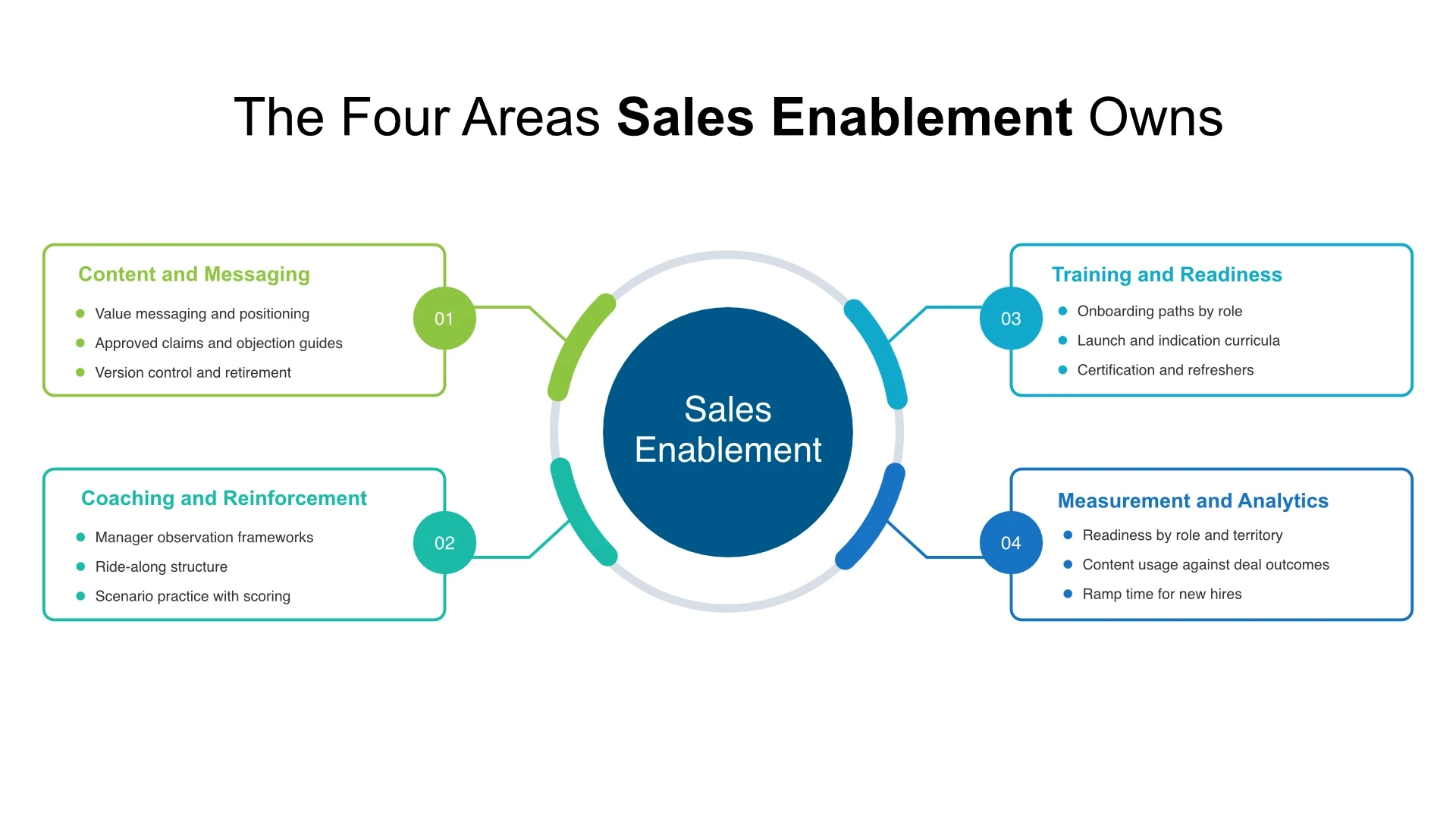
Most enablement teams in enterprise organizations work across four areas. The weighting shifts by industry, but the four show up almost everywhere.
Content and messaging
This covers the material reps use in front of buyers: value messaging, competitive positioning, clinical or technical claims, objection guides, and approved decks. The job is not only creating the material. It is making sure the right version is what a rep finds under pressure, and that outdated versions are retired.
Training and readiness
Onboarding paths, product launch curricula, certification, and refresher programs sit here. In enterprise settings this usually runs as structured learning paths tied to a role and a stage rather than a single course everyone takes.
Coaching and reinforcement
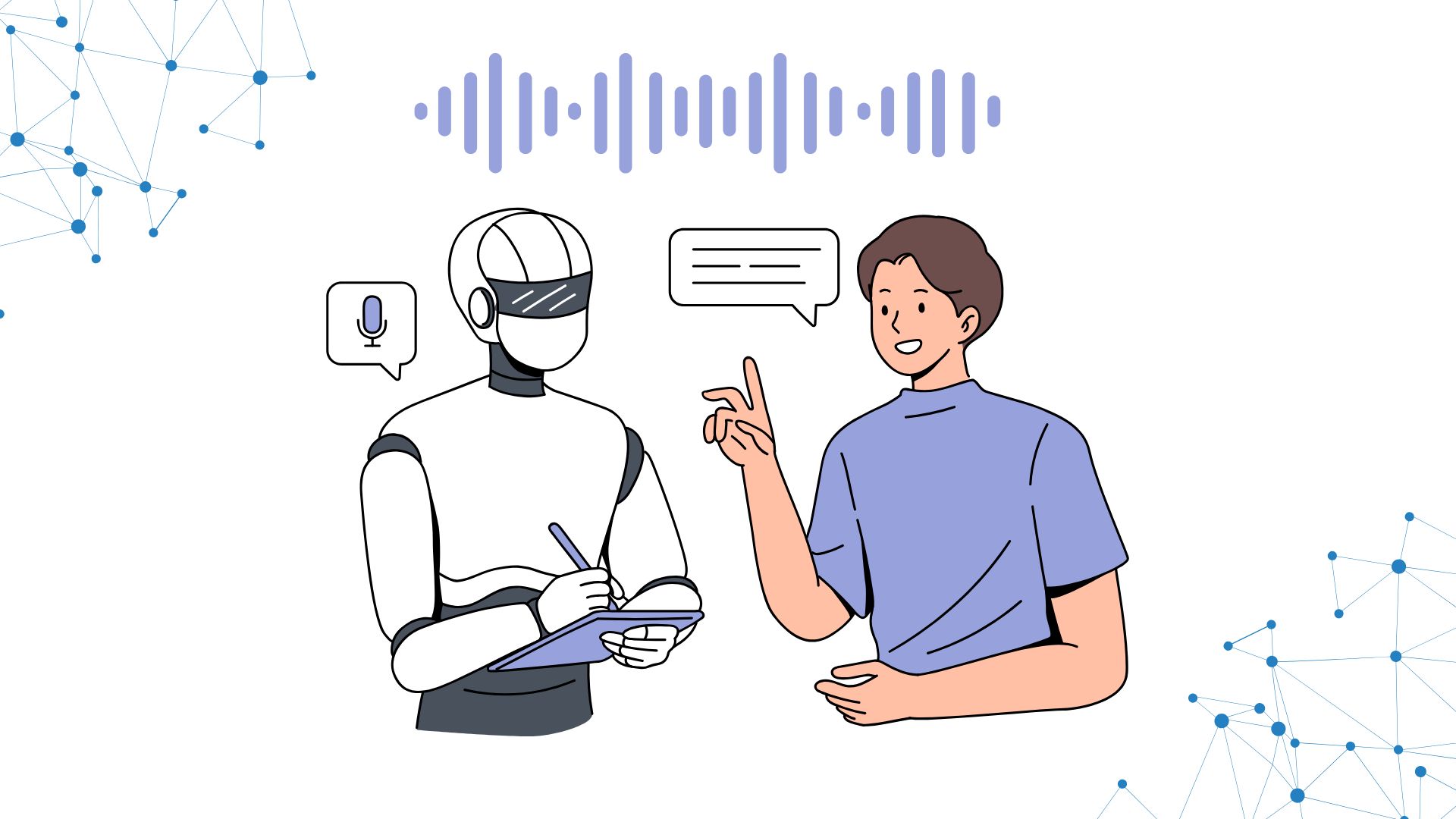
Enablement rarely delivers coaching directly at scale. It builds the system that first-line managers use: observation frameworks, ride-along structure, feedback templates, and practice environments. AI Roleplay practice has become a common way to give reps repetitions before a live call, with scoring that managers can review.
Measurement and analytics
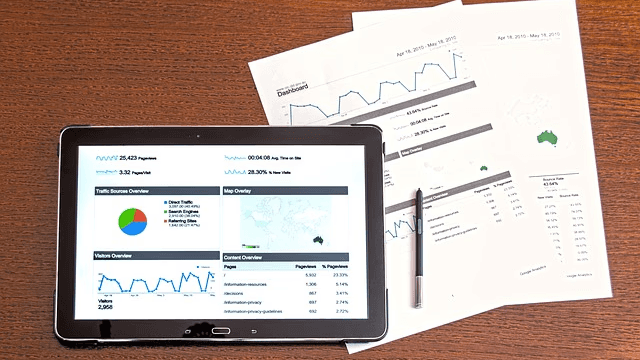
The fourth area is what separates an enablement function from a training department. It tracks sales readiness by role, certification status by territory, content usage against deal outcomes, and ramp time for new hires.
How is sales enablement different from sales training?
Sales training is one input into sales enablement. Enablement is the wider system that decides what training is needed, when it is delivered, how it is reinforced, and whether it worked.
Dimension | Sales training | Sales enablement |
|---|---|---|
Scope | Skill and knowledge delivery | Content, training, coaching, tools, and measurement |
Timing | Scheduled events and courses | Continuous, tied to the selling calendar |
Owner | L&D or training team | Cross-functional, often reporting into sales or revenue |
Success measure | Completion and assessment scores | Ramp time, message consistency, win rate, quota attainment |
Tooling | LMS | Sales enablement platform plus CRM and analytics |
Both matter. Training builds the capability. Enablement makes sure the capability shows up in the field on the day it is needed.
What does sales enablement look like in regulated industries?
In pharma, medical devices, banking, and insurance, enablement carries an extra requirement: every rep-facing message has to stay inside an approved boundary. Content approval workflows, audit trails, and certification records are part of the design rather than an afterthought.
Consider a mid-year indication launch at a pharma commercial team with 900 field reps across three regions. The medical and legal review clears the messaging six weeks before the launch NSM. Enablement has to certify every rep on the new claims, verify that regional managers coached to the same standard, and produce a record of who was certified and when.
Manager ride-alongs alone cannot cover 900 reps in six weeks. So the readiness plan combines a certification path, scenario practice with compliance gates, and manager observation on a defined cadence, with a single dashboard showing regional coverage.
What this reveals: In regulated selling, enablement is measured as much by evidence of readiness as by readiness itself. The audit record is part of the deliverable. The PhRMA Code on Interactions with Health Care Professionals sets expectations for how representatives are trained and monitored, which is why certification records sit close to the center of pharma enablement design.
How do you measure sales enablement?
Enablement leaders who present to the C-suite tend to report on four groups of metrics.
Readiness metrics show whether reps are prepared: certification completion by region, practice scores before launch, and knowledge retention over time.
Behavior metrics show whether preparation changed what reps do: message consistency in field observations, coaching sessions completed per manager, and content used in live deals.
Speed metrics show how fast the system moves: time to first deal for new hires, and time from message approval to field certification.
Revenue metrics close the loop: win rate, average deal size, and quota attainment by cohort.
The link between the first two groups and the last two is where enablement earns its budget. SmartWinnr customers report a 22% increase in sales productivity and 90% message consistency during rollouts, which are the kinds of numbers that connect readiness work to commercial outcomes.
Pick a small set and hold them steady across quarters. A dashboard with sixty metrics tells a leadership team less than one with six that have a year of history behind them.
How do you build a sales enablement program?
Start by writing down the sales motion you are enabling. Territory, buyer, average cycle length, and the two or three conversations that decide most deals. Everything downstream should trace back to that.
From there, most enterprise programs follow a similar sequence. Audit what already exists across content, training, and coaching. Map the gaps against the motion. Choose a small number of measures. Then build the readiness path for one segment, prove it, and expand.
Tooling comes after that, not before. When you do evaluate, look at how a platform handles role-based content delivery, practice with scoring, manager coaching workflows, and reporting that rolls up by region. Platforms built for regulated and field-heavy selling, including SmartWinnr, tend to weight compliance controls and audit trails more heavily than general-purpose enablement tools, which matters if you sell in pharma, medtech, or financial services.
One more thing worth planning early: manager adoption. Enablement systems that first-line managers use in their weekly rhythm outlast the ones that only enablement teams open. Build field coaching programs around what a manager already does on a ride-along rather than adding a separate process.
Gartner's guidance for sales enablement leaders points in a similar direction, recommending that enablement be embedded directly into the systems sellers already work in so that adoption does not depend on tool switching.
Request a demo to understand how SmartWinnr supports enterprise sales teams through AI roleplay, structured coaching, and continuous knowledge reinforcement.
Frequently Asked Questions
What is the difference between sales enablement and revenue enablement?
Revenue enablement extends the same discipline to every customer-facing role, including customer success, account management, and sometimes partner teams. Sales enablement focuses on the selling org. The methods are largely the same. The difference is scope, and most organizations move to revenue enablement once post-sale roles start carrying quota or renewal targets.
Who should own sales enablement, sales or marketing?
In most enterprise organizations, sales enablement reports into sales or revenue operations, with a dotted line to marketing for messaging and to L&D for learning design. Reporting into sales keeps the function close to quota accountability. What matters more than the reporting line is a single owner who controls both the readiness plan and the measurement.
How long does it take to see results from a sales enablement program?
Readiness and behavior metrics usually move within one to two quarters. Revenue metrics take longer because they depend on your sales cycle length. A team with a nine-month cycle should not expect win rate movement inside six months. Set expectations with leadership on that sequence at the start.
How does sales enablement work with the CRM and LMS a company already has?
Sales enablement sits alongside both. The CRM holds deal and activity data. The LMS holds course completion. An enablement platform adds practice, coaching, content delivery, and readiness scoring, then connects to the CRM so readiness data can be read against pipeline. Most enterprise teams keep the LMS for compliance training and use an enablement platform for field readiness.
What team size justifies a dedicated sales enablement function?
It depends less on headcount than on how much certification and audit work the business carries. Organizations with distributed field teams, frequent launches, and regulatory requirements tend to need a dedicated function earlier than teams selling a single product to one buyer type. Below that threshold, enablement is often a shared responsibility inside sales operations or L&D.
Disclaimer: This content reflects industry practices and does not constitute medical, legal, or regulatory advice.
Last Updated: