

Smart AI Blog Summary
Get a quick blog summary from any of the below LLM's
What You'll Learn
The period between a sales rep's onboarding and their full field readiness is one of the most resource-intensive phases in the commercial talent lifecycle. Organizations invest substantially in onboarding programs, yet many find that the time it takes for new representatives to operate with genuine confidence and consistency is longer than their programs are designed to produce. The gap between what training delivers and what field performance requires is often not a content problem. It is a practice problem.
AI-powered coaching addresses this gap by making structured, feedback-rich practice available on demand, from the first week of onboarding through the full ramp period, without requiring a manager's presence for every session. This article explores the specific mechanisms through which AI coaching supports shorter ramp times, the organizational conditions that make it most effective, and what enablement teams should consider when integrating it into their existing programs.
Understanding the Real Drivers of Ramp Time
Ramp time is influenced by multiple intersecting factors, and understanding which factors are most significant for a particular organization is the necessary starting point for designing effective interventions. Product complexity is an obvious driver: representatives selling a novel biologic to specialist physicians face a fundamentally more demanding ramp challenge than those selling a mature primary care product.
The regulatory environment adds a layer of complexity specific to pharma and life sciences; representatives must not only learn the science but internalize the communication boundaries within which they must stay.
Geography and team structure also matter in ways that are often underappreciated. A new representative joining a team with an engaged and experienced regional manager who prioritizes individual coaching will ramp more quickly than one whose manager is stretched across a large territory and can only schedule monthly check-ins.
Organizations that rely on manager availability as the primary mechanism for practice and feedback are building structural bottlenecks into their ramp programs. AI coaching addresses exactly this constraint.
Individual learning pace is a third variable that organizational programs frequently underserve. A cohort-based onboarding event delivers the same content on the same timeline to representatives with very different starting points, backgrounds, and learning speeds. Representatives who need more time to build fluency with specific content rarely receive it in a format that is practical and low friction.
AI coaching supports self-paced practice in a way that neither classroom training nor manager coaching can replicate.
Where Exactly Traditional Onboarding Creates Bottlenecks
Traditional onboarding concentrates learning into an intensive initial period, typically a combination of classroom sessions, product training events, and field ride-along with an experienced colleague. This approach provides an important knowledge foundation and establishes the cultural and relational context that new representatives need. But it creates structural bottlenecks that limit how quickly representatives can build genuine communication readiness.
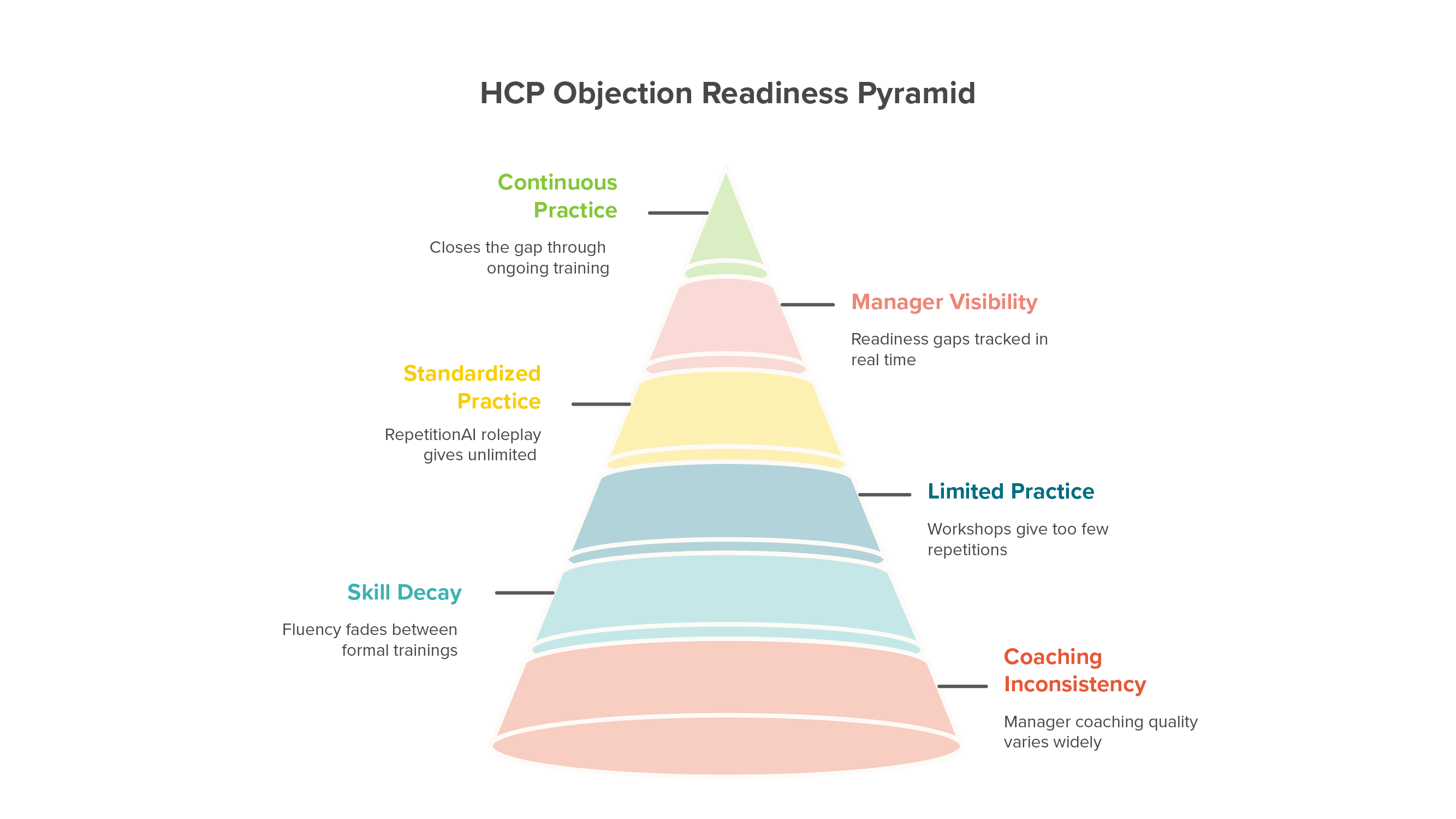
The most significant bottleneck is the ratio of practice to instruction. In a standard onboarding program, representatives spend far more time receiving information than applying it. The application opportunities that do exist, typically role-play exercises in a training room setting, are brief, infrequent, and dependent on the availability of a trainer or manager to serve as the practice partner.
The feedback that follows is often general and time-limited, delivered in the context of a group session rather than a personalized coaching conversation.
The result is that many representatives enter the field having absorbed a significant amount of information but having practiced its application relatively little. The first weeks of field activity effectively become additional training time, during which the representative is learning on the job in situations that have real stakes for the organization's market presence. AI coaching does not eliminate this learning curve, but it meaningfully compresses it by building practice density into the pre-field period.
How AI-Powered Coaching Supports Readiness
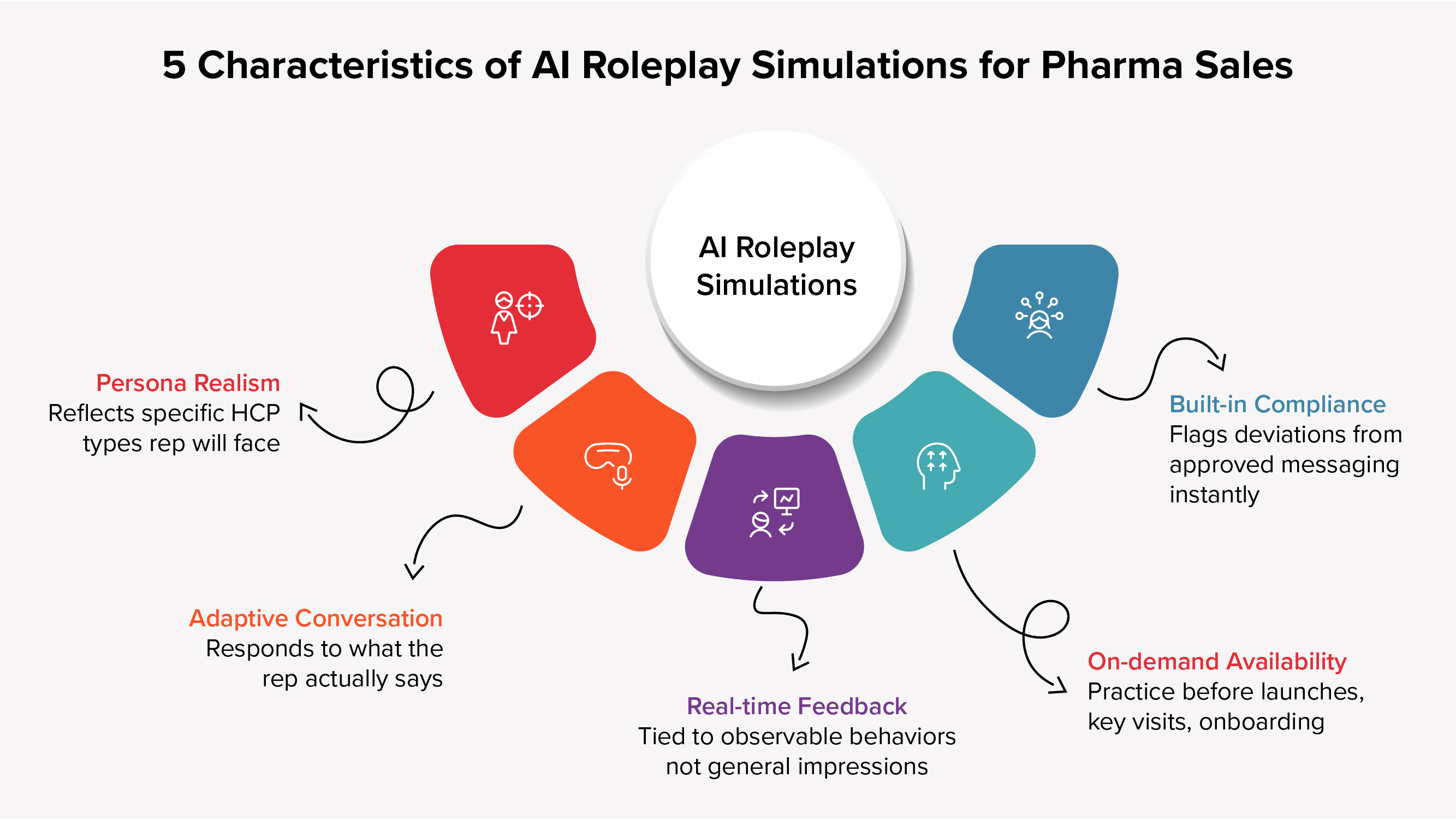
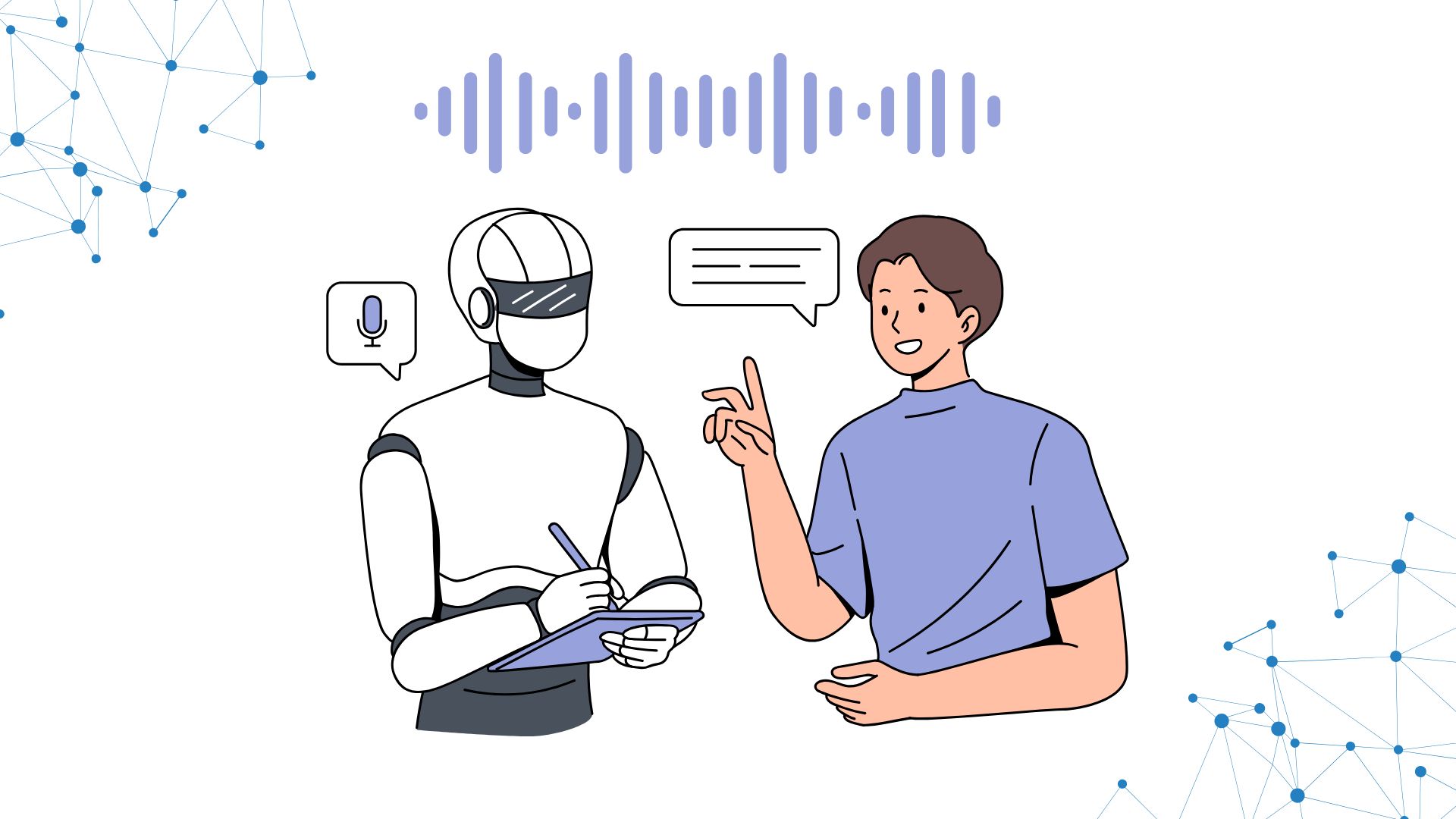
AI-powered coaching addresses the practice bottleneck by making structured scenario engagement available on demand, throughout the onboarding period, on the representative's timeline and device.
Rather than waiting for the next training event or the next field visit with a manager, a representative who wants to practice a specific objection scenario, revisit a product knowledge application, or refine their messaging approach for a particular customer profile can do so immediately, as many times as they find useful.
The immediate feedback that AI coaching provides is a critical component of its effectiveness. Learning research is consistent on this point: feedback that arrives in close temporal proximity to the practice attempt produces significantly better improvement than feedback that arrives hours or days later.
When a representative completes a simulation and receives specific commentary on their response within seconds, they can adjust their approach on the next attempt while the scenario is still fresh. When feedback arrives in a scheduled coaching call three days later, much of the developmental potential of the practice session has dissipated.
AI coaching also introduces a consistency that is difficult to achieve through human coaching alone. All representatives receive feedback evaluated against the same criteria, regardless of which manager they report to or which training session they attended. In large field organizations with significant regional variation in coaching quality, this consistency has genuine value for ensuring that readiness standards are applied uniformly.
Practice Volume and the Confidence Connection
There is a meaningful difference between a representative who knows the material and one who has practiced communicating it. Knowledge can be acquired from content. Confidence is built through repetition. A representative who has engaged with a challenging specialist scenario ten times during onboarding approaches their first real version of that conversation with a fundamentally different internal experience than one who encountered it once in a training room.
They have already navigated the moment where the conversation takes an unexpected turn. They have already found the language for the question they did not anticipate. The scenario has lost its novelty, and that loss of novelty frees cognitive capacity for the more nuanced dimensions of the interaction.
In regulated industries, this confidence dimension is particularly important because it directly supports compliance. A representative who is uncertain or anxious during a conversation is more likely to reach for familiar language that may not reflect current approved messaging, or to overstate a clinical claim in response to pushback.
A representative who has practiced the same scenario many times has a more stable foundation from which to maintain precise, compliant communication even under pressure. Practice volume is not a soft development benefit.
In regulated commercial environments, it has a compliance function.
Manager Coaching Visibility and Proactive Intervention
AI coaching platforms generate data that transforms the manager's coaching role from reactive to proactive. Rather than discovering a representative's messaging gaps during a field ride six weeks into their tenure, a manager with visibility into simulation performance data can identify those gaps during the third week of onboarding and address them before the representative enters the field.
This earlier intervention is better for the representative, who receives targeted support at the point when it will have the most impact, and better for the organization, which avoids the compounding effect of unaddressed gaps in the early field period.
The data also supports more productive coaching conversations. When a manager and a new representative sit down to review progress, having specific simulation performance data to reference moves the conversation from general impressions to concrete observations.
The manager can point to specific scenarios where the representative is showing improvement, specific patterns in their responses that reflect a gap to address, and specific areas where they are ready to advance.
This evidence-based coaching is more actionable and more motivating than feedback derived from general impressions.
Integrating AI Coaching into Your Onboarding Program
AI coaching produces the most significant ramp time benefits when it is integrated into the onboarding program as a continuous practice layer rather than deployed as a standalone tool alongside the main program. The specific scenarios available in the platform should be aligned with the content covered in formal training events, so that representatives can practice applying what they have just learned rather than encountering disconnected content.
Completion of simulation activities should be linked to certification milestones, so that practice is positioned as a meaningful developmental step rather than an optional supplement.
Manager involvement in reviewing simulation data and connecting it to coaching conversations reinforces the value of the practice for representatives. When a representative sees that their simulation performance informs their manager's coaching approach, they understand that the tool is integrated into the organization's approach to their development, not a parallel activity with no connection to their real career progress.
How SmartWinnr Supports Rep Ramp Time
SmartWinnr's AI-powered coaching capabilities are designed to support sales rep readiness from the first days of onboarding through the full ramp period. The platform enables structured scenario practice, delivers specific and immediate feedback, and gives managers real-time visibility into individual and team progress through dashboards that surface patterns and flag representatives who may benefit from additional coaching support.
For regulated industries including pharma and biotech, SmartWinnr's coaching simulations are built to align with compliance-safe messaging frameworks, ensuring that the practice representatives accumulate during onboarding reinforces the right behaviors from the very beginning of their tenure. The platform's mobile accessibility supports practice outside of formal training windows, giving representatives the opportunity to build confidence on their own schedule
Explore SmartWinnr
Request a demo to explore how SmartWinnr's AI-powered coaching supports structured onboarding and helps sales teams build field readiness efficiently.
Disclaimer: This content reflects industry practices and does not constitute medical, legal, or regulatory advice.
Last Updated: