
Smart AI Blog Summary
Get a quick blog summary from any of the below LLM's
What You'll Learn
There is a difference between a sales manager and a sales coach. Most organizations have plenty of the first. The second is rarer, and considerably more valuable.
In pharma sales, that distinction matters more than most. A manager tracks numbers, reviews call plans and runs territory reviews. A coach changes how a rep thinks in the room with a physician. They build the kind of confidence and capability that shows up in every HCP interaction, not just the ones being observed.
The good news is that coaching is a learnable skill. The principles behind it are consistent, the habits are buildable, and the impact on team performance is measurable. This article covers what those principles look like in practice, and how pharma sales leaders can build a coaching culture that actually develops successful sales teams.
Why Coaching Is the Most Underinvested Skill in Sales Leadership
Ask most sales organizations where they invest their training budget and the answer is almost always the same. Product knowledge, compliance certification, onboarding programs, and occasionally objection handling workshops.
Coaching is rarely on that list. Not because leaders do not value it, but because it is harder to measure, harder to scale, and frequently assumed to happen naturally once a manager is in the role.
Being a strong individual contributor does not automatically make someone an effective coach. The skills are different. Selling requires confidence, instinct, and product mastery.
Coaching requires observation, patience, the ability to ask the right question at the right moment, and the discipline to let a rep find their own answer rather than simply handing them one.
Gartner's research on critical sales leadership trends found that maximizing the impact of sales managers requires a fundamental redesign of their role, with organizations needing to hire and develop managers based on specific mindsets and competencies rather than simply promoting top sellers, and investing in enablement programs that allow managers to provide personalized coaching at scale.
In pharma, this gap is particularly visible. Many field managers were promoted because they were exceptional reps. Their product knowledge is deep, their HCP relationships are strong, and their instincts in the field are sharp.
But coaching a team of fifteen reps across a large territory requires a completely different capability set, one that is rarely developed deliberately.
The organizations that build successful sales teams are the ones that treat manager development with the same seriousness they treat rep development.
What Effective Sales Coaching Actually Looks Like
Before building a coaching culture, it helps to be clear about what coaching actually is and what it is not.
Coaching is not feedback after a joint visit. It is not a quarterly performance review. It is not telling a rep what they did wrong and how to fix it.
Effective coaching is a structured, ongoing conversation between a manager and a rep that is grounded in observation, focused on specific behaviors, and designed to help the rep develop their own capability rather than simply follow instructions.
In practice, it has three qualities that separate it from generic management:
It is specific, not general.
Good coaching does not say "You need to be more confident." It says "When the physician challenged the clinical data at the two-minute mark, you paused and then moved on without addressing it. Let us talk about what you could have done in that moment."
It is forward-looking, not backward-focused.
The goal of a coaching conversation is not to relitigate what went wrong. It is to build a plan for what the rep will do differently next time. The past is context. The future is the point.
It is consistent, not occasional.
A single coaching conversation does not change behavior. A coaching culture does. Reps who receive regular, structured feedback from their manager develop faster, stay longer, and perform more consistently than those who only hear from their manager when something goes wrong.
In pharma, these three qualities carry an additional dimension. Every coaching conversation is also an opportunity to reinforce compliant messaging, clinical accuracy, and professional conduct standards.
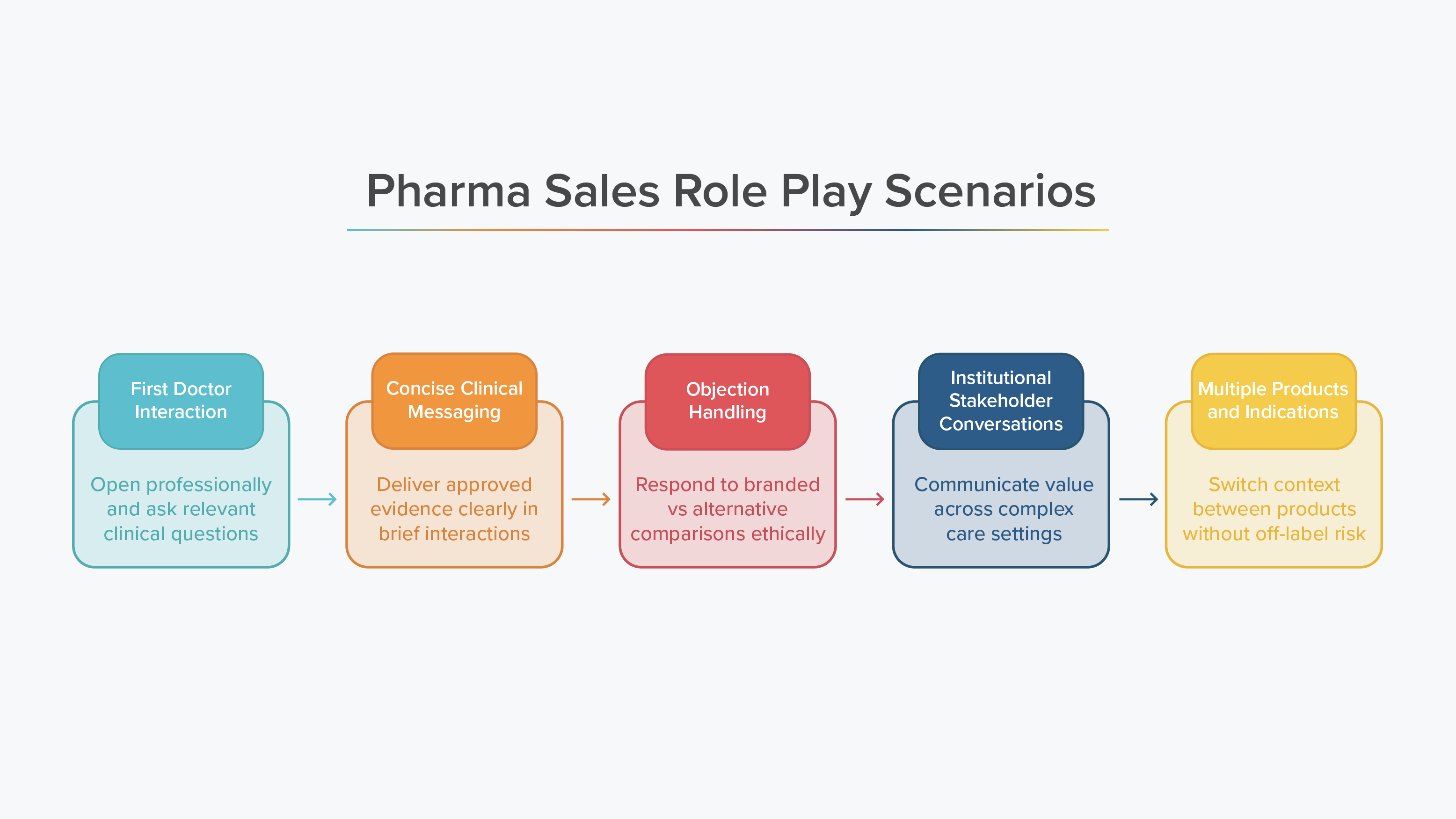
A coach who notices a rep straying from approved label language during a roleplay session can address it before it becomes a field issue.
The Five Habits of Managers Who Build Successful Sales Teams
The best sales coaches in pharma are not necessarily the most experienced reps who got promoted. They are the managers who have built consistent habits around how they observe, listen, give feedback, and develop their people.
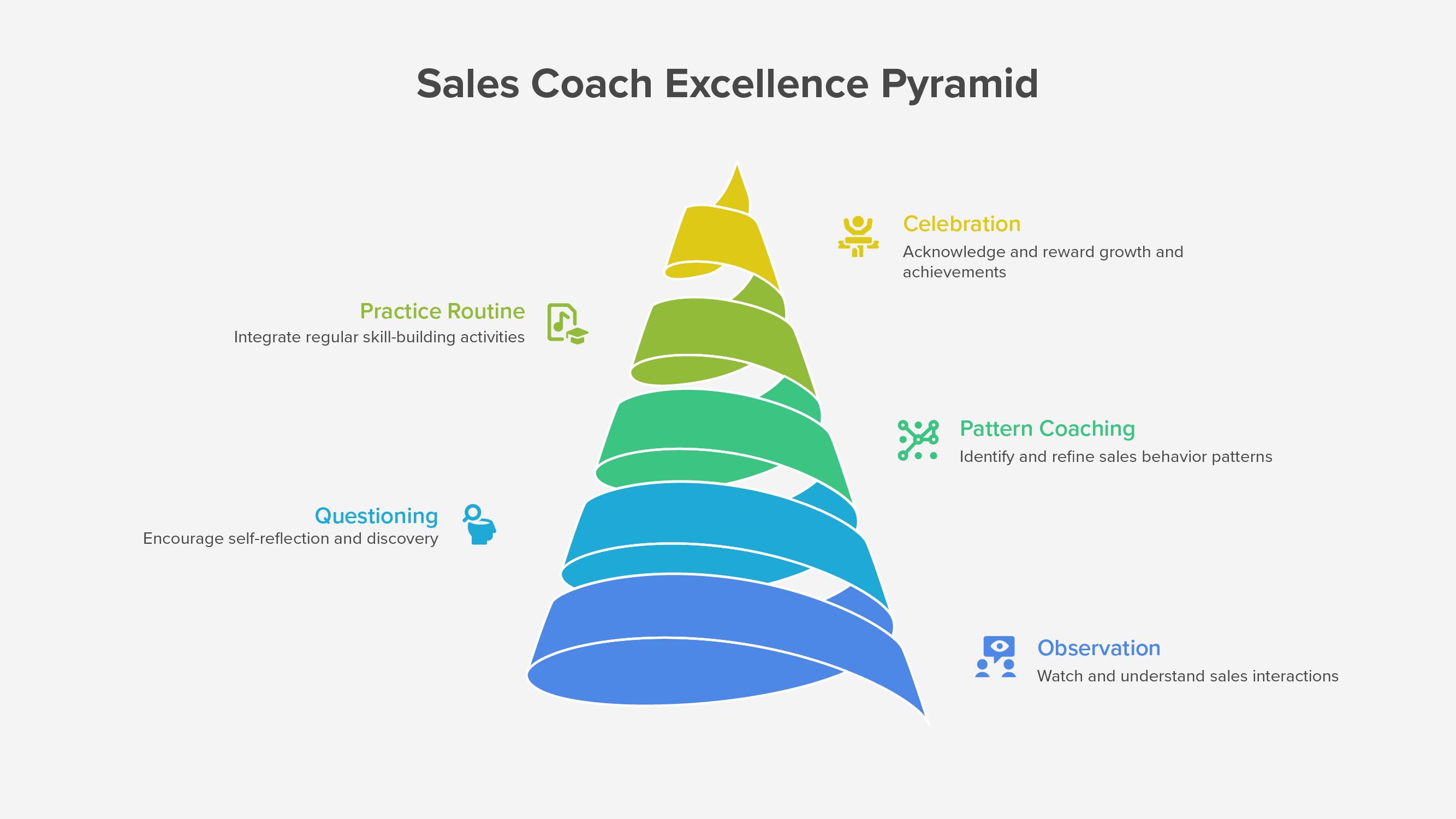
Here are the five habits that show up most consistently in managers who build genuinely successful sales teams:
They observe before they advise. They listen to how a rep opens a conversation before jumping to what needs fixing. Observation comes first; judgment comes second.
They ask more than they tell. Instead of saying "here is what you should do," they ask "what do you think you could have done differently?" Reps who find their own answers retain them longer.
They coach to patterns, not incidents. A single missed objection is an incident. Three missed objections in the same scenario is a pattern. Great coaches track patterns and address them with structured practice.
They make practice part of the routine. They do not wait for a formal training event to run a roleplay. Short, frequent practice sessions built into the weekly rhythm are more effective than quarterly workshops.
They celebrate progress, not just results. A rep who handled a clinical challenge better this week than last week deserves recognition, even if the HCP conversation did not go perfectly. Progress builds confidence and confidence builds performance.
These five habits sound straightforward. They are. What makes them rare is consistency. Most managers apply them occasionally. But only the best applies them every week, with every rep, regardless of how busy the territory gets.
For pharma organizations serious about building this kind of coaching structure at scale, the challenge is not intent. It is execution.
How to Scale Coaching Consistently Across a Large Field Team
Individual coaching habits matter. But a pharma sales organization with two hundred or five hundred field reps cannot rely on individual manager quality alone to build a successful team. Consistency across the field force requires structure.
Here is what that structure looks like in practice:
A shared coaching framework
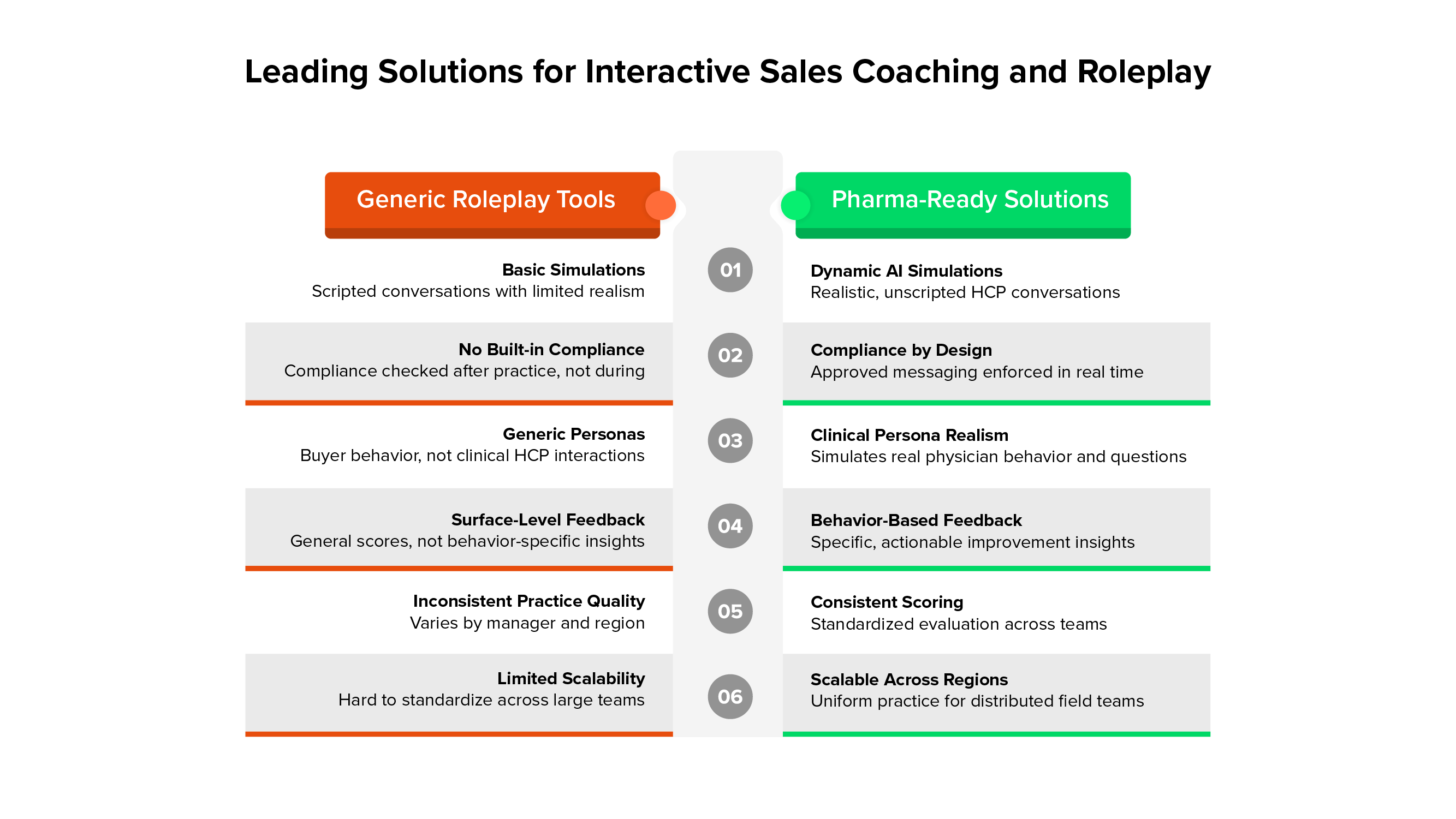
Every manager should be working from the same definition of what good looks like. What does a strong HCP open sound like? What does compliant objection handling look like? Without a shared framework, coaching quality varies by region, by manager personality, and by how recently someone attended a training event.
Regular cadence, not event-based coaching
Coaching that only happens at national sales meetings or during annual reviews does not change field behavior. A weekly fifteen-minute coaching conversation grounded in recent observation is more impactful than a half-day workshop once a quarter.
Data that informs the conversation
Managers who walk into a coaching conversation with specific data, which scenarios a rep has practiced, where their feedback scores show consistent gaps, what objections they handle well versus poorly, have sharper, faster, more useful conversations than those relying on memory and impression.
Visibility across the team
A regional director needs to know not just how individual reps are performing, but where coaching quality is strong across their managers and where it needs support. That requires readiness data at a team level, not just individual rep metrics.
Keeping coaching consistent across regions, managers, and product cycles requires more than good intentions and a shared framework. It requires the right infrastructure.
That is where SmartWinnr comes in.
How SmartWinnr Supports a Coaching Culture in Pharma Sales
SmartWinnr Platform is built to support exactly the kind of structured, consistent coaching culture this article describes.
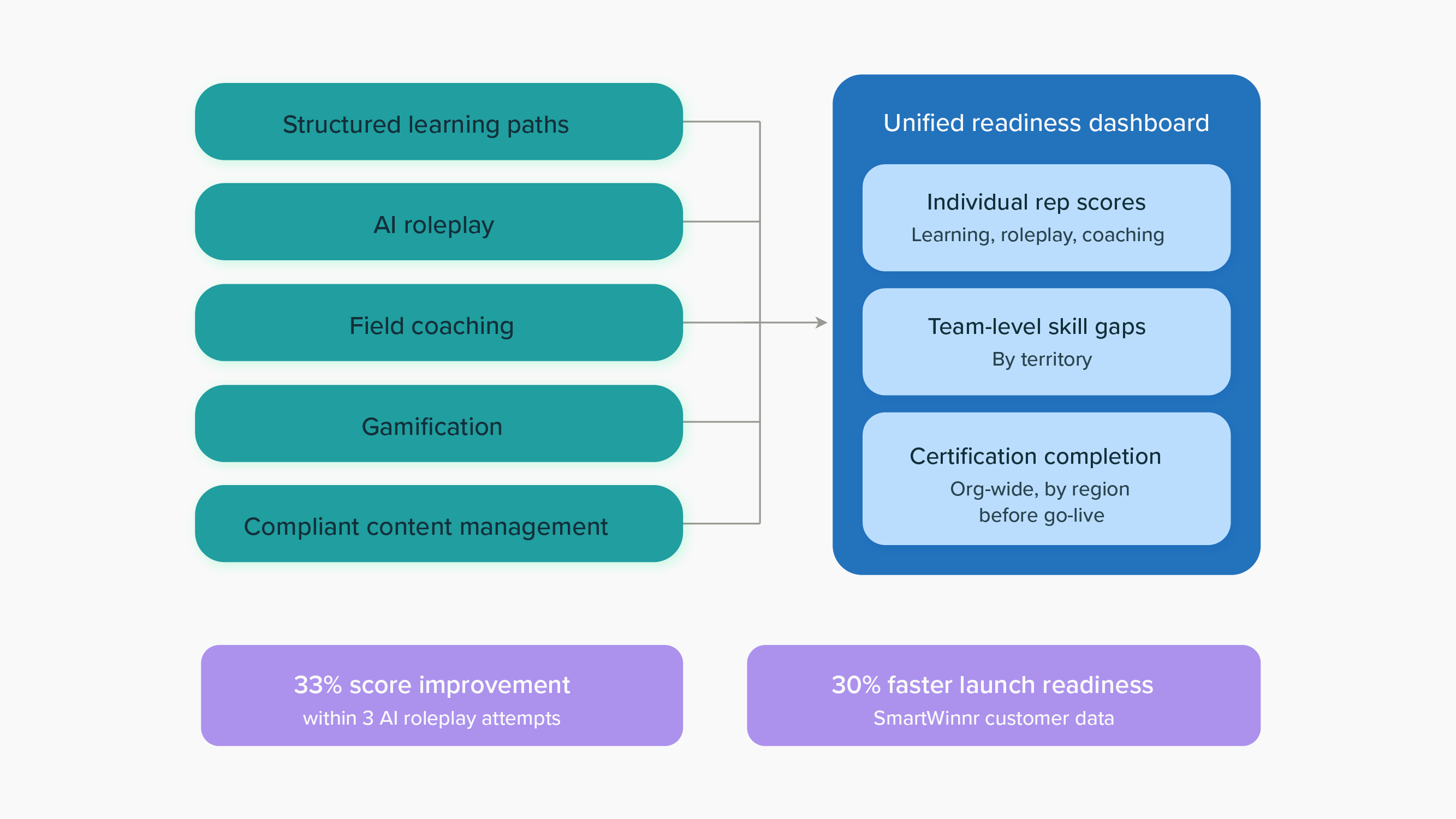
Managers get visibility into how each rep is developing across specific skills and scenarios, so coaching conversations are grounded in data rather than impression. Reps practice realistic HCP conversations through AI roleplay, receive immediate structured feedback, and build the kind of field confidence that only comes from deliberate, repeated practice.
For sales excellence leaders and regional managers, SmartWinnr surfaces the readiness gaps that matter most, at an individual, team, and territory level, so coaching time is directed where it will have the greatest impact.
For pharma organizations looking to build a more consistent, scalable coaching culture across their field force, SmartWinnr offers a practical and structured starting point.
Request a demo to understand how SmartWinnr supports pharma sales coaching, team readiness, and compliant skill development at scale.
Disclaimer: This content reflects industry practices and does not constitute medical, legal, or regulatory advice.
Last Updated: