
Smart AI Blog Summary
Get a quick blog summary from any of the below LLM's
What You'll Learn
Most pharma sales reps walk into an HCP conversation with a clear agenda. They know the product, they know the indication, and they know what they want to communicate before they leave the room.
The problem is that the physician has not read that agenda.
The tension between discovery and pitching is one of the most common challenges in sales conversations across B2B and pharma alike. Spend too much time pitching and the HCP feels talked at, not heard. Spend too little time on discovery and the rep misses the clinical context that would have made the pitch land.
Getting that balance right is not about following a script. It is about understanding what each part of the conversation is actually for, and how much weight to give each one depending on the situation in the room.
This guide breaks that down in plain terms for pharma sales reps and the managers who coach them.
Why the Discovery vs Pitching Question Matters in Pharma
There is a reason this question comes up in almost every sales training conversation. Most reps default to pitching. It feels productive. It feels like progress. And in a two-minute HCP interaction, the pressure to communicate the key message is real.
But pitching without discovery is essentially guessing. The rep is presenting a solution to a problem they have not yet confirmed the physician actually has.
Forrester's State of Business Buying 2024 report found that 81 percent of B2B buyers express dissatisfaction with the provider they choose at the end of a purchase process, with buyers specifically citing that providers fail to understand their challenges and are not responsive to their actual needs.
In pharma, that disconnect shows up in HCP conversations every day.
A rep leads with efficacy data when the physician's concern is tolerability.
A rep presents a product for a patient population the physician rarely sees.
A rep spends the entire interaction talking when the physician had a specific question they never got to ask.
Discovery is not a delay before the pitch. It is the information that makes the pitch worth listening to.
What Good Discovery Looks Like in an HCP Conversation
Before getting into time allocation, it helps to be clear on what discovery actually is in a pharma sales context. It is not a questionnaire. It is not a checklist of clinical questions read from a call plan. And it is not a warm-up exercise before the rep gets to the "real" part of the conversation.
Needs discovery in an HCP conversation is the practice of understanding the specific clinical situation the physician is working in before presenting any information about a product.
In practice, that means understanding three things:
What patient population is this physician actually treating?
A cardiologist in a hospital setting and a GP in a community clinic may both be relevant prescribers for the same product, but their clinical priorities, patient profiles, and daily pressures are completely different. Discovery surfaces which world the rep is actually in.
What is already working or not working for this physician?
A physician who is satisfied with current treatment options needs a very different conversation than one who is actively looking for alternatives. Without knowing this, the rep is pitching into a void.
What does this physician actually care about most?
Efficacy, safety profile, dosing convenience, patient adherence, reimbursement. Different physicians weight these differently. The rep who finds out which one matters most before presenting has a significant advantage over the one who covers all five equally.
Good discovery does not take long. Two or three well-chosen questions at the start of a conversation can change the entire shape of what follows.
How to Structure the Balance Between Discovery and Pitching
There is no universal formula for how much time to spend on discovery versus pitching. It depends on whether this is a first interaction or an established relationship, whether the physician has limited time or is genuinely engaged, and whether the rep already has useful context from previous calls.
That said, there is a practical framework that works well across most pharma sales conversations.
Start with a brief opening and context setting, roughly 10-15% of the conversation. This is where the rep establishes purpose, reads the room, and checks how much time the physician actually has available.
From there, needs discovery should take up 30-40% of the conversation. This is where the rep asks, listens, and builds a real understanding of the clinical situation before presenting anything.
The tailored presentation follows, taking up 35-40%. Critically, this is not a standard product walkthrough. It is a response to what was just discovered, presenting only what is clinically relevant to this specific physician and their patients.
The final 15-20% covers response and close. This is where the rep handles questions, confirms the next step, and leaves a clear and professional impression.
The most important shift this framework represents is moving discovery from a brief opener to a genuine third of the conversation. That feels counterintuitive to reps who are under pressure to deliver a message. In practice, it makes the message land far more effectively because it is being delivered to a physician who now feels understood rather than presented to.
In a two-minute interaction, this framework compresses but the principle holds. Even in the shortest HCP conversation, one good discovery question asked and genuinely listened to is more valuable than two minutes of product information delivered without context.
Common Mistakes That Throw the Balance Off
Understanding the right balance is one thing.
Staying in it during a real conversation is another.
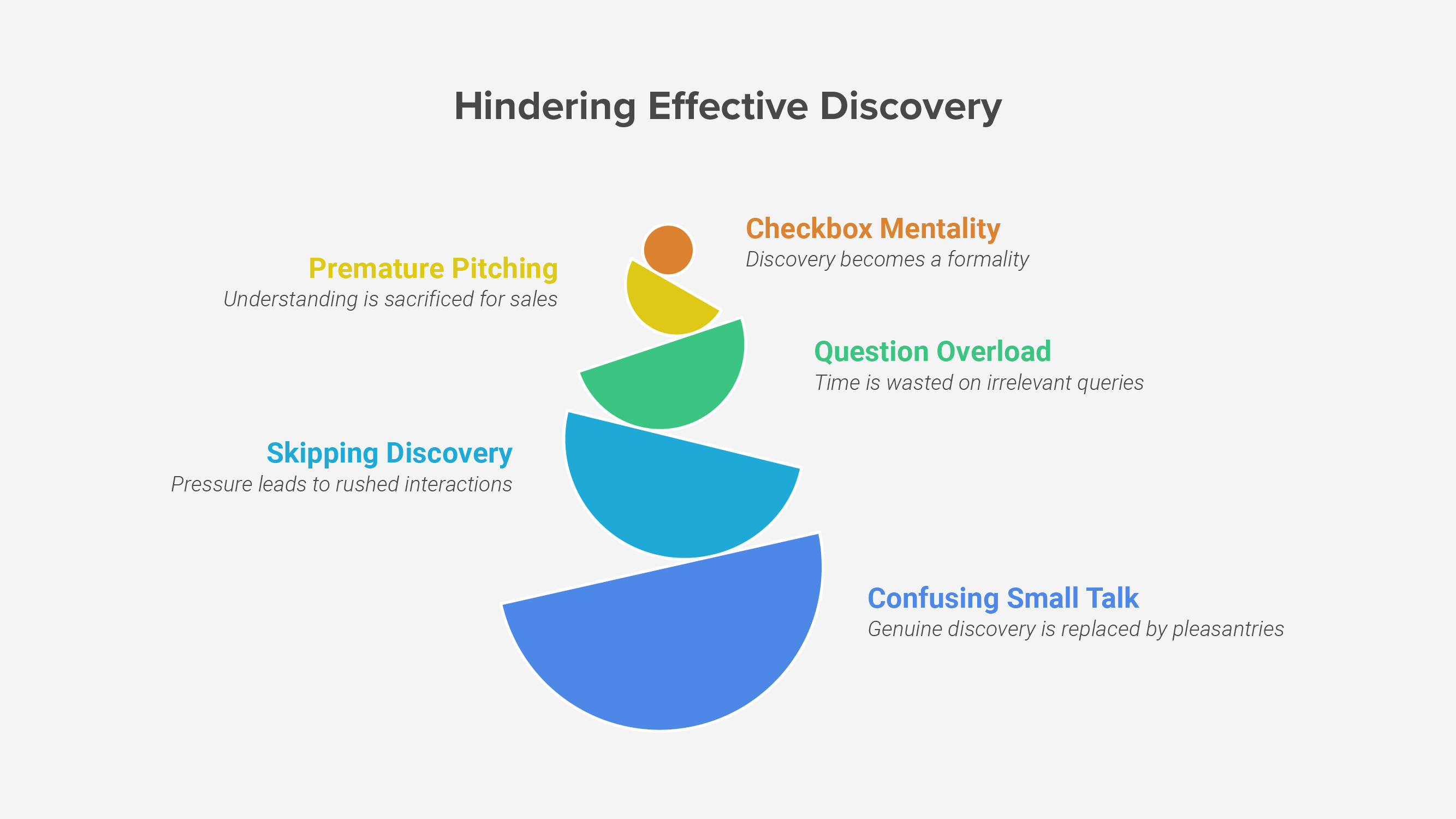
These are the five most common ways pharma reps lose the balance between discovery and pitching, and what to do instead.
Treating discovery as a formality.
The rep asks one question, half-listens to the answer, and then launches into the prepared pitch regardless. The physician notices immediately. Discovery only works if the rep actually adjusts what they say next based on what they heard.
Pitching the product before understanding the patient.
The rep leads with clinical data before establishing which patient type the physician is thinking about. The data may be accurate, but if it does not connect to the physician's actual patient population, it does not register as relevant.
Running out of time because discovery took too long.
The opposite problem. The rep asks too many questions, the physician gets impatient, and the rep never gets to the clinical message. Good discovery is focused, not exhaustive. Two or three targeted questions are enough.
Abandoning discovery under time pressure.
When a physician says, "make it quick," most reps skip straight to the pitch. A more effective response is one brief, well-chosen discovery question that makes the pitch sharper and more specific. Thirty seconds of good discovery is always worth it.
Confusing rapport building with discovery.
Small talk is not discovery. Asking about the physician's weekend is not the same as asking about their patient population. Both have a place in an HCP relationship, but they serve different purposes and should not be confused.
Avoiding these mistakes consistently is what separates a rep who occasionally gets discovery right from one who does it well every time. That level of consistency does not come from awareness alone.
It comes from practice, and that is exactly where SmartWinnr comes in.
How SmartWinnr Helps Reps Practice the Right Balance
Getting the discovery-to-pitch balance right is a skill. Like every skill in sales, it develops through practice, not through reading about it.
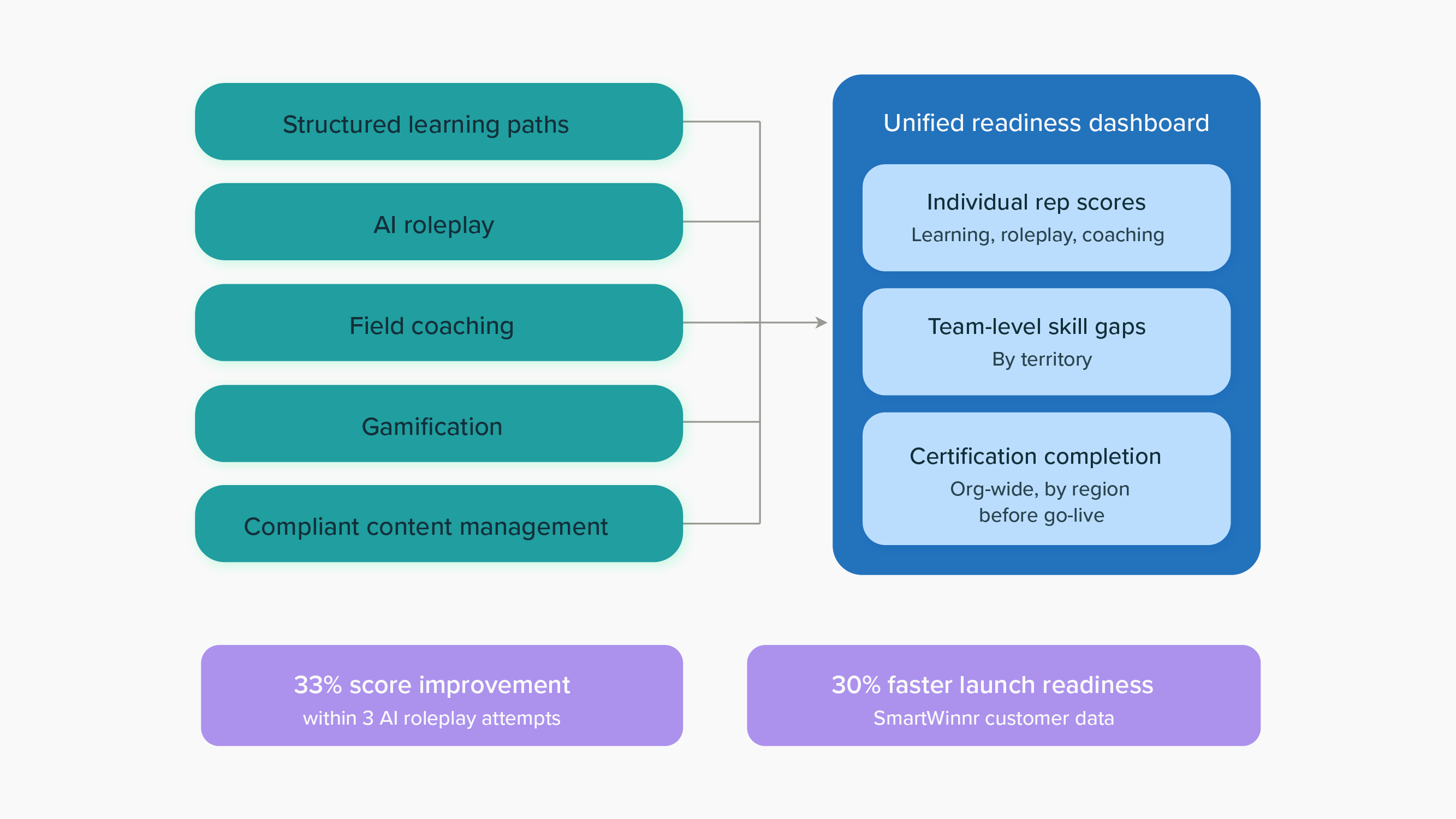
SmartWinnr's AI roleplay capabilities allow pharma sales reps to rehearse HCP conversations in realistic simulations where the balance between discovery and pitching can be practiced, observed, and refined. Reps can run through scenarios where the simulated HCP responds differently depending on how well the rep listens and adapts, building the kind of conversational judgment that only comes from repeated, deliberate practice.
Managers and coaches get visibility into how each rep is navigating these conversations, where discovery is being skipped, where pitching is running too long, and where the balance is improving over time. That turns coaching conversations from general feedback into specific, evidence-based guidance.
For pharma organizations looking to develop reps who ask better questions, listen more effectively, and present with greater clinical relevance, SmartWinnr offers a practical and structured starting point.
Request a demo to understand how SmartWinnr supports pharma sales readiness through AI roleplay, coaching, and compliant skill reinforcement.
Disclaimer: This content reflects industry practices and does not constitute medical, legal, or regulatory advice.
Last Updated: