
Smart AI Blog Summary
Get a quick blog summary from any of the below LLM's
What You'll Learn
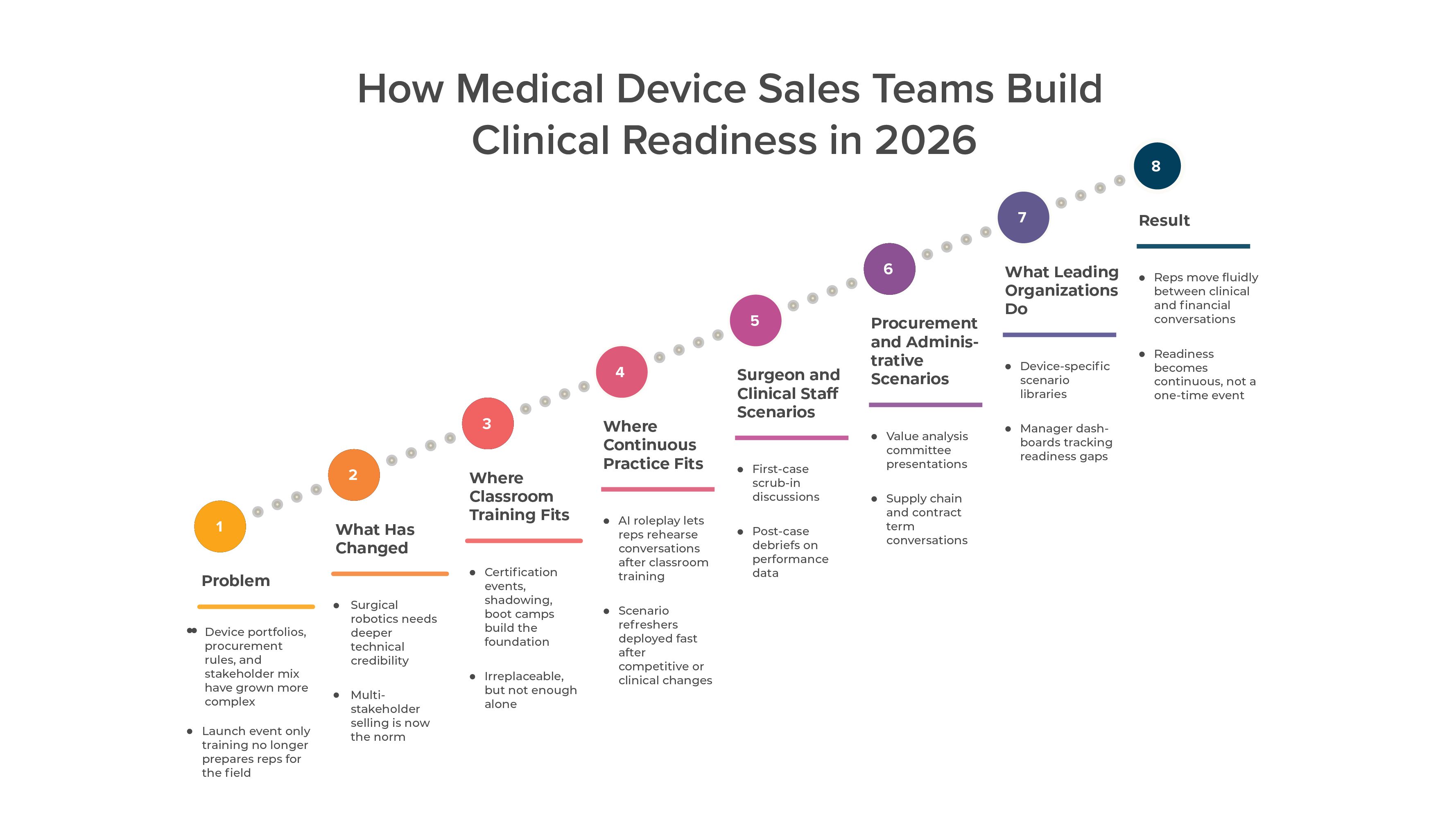
Every medical device org has an LMS. Most treat it like the end of the training conversation. The ones winning in the field treat it like the beginning.
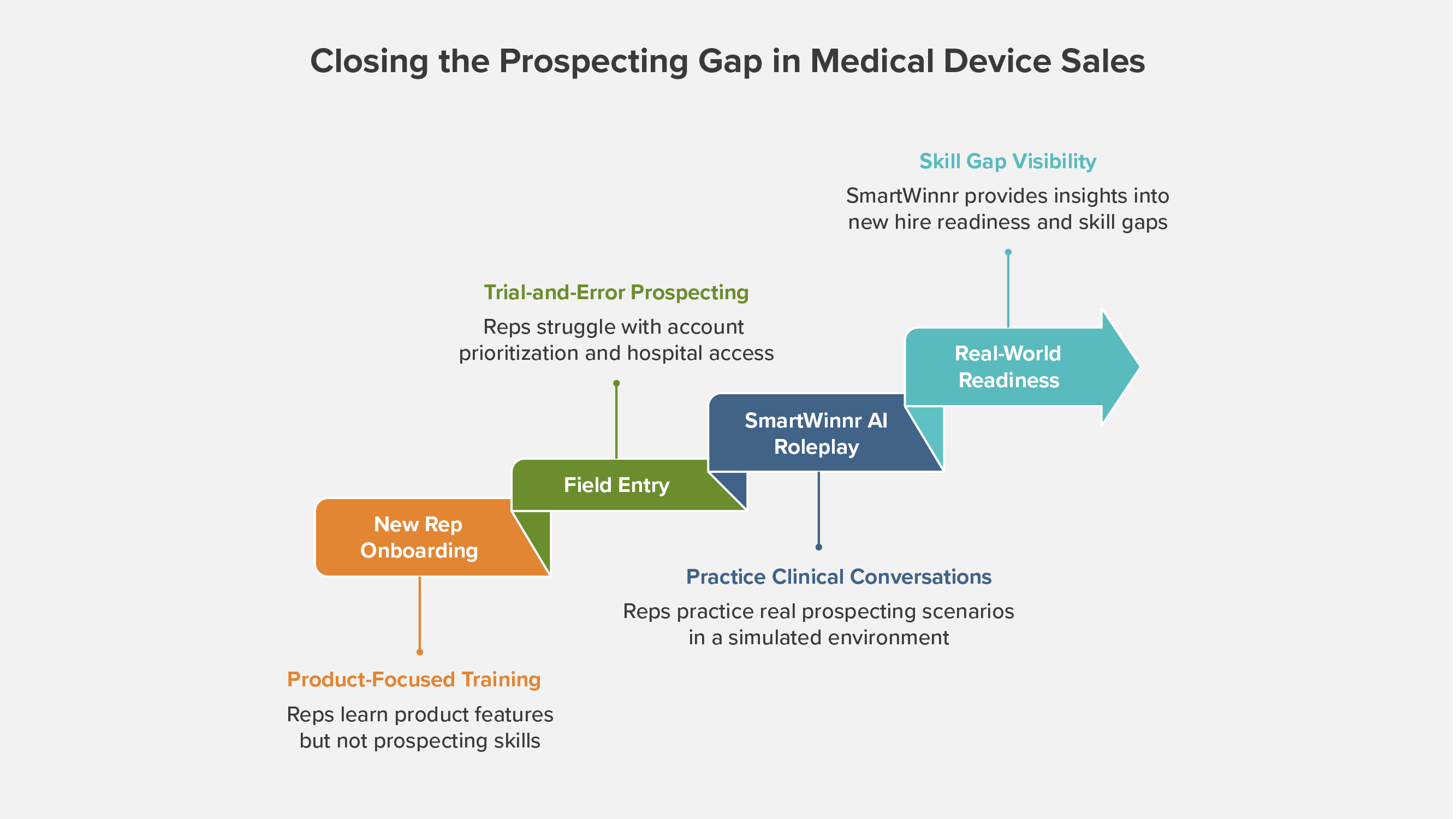
Here is what that distinction costs when you get it wrong: a specialist who aced every compliance module and scored 94% on their product assessment walks into their first case with a GI surgeon. The surgeon deviates slightly from the training scenario, different patient anatomy, different procedural sequence, and asks a follow-up question about device performance under those specific conditions. The specialist hesitates. That hesitation, three or maybe four seconds of visible uncertainty, costs them credibility they may spend the next six months rebuilding, and your LMS dashboard still shows a green checkmark next to their name.
That is the gap. And in 2026, the medical device organizations that have closed it are pulling away from the ones that have not. Read on as we discover why this question is front and center in medical device enablement conversations in 2026, and what a more complete approach to LMS strategy for device teams looks like.
What Is a Medical Device LMS?
A medical device LMS is the system commercial organizations use to deliver, track, and document compliance training, product knowledge, and certification records for clinical specialists. It centralizes content in a version-controlled environment and produces the audit trail regulated commercial organizations require. It does not, on its own, develop live conversational skill.
What Do LMS Platforms Deliver for Medical Device Organizations?
LMS platforms deliver documented compliance training, version-controlled product knowledge, and certification tracking at scale. The LMS is irreplaceable for several specific functions in medical device commercial training. These functions matter enough that the strategic conversation is always about connecting to the LMS, not replacing it.
LMS platforms excel at:
Delivering and documenting AdvaMed Code of Ethics certification, company-specific compliance training, and anti-kickback and sunshine reporting education, with the audit trail and version control that regulatory environments require.
Hosting and distributing product knowledge modules, in-service protocol training, and clinical evidence education in a controlled, version-managed environment that ensures specialists are accessing current, approved content.
Managing assessment and certification records for clinical specialist credentialing, including the device-specific certifications that some care settings require for OR and procedural suite access.
Integrating with HRIS and CRM platforms to connect training records to broader talent management and commercial performance infrastructure.
Providing the scalable content delivery mechanism that allows large, distributed specialist teams to access required training simultaneously and at the pace that field schedules allow.
For medical device organizations operating across large territories with hundreds or thousands of specialists, the LMS compliance and certification infrastructure is a prerequisite, not an option.
The question is not whether to use it. The question is what to connect to it.
Where Do LMS Platforms Have Limitations for Device Team Readiness?
LMS platforms confirm that a specialist was exposed to content. They do not confirm the specialist can deliver a credible in-service to a skeptical scrub nurse or handle a surgeon's clinical evidence challenge in real time. The structural limitations of the LMS as a field readiness platform for medical device teams are amplified by the greater behavioral complexity of device specialist roles.
Understanding these limitations with specificity is necessary for designing an LMS strategy that advances field readiness rather than just compliance documentation.
Module completion confirms that a specialist was exposed to content. It does not confirm that they can deliver a credible in-service to a skeptical scrub nurse, handle a surgeon's clinical evidence challenge, or navigate a VAC financial question with confidence.
Assessment scores measure product knowledge recall in a low-pressure testing environment. They do not reflect the quality of clinical conversations under the cognitive and social demands of a live OR or procurement interaction.
Picture this: a specialist completes the full LMS curriculum for a new endoscopy platform. Their assessment scores are excellent. Their manager signs off on their certification.
Three weeks later, the specialist supports their first case with a GI surgeon who uses the device in a way that differs slightly from the training scenario. The surgeon asks a follow-up question about device performance during a specific patient anatomy variation.
The specialist is not prepared for that level of nuanced clinical conversation because LMS modules cannot simulate the texture of live clinical interaction under social and cognitive pressure. Their hesitation in that moment costs them credibility they may spend months rebuilding.
What this reveals: certification confirms exposure to content, not readiness for the live, unscripted version of that content in front of a stakeholder.
Additional limitations that medical device commercial and L&D leaders are addressing in 2026 include:
LMS content refresh cycles are often slow relative to the pace of change in device portfolios, competitive landscapes, and clinical evidence, creating a persistent gap between what specialists have been certified on and what they encounter in current field conditions.
Self-paced module formats do not develop the active, practiced fluency that multi-stakeholder device conversations require. Knowing the answer to an objection is not the same as being able to deliver it credibly under pressure in a room full of decision-makers.
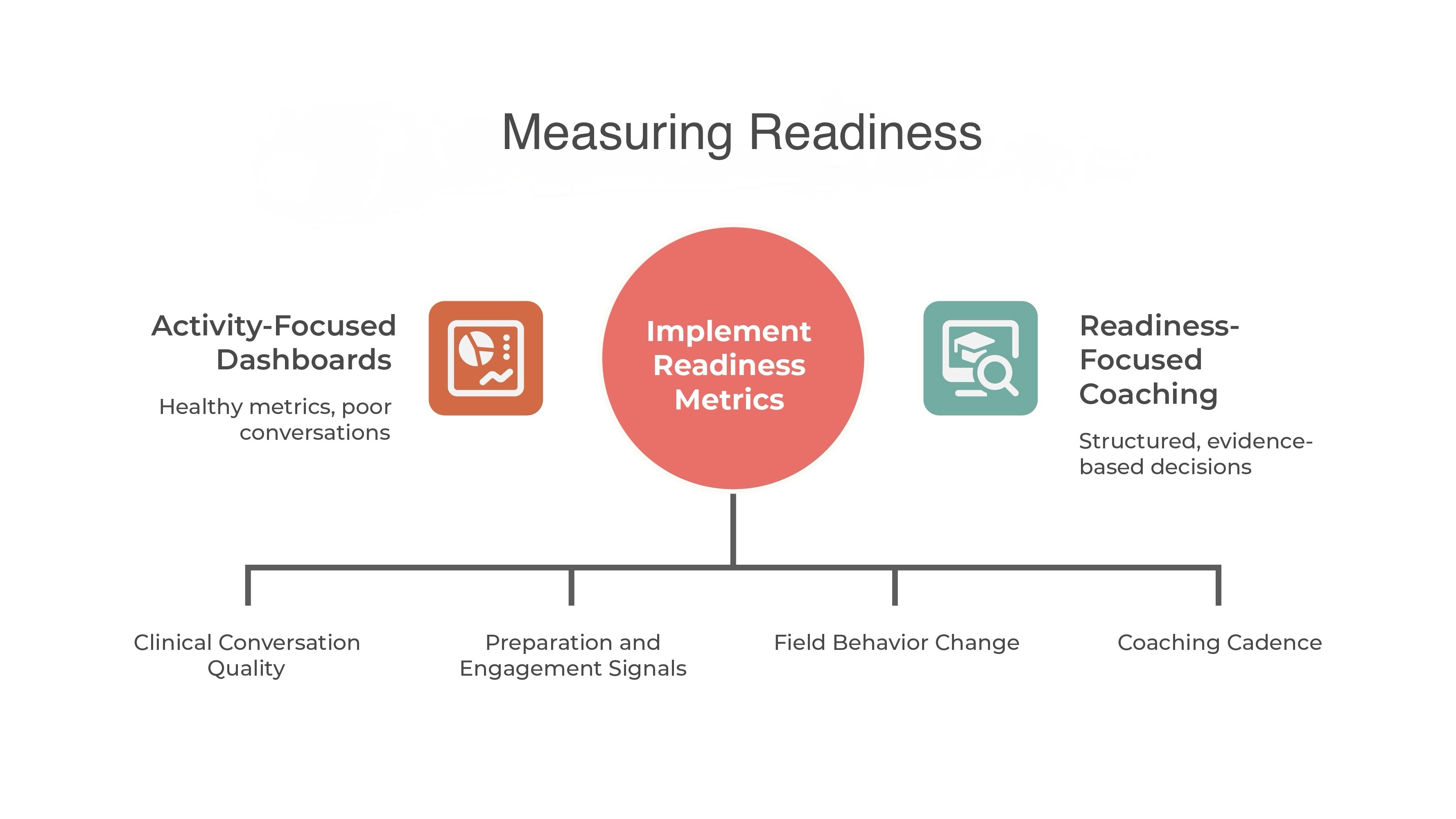
Manager visibility through LMS data is limited to completion rates and assessment scores, providing no insight into the quality or consistency of the clinical conversations those assessments are designed to prepare specialists for.
What Should Device Teams Prioritize in Their LMS Strategy in 2026?
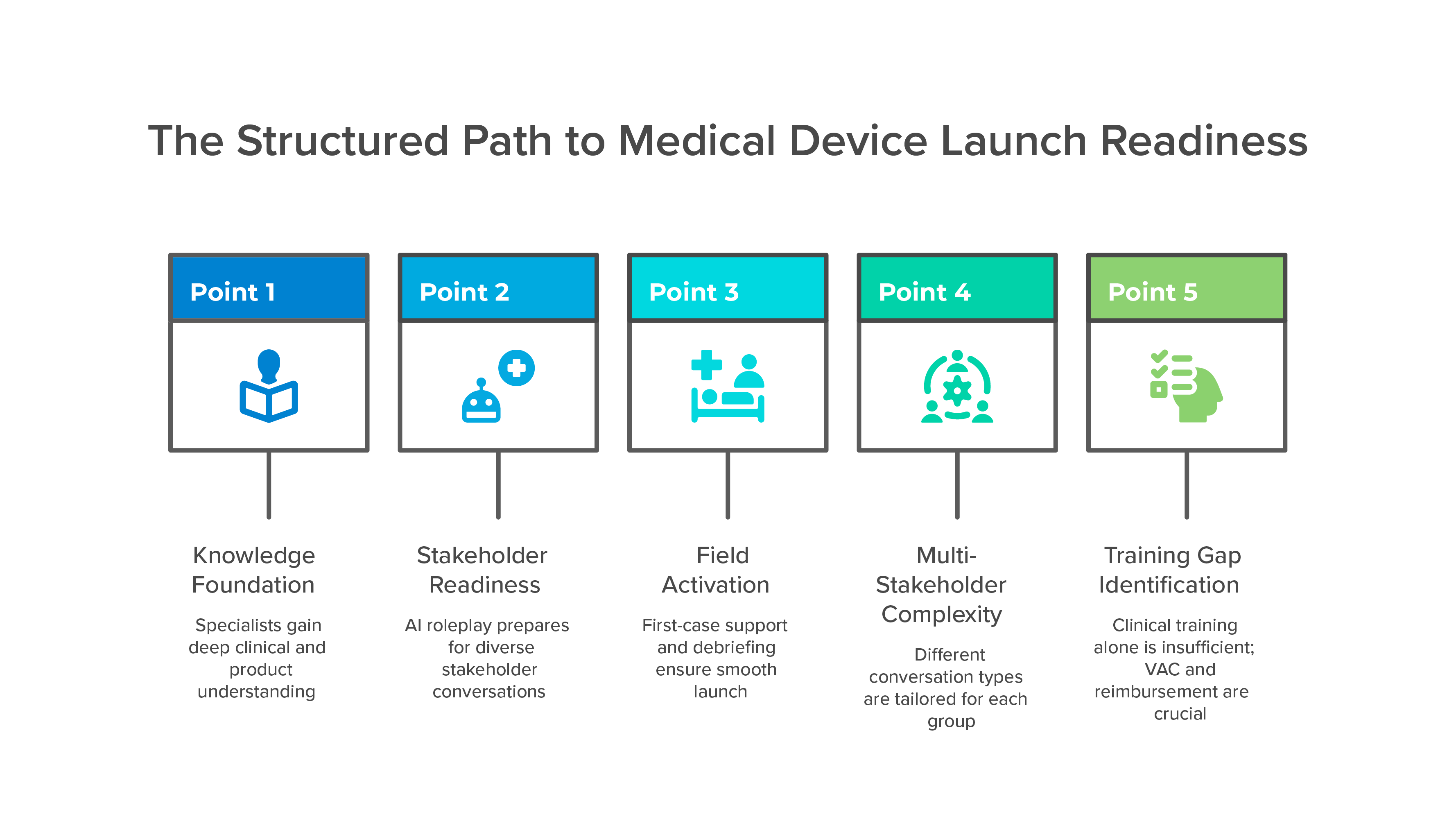
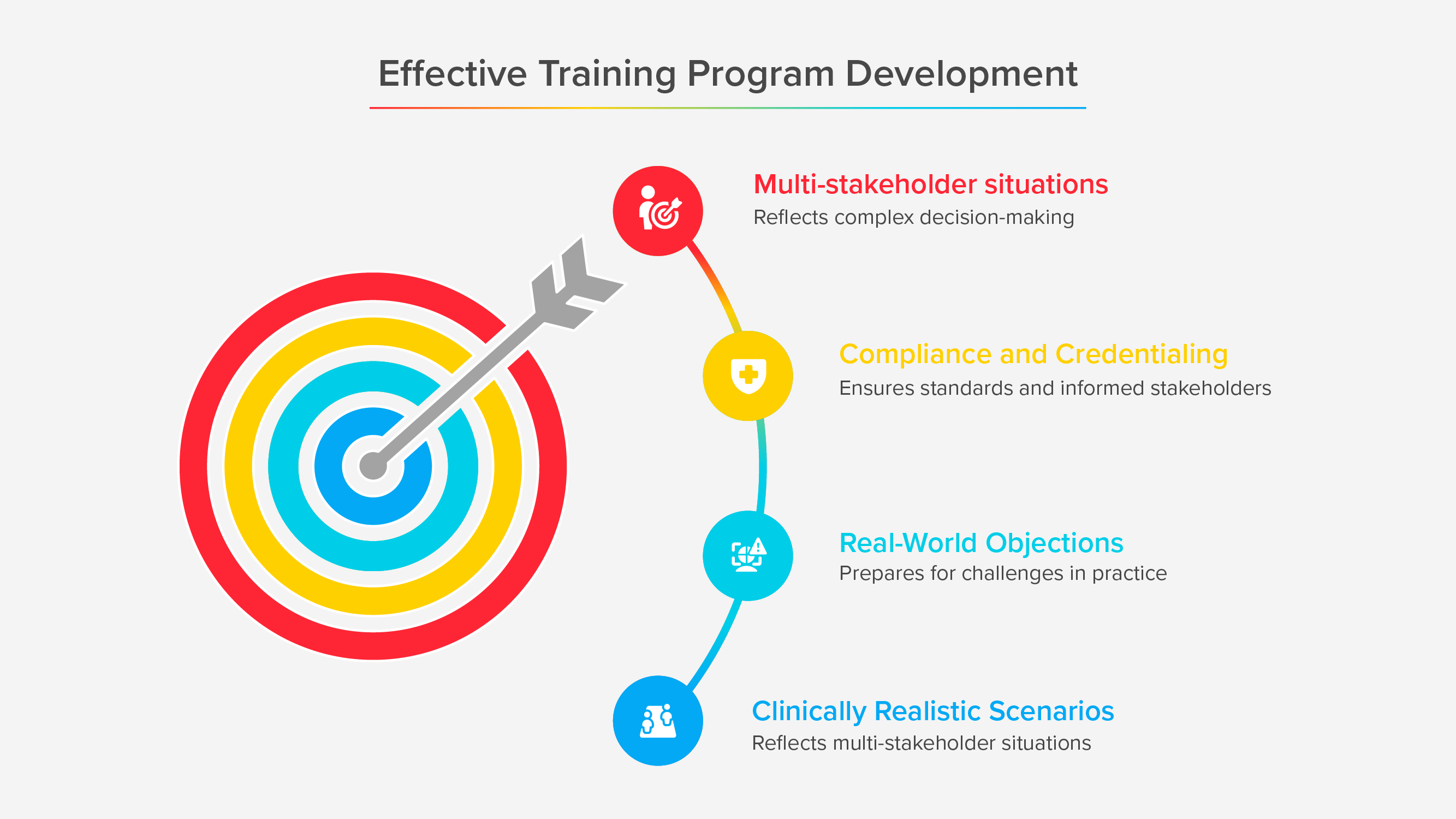
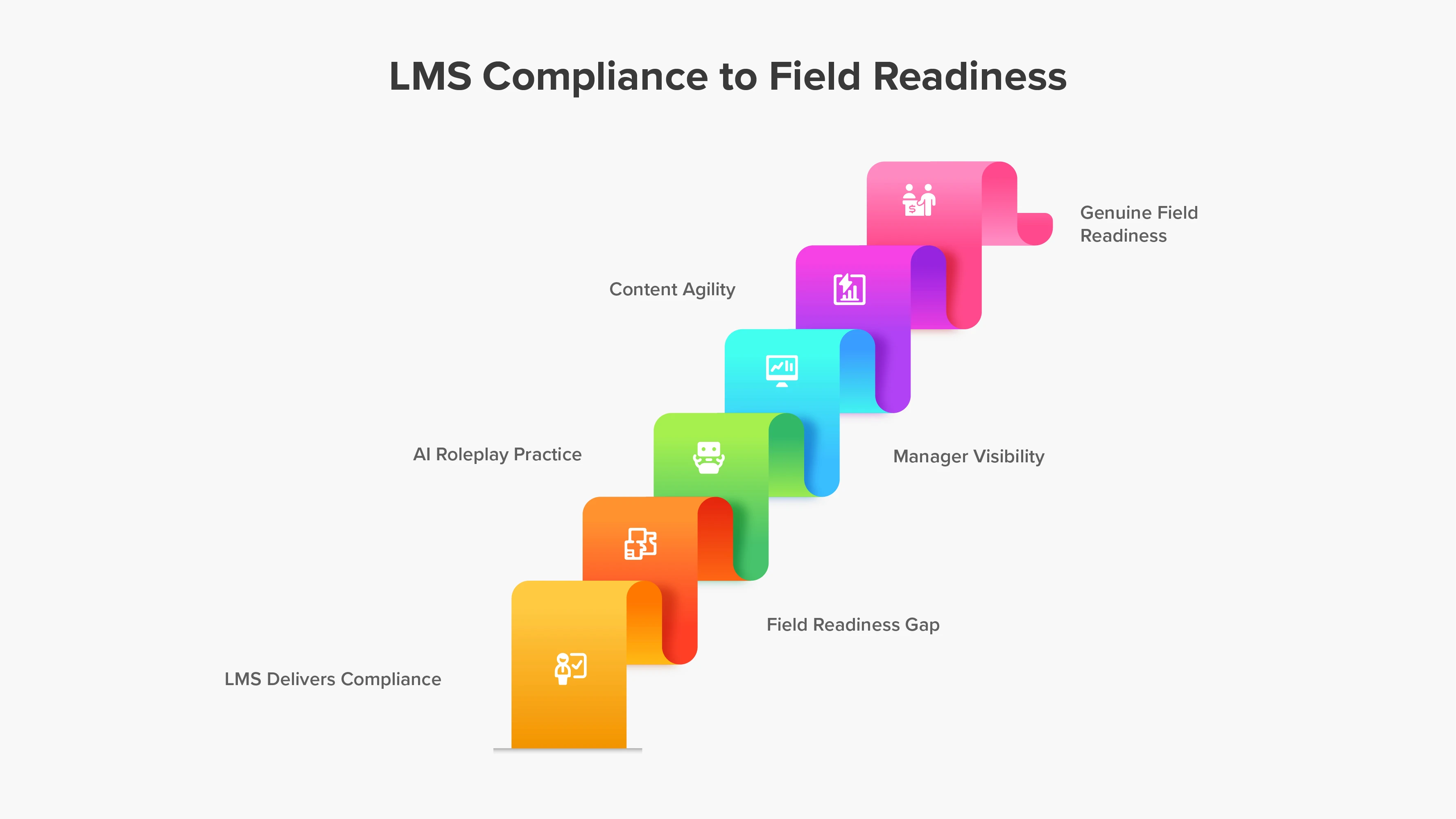
Medical device organizations closing the readiness gap in 2026 are prioritizing three connections: practice infrastructure tied to the LMS, content that keeps pace with portfolio change, and coverage across every stakeholder a specialist actually meets in the field. Each priority involves connecting the LMS to complementary capabilities rather than trying to make the LMS do more than it was designed for.
Priority 1: Integrated Practice and Coaching Infrastructure
The highest-impact LMS strategy investment for medical device organizations is connecting the LMS to a practice and coaching layer that transforms content knowledge into behavioral field competence.
Picture this: a specialist completes the LMS module on a new capital equipment platform. Immediately after, the platform surfaces a linked AI Roleplay scenario where a hospital CFO is asking the specialist to justify the acquisition cost versus the current approved device. The specialist transitions directly from content learning to conversation practice, with the subject matter fresh and the pressure of a realistic stakeholder response to navigate.
What this reveals: the step from knowing content to using it under pressure is what most LMS strategies currently lack, and it is what drives measurable improvement in field readiness.
Closing this gap requires tighter integration across three areas:
LMS content and AI Roleplay: Product and protocol training cannot remain isolated from practical, scenario-based learning.
Frontline coaching systems: Manager dashboards should surface behavioral practice data alongside traditional LMS completion metrics.
Assessment strategies: Instead of measuring simple recall, leading organizations are evaluating how effectively specialists apply knowledge across realistic, multi-stakeholder interactions.
Priority 2: Content Agility for Device Portfolio and Competitive Evolution
Medical device portfolios evolve continuously, and an LMS strategy that cannot keep pace with that evolution creates a persistent gap between what specialists have been certified on and what they encounter in their territories.
Addressing this requires integration with AI Roleplay content platforms that can update scenario content within days of a new device model introduction, competitive entry, or clinical evidence publication.
It requires modular content architecture that allows specific device, indication, or competitive landscape updates to be deployed without requiring a full course redevelopment cycle. And it requires mobile-first microlearning delivery formats that allow content updates to be pushed to the field organization and consumed in the rhythm of specialist schedules.
Priority 3: Multi-Stakeholder Readiness Coverage
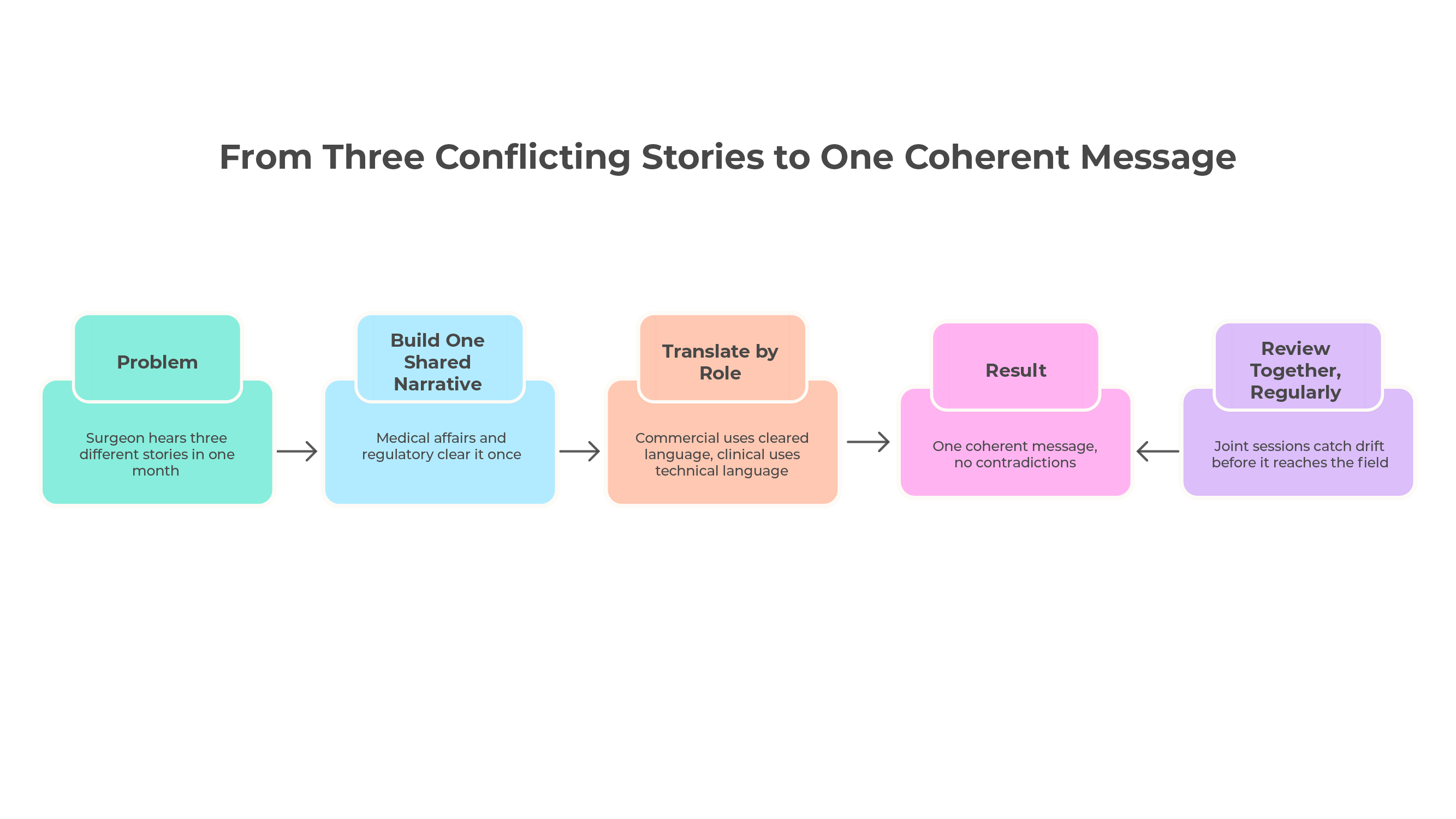
The most significant gap in traditional LMS-based device training is the absence of meaningful preparation for the full range of stakeholder conversations that specialists encounter.
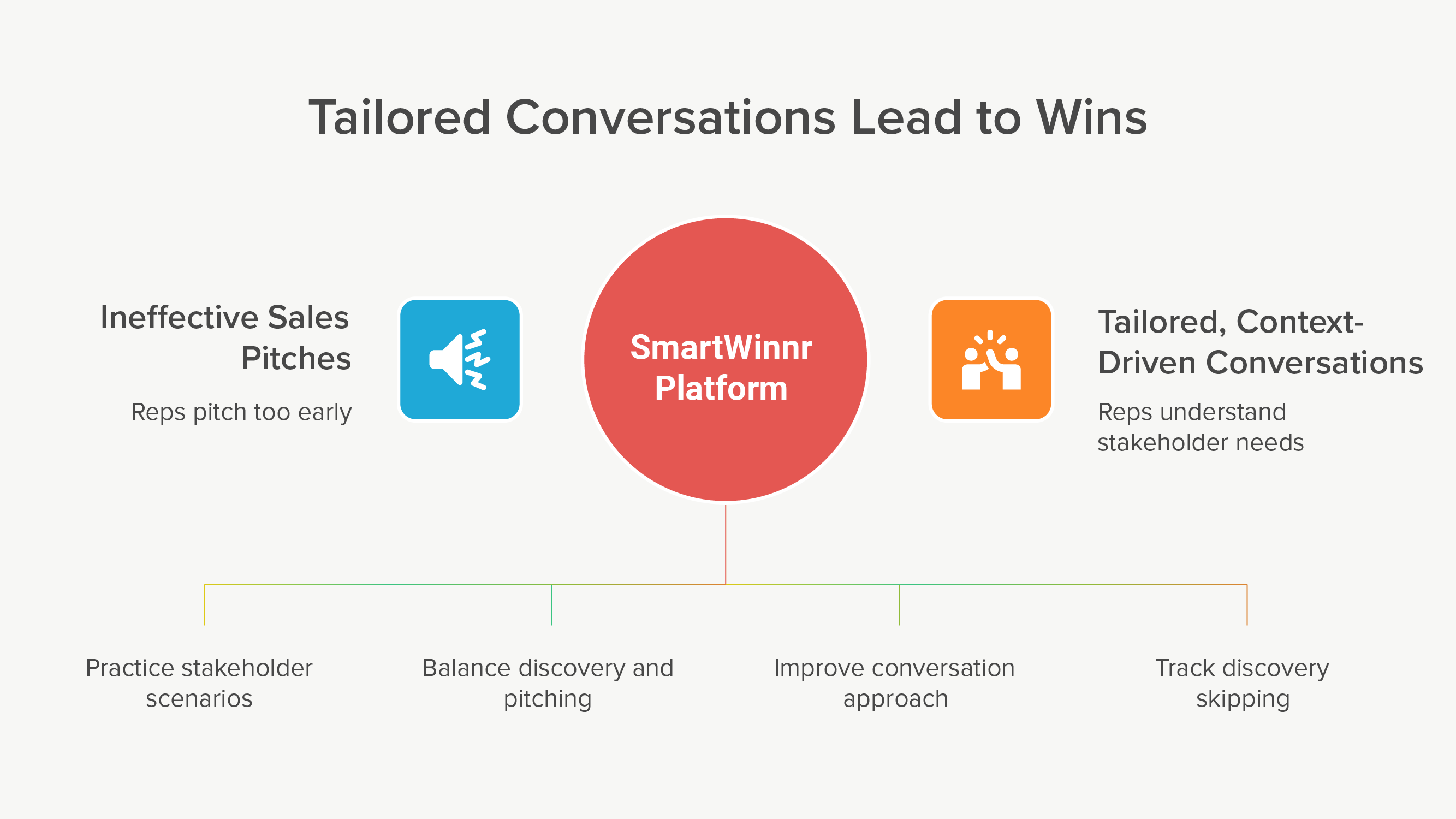
This requires AI Roleplay scenario libraries that cover the full stakeholder conversation range: surgeon, nurse, biomedical, procurement, and administrator, in the specific care settings most relevant to the organization's device portfolio.
It requires scenario content aligned to the financial, operational, and technical questions that non-clinical stakeholders bring to device evaluation conversations. And it requires manager-assignable practice modules that allow coaching insights to be translated directly into targeted scenario practice.
Is the LMS the Foundation or the Finish Line?
The LMS is the foundation of field readiness, not the finish line. The compliance documentation lives there. The certified product knowledge lives there. The version-controlled clinical evidence modules live there. All of that is essential. None of it is sufficient.
What the LMS does not provide, and was not designed to provide, is the practiced conversational fluency that separates a specialist who knows the device from a specialist who can use that knowledge to navigate a skeptical surgeon's objection or a VAC coordinator's financial challenge in real time.
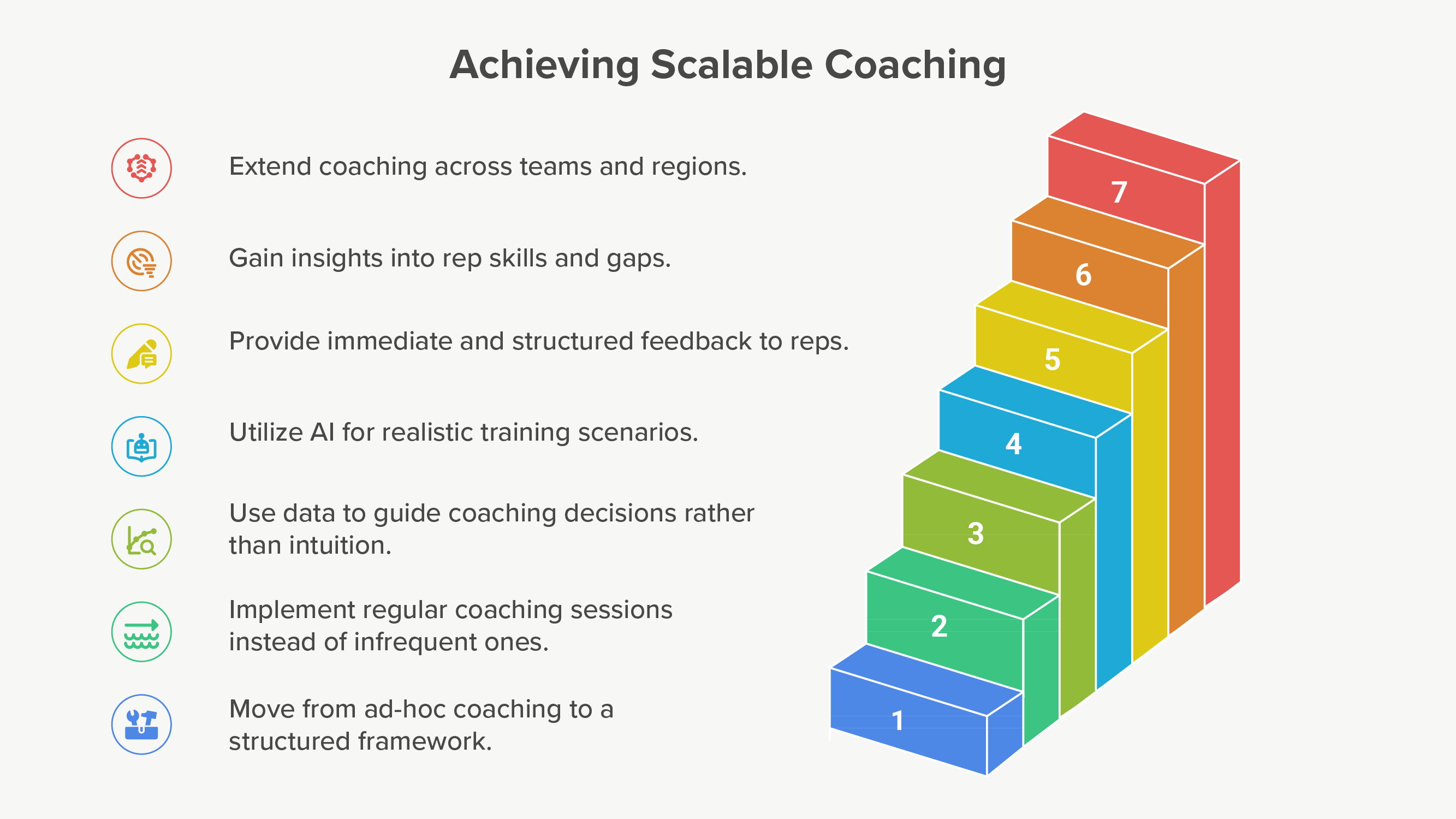
Building that fluency requires connecting the LMS to a practice layer and connecting the practice layer to manager coaching data. When those three components work together, the LMS becomes what it should always have been: the starting point of a continuous readiness program, not the sum of it.
The medical device organizations building the most comprehensive field readiness programs in 2026 are doing exactly this: connecting their LMS compliance and knowledge infrastructure to AI-powered practice and coaching layers that transform module completion into genuine clinical and commercial competence. The LMS and the practice platform work together, each doing what it does best.
How Does SmartWinnr Complement Medical Device LMS Infrastructure?
SmartWinnr integrates with existing LMS and enablement infrastructure to provide the practice and coaching layer that transforms structured content delivery into genuine field readiness. The platform connects what specialists learn through LMS modules to how they need to perform in complex, multi-stakeholder field interactions across care settings.
For medical device commercial and L&D leaders building more effective training ecosystems, the platform provides:
AI Roleplay scenarios directly aligned to LMS product, protocol, and clinical evidence content, creating a connected pathway from content learning to multi-stakeholder conversation practice.
Multi-stakeholder scenario libraries that extend LMS knowledge into the full range of clinical, commercial, and technical conversations that device specialists encounter in the field.
Field coaching dashboards that provide behavioral readiness visibility alongside LMS compliance and completion data, giving commercial leaders a complete picture of individual specialist preparedness.
Rapid scenario update capability, supported by targeted learning paths, that keeps practice content current with device portfolio evolution, competitive landscape changes, and clinical evidence developments.
Performance analytics and coaching workflows, connected through digital content management, that tie practice outcomes back to field results and help L&D leaders prioritize coaching interventions.
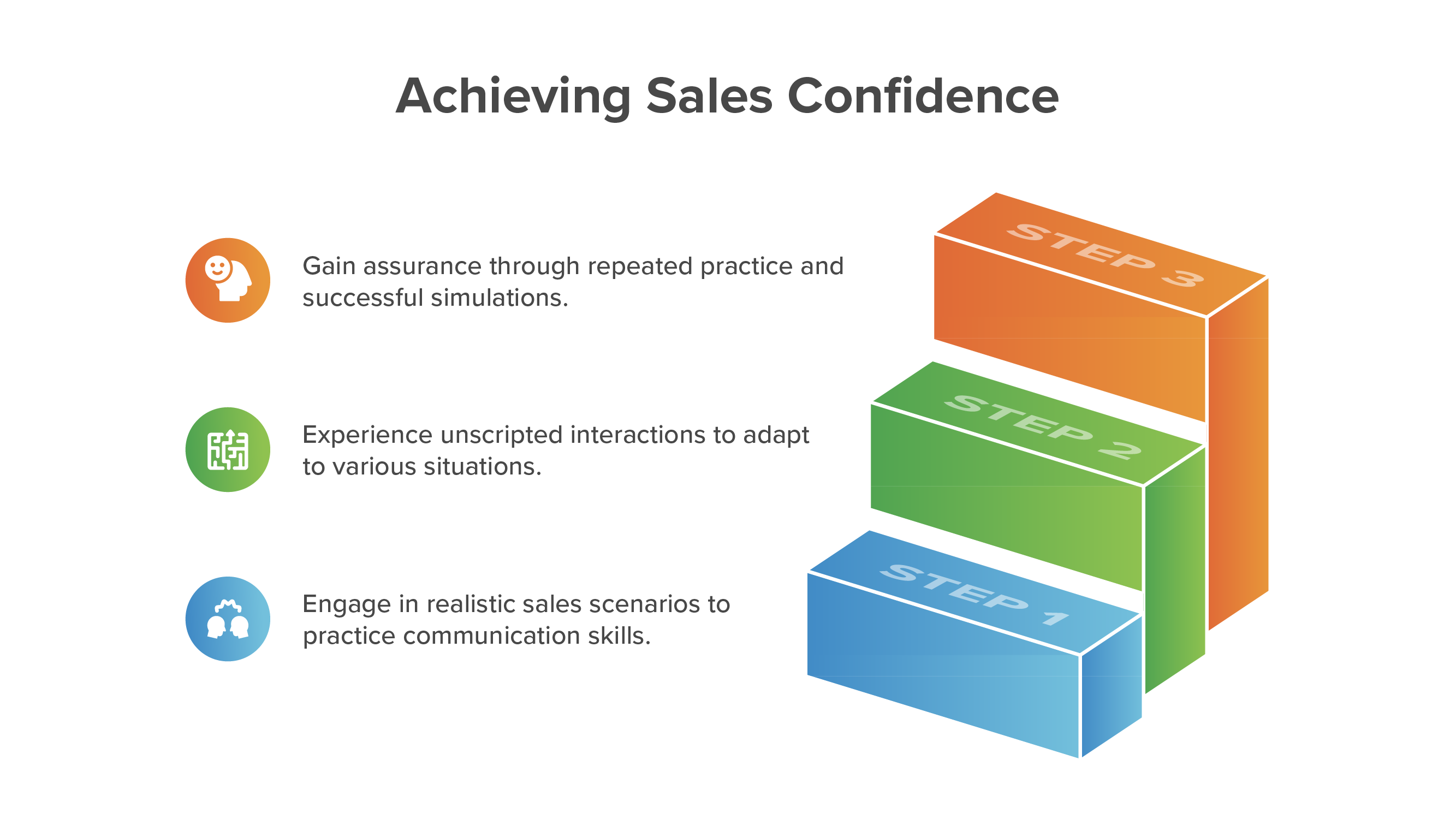
SmartWinnr customers report a 74% increase in rep confidence for complex clinical conversations after connecting AI Roleplay to their existing LMS, and a 30% improvement in launch readiness timelines, based on AI Roleplay product data.
Explore how the platform supports medical device sales readiness.
Request a demo to understand how it complements your LMS with AI Roleplay, structured coaching, and continuous field readiness infrastructure.
Frequently Asked Questions
What is a medical device LMS?
A medical device LMS is the system used to deliver, track, and document compliance training, product knowledge, and certification for clinical specialists. It centralizes content in a version-controlled environment and produces the audit trail regulated commercial organizations require. It does not, on its own, develop live conversational skill.
What are the limitations of an LMS for field readiness?
Module completion confirms exposure to content, not the ability to apply it under pressure in a live clinical or procurement conversation. Assessment scores measure recall in a low-pressure testing environment. Field readiness depends on practiced fluency across the exact stakeholder conversations a specialist will actually face.
How does AI Roleplay fit alongside an existing LMS?
AI Roleplay connects to LMS content so specialists move from a module directly into a scenario-based conversation built around that same material. It does not replace the LMS. It adds the practice layer the LMS was not designed to provide.
What stakeholders should medical device roleplay scenarios cover?
Effective scenario libraries cover surgeons, nurses, biomedical engineers, procurement teams, and administrators, since device specialists move between all of these conversations, often in the same care setting. Each stakeholder raises different questions, from clinical evidence to total cost of ownership. Coverage across all of them, not just clinical conversations, is what closes the readiness gap.
What should managers look for beyond LMS completion data?
Managers should have visibility into behavioral practice data, such as roleplay scores and coaching observations, alongside standard completion and assessment metrics. Completion rates confirm exposure. Behavioral data confirms whether a specialist can apply that knowledge in a live, multi-stakeholder conversation.
Disclaimer: This content reflects industry practices and does not constitute medical, legal, or regulatory advice.
Last Updated: