
Smart AI Blog Summary
Get a quick blog summary from any of the below LLM's
What You'll Learn
There is a moment that every device MSL knows well. You are in a pre-op briefing. The surgeon is reviewing the case. A scrub technician is setting up. The clinical nurse specialist is double-checking the setup protocol.
And somewhere in that organized, focused room, someone turns to you and asks a question about the device that sits right at the edge of what you have formally prepared for.
It might be a question about intraoperative handling. It might be a comparison to a device the team has used for years. It might be a concern about a complication that came up in a paper. Whatever it is, the conversation that follows will either build trust or quietly erode it.
And unlike a standard meeting, you cannot ask for a moment to collect your thoughts. The room is already moving.
That is the environment medical device MSLs and clinical specialists are trained for. And it is genuinely hard to replicate in a classroom, a training day, or even a field ride-along. AI roleplay is helping organizations get closer to realistic preparation for those moments.
This article explores what that looks like in practice, what scenarios are worth building, and what training and commercial leaders should be looking for when they evaluate platforms for a device team
What This Article Covers
What makes device MSL training genuinely different
Where the conversational preparation gap shows up in the field
What good AI roleplay looks like in a device environment
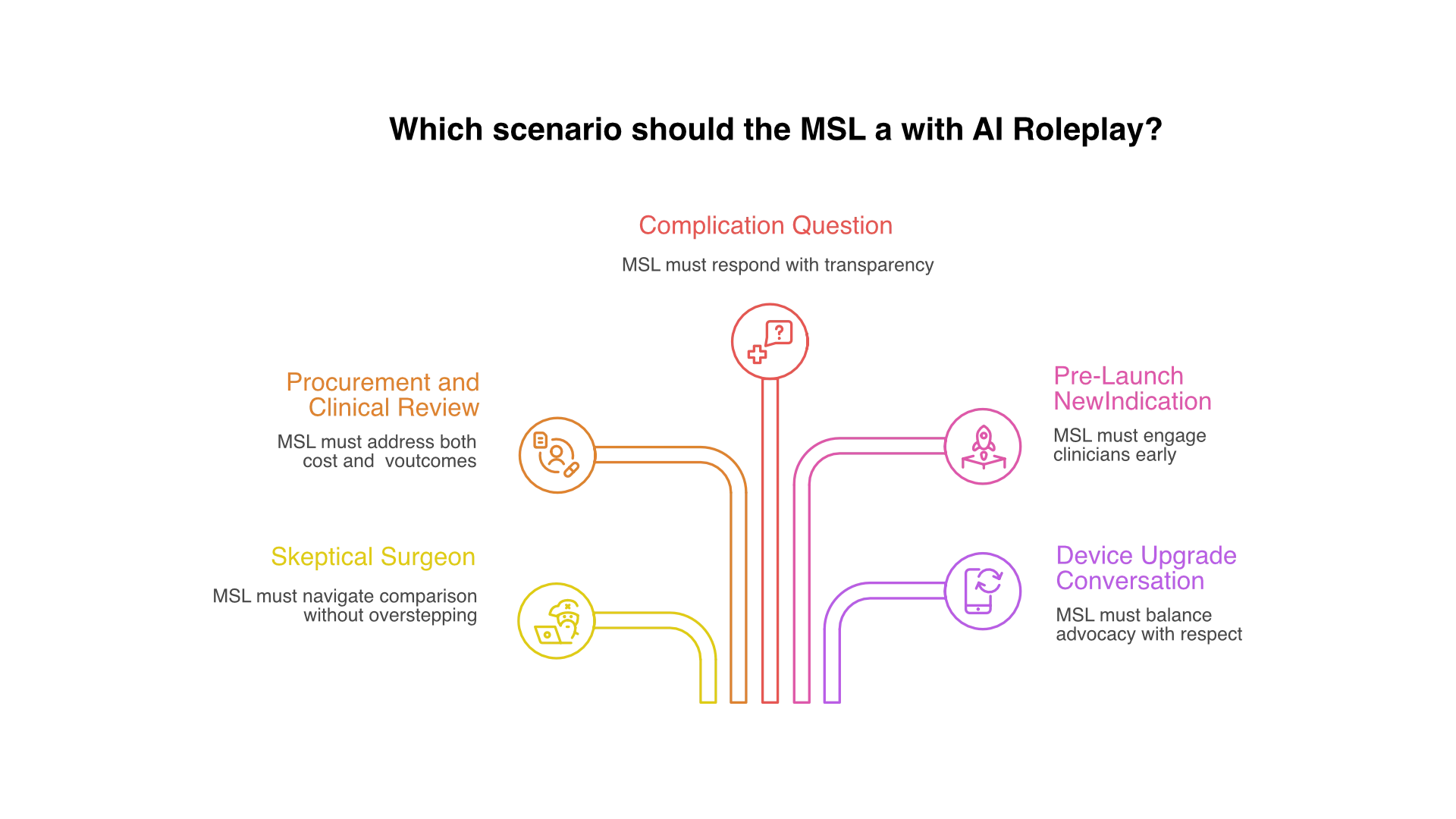
Five real scenarios device MSL teams need to practice
What commercial and clinical training leaders should evaluate
What Makes Device MSL Training Genuinely Different
Medical device MSLs face a layer of complexity that their pharma counterparts do not deal with in quite the same way: the multi-stakeholder clinical environment.
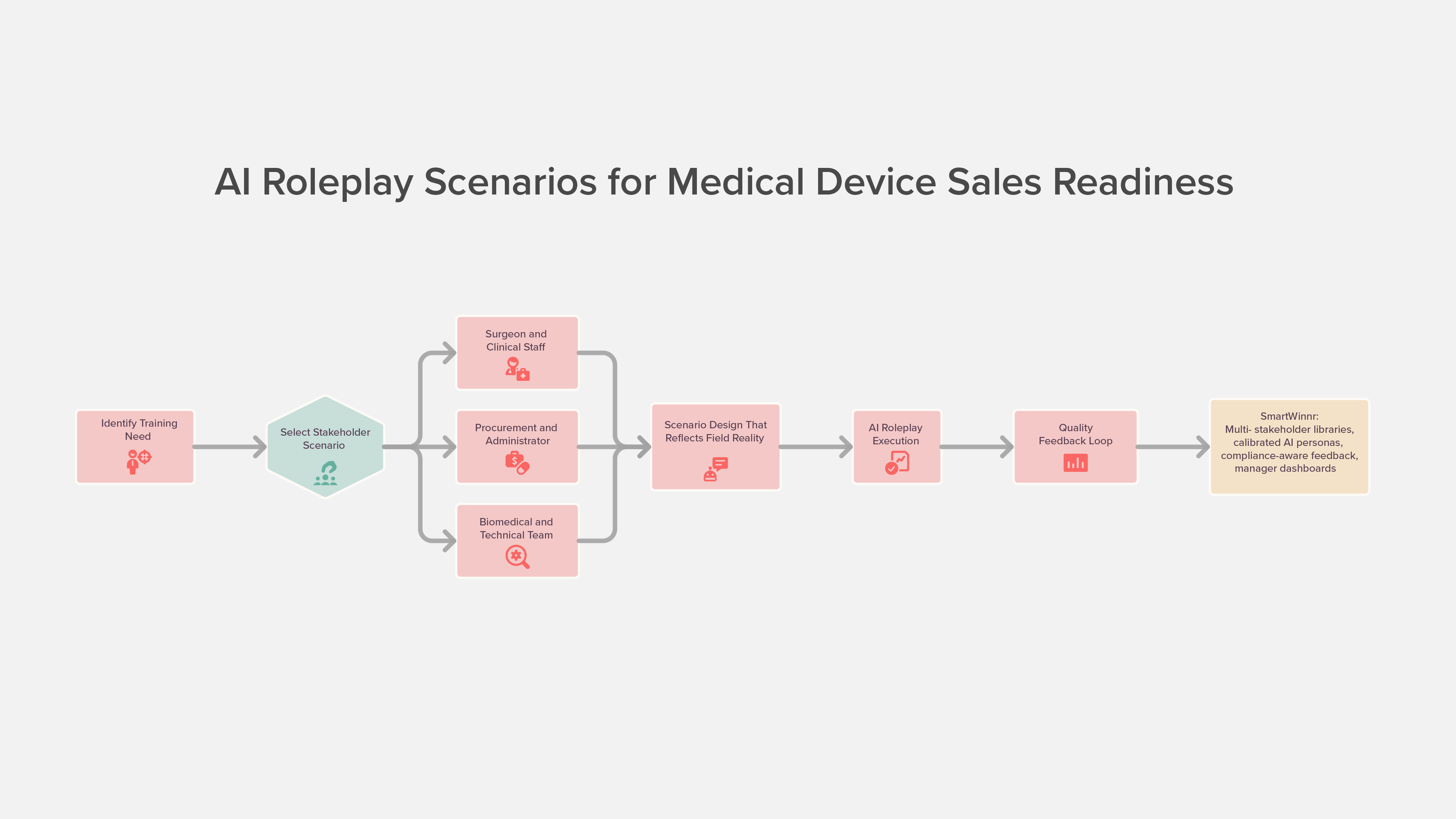
A pharmaceutical MSL typically navigates a conversation with one prescriber at a time. A device MSL might walk into a room where the surgeon, the OR coordinator, the biomedical engineer, the department head, and the procurement manager all have different questions, different concerns, and different frames of reference for what matters about the device. Each of those conversations requires a different register, a different emphasis, and a different kind of preparation.
Beyond the stakeholder complexity, device MSLs often work in procedural environments where communication norms are different from a standard meeting.
Operating rooms, catheter labs, endoscopy suites, these are spaces with their own rhythms, their own hierarchies, and their own expectations about how information should be delivered and when.
A device MSL who has not practiced communicating in those environments can feel genuinely out of their depth even if their product knowledge is solid.
The MSL Journal notes that new MSLs typically need twelve to eighteen months to fully comprehend the scope of their role and develop the kind of independent confidence that field effectiveness requires.
For device MSLs, where the procedural dimension adds real complexity to the interpersonal one, that adjustment period can stretch further if preparation has not been structured to address it.
The other unique pressure in device MSL roles is the pace of clinical evaluation. Surgeons and proceduralists do not make adoption decisions over months of relationship-building the way prescribers sometimes do.
They often form clear views quickly, based on a small number of direct interactions. That makes each early conversation with a new clinical contact more consequential, and more in need of solid preparation.
Where the Conversational Preparation Gap Shows Up in the Field
Most device training programs do a reasonable job of building product knowledge. The gap shows up in the conversations that product knowledge alone cannot navigate.
Consider a device specialist preparing for their first independent engagement with a surgical team that has been loyal to a competitor's platform for years. They know every feature of the device. They can discuss the clinical evidence clearly.
But have they ever practiced responding to a surgeon's casual skepticism about switching costs?
Have they worked through how to handle a complication question in front of a clinical audience in a way that is accurate, compliant, and credible?
Those conversations are hard to practice in a traditional training environment because the dynamics that make them hard, the presence of multiple stakeholders, the clinical setting, the real relationship at stake, cannot be fully replicated in a training room.
What you can replicate is the conversation itself. The back and forth. The unexpected follow-up. The moment when the clinical contact says something that takes the exchange somewhere you did not anticipate.
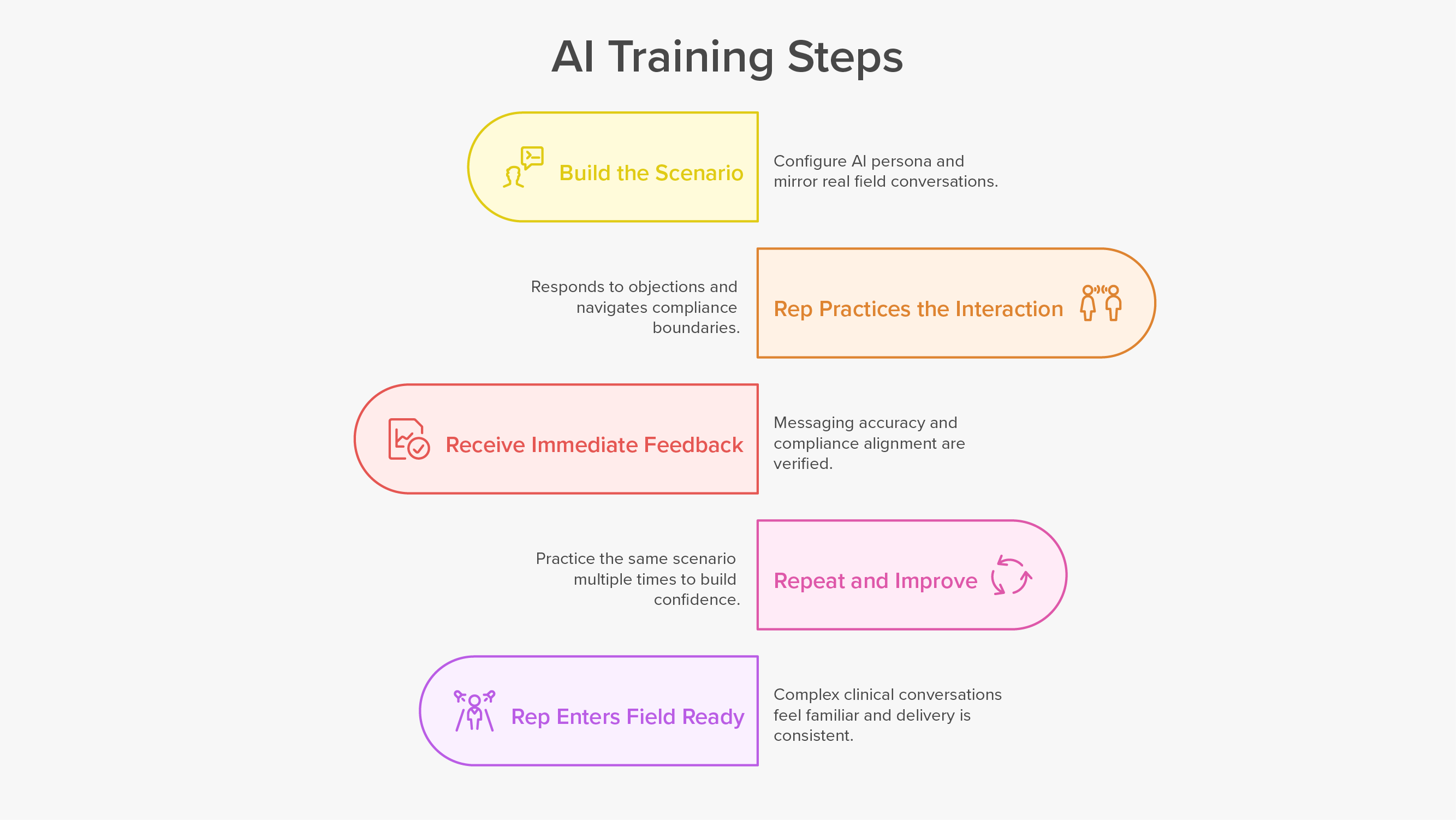
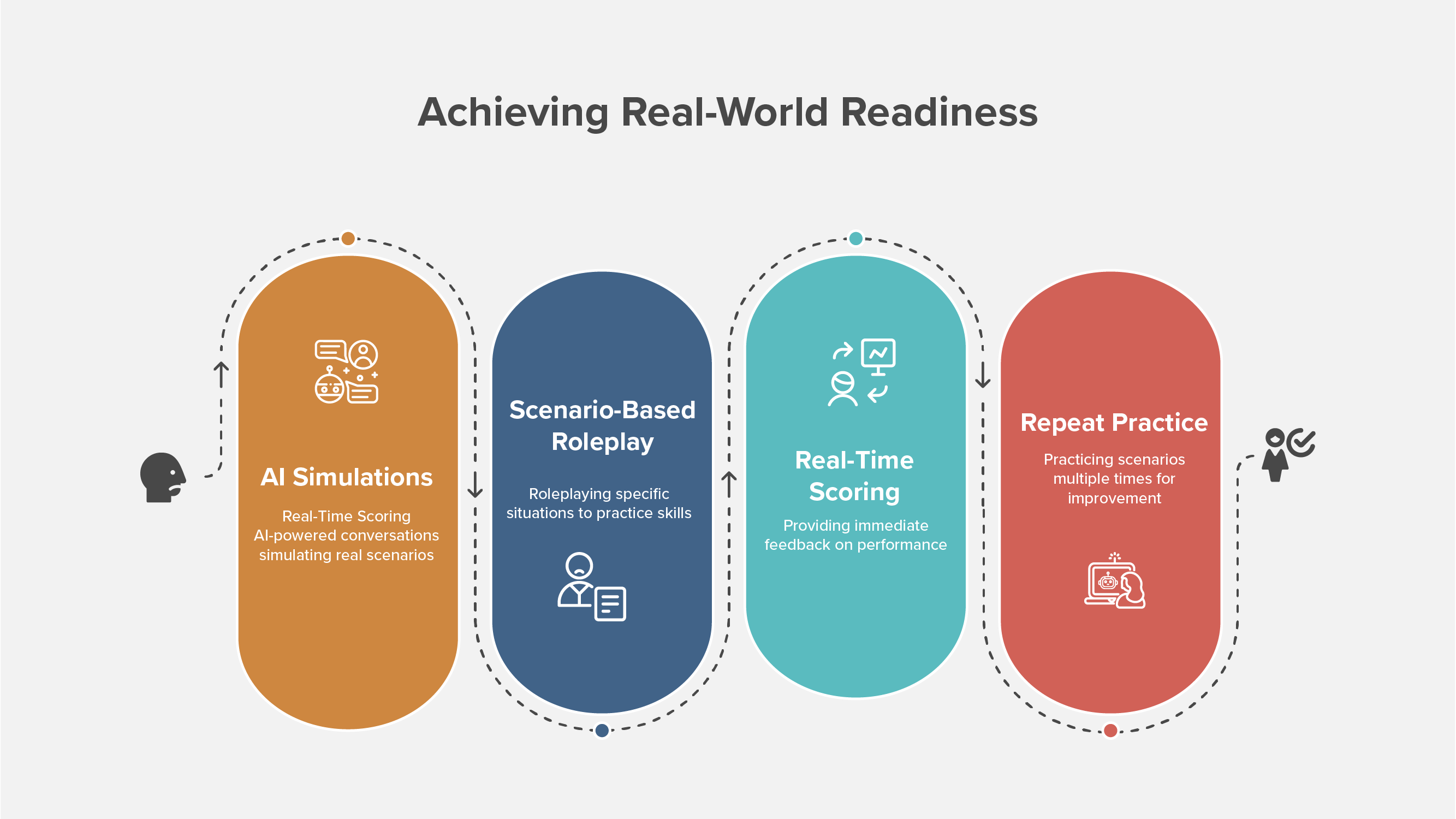
AI roleplay creates a repeatable environment where device MSLs can practice those conversations as many times as they need, with structured feedback on what worked and what did not, before the interactions are real.
Research on simulation-based training in medical and sales contexts consistently finds that repeated low-stakes practice with realistic adversarial scenarios improves real-world performance more effectively than single-session didactic training.
That finding holds for device MSL preparation in the same way it holds for other high-stakes professional conversations.
What Good AI Roleplay Looks Like in a Medical Device Environment
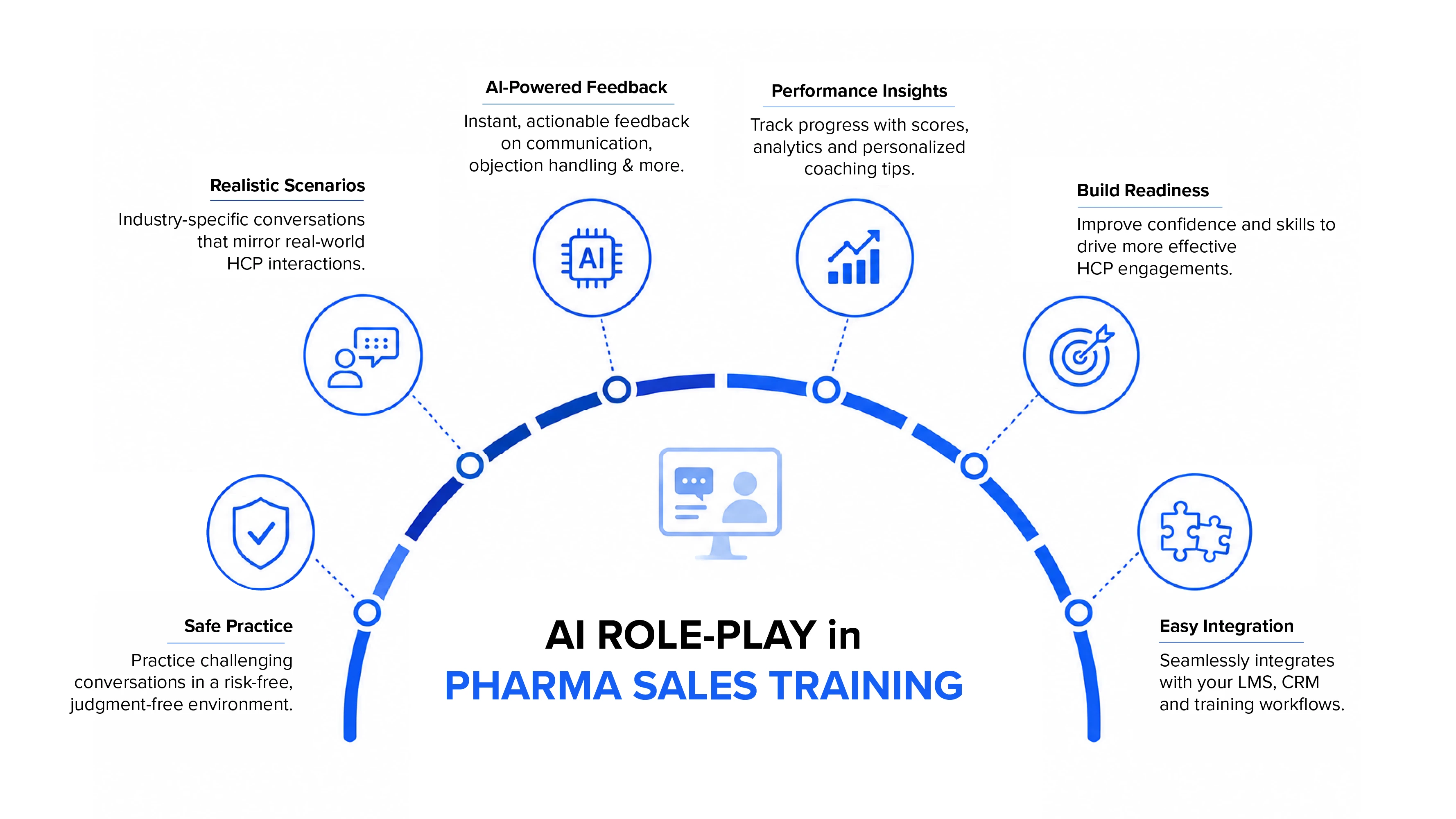
Not every AI roleplay platform is built for the complexity of a device MSL context. When evaluating tools for a clinical and commercial team, there are specific capabilities worth looking for.
Multi-stakeholder scenario design that simulates different clinical roles, surgeons, procurement managers, OR nurses, biomedical staff, not just a generic HCP persona.
Procedural context awareness, so scenarios reflect the care settings and clinical workflows where the device is actually used rather than a generic meeting room dynamic.
Compliance-aware feedback that reinforces device-specific communication standards around evidence representation, intended use, and comparative discussions.
Specific, behavior-level feedback on how the MSL managed clinical questions, not surface-level praise but substantive input on accuracy, framing, and relationship management.
Configurability across device categories and care settings, so the platform can reflect the actual portfolio and stakeholder landscape of your organization rather than applying one-size-fits-all scenarios.
Five Scenarios Device MSL Teams Need to Practice
Capability descriptions are more useful when they are grounded in real situations. Here are five scenarios where structured AI roleplay practice directly supports device MSL readiness.
The Surgeon Evaluating a New Implant System
A senior orthopedic surgeon with fifteen years of experience using a competitor's implant system is being introduced to a new device. The AI persona is not hostile but is genuinely skeptical. They ask about intraoperative handling, about the learning curve, about how the outcome data compares to what they know from their own clinical experience with the alternative.
The device MSL needs to engage at a clinical level, represent the evidence accurately, and navigate the comparison without overstepping communication boundaries. Having practiced this conversation multiple times in an AI environment means the first real version of it feels like familiar territory rather than a high-stakes improvisation.
The Combined Procurement and Clinical Review
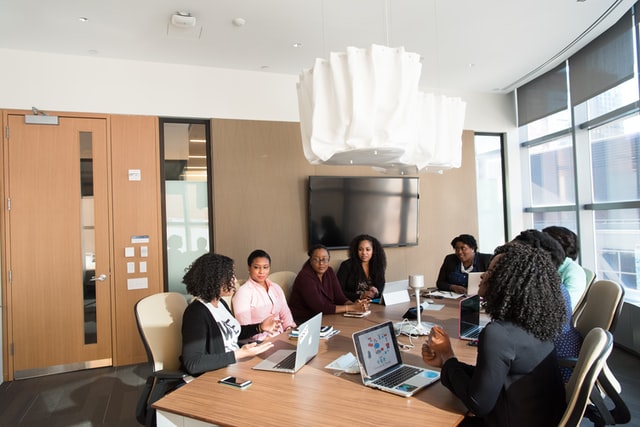
A hospital is conducting a formal device evaluation. A procurement manager and a clinical department head are both present. The procurement manager is focused on total cost of ownership, contract terms, and standardization across the network.
The clinical director cares about outcomes data, staff training requirements, and how the device fits into current workflows.
The device MSL needs to address both sets of concerns in the same conversation, without making commitments that are not within their remit and without allowing the clinical conversation to be entirely swamped by cost discussion.
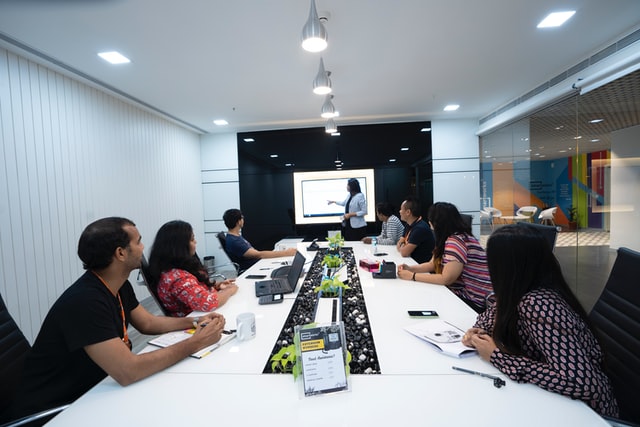
This multi-audience dynamic is one of the hardest things to build in a standard training program. AI roleplay can simulate it directly.
The Complication Question in a Clinical Setting
A clinical nurse specialist has read about an adverse event associated with devices in the category and wants to understand how the device being discussed compares. This is not an adversarial question.
It is a legitimate clinical concern raised by a professional who is trying to make a good decision for their patients.
The device MSL needs to respond with transparency, accuracy, and genuine engagement, not defensiveness, not deflection, not an over-reassuring response that does not hold up to scrutiny.
Practiced language for this kind of conversation matters. The MSL who has worked through this scenario in an AI environment multiple times will handle it with far more composure than one encountering it for the first time in a real clinical setting.
Pre-Launch Preparation for a New Procedural Indication
A company is preparing to launch a device for a new indication. The clinical community is still forming its views on the evidence. The MSL team needs to be ready from day one to engage with clinicians who are curious, evaluating, and in some cases skeptical about the new use case.
AI roleplay scenarios built around the specific clinical evidence and the anticipated objections allow every MSL on the team to practice that engagement before any real interaction happens. For a VP of commercial training managing a launch, the ability to have structured data on team readiness before field deployment begins is a meaningful operational capability.
The Device Upgrade Conversation with an Established Clinical Relationship
A clinical specialist is meeting with a hospital team that has been using an older generation of the device for several years and is being asked to consider an upgrade. The team is comfortable with what they have. Change has a cost in terms of workflow adjustment and re-training.
The conversation requires the MSL to be genuinely respectful of that reality while making an honest case for the clinical and workflow improvements the new device offers.
This is a conversation that requires emotional intelligence as much as clinical knowledge.
AI roleplay that simulates a realistic version of that dynamic, with a persona that is not hostile but is genuinely comfortable with the status quo, gives device MSLs a space to practice the balance between advocacy and respect for the clinical team's existing experience.
These five scenarios share a common requirement: the ability to practice in a realistic, repeatable environment with feedback that is specific enough to actually change behavior.
What Commercial and Clinical Training Leaders Should Evaluate
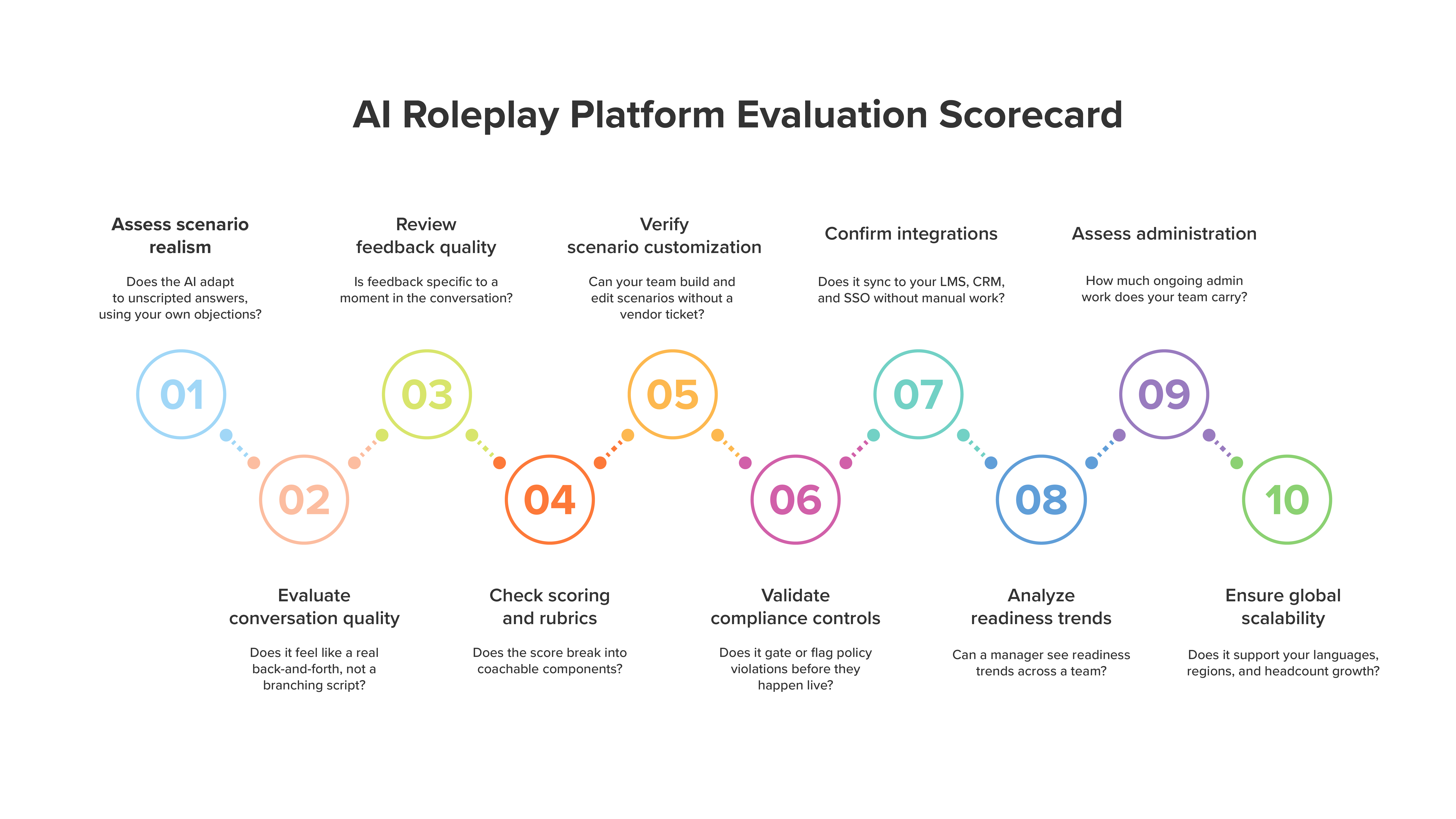
For a VP of commercial excellence or a head of clinical training in a device organization, the evaluation of an AI roleplay platform comes down to whether it supports the kind of preparation that actually shows up in better field performance. The following questions are worth asking of any platform you consider.
Can scenarios be configured to reflect your specific device portfolio, clinical care settings, and stakeholder types, rather than applying generic defaults that do not reflect your field reality?
Does the feedback engine address the behaviors that matter in clinical device interactions, accurate evidence representation, appropriate compliance framing, multi-stakeholder fluency, rather than generic performance scores?
Can training leaders track preparation progress across a distributed team and use that data to inform coaching and readiness certification, without needing to be present for each practice session?
Can new scenarios be built or updated quickly when a product line expands, a new indication is supported, or a competitive change requires the team to be prepared for different questions?
Is compliance built into the design of the platform as a foundational principle, so that device MSLs are reinforced toward communication practices that align with regulatory and company standards?
The answers to those questions will separate platforms built for the complexity of a device environment from tools that apply generic AI roleplay to a context that requires something more specific."
That is what purpose-built AI roleplay platforms like SmartWinnr are designed to deliver.
How SmartWinnr Supports Medical Device MSL Readiness
SmartWinnr's AI Roleplay platform is built for regulated industries where conversational precision and compliance alignment are not optional. For medical device organizations, that means scenarios can be configured to reflect specific device categories, specific care settings, specific stakeholder types, and the communication standards applicable to the organization.
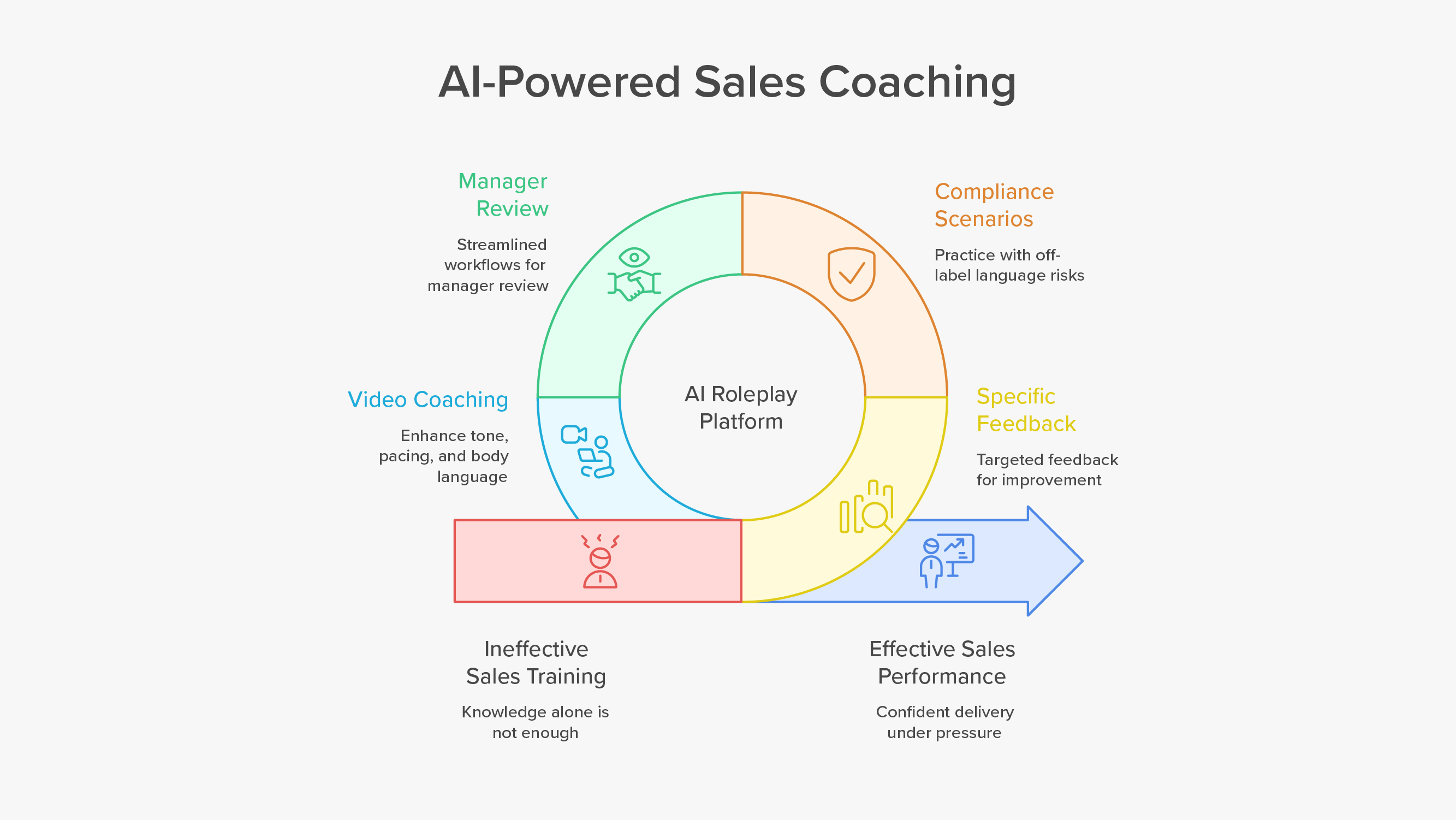
The two-way AI simulation enables device MSLs and clinical specialists to practice the full range of interactions they will encounter in the field, from complex multi-stakeholder clinical reviews to one-on-one conversations with skeptical surgeons, and to receive structured feedback that is relevant to the actual behaviors that matter in those interactions.
Training managers and commercial excellence leaders gain visibility across the team, with structured data on where conversational gaps are appearing and where coaching should be focused. That visibility supports evidence-based decisions about readiness rather than relying on manager intuition or self-reporting.
SmartWinnr integrates AI roleplay with knowledge reinforcement, coaching workflows, and certification within a single platform.
For device organizations managing teams across multiple product lines and care settings, that integration means practice connects to formal readiness milestones and is measurable at scale.
More on SmartWinnr's medical device capabilities is available at https://smartwinnr.com/industries/medical-devices
Final Thoughts:
Device MSLs carry one of the most demanding communication briefs in healthcare. They need to be credible to clinicians who have spent careers mastering their procedural domain. They need to navigate multi-stakeholder environments where different people in the same room have genuinely different concerns.
And they need to do all of that in a way that is accurate, compliant, and relationship-preserving at the same time.
Building the conversational fluency required for those interactions takes practice. The question is whether your organization's preparation infrastructure provides enough of it, at the right level of realism, consistently across a distributed team.
AI roleplay is not a substitute for field experience. But it can make the difference between an MSL who walks into their first difficult clinical conversation prepared and one who learns entirely on the job.
Request a demo to understand how SmartWinnr supports medical device MSL readiness through AI roleplay, coaching integration, and structured skill reinforcement.
Disclaimer: This content reflects industry practices and does not constitute medical, legal, or regulatory advice.
Last Updated: