
Smart AI Blog Summary
Get a quick blog summary from any of the below LLM's
What You'll Learn
The sales coaching platform market in 2026 presents both more options and more complexity than it did three years ago. AI-powered simulations, mobile-first design, gamification, analytics dashboards, and compliance-aligned content management have moved from differentiating capabilities to baseline expectations in most enterprise evaluations.
The practical consequence is that feature lists alone have become less useful as a basis for selection decisions. Almost every platform of scale will tell you it has AI coaching, mobile access, and analytics. The relevant question is whether it delivers those capabilities with the depth, configurability, and compliance alignment that your specific organization requires.
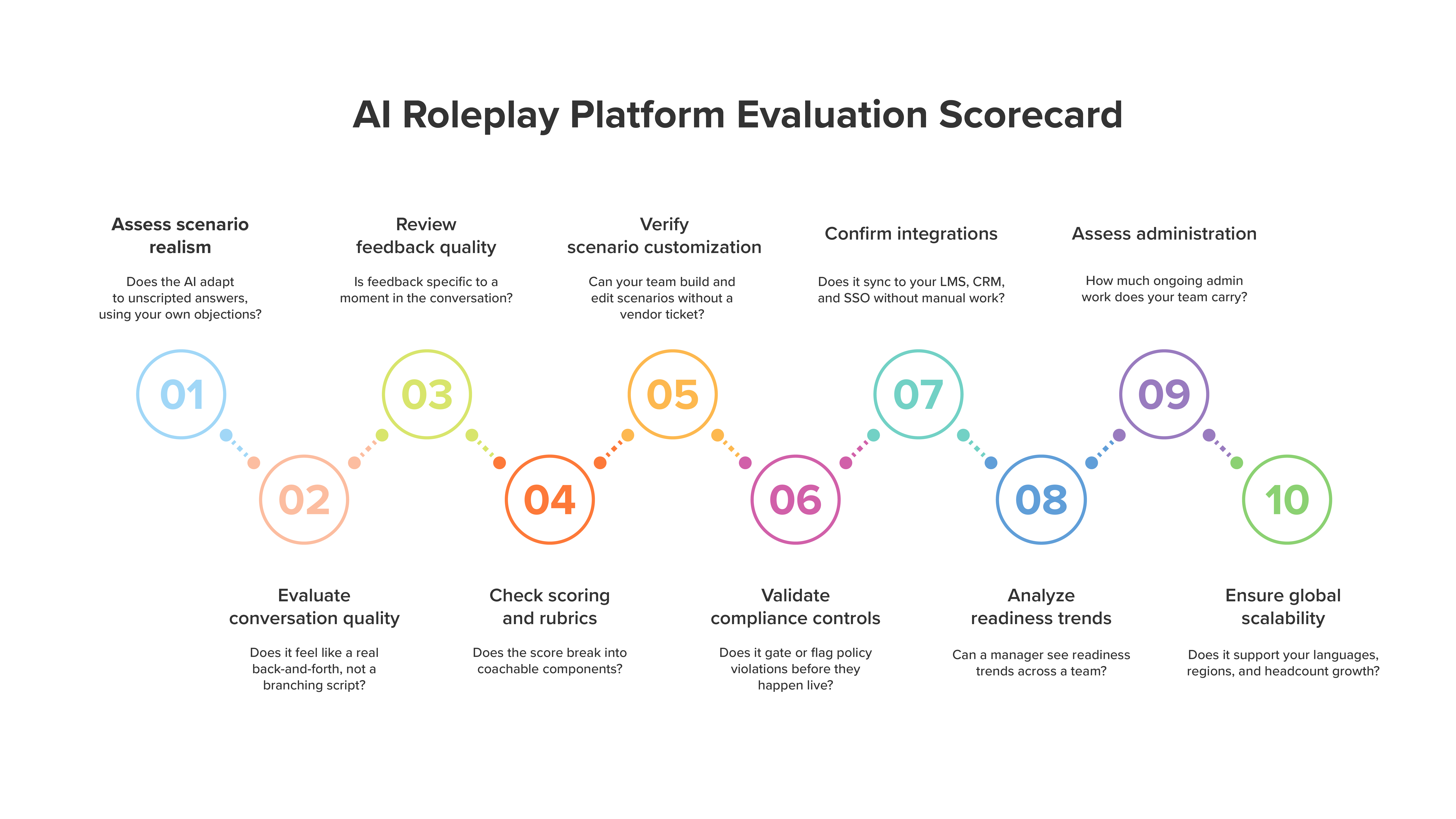
This guide takes a feature-by-feature approach to platform evaluation, providing specific criteria for assessing each capability area and the questions worth asking of vendors during the evaluation process.
The goal is a selection framework that can distinguish between platforms that check the feature box and those that will actually serve your team's readiness needs at scale.
AI-Powered Coaching Simulations
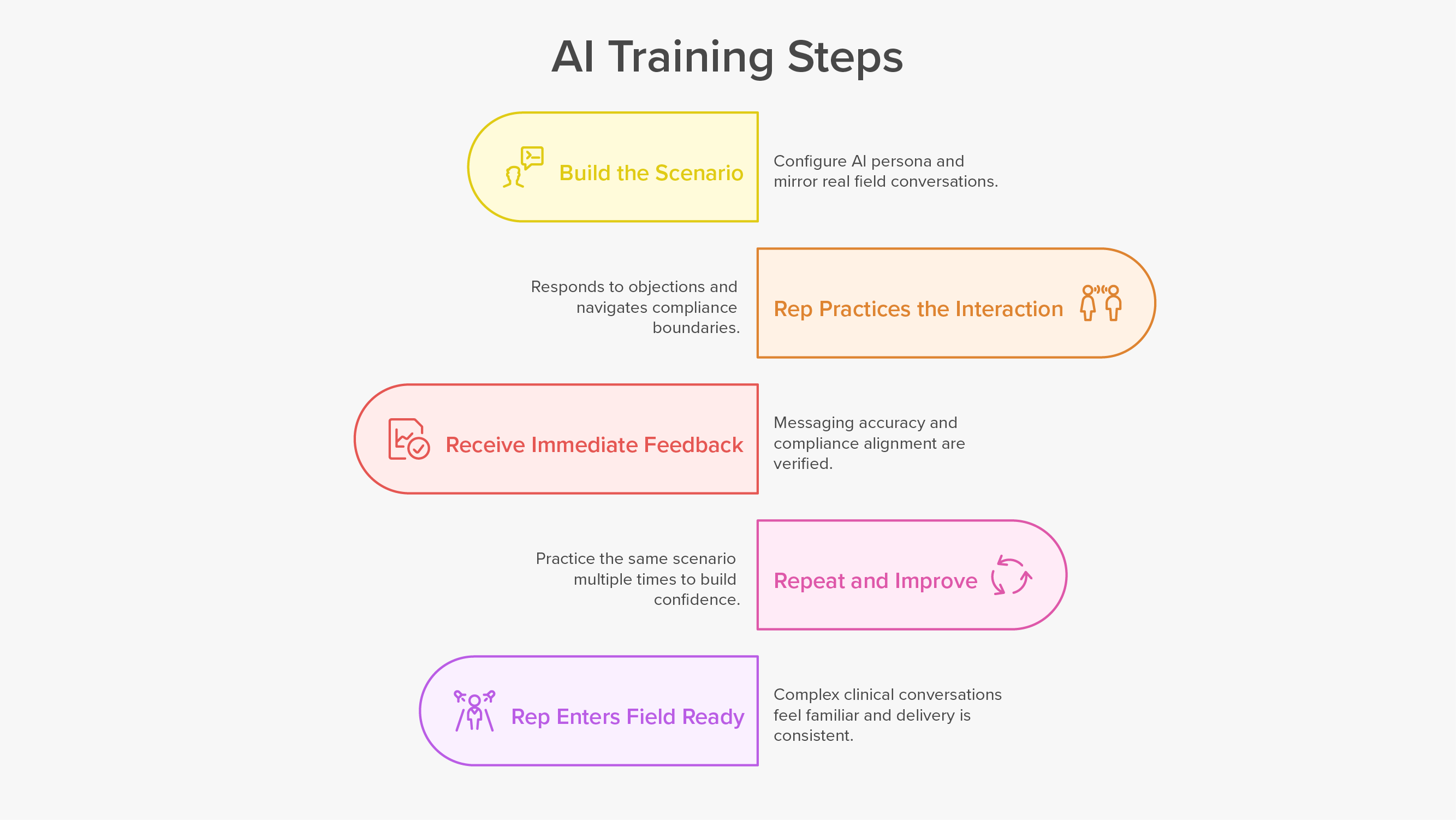
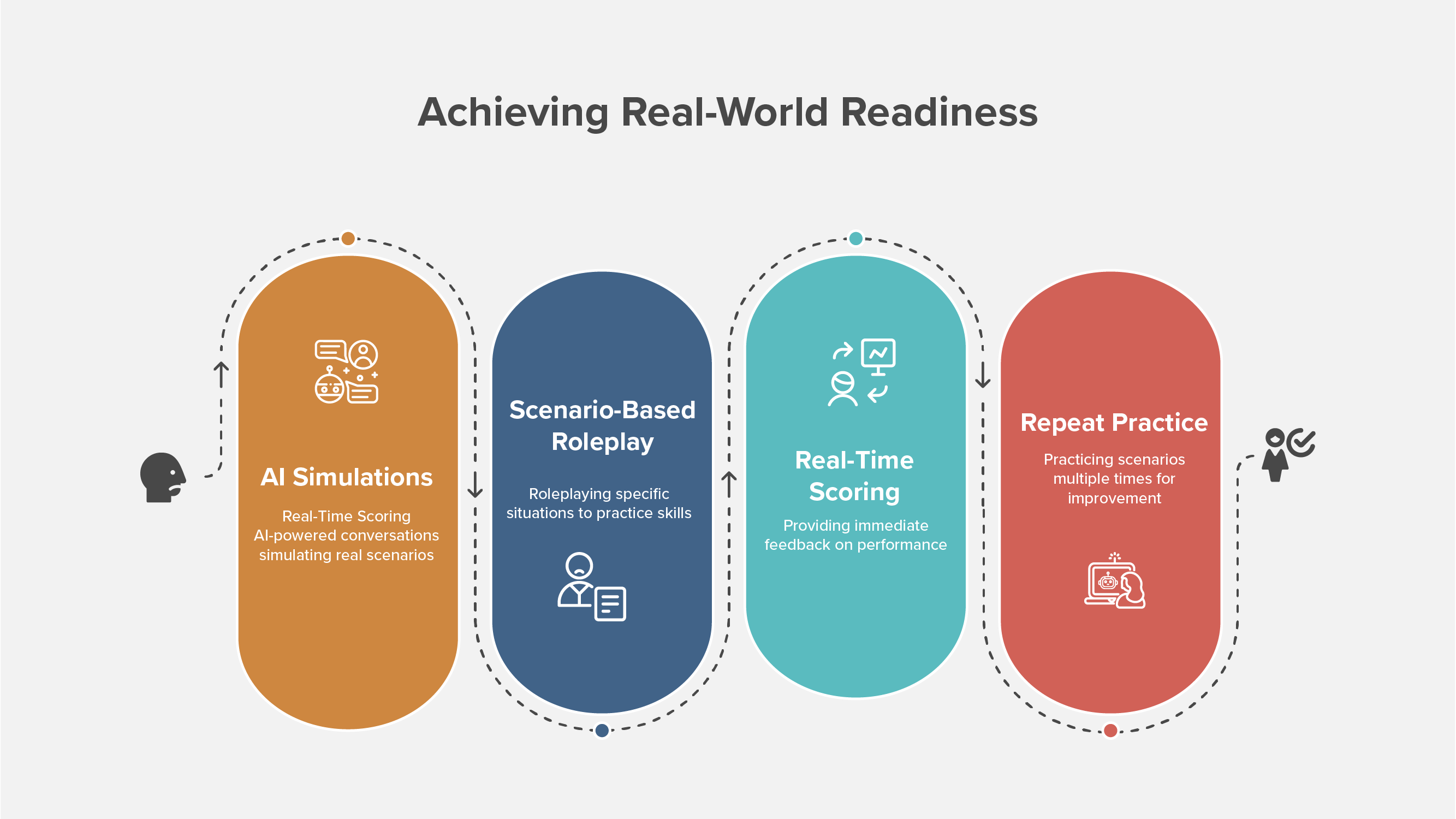
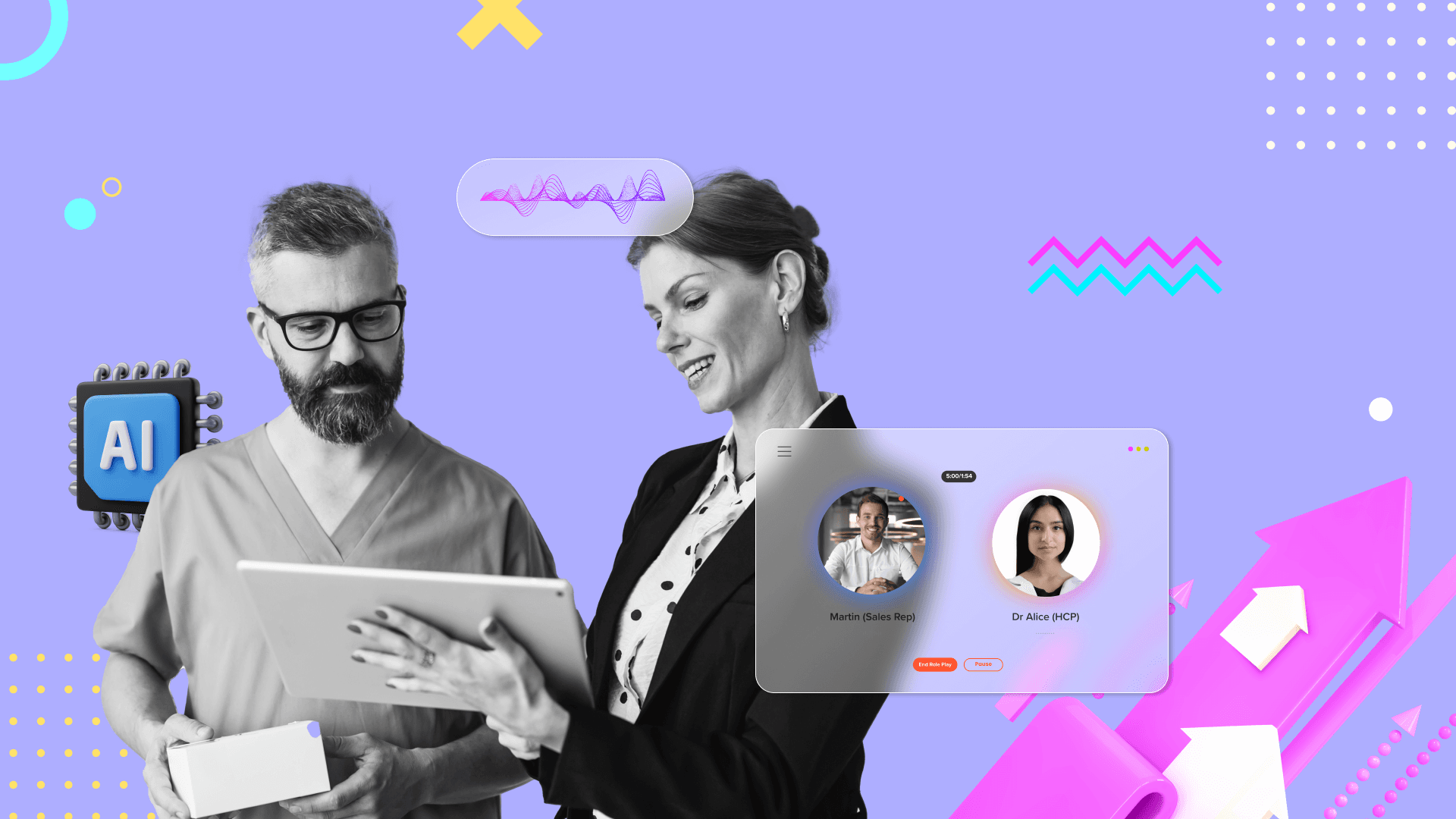
AI coaching simulations are the capability that most organizations are actively seeking in 2026, and the variability in what that term actually means across platforms is significant. At the high end, AI simulations present realistic conversational scenarios, respond dynamically to the representative's inputs, evaluate responses against multi-dimensional criteria that include messaging accuracy and compliance alignment, and provide specific element-level feedback that the representative can act on immediately.
At the lower end, they present fixed-path scenarios with rule-based branching and return only aggregate scores.
When evaluating this feature, request a live demonstration of the full simulation experience, including the feedback that is provided at the end. Ask specifically how the feedback is generated, what criteria it evaluates against, and how those criteria can be configured by your enablement team.
Ask how the platform handles compliance-sensitive scenarios and what controls exist to ensure that feedback reinforces approved messaging rather than generic communication quality. The answers to these questions will reveal far more about the actual capability than a feature description.
Video Roleplay and Manager Review
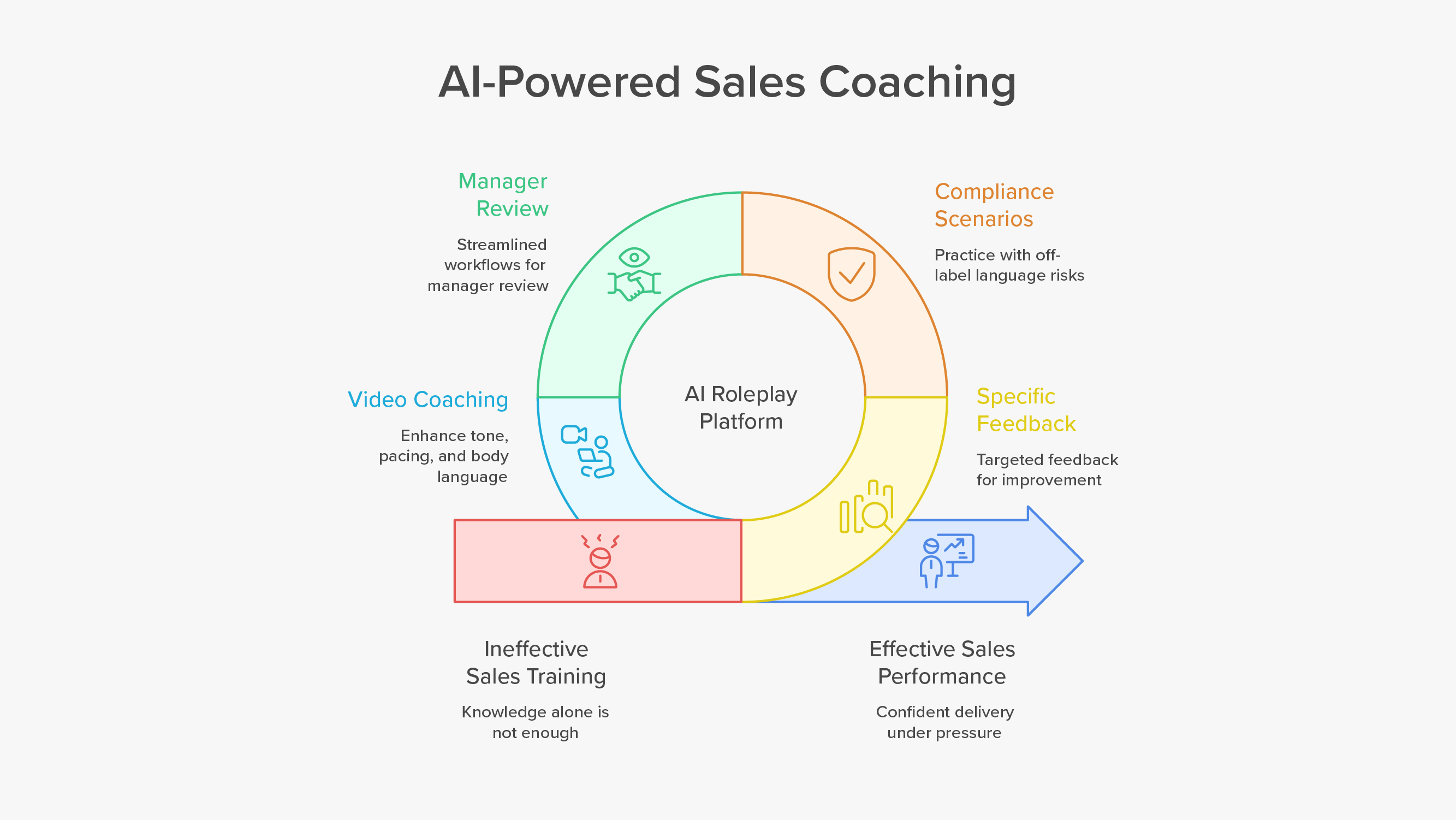
Video roleplay adds a communication dimension that text-based simulations cannot capture. When a representative records a video response to a scenario, they engage their tone, pacing, body language, and message structure simultaneously, which is far closer to the actual experience of a field interaction than a text exchange.
For organizations in regulated industries, video submissions also provide a record of communication quality that has value for compliance documentation.
The manager review workflow is where the operational value of video roleplay is determined. Evaluate the ease and efficiency of the review process: how long it takes a manager to review a submission, what tools they have for providing specific feedback, whether they can annotate specific moments in the video, and how feedback is delivered to the representative.
A review workflow that is cumbersome at scale will result in delayed or superficial feedback, which undermines the developmental value of the practice. Look for rubric-based review tools that support consistent evaluation across a large manager population.
Knowledge Reinforcement and Quizzing
The knowledge component of a sales coaching platform serves a distinct function from simulation-based practice. Where simulations build communication fluency, knowledge reinforcement maintains the foundational accuracy of product, clinical, and compliance knowledge over time. Without structured reinforcement, knowledge acquired during onboarding or a product launch training event will decay significantly within weeks.
Effective knowledge reinforcement features include spaced repetition scheduling that delivers review questions at intervals calibrated to maintain retention, adaptive question selection that focuses reinforcement on the areas where each individual shows the most vulnerability, and content alignment tools that allow training managers to update quiz content quickly when product information or messaging guidance changes.
For pharmaceutical and biotech organizations, the ability to deploy a targeted reinforcement campaign aligned with a new clinical publication or a label update is a practical capability that should be tested during evaluation.
Performance Analytics and Coaching Dashboards
Analytics capabilities have become a meaningful differentiator in the sales coaching platform category, and the gap between platforms with genuine analytical depth and those with attractive-looking dashboards that offer limited actionable insight is worth examining carefully.
The most valuable analytics for a sales coaching context provide visibility at multiple levels: individual representative performance trends, team and regional patterns, comparison across cohorts, and correlation between coaching activity and readiness metrics.
Evaluate specifically whether the dashboards help managers identify who needs coaching attention and why, or whether they simply report on who has completed what.
A dashboard that shows completion rates tells a manager that their team has engaged with the platform.
A dashboard that surfaces which representatives are struggling with a specific scenario type, or which knowledge areas show consistent gaps across a regional team, tells a manager where to focus their coaching time.
The latter is actionable information. The former is administrative confirmation.
Mobile and Multi-Device Accessibility
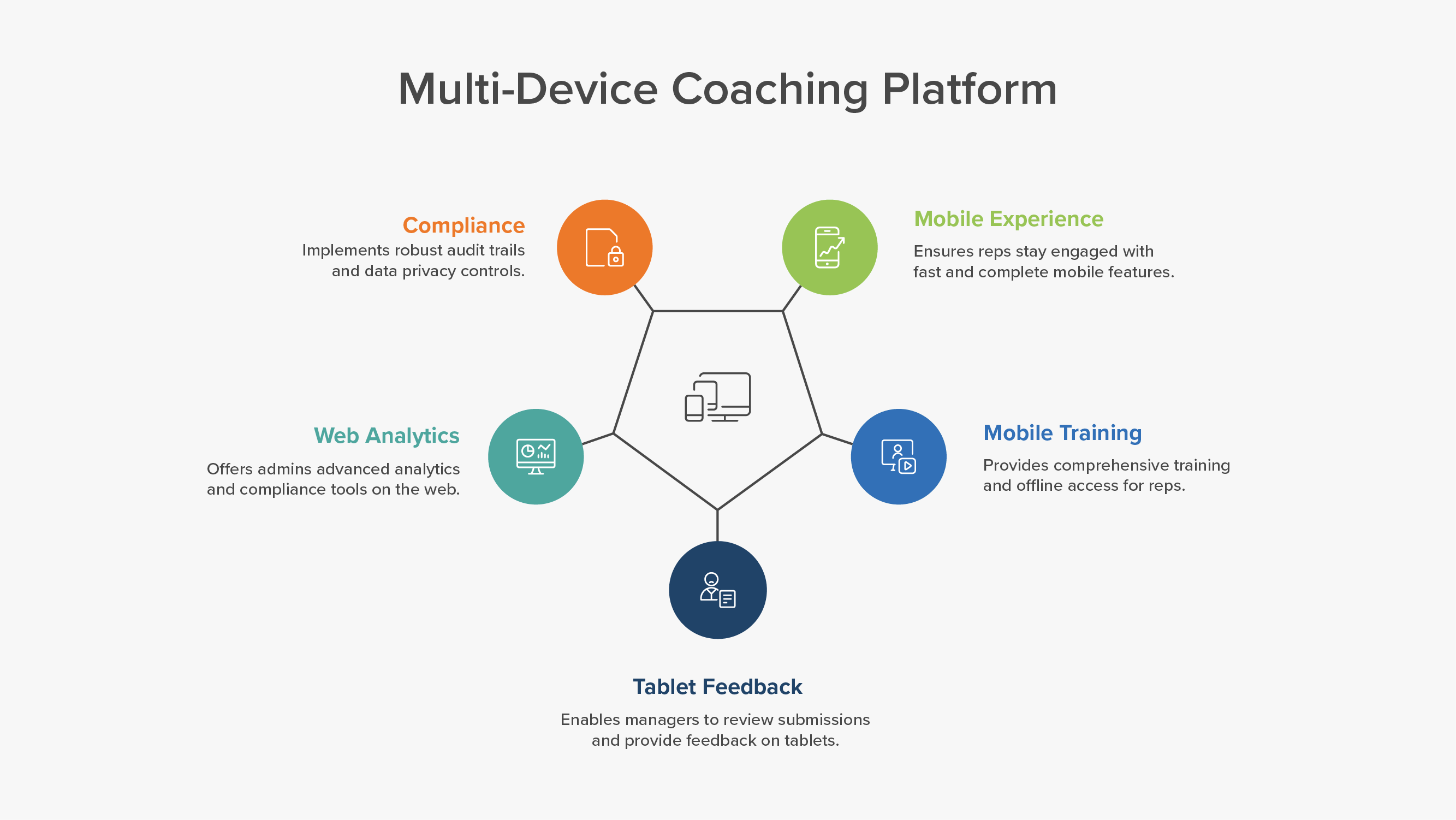
For field sales teams, mobile access is not a convenience feature. It is the primary interface through which most representatives will interact with any platform their organization deploys.
A coaching platform that delivers a complete and responsive experience on a smartphone, and not simply a scaled-down version of the desktop interface, will see meaningfully higher adoption among field teams than one that treats mobile as secondary.
Test the mobile experience directly during your evaluation: complete a simulation on a phone, submit a video roleplay on a tablet, and access a knowledge reinforcement module while on a mobile data connection rather than WiFi.
This direct experience will surface usability and performance issues that vendor demonstrations, which typically run on a WiFi-connected laptop with the optimal display configuration, will not reveal.
Compliance and Messaging Alignment
For pharmaceutical, biotech, and medical device organizations, compliance alignment in a sales coaching platform is a structural requirement that deserves a dedicated evaluation dimension. The platform must support the integration of approved language frameworks into scenario design and quiz content. The feedback logic must be configurable to evaluate responses against compliance criteria, not just communication quality. Certification records must be audit-ready and exportable. Content update workflows must allow medical and regulatory affairs teams to review and approve changes before they are deployed to the field.
Organizations that deploy coaching platforms without these controls create a training environment that may inadvertently reinforce non-compliant messaging habits. A representative who receives positive AI feedback for a response that includes off-label language will not understand that the feedback is incomplete. Compliance alignment in the platform protects both the representative and the organization.
Integration with Existing Systems
No sales coaching platform operates in isolation, and the quality of its integrations with your existing technology environment determines how much administrative overhead the platform creates and how effectively its data contributes to broader training and performance management processes. LMS integration ensures that training completion data flows into the systems your team already uses. CRM integration can enable correlation between coaching engagement and field activity data. HRIS integration supports automated user provisioning and access management.
Evaluate the depth of integrations rather than their existence. A platform that has a native LMS integration that syncs completion data automatically is materially different from one that supports a CSV export that requires manual upload. Ask vendors to walk through the specific integration workflow for the systems your organization uses
Gamification and Engagement Mechanics
Gamification mechanics including leaderboards, achievement badges, points systems, and participation streaks can support sustained engagement with training activities in ways that purely obligation-based deployment cannot. In regulated industries, however, gamification requires careful design to ensure that competitive mechanics reinforce accurate and compliant learning behavior rather than incentivizing speed or quantity at the expense of quality.
Evaluate whether the platform's gamification features are configurable to your organizational context:
Can you apply leaderboards at the regional or team level rather than across the entire organization?
Can scoring be weighted toward accuracy rather than just participation volume?
Can gamification campaigns be aligned with specific product launches or training priorities?
Configurability in this area is the difference between a feature that supports your training program and one that operates independently of it.
Content Management and Scenario Design
Training content has a shelf life, particularly in regulated industries where messaging guidance, clinical data, and market conditions evolve continuously. Platforms that require vendor involvement or technical expertise to update content will inevitably fall behind the pace of the business.
Evaluate the content authoring experience from the perspective of the training manager who will own the platform day to day: how long does it take to create a new simulation scenario, update a quiz question, or retire a content module that is no longer current?
The ease of content maintenance is a direct determinant of how useful the platform remains six months and two years after implementation.
How SmartWinnr Addresses These Criteria
SmartWinnr's sales coaching platform delivers across the full range of capabilities outlined above, with depth in AI-powered simulations, compliance-safe scenario design, mobile-first field accessibility, and the analytics visibility that enables proactive manager coaching.
The platform is purpose-built for regulated commercial environments, reflecting the specific requirements of pharmaceutical, biotech, and medical device sales teams in its design and feature set.
SmartWinnr's content management tools support non-technical authoring of simulation scenarios and quiz content, allowing training teams to maintain current, accurate training material without ongoing vendor dependency. The platform's compliance alignment features ensure that all training activities reinforce messaging standards and that certification records meet regulatory documentation requirements.
Request a demo to explore how SmartWinnr supports the sales coaching features your team needs in 2026.
Disclaimer: This content reflects industry practices and does not constitute medical, legal, or regulatory advice.
Last Updated: