
Smart AI Blog Summary
Get a quick blog summary from any of the below LLM's
What You'll Learn
A medical device clinical specialist faces a preparation challenge unlike most commercial roles in healthcare.
In a single account visit, they may need to hold a technically credible conversation with a cardiovascular surgeon about procedural outcomes data, answer a scrub nurse's patient safety question about device setup protocol, explain the reimbursement pathway to a hospital administrator, and respond to a biomedical engineer's integration question, sometimes within the same hour. Each of those conversations requires a different knowledge set, a different communication approach, and a different level of preparation. And the standard for each conversation is not adequate; it must be credible.
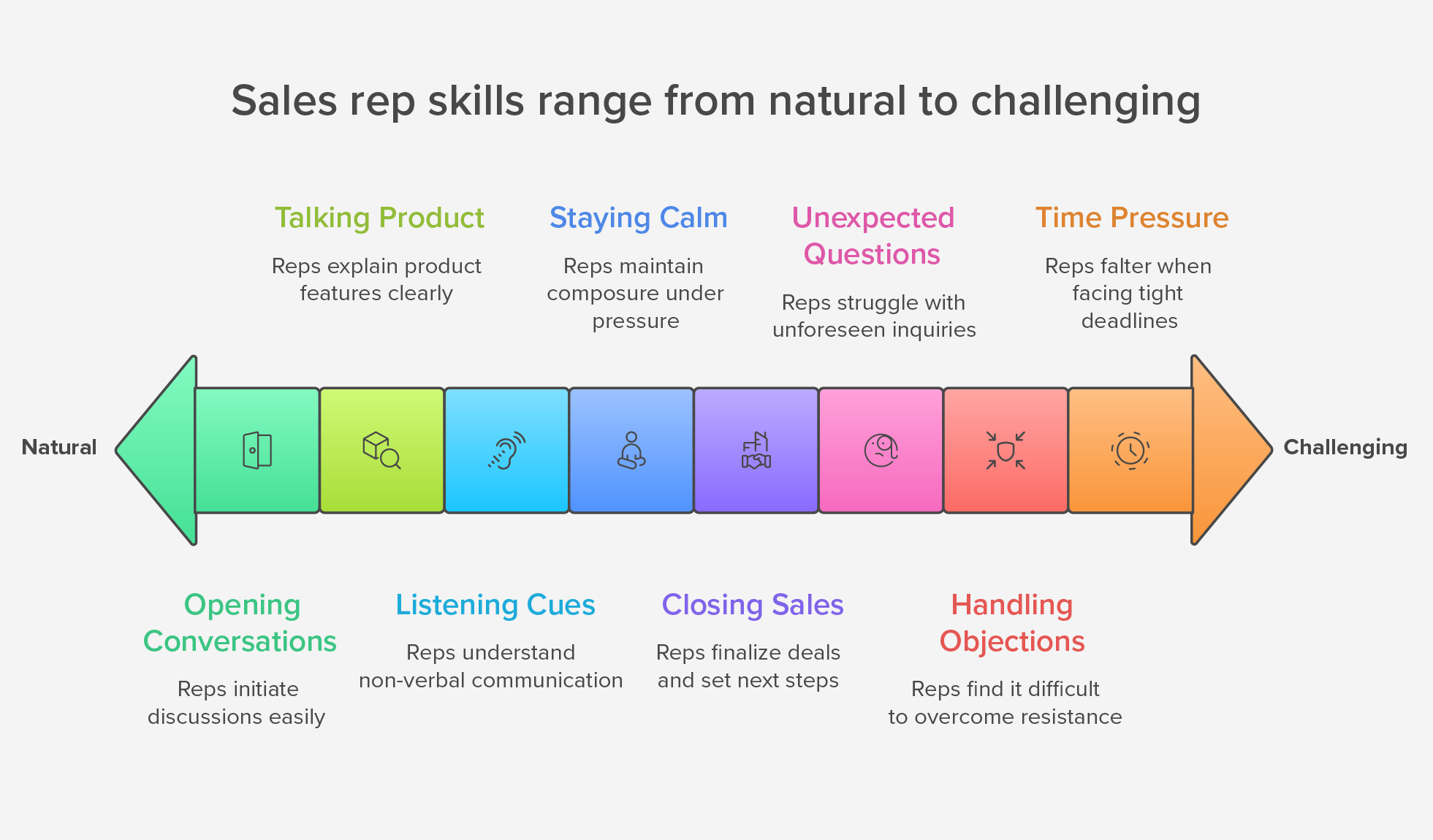
Because in medical device sales, credibility is the currency that determines whether a first case becomes a reference account or a one-time interaction. Traditional training programs build product and clinical knowledge effectively. Converting that knowledge into fluent, credible conversations across all stakeholder types requires practice volume that most programs are not structured to provide.
A specialist who knows the device exceptionally well but has never practiced the value analysis committee conversation is not prepared for the value analysis committee conversation, regardless of what their certification record shows. That gap between knowledge and practiced fluency is exactly what AI roleplay is designed to close.
Why AI Roleplay Is Growing in Medical Device Sales Training
The adoption of AI roleplay in medical device sales training reflects both the genuine value the approach delivers and the specific scalability problem that traditional practice mechanisms cannot solve for distributed clinical specialist teams.
Manager-facilitated roleplay is high quality but not scalable for teams covering large geographies. A specialist in a rural territory may have access to a facilitated practice session with their manager once every few weeks, if that. AI roleplay provides consistent practice quality regardless of geography and without the scheduling constraints of manager-dependent practice.
Multi-stakeholder account complexity requires preparation for fundamentally different conversation types across a single account, a scale of preparation need that manager-facilitated roleplay cannot provide cost-effectively. The clinical accuracy requirement for device specialist conversations means that feedback quality matters enormously, not just whether a response sounded confident, but whether it was accurate, compliant, and appropriate for the specific stakeholder. And rapid device portfolio evolution means scenario content must be updated frequently, something AI platforms can do much faster than facilitator-dependent practice programs.
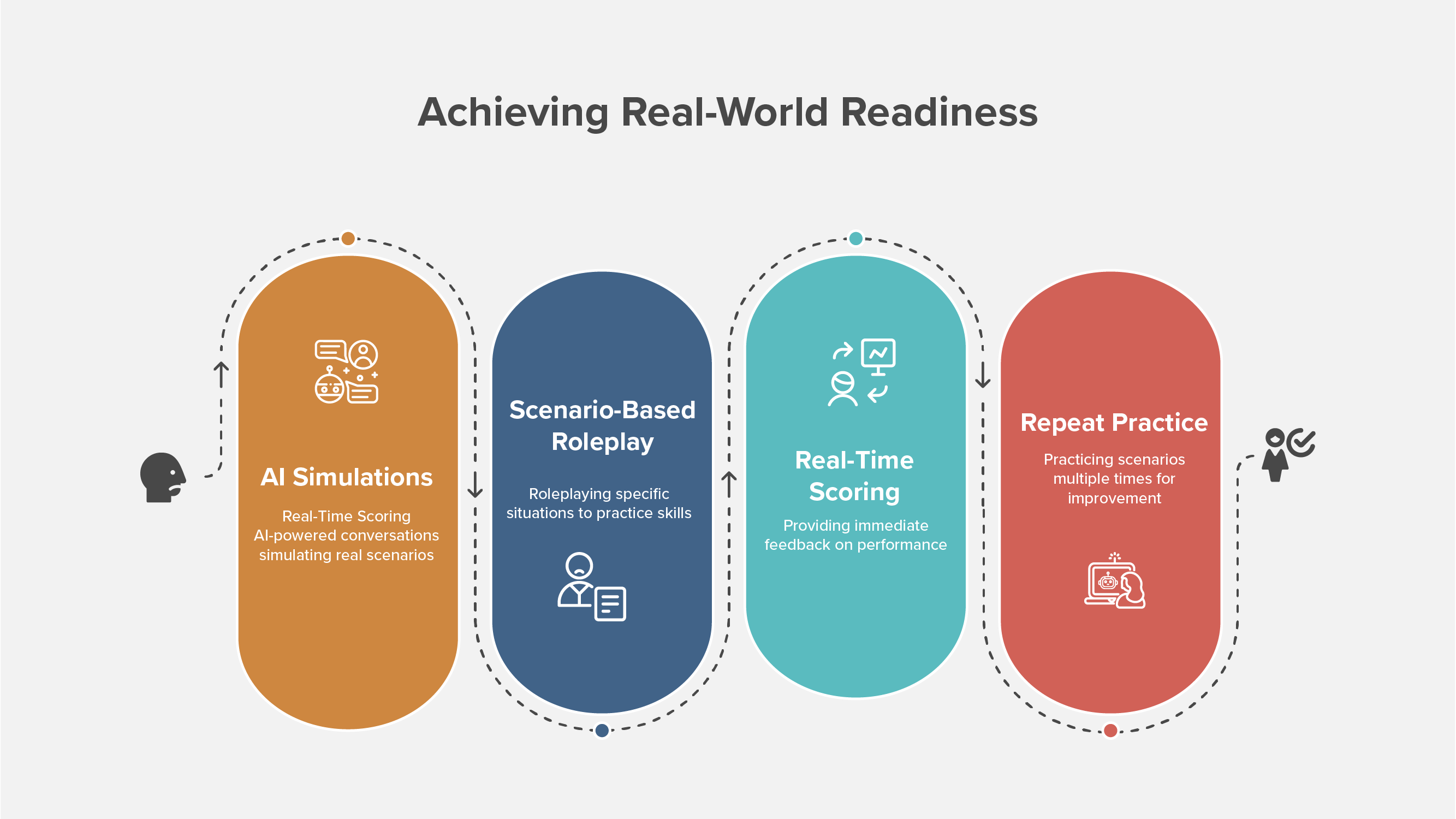
There is also a repetition dimension that traditional practice cannot address at scale. Genuine fluency in a complex stakeholder conversation, the kind that feels natural and confident under pressure, requires more practice repetitions than any manager-facilitated program can deliver. Research from the Association for Talent Development on sales training reinforcement points to a similar pattern: skill retention drops sharply without structured, repeated practice after initial training.
A specialist who has practiced the VAC financial objection handling scenario four times is meaningfully more prepared than one who practiced it once during a launch boot camp breakout session. AI roleplay is one of the few mechanisms that makes that volume of deliberate, feedback-rich practice accessible within the rhythms of a field specialist's schedule.
The Role of Feedback Quality in Scenario Practice
Not all practice produces improvement. Practice without quality feedback reinforces existing habits, whether those habits are effective or not. For medical device AI roleplay to produce genuine field readiness, the feedback that follows each practice scenario must be specific enough to change behavior, not just evaluate it.
Effective feedback in a medical device AI roleplay context addresses three dimensions simultaneously. Clinical accuracy feedback evaluates whether the specialist's response was factually correct, consistent with approved messaging, and appropriate for the clinical context. Communication quality feedback addresses how the response was delivered, whether the tone matched the stakeholder, whether the pacing was appropriate, and whether the response addressed what the stakeholder asked rather than defaulting to a rehearsed talking point. And compliance alignment feedback confirms that the response stayed within the regulatory and messaging boundaries that govern medical device commercial conversations.
When all three dimensions are addressed in feedback, specialists are not just getting a score. They are getting a map of what to change and why, which is the input that produces behavioral improvement in subsequent practice sessions and, ultimately, in live field interactions.
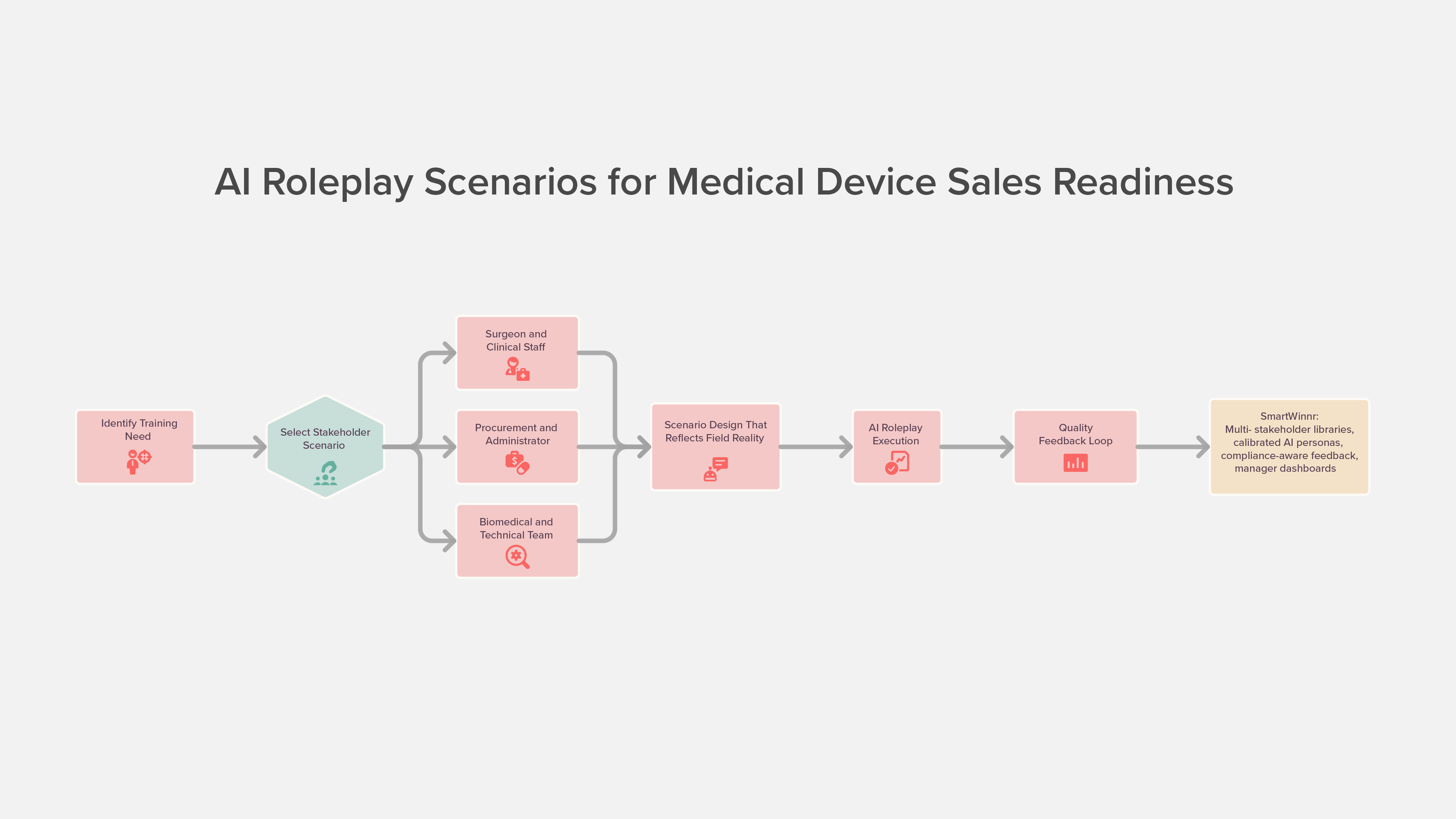
Surgeon and Clinical Staff Scenarios
These are the most clinically demanding conversations and require the highest level of both clinical accuracy and professional credibility. Specialists practicing these scenarios are building the fluency to hold genuinely peer-level conversations with clinical decision-makers.
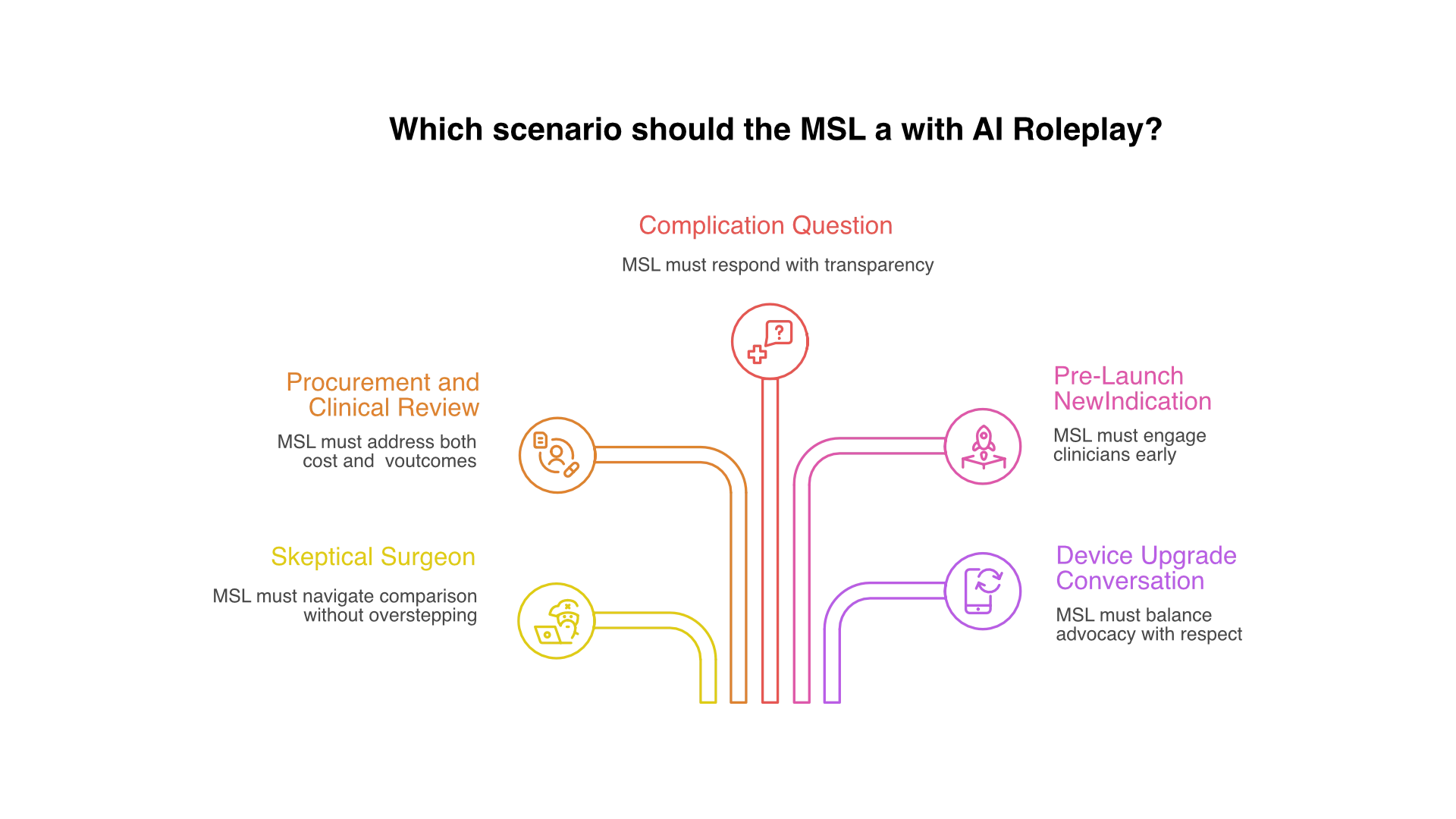
Picture this: a specialist is sitting in a cardiovascular surgeon's office. The surgeon has been using a competing device for seven years and is direct: "What would actually change for me clinically if I made the switch?" An unpracticed specialist tends to default to feature listing. A specialist who has rehearsed this scenario multiple times knows how to lead with comparative outcomes data, acknowledge the surgeon's established approach with respect, and frame the differentiation in the language of clinical evidence rather than marketing copy. That shift in delivery, practiced rather than improvised, is what earns the next conversation.
Additional surgeon-focused scenarios that generate high value for device teams include:
A scrub nurse raising a patient safety concern about the device setup protocol during first-case preparation, with the surgeon present and watching. The specialist practices the accurate, empathetic, protocol-aligned response that addresses the concern without dismissing it.
An interventional radiologist asking about the learning curve for a new catheter platform and its impact on procedure time and patient outcomes, requiring the specialist to hold a realistic procedural efficiency and case support conversation.
An orthopedic surgeon asking detailed questions about the biomechanical design rationale for a new implant compared to the current standard, requiring the specialist to hold a genuinely technical clinical engineering conversation.
Procurement and Administrator Scenarios
These require fluency in healthcare economics and structured financial argumentation, a knowledge set that many clinical specialists find challenging without specific preparation because their training has historically been weighted toward the clinical conversation.
Picture this: a specialist walks into a value analysis committee meeting. The room has seven people: the VAC coordinator, the CFO, the supply chain director, a surgical clinical coordinator, a physician champion, the infection control officer, and a pharmacy representative. Each person has a different concern. The CFO wants to know the total cost of care impact. The supply chain director wants to know about GPO compatibility. The infection control officer wants cleaning validation documentation. Without structured practice across all those conversation types, the specialist ends up answering one person's questions well and struggling through the rest. With it, they can move around the table and meet each stakeholder where they are.
Specific scenarios in this category include:
A VAC coordinator requesting a comprehensive total cost of care analysis that compares the new device against the current standard across the full patient pathway.
A supply chain director asking about GPO contract compatibility and the specific pathway for adding the device to the hospital's approved procurement channels.
A hospital CFO asking about the reimbursement pathway for procedures using the device, specifically what changes financially when the new device replaces the current standard.
Biomedical and Technical Team Scenarios
These address the technical and operational questions that specialists must be genuinely prepared for, not as an afterthought but as a core part of account readiness. In many device categories, attribute this or soften it, e.g. "biomedical and sterile processing teams often have significant influence over evaluation timelines.
Picture this: a specialist is three weeks into their relationship with a major hospital system. Everything is going well with the surgeon. Then the biomedical engineering team requests a meeting. The lead engineer opens with a request for cleaning validation documentation, referencing standards such as ISO 13485 for medical device quality management, and wants to walk through how the device integrates with the hospital's existing sterile processing equipment. The specialist who has never specifically prepared for this conversation either has to improvise or delay the evaluation process. The specialist who has practiced this scenario, who knows what documentation exists and how to explain the cleaning protocol, handles it with confidence and speed. That efficiency signals competence to the whole account.
Additional scenarios in this category include:
A clinical educator asking about the practical in-service training timeline and learning curve for nursing staff, requiring the specialist to give a realistic, credible estimate grounded in case support experience.
An infection control officer requesting biocompatibility documentation and cleaning validation data, requiring the specialist to navigate a highly technical request with precision and appropriate documentation knowledge, consistent with guidance such as the FDA's medical device quality system requirements.
Scenario Design That Reflects Field Reality
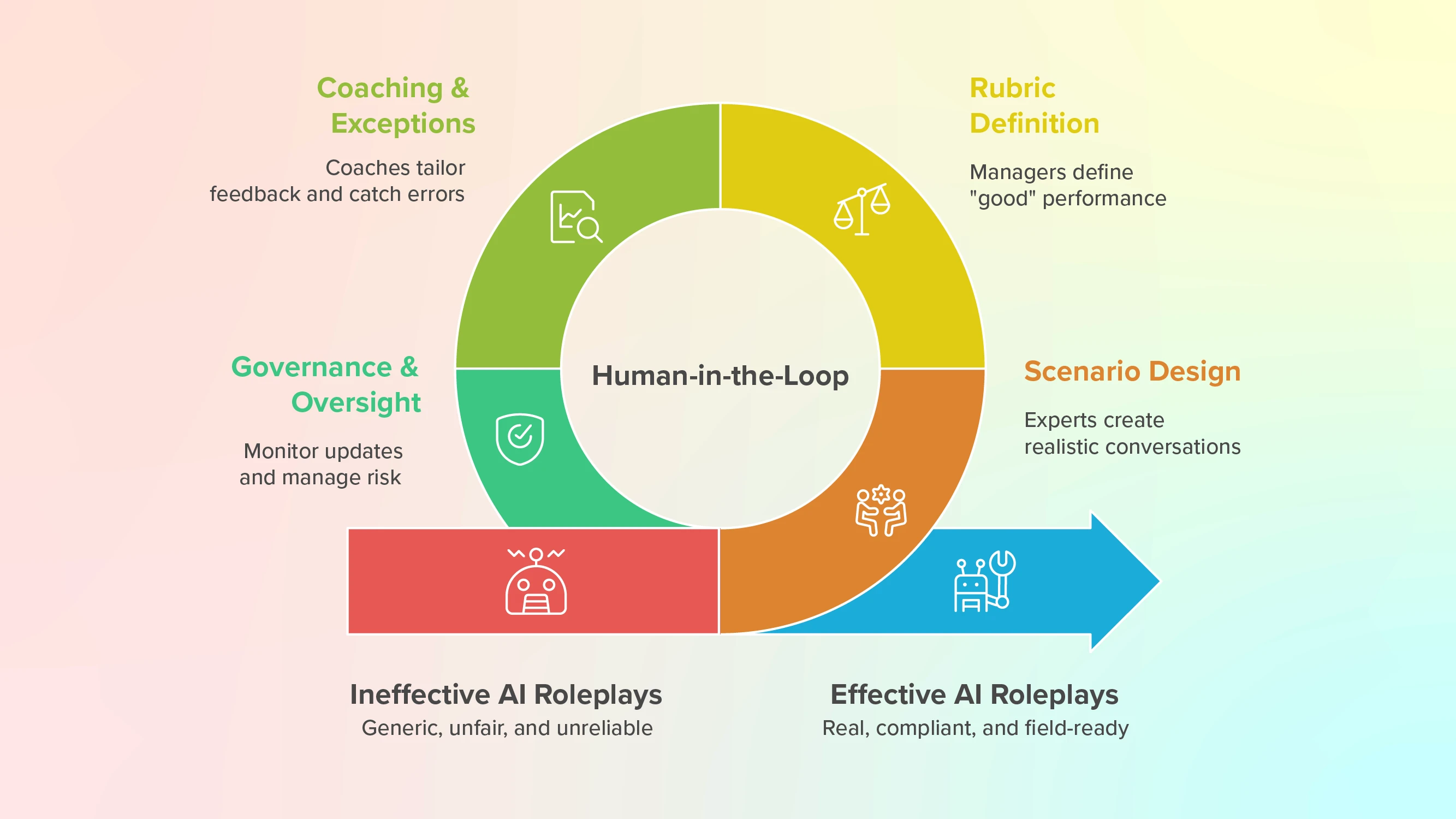
The quality of AI roleplay practice is entirely dependent on the quality of the scenarios. A generic simulation of a sales conversation produces generic conversational improvement. A simulation built around the specific objection patterns of a cardiovascular surgeon evaluating a new EP mapping system in a cath lab environment produces the specific fluency that prepares specialists for that account.
This is why the most effective medical device organizations are investing not just in AI roleplay technology but in scenario libraries built around the actual conversations their specialists encounter, calibrated to specific care settings, specific device categories, and specific stakeholder types. They are treating scenario content as a strategic asset, updated regularly as the competitive landscape evolves, the clinical evidence base expands, and hospital procurement practices shift. The investment in scenario quality is what determines whether AI roleplay practice produces field-ready specialists or simply more comfortable ones.
Medical device commercial teams generate plenty of coaching activity. What is often missing is visibility into whether that coaching is producing genuine field readiness. The shift from activity metrics to behavioral readiness signals closes that gap, giving commercial and L&D leaders the data to coach proactively, specifically, and at scale, through structured field coaching tied to practice performance. That infrastructure exists. SmartWinnr is built to make it operational.
How SmartWinnr Powers AI Roleplay for Medical Device Teams
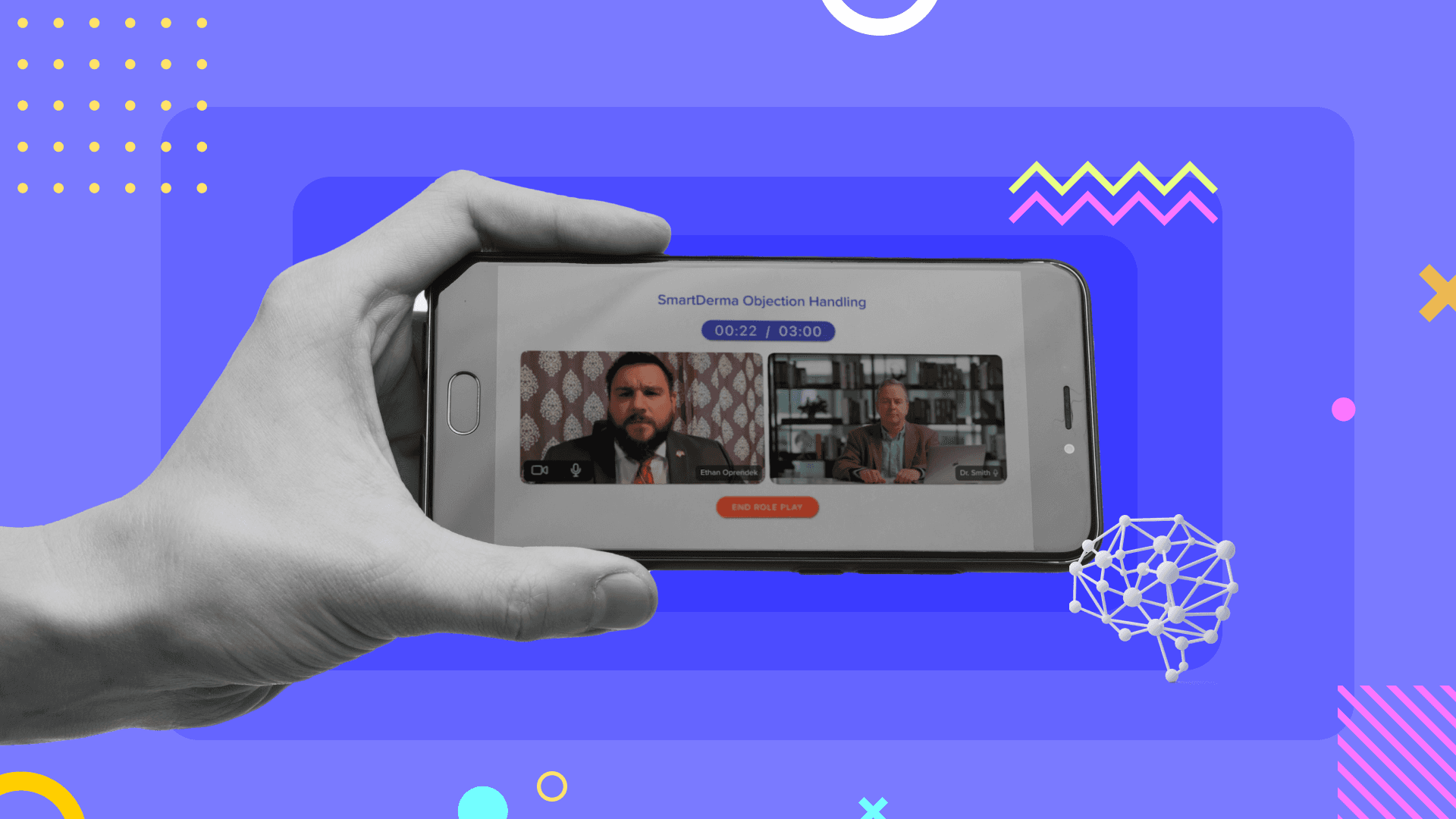
SmartWinnr's AI roleplay platform gives medical device organizations the ability to build, deploy, and continuously update scenario libraries that reflect the genuine complexity of the clinical and commercial conversations their specialists encounter across care settings. Specialists practice with AI-powered personas that simulate the specific stakeholder types, objection patterns, and conversation dynamics of their actual accounts.
For medical device commercial and enablement leaders, SmartWinnr provides:
Multi-stakeholder scenario libraries covering the full range of device selling conversation archetypes, including surgeon, nurse, biomedical, procurement, and administrator, configured to specific care settings and device categories.
AI personas calibrated to medical device conversations, built to reflect the clinical accuracy and procedural specificity that these interactions demand, not generic B2B sales scenarios.
Compliance-aware practice feedback that evaluates specialist responses for clinical accuracy, regulatory appropriateness, and alignment with approved messaging, ensuring that practice builds the right professional habits from the start.
Manager dashboards that track specialist practice frequency, scenario performance across all stakeholder types, and readiness trajectory, enabling proactive coaching before high-stakes account interactions.
Structured scenario performance data that gives managers and specialists a shared, objective foundation for coaching conversations, building on field observation with consistent and comparable behavioral evidence.
Request a demo to understand how SmartWinnr supports medical device sales readiness through AI roleplay, scenario libraries, and compliant skill reinforcement.
Disclaimer: This content reflects industry practices and does not constitute medical, legal, or regulatory advice.
Last Updated: