
Smart AI Blog Summary
Get a quick blog summary from any of the below LLM's
What You'll Learn
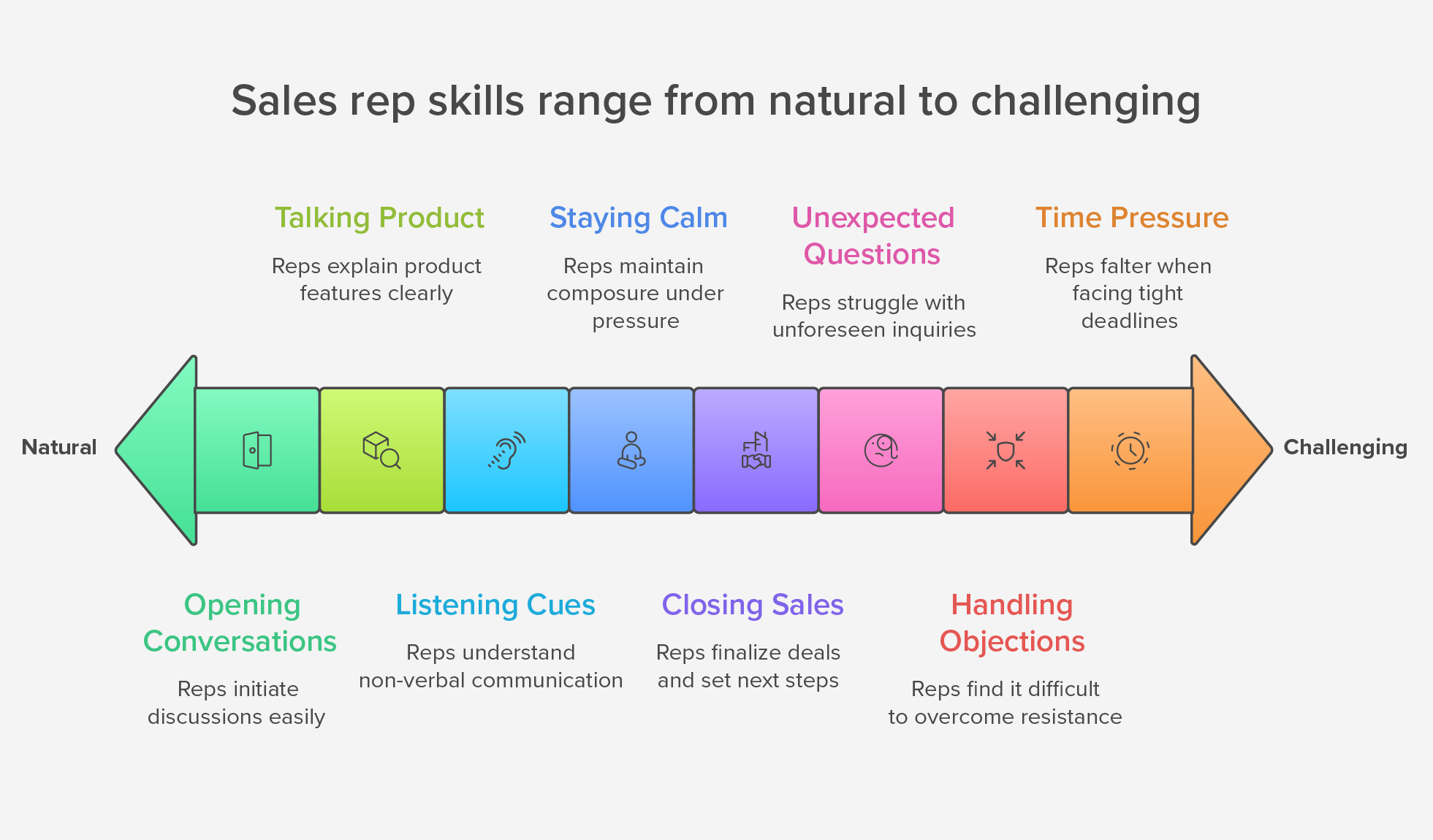
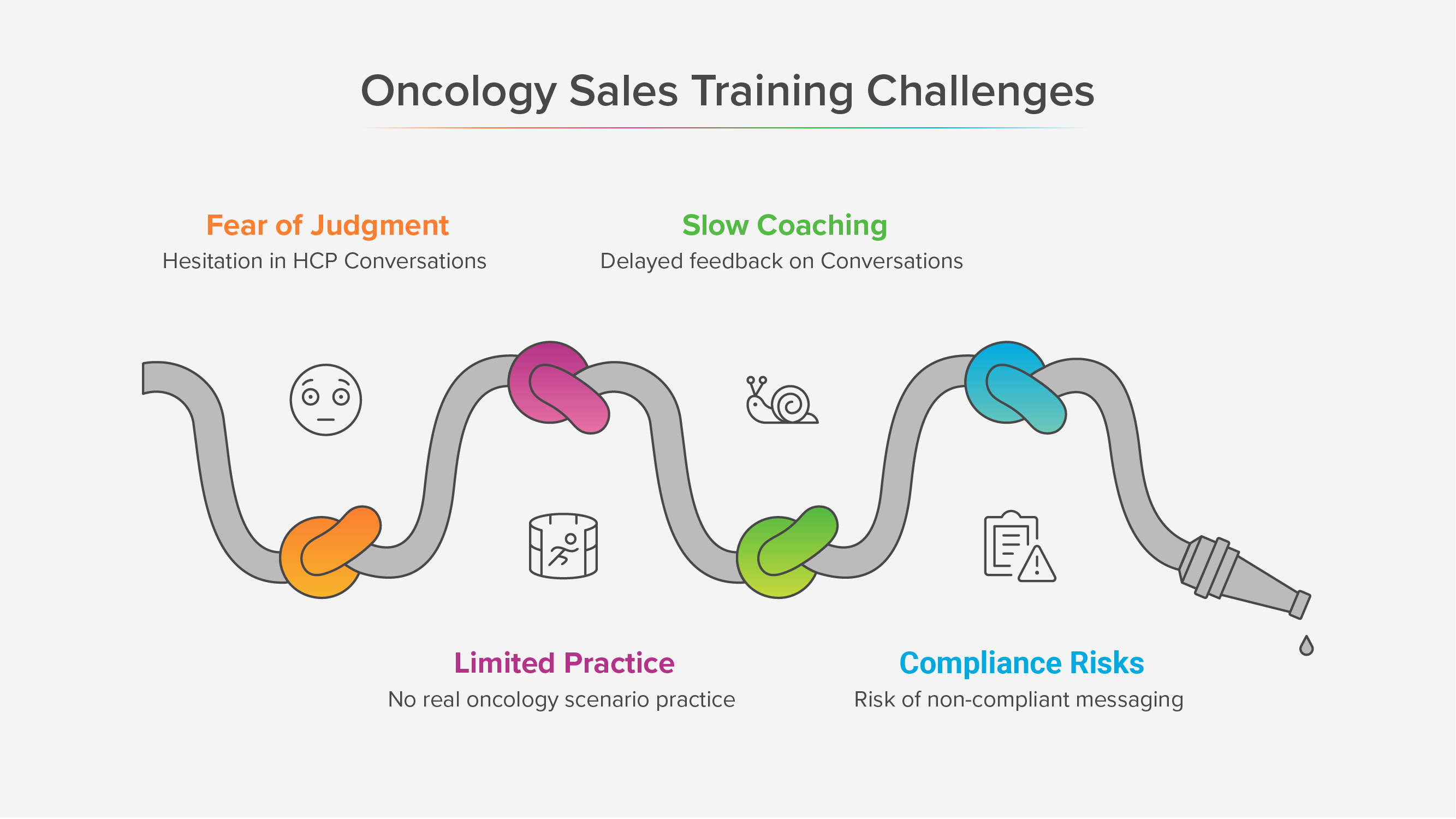
Pharma sales conversations are among the hardest to train for. A rep gets four minutes with an oncologist, a hallway exchange with a payer, or one shot at a formulary committee, and every word is bounded by compliance. Traditional role-play, the tool the industry has relied on for decades, has never scaled to match that difficulty: it depends on a manager's availability, it happens a handful of times a year, and no two reps get the same standard of practice.
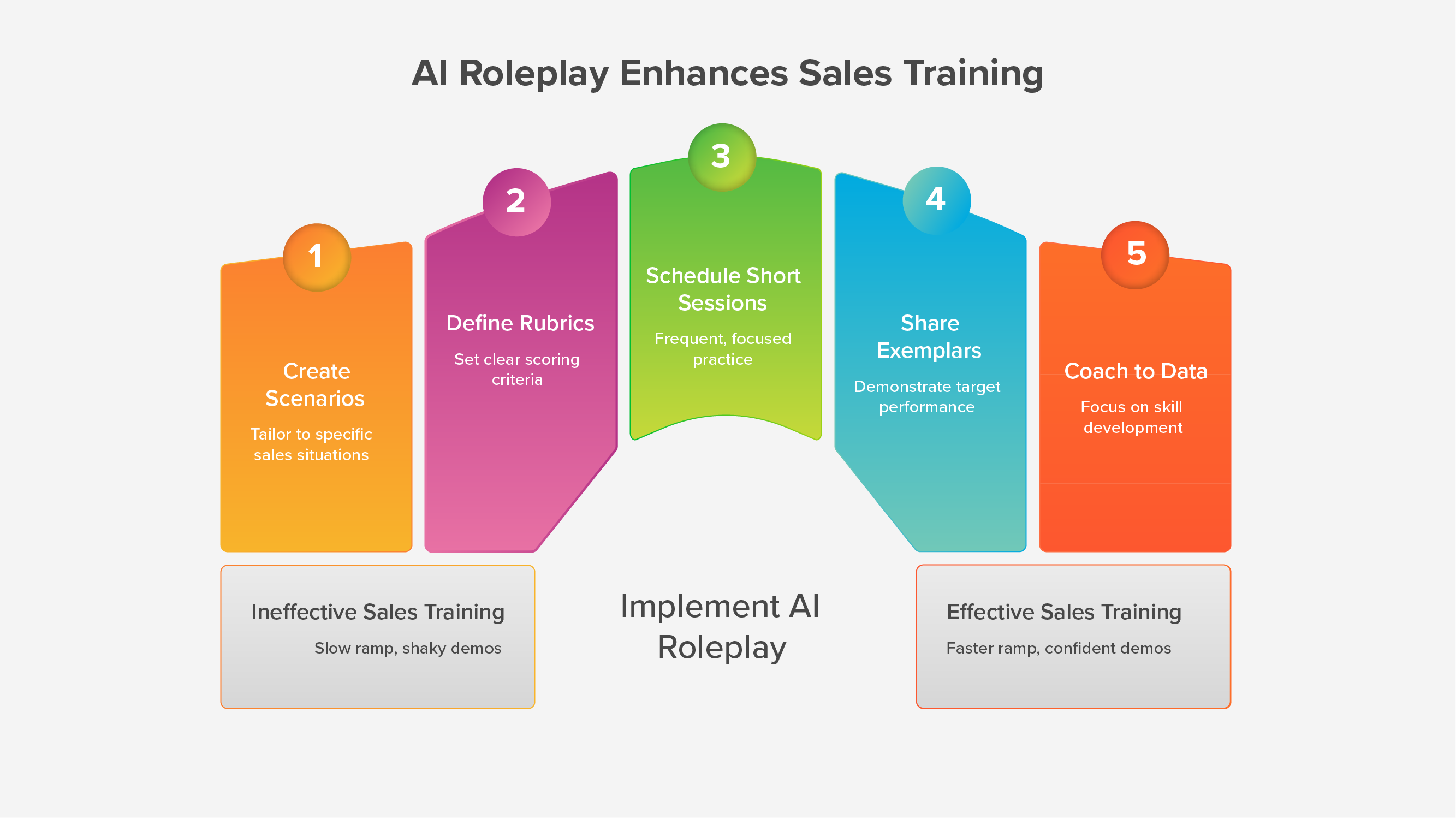
AI role-play changes the economics of practice. Instead of waiting for a workshop, a rep rehearses a difficult HCP objection on Tuesday night before the Wednesday call, against an AI avatar that plays the skeptical physician, scores the conversation, and coaches the gaps. The question for commercial training and enablement leaders is no longer whether this category is real. It is how to evaluate it for a regulated industry, where the bar is higher than "the demo looked impressive."
What is AI role-play for sales training?
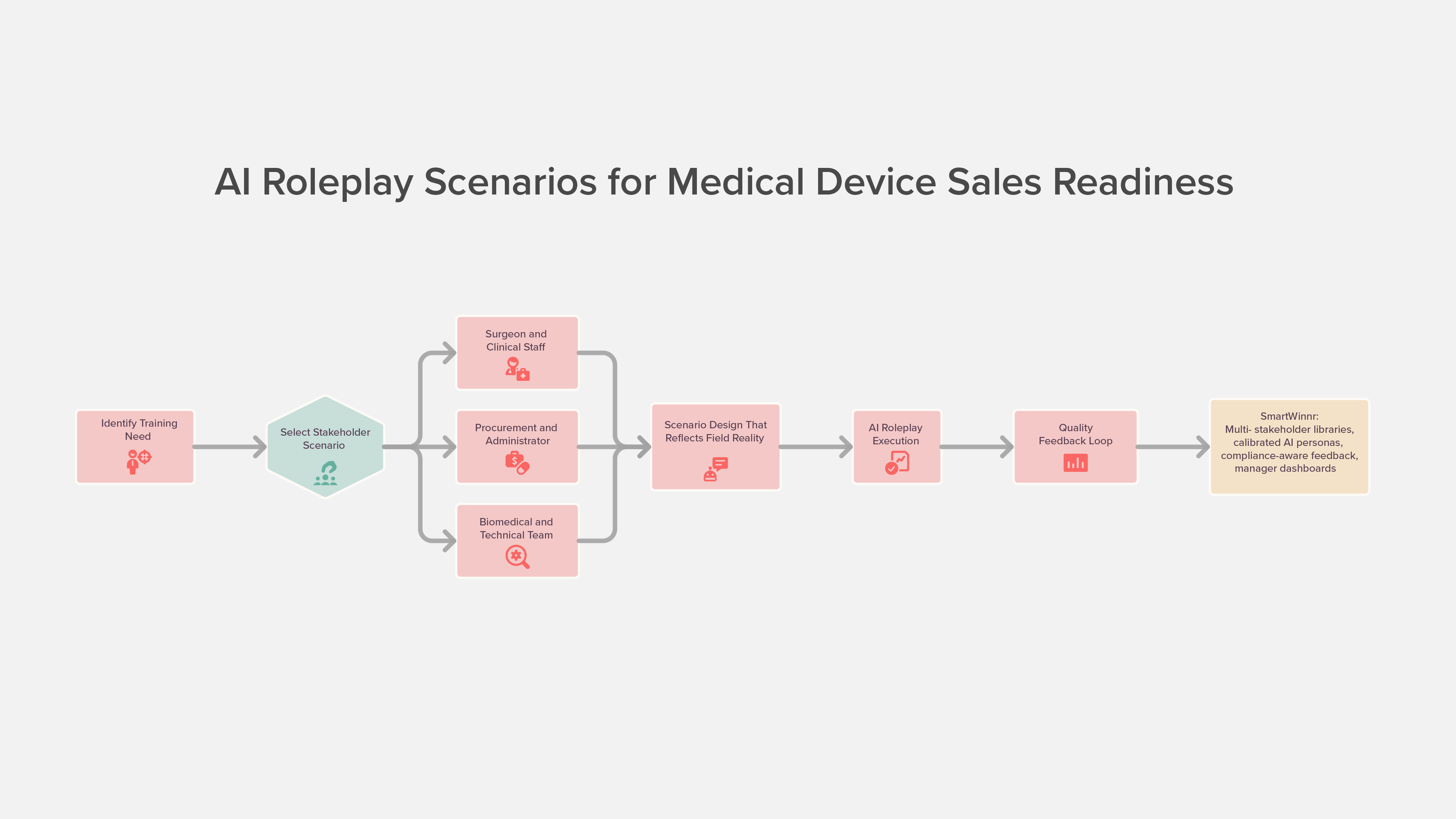
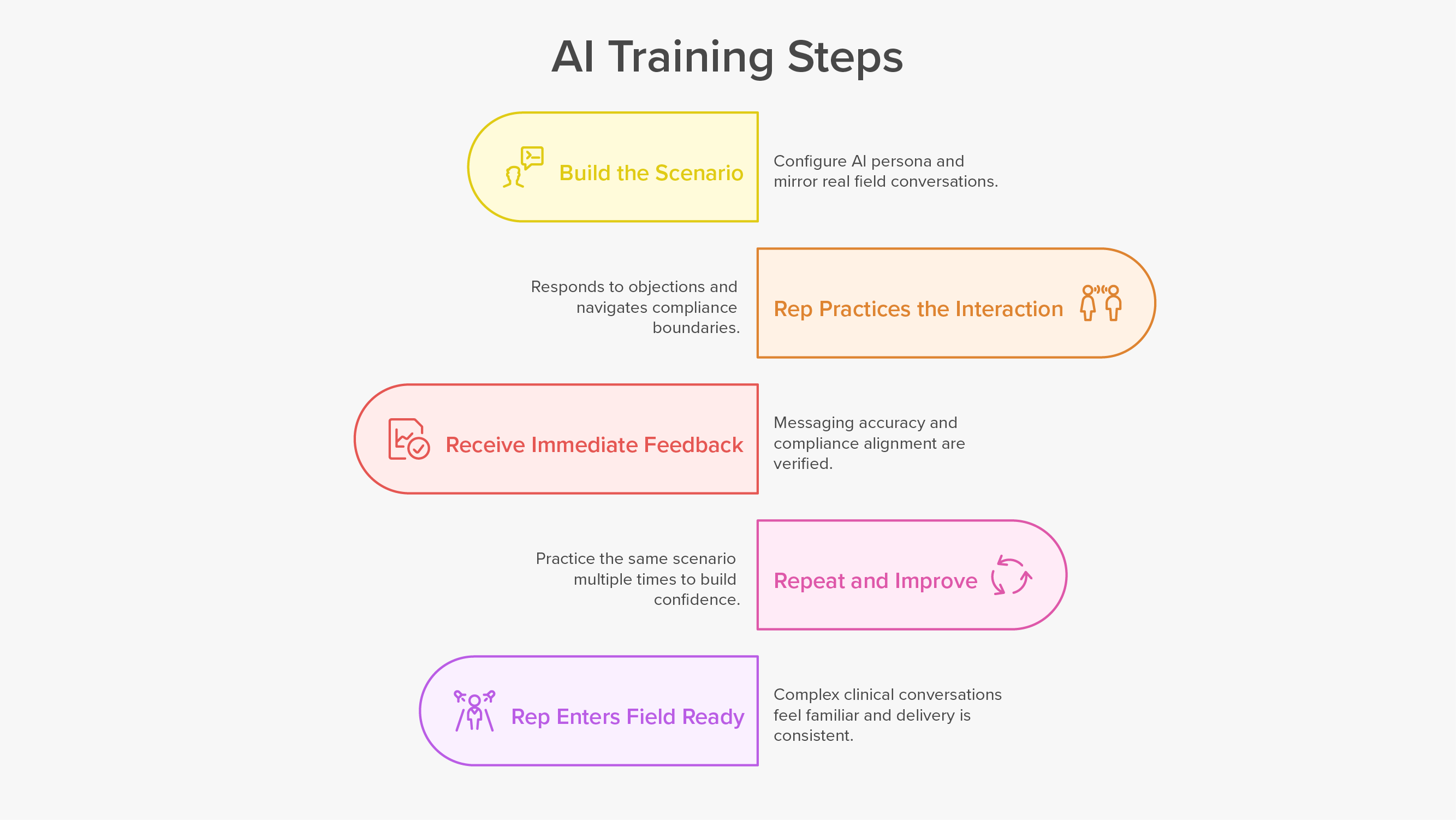
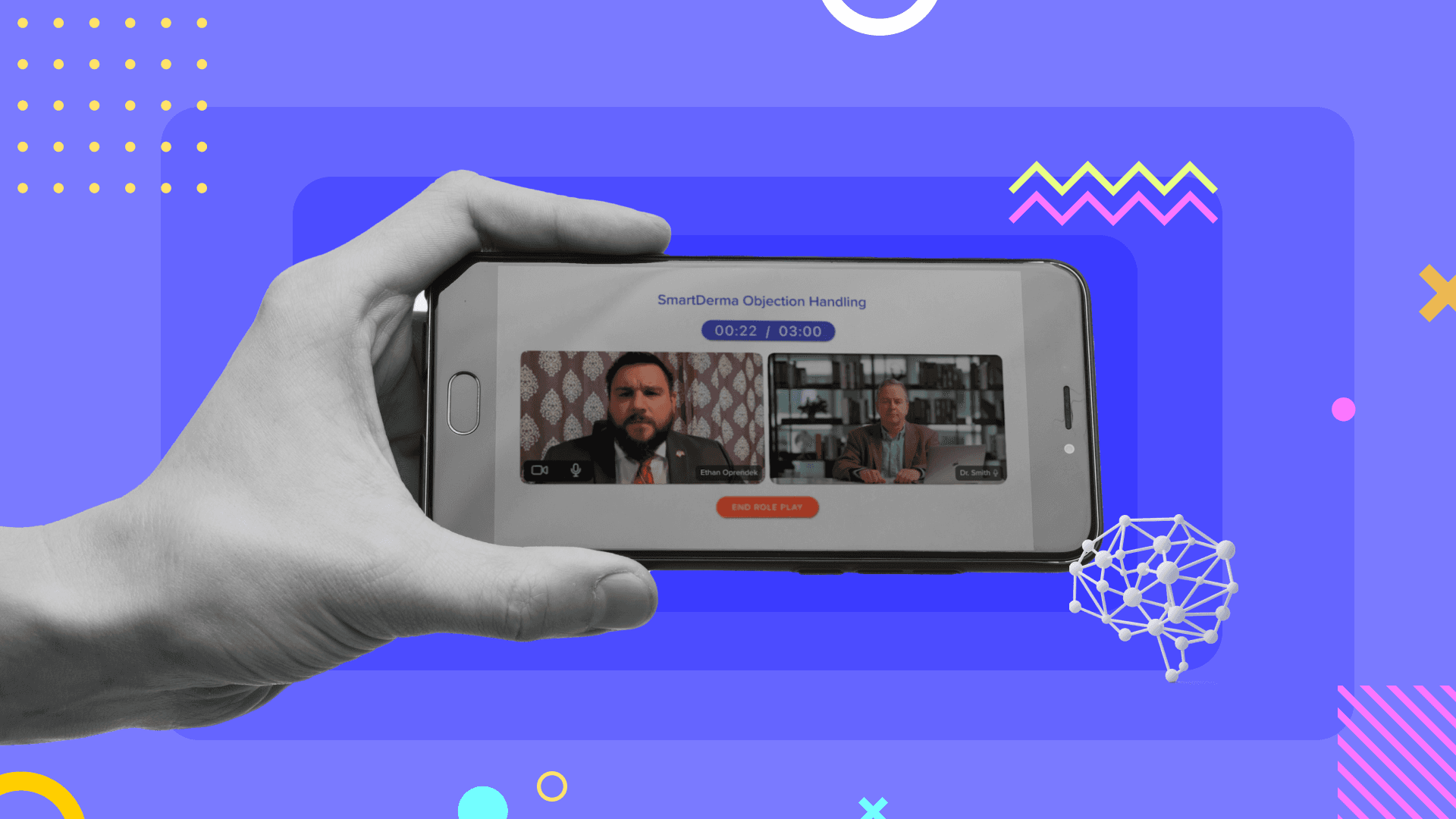
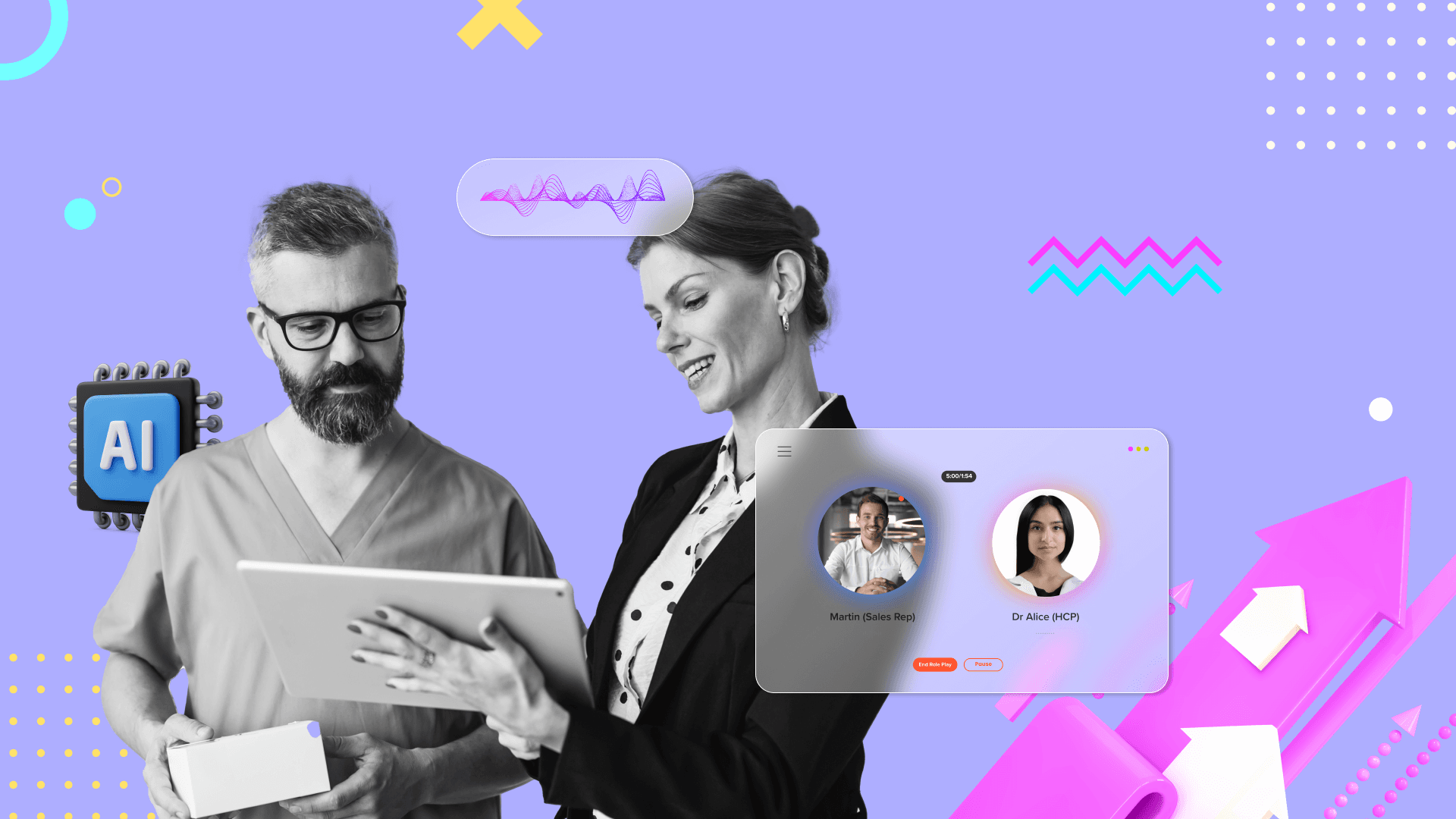
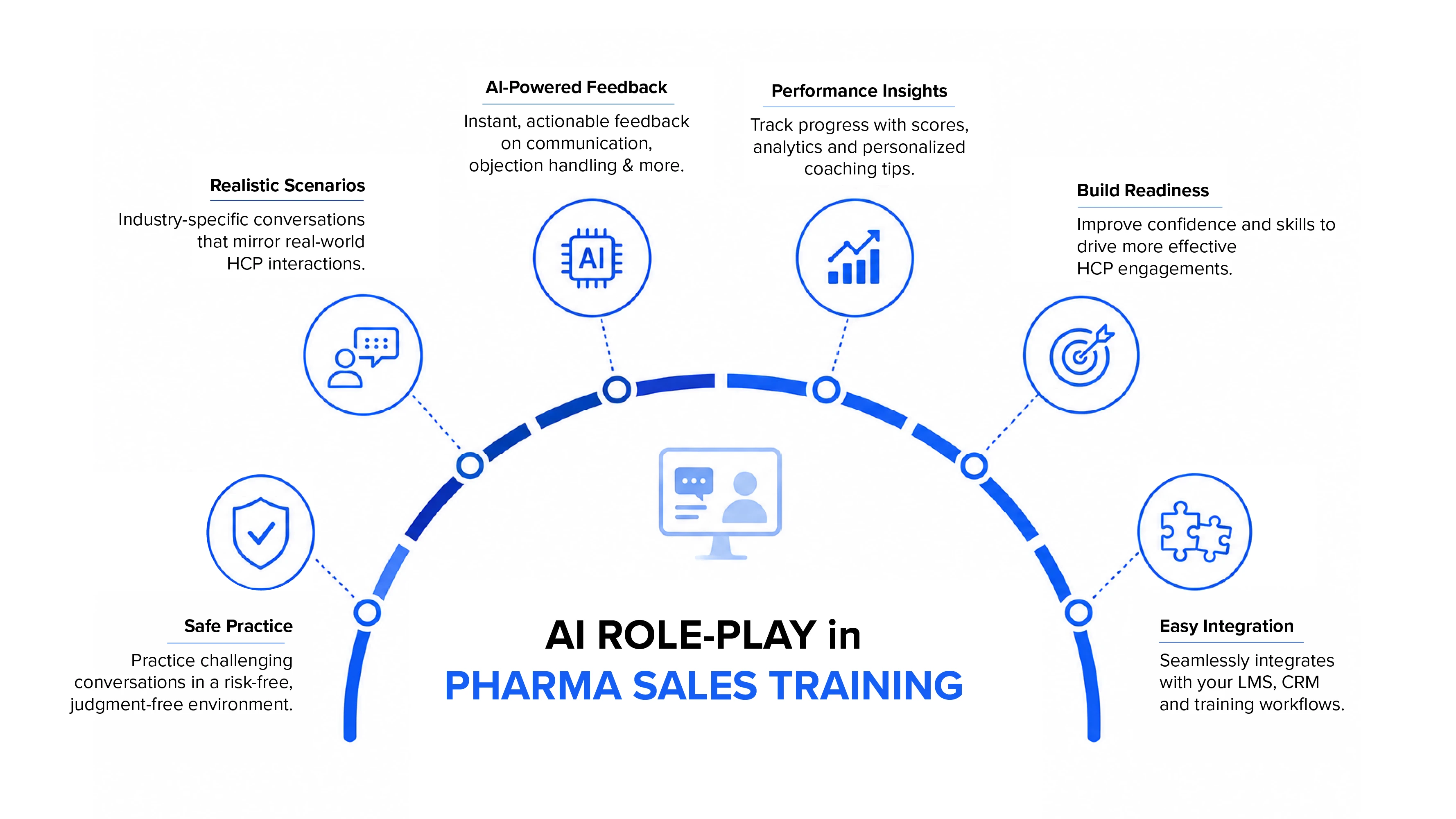
AI role-play is simulated sales conversation practice with an AI-powered counterpart, typically a customizable avatar that plays an HCP, a KOL, a pharmacist, a payer, or a procurement stakeholder. The rep speaks naturally; the AI responds in character, raises objections, and pushes back the way a real customer would. Afterward, the system scores the conversation against the competencies that matter, including message accuracy, objection handling, call flow and compliance language, then shows the rep exactly what to practice next.
The difference from e-learning is the difference between reading about swimming and getting in the pool. The difference from traditional role-play is that the pool is open 24/7, judges every lap by the same standard, and never gets tired of one more attempt.
Why does this matter more in life sciences than anywhere else?
Three reasons, all structural.
The cost of a wrong sentence is higher: In most industries, a clumsy claim loses a deal. In pharma and medical devices, an off-label statement or an inaccurate clinical claim creates regulatory exposure. Practice isn't a nice-to-have; it's a control. AI role-play lets reps make their mistakes in the simulator, where the only consequence is a coaching note.
Launch windows are unforgiving: A product launch compresses months of message training into weeks. When 300 reps need to be certified on a new indication before the national meeting, manager-led role-play simply cannot cover the ground. AI role-play certifies every rep against the same standard, on the same timeline, with an audit trail.
Field time is scarce and shrinking: Every hour a district manager spends running practice sessions is an hour not spent coaching in the field. Offloading repetition to AI returns that time, and sharpens what human coaching is for: judgment, relationships, and career development, the things AI genuinely cannot do.
What should you look for when evaluating AI role-play platforms?
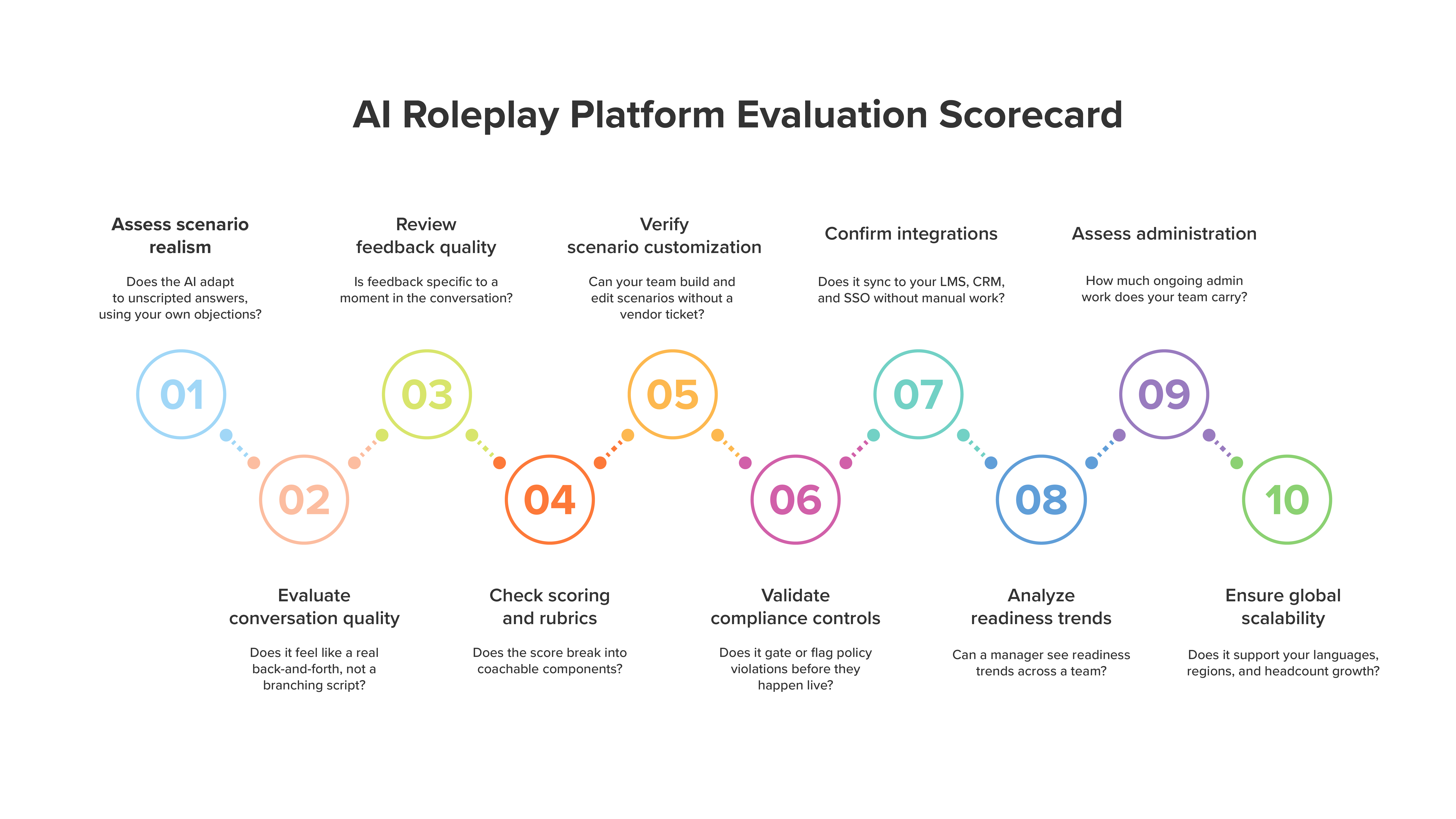
Six criteria separate enterprise-grade platforms from demos.
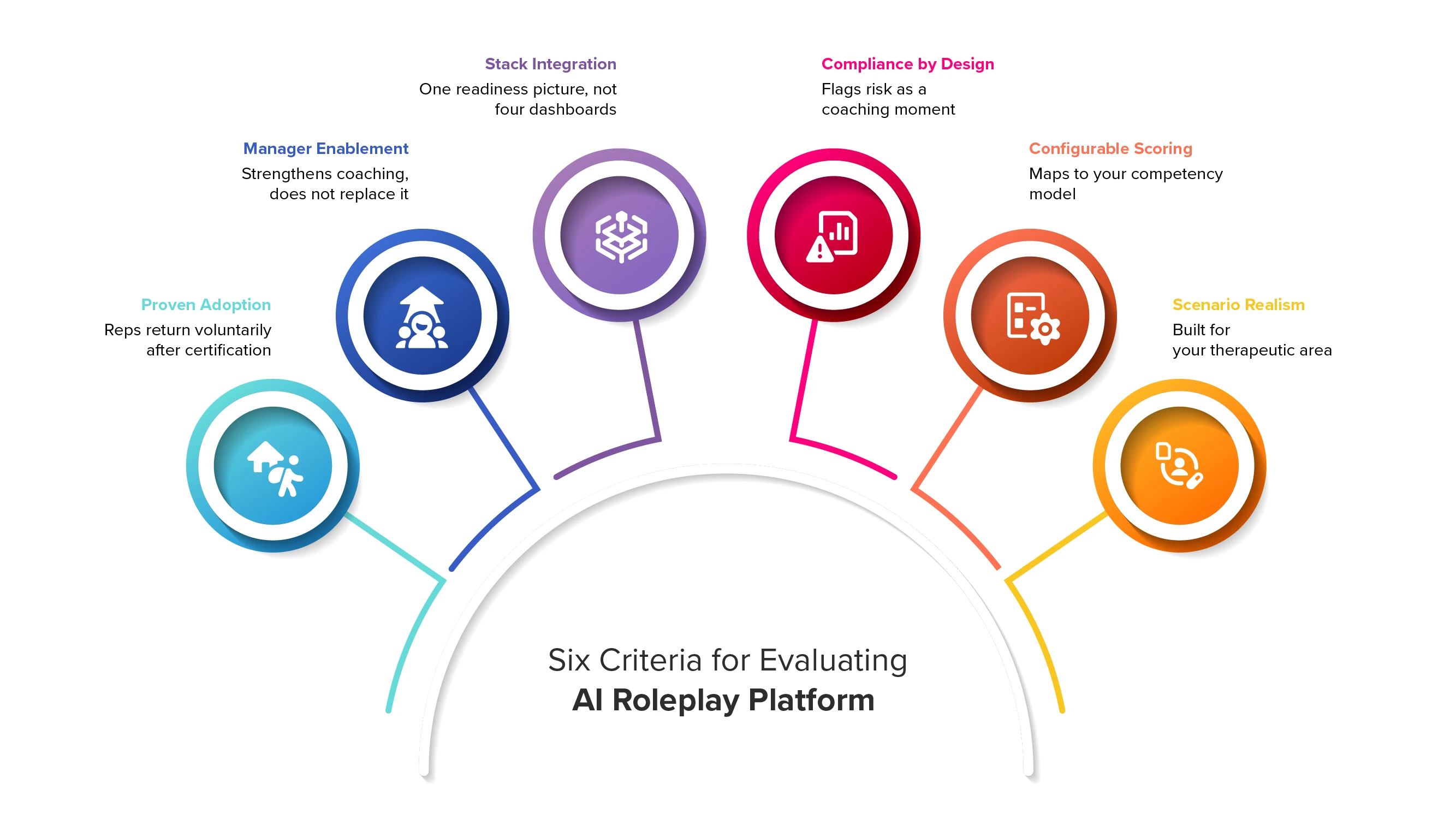
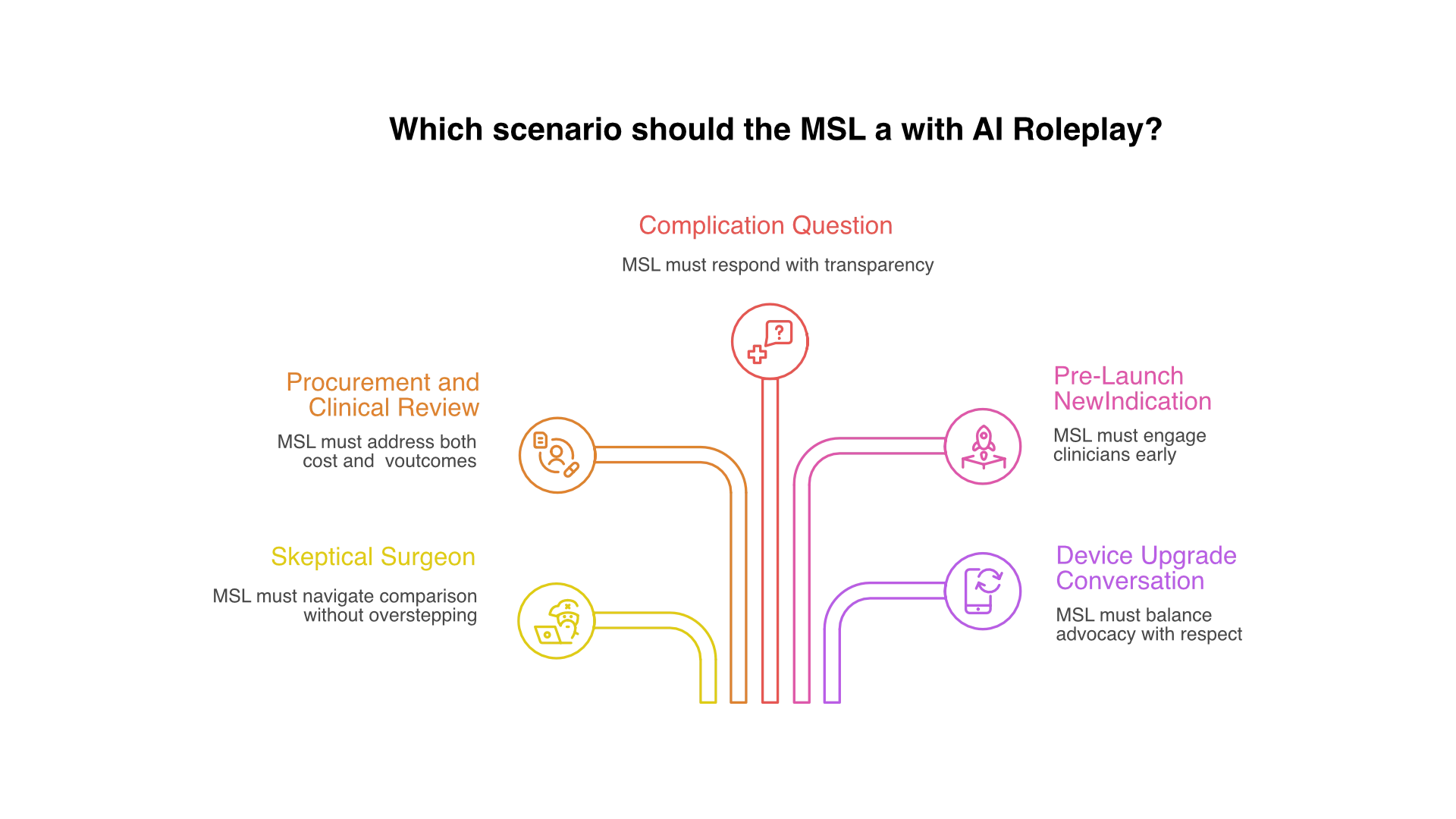
Scenario realism in your world: A generic "handle the price objection" scenario proves nothing. Ask to see a skeptical cardiologist questioning a subgroup analysis, a pharmacist raising a storage concern, a payer challenging health-economics data. If the vendor can't build your therapeutic area, your reps will notice in the first minute.
Scoring that maps to your competency model: The output that matters is not a vanity score but a readiness signal: which reps are certified, which message pillars are weak across a region, where the next coaching hour should go. Scoring must be configurable to your call model and message guide, not a black box.
Compliance by design: In a regulated industry, ask where the data lives, how conversations are retained, and whether the platform can flag non-compliant language as a coaching moment. Vendors serving pharma and medtech at enterprise scale will have ready answers on security review, data residency, and validation support.
Integration with the rest of the readiness stack: Role-play in isolation creates another silo. The signal from practice sessions should flow into the same place as field coaching observations, knowledge checks, and learning paths, so a manager sees one picture of a rep's readiness, not four dashboards.
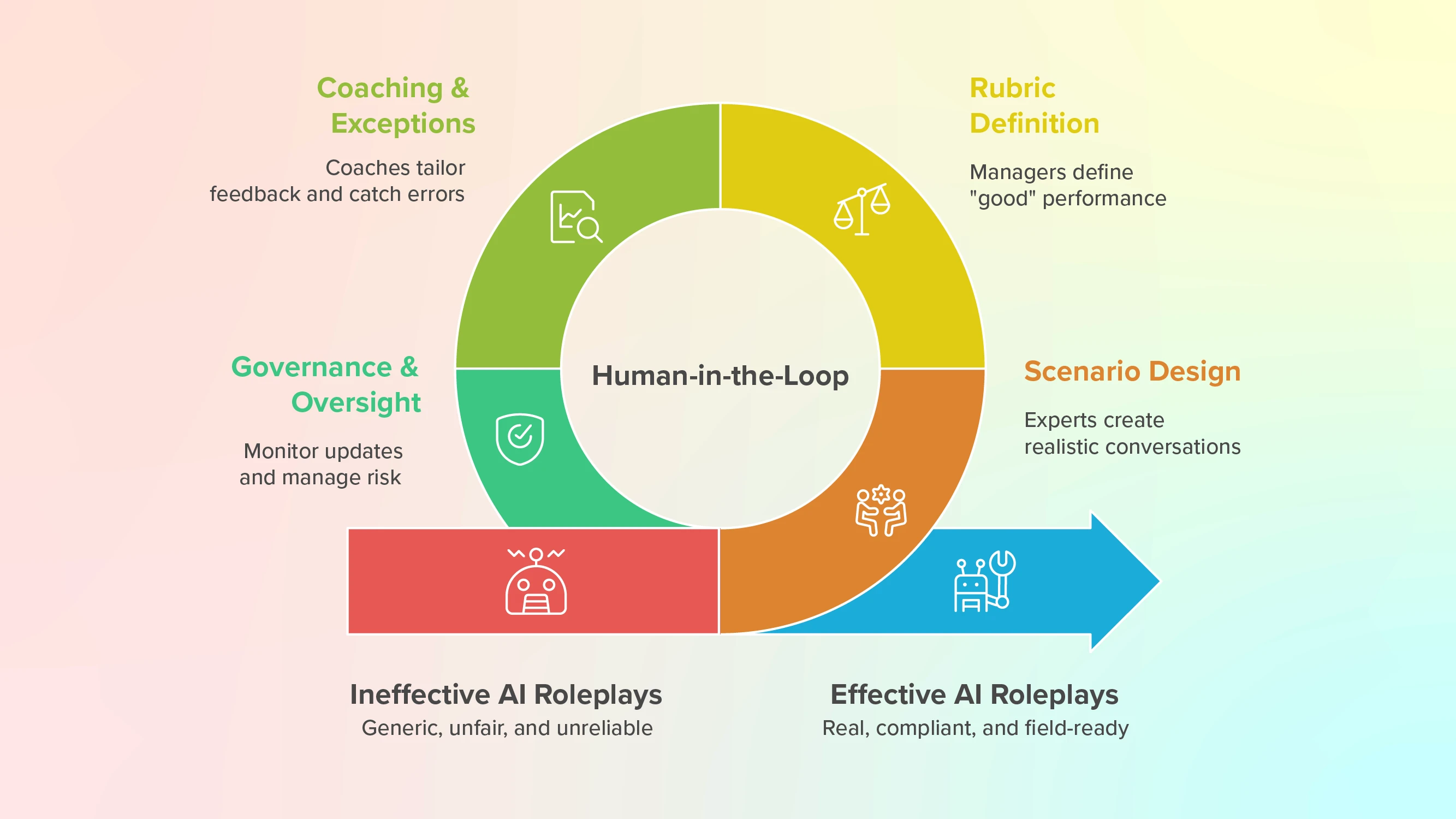
Manager enablement, not manager replacement: The best implementations make frontline managers stronger: AI handles repetition and consistent scoring, managers get a heat map of who needs live coaching on what. If a platform's pitch is "you won't need your managers," walk away. In field sales, the manager is the multiplier.
Evidence of adoption, not just capability: Reps vote with their behavior. Ask vendors for practice-frequency data from live deployments: how often do reps return voluntarily after certification? Gamified reinforcement, meaning leaderboards, streaks and milestone rewards, is what separates platforms reps use from platforms reps complete.
How do you measure whether it's working?
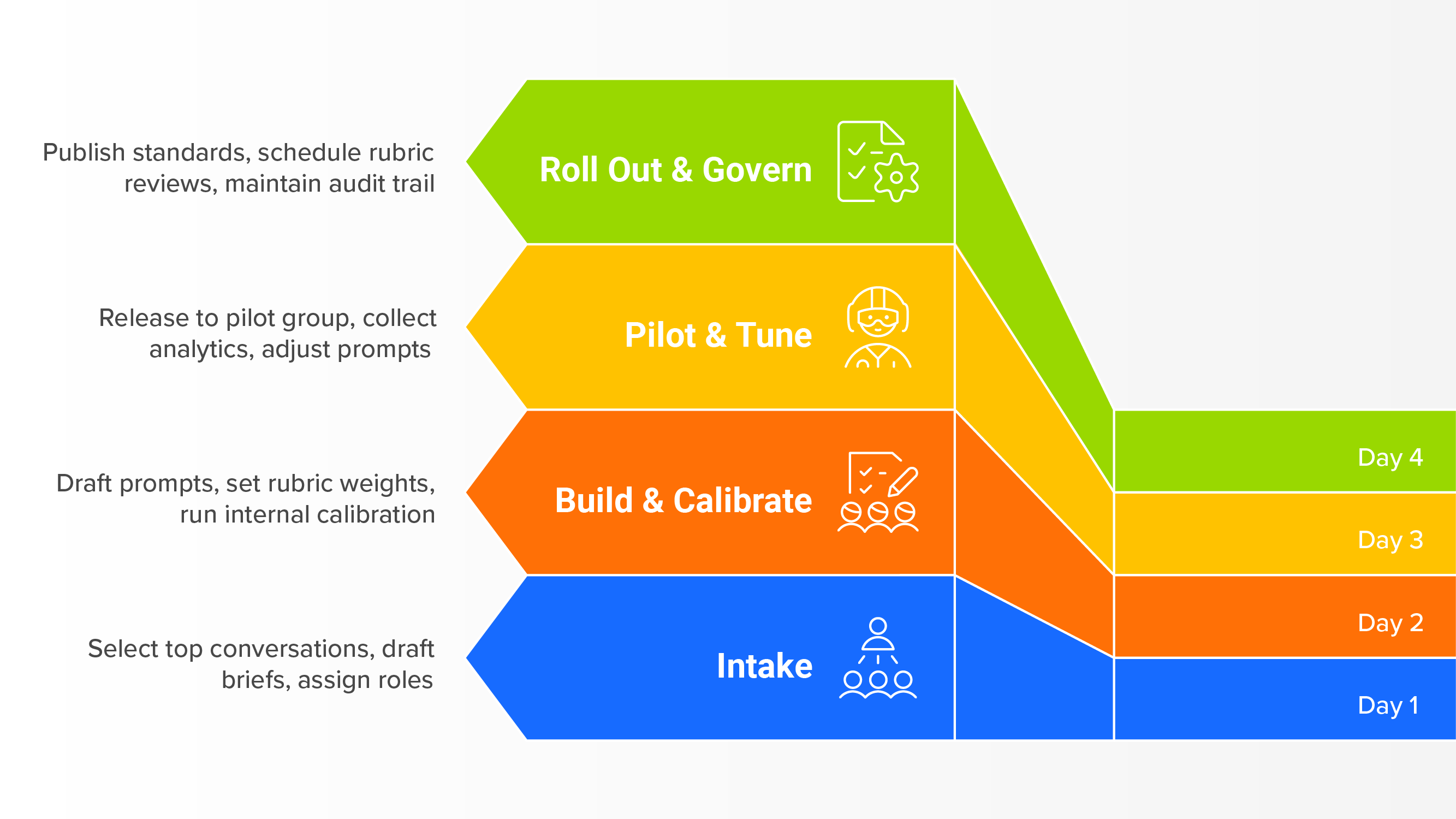
Set the measurement model before the pilot, not after. The leading indicators arrive in weeks: practice attempts per rep, certification pass rates and time-to-certify, score improvement across attempts, message-accuracy trends by region. The lagging indicators take a quarter or more: field-coaching scores on the competencies practiced, launch message pull-through (from your next message-recall audit), and manager time reallocated from running role-plays to actual field coaching. A well-run pilot defines two or three of each, baselines them, and reports honestly, including what didn't move.
The bottom line
AI role-play is not a substitute for great managers, great messaging, or great science. It is a substitute for the practice your reps were never getting, and in an industry where a single conversation can carry a launch or a compliance risk, unrehearsed field conversations are the most expensive kind. The commercial training leaders moving first aren't replacing their coaching culture; they're finally giving it the repetitions it always lacked.
Frequently Asked Questions
Is AI role-play compliant for pharma sales training?
The category can be deployed compliantly, but it depends on the platform: look for enterprise security review readiness, configurable data retention, controlled scenario content built from your approved messaging, and the ability to flag non-compliant language during practice rather than letting it pass.
Does AI role-play replace manager-led coaching?
No, it redistributes it. AI absorbs repetitive practice and consistent scoring; managers redirect their limited field time toward judgment-based coaching, guided by the readiness data practice sessions generate.
How long does it take to see results?
Leading indicators such as practice frequency, certification pass rates and score improvements show within two to six weeks. Field-level indicators such as coaching scores and message pull-through typically need a full quarter.
Whats the difference between AI role-play and conversation intelligence?
Conversation intelligence analyzes real calls after they happen. AI role-play creates practice conversations before they happen. They're complementary: one tells you what went wrong in the field, the other makes sure it doesn't.
Disclaimer: This content reflects industry practices and does not constitute medical, legal, or regulatory advice.
Last Updated: