

Smart AI Blog Summary
Get a quick blog summary from any of the below LLM's
What You'll Learn
Compliant sales coaching in pharmaceutical sales is not simply about improving conversation skills, and compliant coaching requires more than good intentions. It operates within a defined regulatory and compliance framework that shapes what your representatives can say, how they can say it, and what boundaries govern their interactions with healthcare professionals.
For you as a sales leader or L&D lead, finding a coaching platform that supports skill development while respecting these boundaries is a meaningful challenge.
Why This Matters: The Stakes Are Higher Than a Bad Call
Picture this: a newly onboarded rep is three weeks into her first territory. She is confident, well-prepared from training, and walks into a busy oncology clinic for her second visit with a skeptical specialist. The physician asks a question that nudges right at the edge of the approved label.
She pauses, then answers with something she heard a senior colleague say in a hallway conversation at the kickoff.
That answer was not in the approved messaging. She did not know that. Her manager was not there.
This is not a hypothetical. It plays out in pharma field teams every week.
The gap is not usually knowledge. It is judgment in the moment, shaped by how coaching was done.
What this reveals: A rep can be fully certified and still deliver an off-label answer in the field, because the gap that matters most often shows up as judgment under pressure, not as a knowledge deficit training already addressed.
What Compliant Coaching Actually Looks Like on the Ground
When compliance teams say they want compliant coaching, what they actually mean is often misunderstood by L&D. Here is the practical picture:
A rep practicing an HCP conversation gets feedback calibrated to approved messaging, not a generic "be more persuasive" note from a pop sales framework
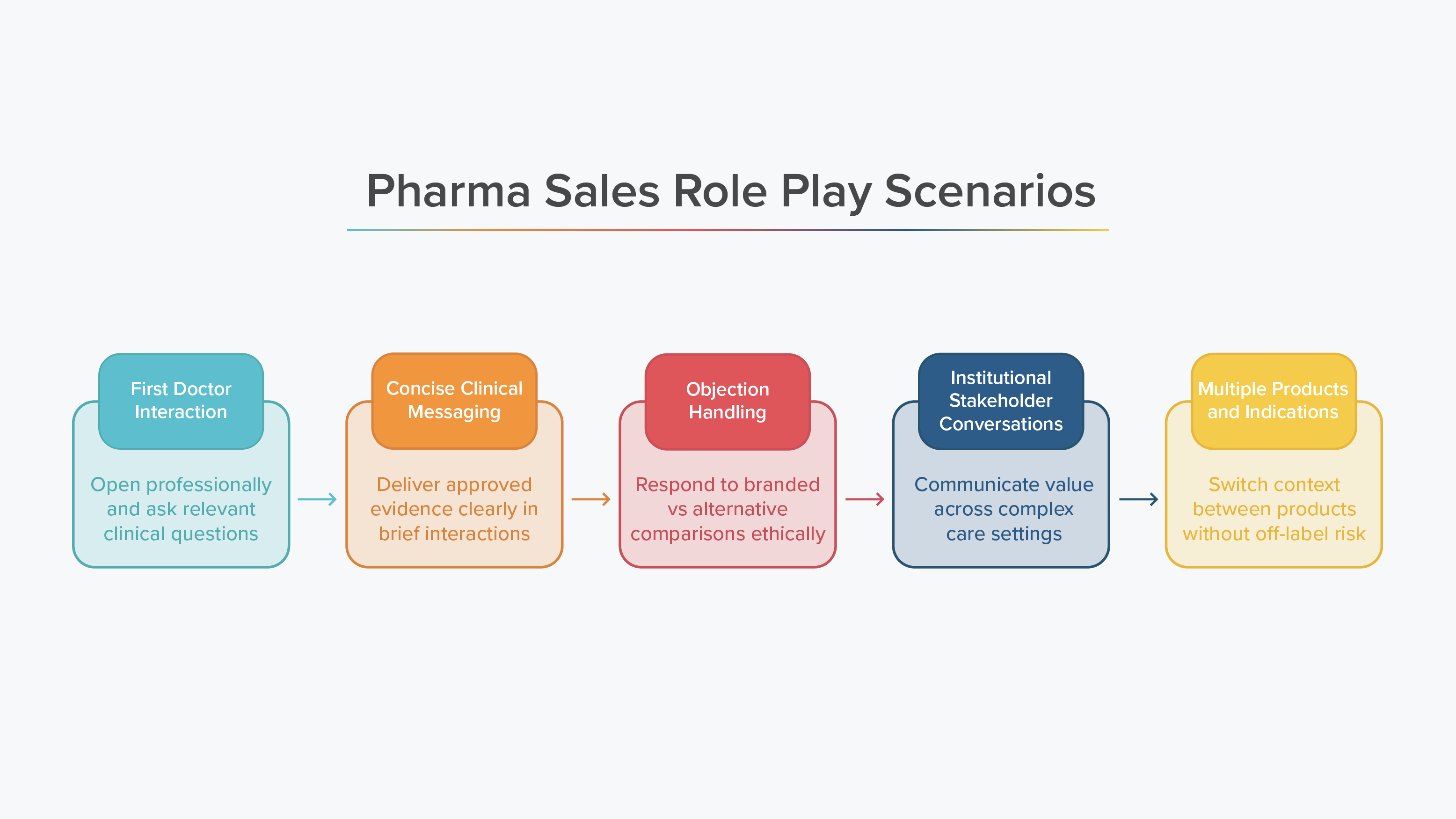
Roleplay scenarios mirror real clinical conversations without the simulation crossing into clinical decision-making territory
Every coaching interaction is documented and accessible for review if compliance needs to pull records
There is a clear line in the content between what a field rep can discuss versus what an MSL handles as scientific exchange
Different roles get different coaching tracks, since a field rep, a KAM, and an MSL should not all be trained with the same conversation framework
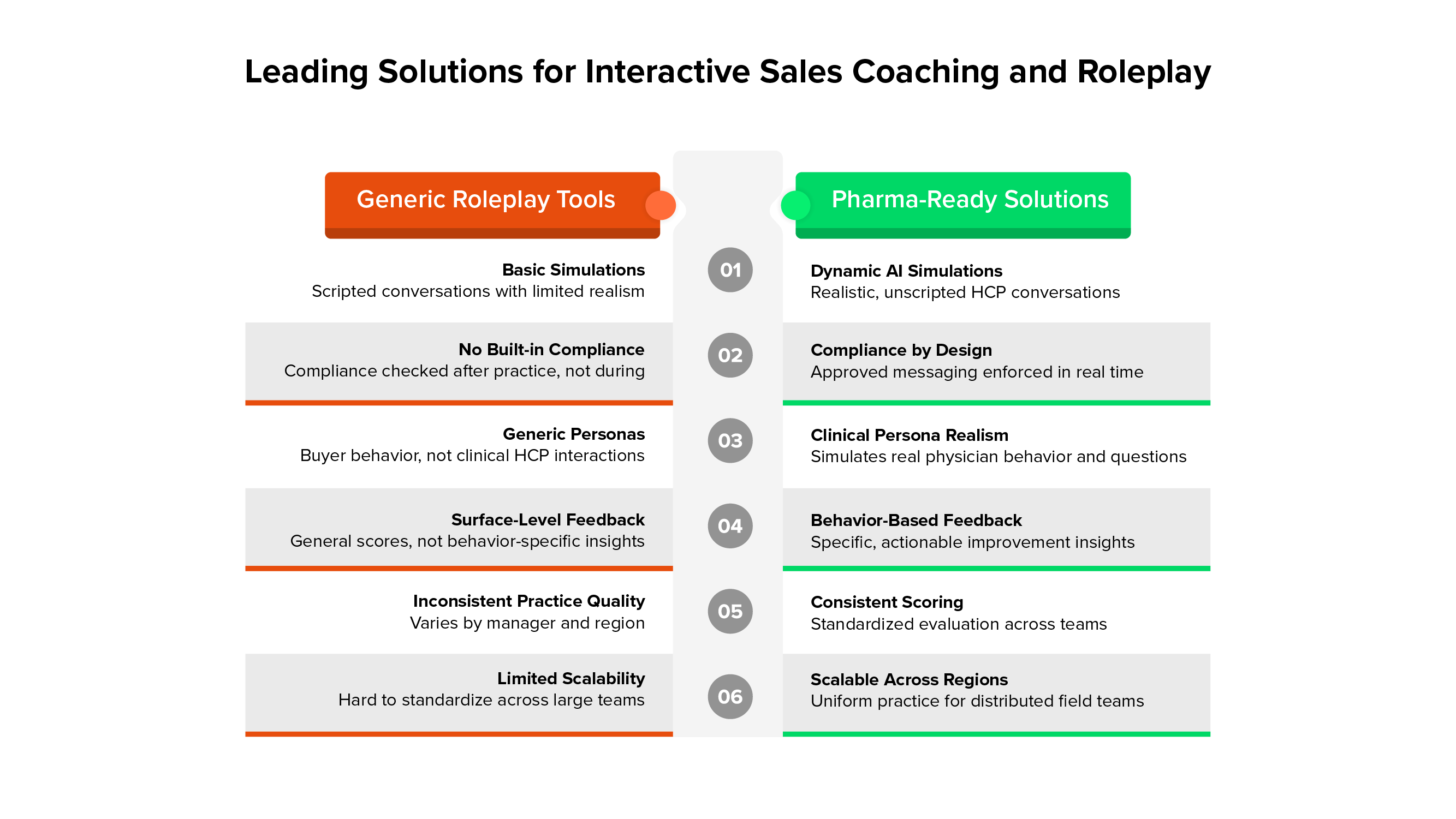
Consider a national pharma organization that had deployed a generic coaching tool across its 600-person field force. The tool gave universal feedback based on sales effectiveness criteria. A compliance audit revealed that the coaching language was actively encouraging reps to lead with efficacy language that had not been fully cleared for certain indications.
The tool was technically excellent. It was compliance blind.
The Specific Platform Features That Change the Equation
Configurable Messaging Guardrails
The most important feature most organizations underweight during evaluation is whether your compliance and training teams can configure what "good" looks like inside the coaching tool.
If AI feedback is based on a generic persuasion rubric, you are coaching reps into habits that may be commercially effective but not always compliant. The platform must allow you to lock feedback criteria to your organization's approved content.
Ask vendors directly: "Can we configure what the AI scores reps against?" If they say yes only generically, push for a live demonstration with a pharma-specific scenario.
Role-Based Learning Paths
A field rep, an MSL, and a key account manager are three different jobs operating inside three different compliance frameworks. Coaching that conflates these roles creates risk.
One large-cap pharma company discovered this the hard way. Their coaching platform had a single content track, so MSLs were getting feedback calibrated to promotional standards, and field reps were occasionally being coached in language more appropriate for scientific exchange. The fix required rebuilding their entire coaching program from scratch.
This is non-negotiable: the platform must support distinct role-based coaching pathways. Verify this in the demo with actual role examples, not just the feature spec.
Audit Trails and Activity Logs
In pharma, "we trained on that" is not enough. You need to be able to show what was delivered, when, to whom, and what the rep demonstrated.
A pharmaceutical organization going through an FDA inspection was asked to demonstrate that its field force had received compliant coaching on updated labeling before a promotion. Because their coaching tool logged every session with timestamps, content metadata, and rep-specific completion, they answered the question in under two hours.
Audit-ready documentation should not be a feature you build on top of the platform. It should be native.
MLR-Reviewed Content Integration
Coaching scenarios developed outside the MLR process are not the same as scenarios built from reviewed content. This distinction matters more than most L&D teams realize at the platform selection stage.
Push vendors on whether their content libraries can be replaced with your own MLR-reviewed materials. Platforms that require you to use their proprietary content are a yellow flag for pharma compliance teams.
The Balance Problem: Skill Development vs. Regulatory Guardrails
Pharma L&D leaders recognize a recurring dynamic: ensuring compliance while developing reps who can engage in meaningful, real-world clinical conversations.
A regional training manager at a mid-size pharma company described it this way: "We had reps who could pass every assessment and then freeze when a cardiologist went off script. The training was compliant, but it was not realistic."
The answer is not to relax the compliance standards. It is to build coaching that develops clinical fluency inside those standards, not despite them.
Scenario design should include moments where the "right" answer is "I will get back to you with the data," and coach reps on how to say that professionally
Practice the boundary as much as the content, since a rep who knows where the line is will navigate toward it, not through it
Simulate the difficult conversations, not just the ideal ones, since a skeptical cardiologist is worth ten polite ones in practice
"The goal is not reps who know the rules. It is reps who know how to think when the rules get complicated."
How to Evaluate a Platform Beyond the Demo
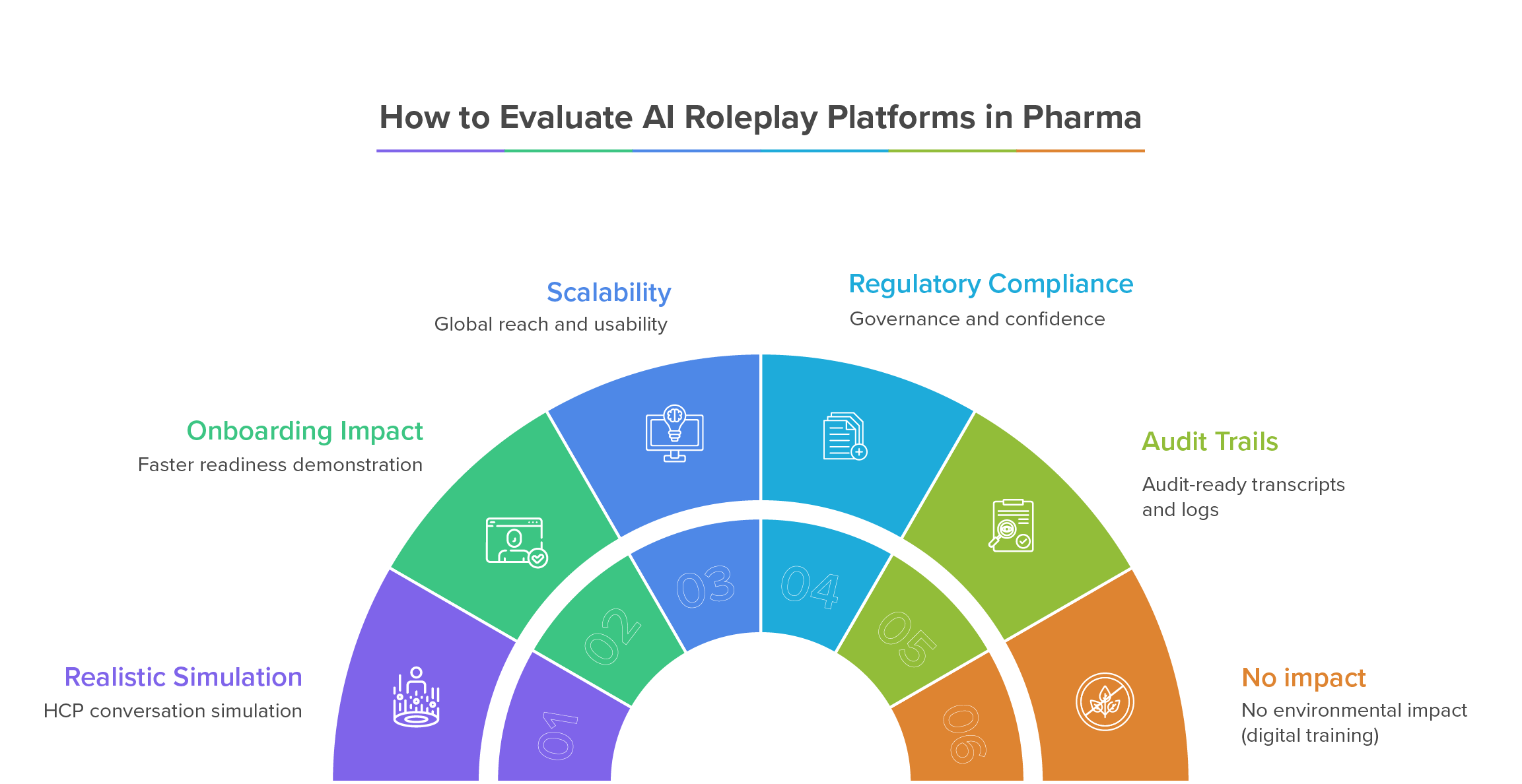
Platform demos are designed to look good. Here is how to see past the presentation:
Bring a compliance or medical affairs person into the evaluation from day one, not after you have already shortlisted
Run a live test scenario that includes a compliance boundary moment and watch how the platform's feedback handles it
Ask how data generated in coaching sessions is stored, who can access it, and what happens when a rep leaves the organization
Ask specifically about AI feedback configuration: can it reflect your organization's approved messaging, or is it trained on generic sales data
Request a reference from a pharma organization specifically, not just any regulated industry customer
The pharma coaching platform landscape is full of tools that are excellent for tech sales or financial services and genuinely inadequate for a regulated field force. The distinction is rarely visible in a demo.
Building a Coaching Culture That Compliance Can Stand Behind
Technology is only part of the answer. The most effective compliance-aligned coaching programs in pharma share a few cultural characteristics:
Managers are trained to coach on compliance instinctively, not just to check a box
Compliance is treated as a coaching dimension, not a separate track that runs parallel to skill development
The coaching feedback language mirrors the field environment, so reps are not surprised by what they encounter with real HCPs
Senior leaders model the integration by discussing compliance naturally in commercial conversations, not only in formal training contexts
One VP of Commercial Excellence put it well: "The reps who get into trouble are not usually the ones who do not know the rules. They are the ones who have never been coached on what to do when a real conversation tests those rules."
Key Takeaways
Compliant coaching is not about being restrictive. It is about building reps who are confident within appropriate boundaries
Platform features matter, but only if they can be configured to your organization's specific compliance environment
Involve compliance and medical affairs in platform selection from the beginning, not after the purchase
Audit trails, role-based pathways, and configurable messaging guardrails are not optional in pharma. They are the baseline
The best coaching programs in pharma make compliance instinctive, not just certifiable
How AI Roleplay Enables Compliant Sales Coaching in Pharma
An AI Roleplay platform can be purpose-built for regulated commercial environments where coaching quality and compliance are inseparable. Here is how it addresses the specific challenges your pharma L&D and commercial excellence teams face:
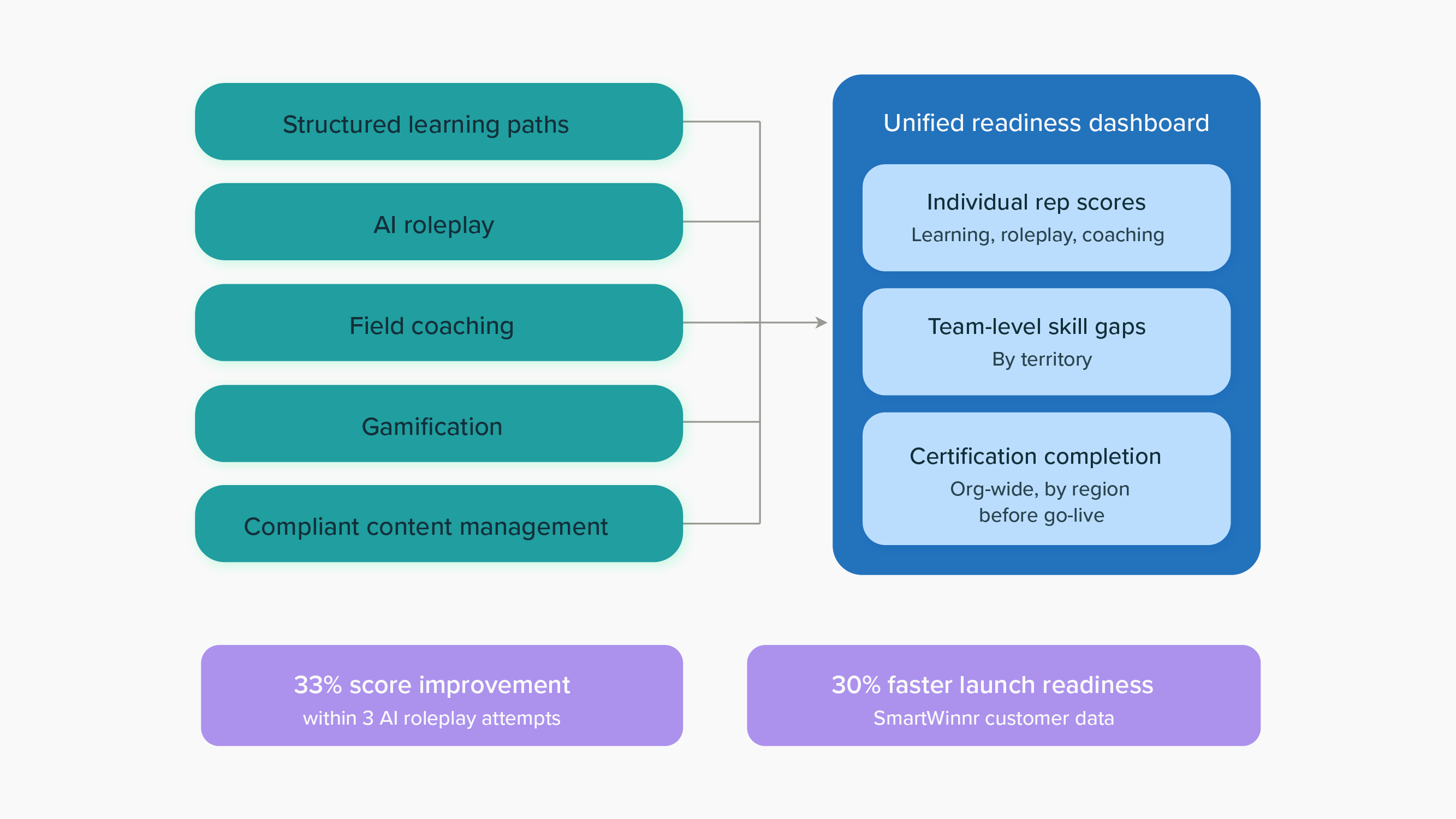
AI-powered roleplay with configurable guardrails: the roleplay engine lets you define what "good" looks like based on your approved messaging, not a generic sales rubric, so your reps practice HCP conversations and receive feedback calibrated to your compliance environment
Role-based learning paths: field reps, MSLs, and KAMs get distinct coaching tracks built for their function and compliance framework, with no one-size-fits-all track
Audit-ready activity logs: every coaching session is timestamped and documented natively, so when compliance or regulatory bodies ask what reps were coached on and when, you have the answer in minutes
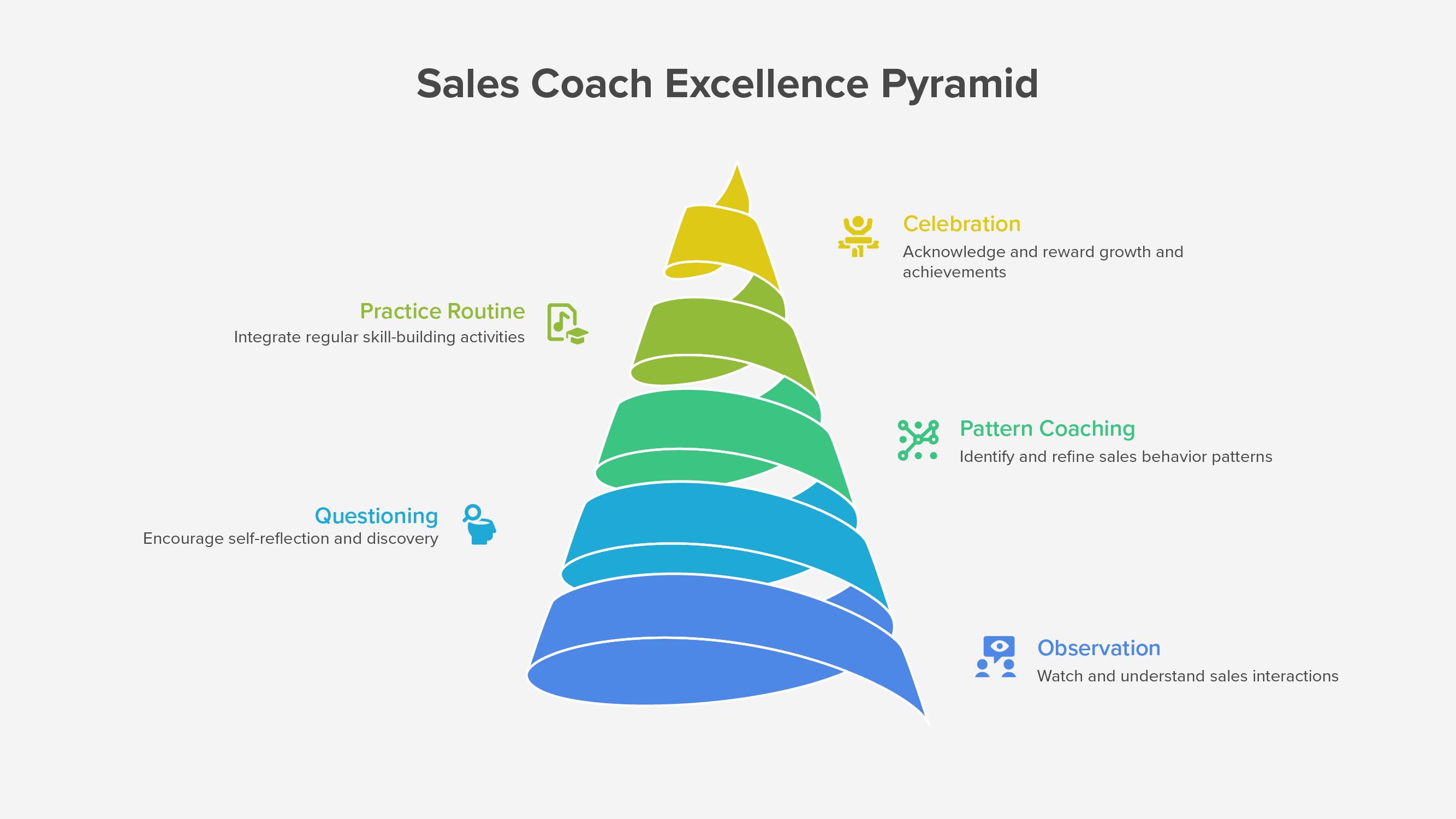
Manager coaching tools: structured feedback frameworks help your field managers coach on compliance instinctively, not just as a checkbox exercise
Real-time analytics: dashboards surface readiness gaps by rep, region, and role, so your L&D leaders can intervene before the field does
This kind of platform turns compliance-aligned coaching from a risk management exercise into a genuine commercial capability, one that builds confident, field-ready reps.
Ready to see how AI Roleplay can strengthen compliant sales coaching across your pharma team? Request a Demo to explore how configurable guardrails, role-based learning paths, and audit-ready logs work together to make compliance instinctive rather than restrictive.
Frequently Asked Questions
What does compliant sales coaching actually look like in pharma?
Compliant coaching gives reps feedback calibrated to approved messaging rather than generic persuasion criteria, keeps roleplay scenarios inside clinical decision-making boundaries, and documents every coaching interaction for compliance review. It also separates coaching tracks by role, since a field rep and an MSL operate under different frameworks.
Why do generic sales coaching platforms create compliance risk in pharma?
Generic platforms typically score reps against broad persuasion or sales-effectiveness criteria that were never reviewed against approved labeling or indications. This can actively coach reps toward language that has not been cleared, even when the platform performs well on general sales metrics.
Why do field reps, MSLs, and KAMs need separate coaching tracks?
Each role operates under a distinct compliance framework: field reps work within promotional guidelines, MSLs engage in non-promotional scientific exchange, and KAMs sit somewhere between commercial and account-level conversations. A single shared content track tends to blur these boundaries and coach people toward the wrong standard for their role.
What should audit trails and activity logs actually capture?
At minimum, logs should show what content was delivered, to whom, when, and what the rep demonstrated during practice, with timestamps and content metadata attached natively rather than assembled after the fact. This is what allows an organization to answer a regulatory inspection question in minutes rather than days.
How should compliance and medical affairs be involved in platform selection?
They should be part of the evaluation from day one, not brought in after a shortlist is already set. Involving them early means testing live scenarios that include compliance boundary moments and confirming how AI feedback can be configured to your organization's approved messaging before you commit to a platform.
Disclaimer: This content reflects industry practices and does not constitute medical, legal, or regulatory advice.
Last Updated: