
Smart AI Blog Summary
Get a quick blog summary from any of the below LLM's
What You'll Learn
Engaging HCPs effectively in competitive pharma sales conversations starts with recognizing whose frame the conversation belongs to. Picture this: a field rep walks into a rheumatologist's office for the third time, knowing the physician is a loyal prescriber of a competing product, carrying clinical data, approved messaging, and six months of relationship building.
He opens with, "I know you've been using the competitor product, but I wanted to share why ours is better." The physician's posture closes, and the conversation that follows is polite, brief, and changes nothing.
What this reveals: the problem was not the product data or the compliance of the messaging, it was the framing, since leading with a comparison forced the physician into a defensive position on behalf of a clinical decision she had already made.
What Does Effective Competitive HCP Engagement Look Like?
Effective competitive HCP engagement means leading with the physician's clinical frame and patient population rather than a product comparison, so the conversation opens instead of putting the physician on the defensive about a decision they have already made. It replaces "why is ours better" with "which patients in your practice might benefit from an additional option."
How Should You Understand the Competitive Landscape from the HCP's Perspective?
Healthcare professionals who have established prescribing patterns for a therapy are not thinking about commercial competition. They made a clinical decision based on patient outcomes, safety profile, formulary access, and practical experience, and they are not waiting to be convinced to switch.
Your reps who approach competitive conversations from the physician's clinical frame, rather than from a commercially defensive position, open the conversation very differently. The question shifts from asking why your product is better to asking which patients in the physician's practice might benefit from an additional option.
Keep these principles in mind:
Start with the patient population, not the product comparison.
Ask what clinical priorities the HCP is managing before presenting information.
Respond to competitor mentions with factual, approved data. Do not match competitive language with competitive language.
Acknowledge what works in the current standard of care rather than dismissing existing preferences.
Focus on the specific clinical context where your product has its strongest supported case.
What Does Preparation for Competitive Conversations Actually Require?
Clinical Evidence Fluency, Not Just Product Knowledge
There is a difference between knowing your product's clinical data and being able to discuss it fluently when a physician frames a question in unexpected clinical terms. A rep who can recite the primary endpoint from the registration trial but cannot respond to a question about how that efficacy translates to the patients they see most often is not ready for a real competitive conversation.
Clinical fluency in a competitive context means knowing your evidence base well enough to adapt it to the physician's clinical frame, and that requires practice in realistic conditions, not just content mastery in a testing environment.
Knowing the Competitive Clinical Landscape
Reps who understand the clinical data for competing therapies, from approved training materials and medical affairs sources, are better positioned to have substantive conversations when competitive mentions arise. This is not about making comparative claims, it is about being a credible clinical conversationalist.
Your reps should know what the approved training content says about the competitive context, know where your product's evidence base is strongest and communicate from that position, and know what questions to refer to medical affairs rather than attempting to answer independently.
Practicing the Difficult Scenarios
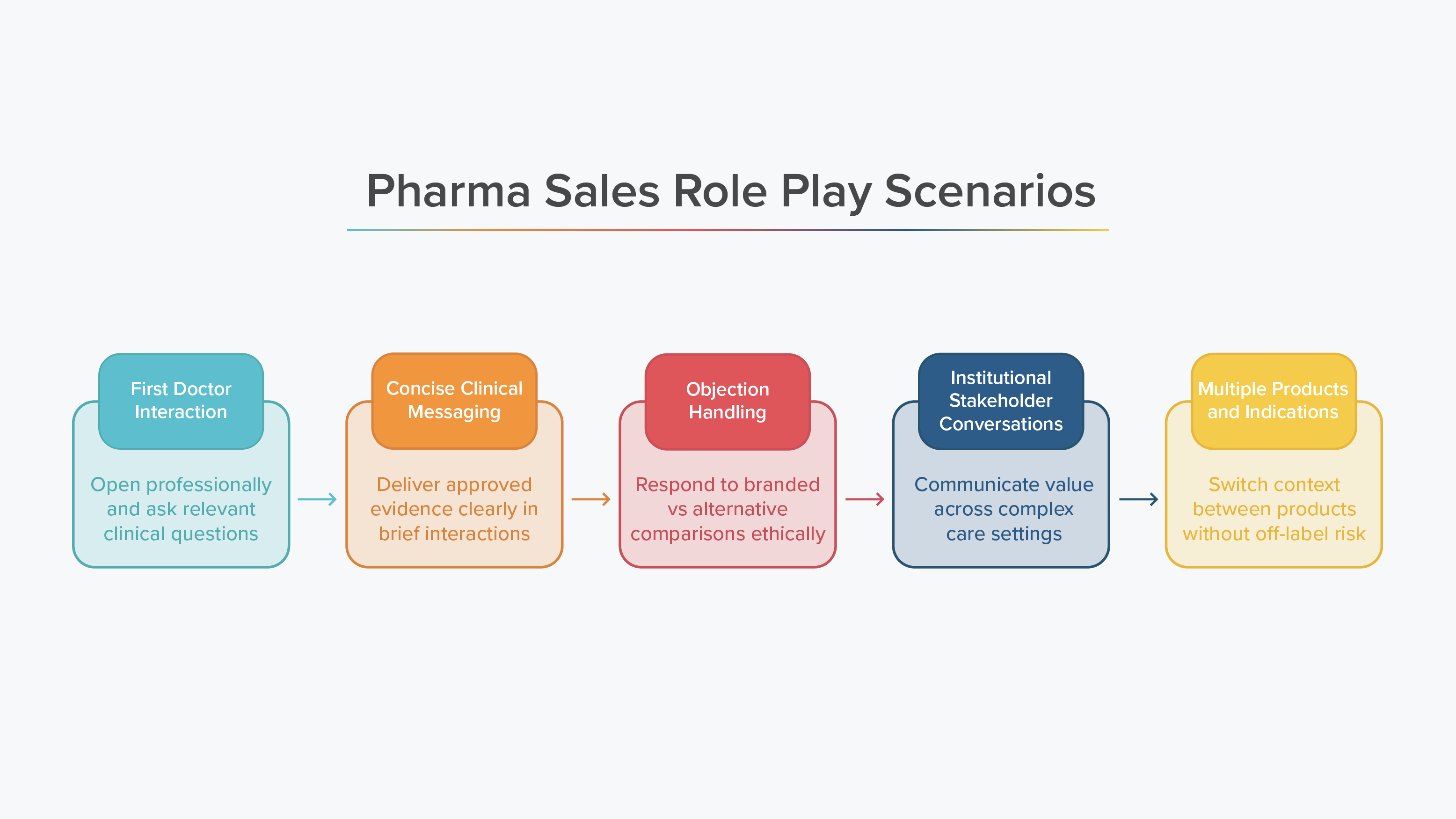
The HCP conversations that create the most hesitation for your reps are not the ideal ones. They are the scenarios where the physician has a strong existing preference, raises a comparison question that edges toward the compliance boundary, or expresses skepticism about the clinical data in a way the rep was not expecting.
AI-powered simulation platforms configured with competitive objection scenarios, including a physician who expresses strong loyalty to an existing therapy and raises clinical challenges to the new product, give reps the practice they need in conditions that approximate the real field environment.
Practice the scenarios where the conversation is hardest, not just where it flows smoothly, and debrief on what was said and how it was said, since both matter.
How Should You Stay Compliant While Addressing Competition?
Competitive conversations in pharma carry specific compliance dimensions. Your representatives are expected to respond to competitor mentions with factual, approved data rather than comparative or denigrating claims, avoid making claims not supported by the approved product labeling even when competitive pressure invites reaching for stronger language, refer off-label questions to medical affairs rather than attempting to address them in a field conversation, and document interactions accurately, including competitive content discussed, in the CRM.
Organizations that provide reps with clear, approved guidance on competitive messaging, and train them to apply it consistently through scenario practice, maintain competitive credibility without creating compliance exposure.
A training manager at a specialty pharma company put it this way: "We stopped training reps on what to say about the competitor and started training them on how to stay in their lane confidently when the competitor comes up. The reps who can do that credibly are more impressive to physicians than the ones who try to argue."
How Do You Build Credibility Over Time in Competitive Accounts?
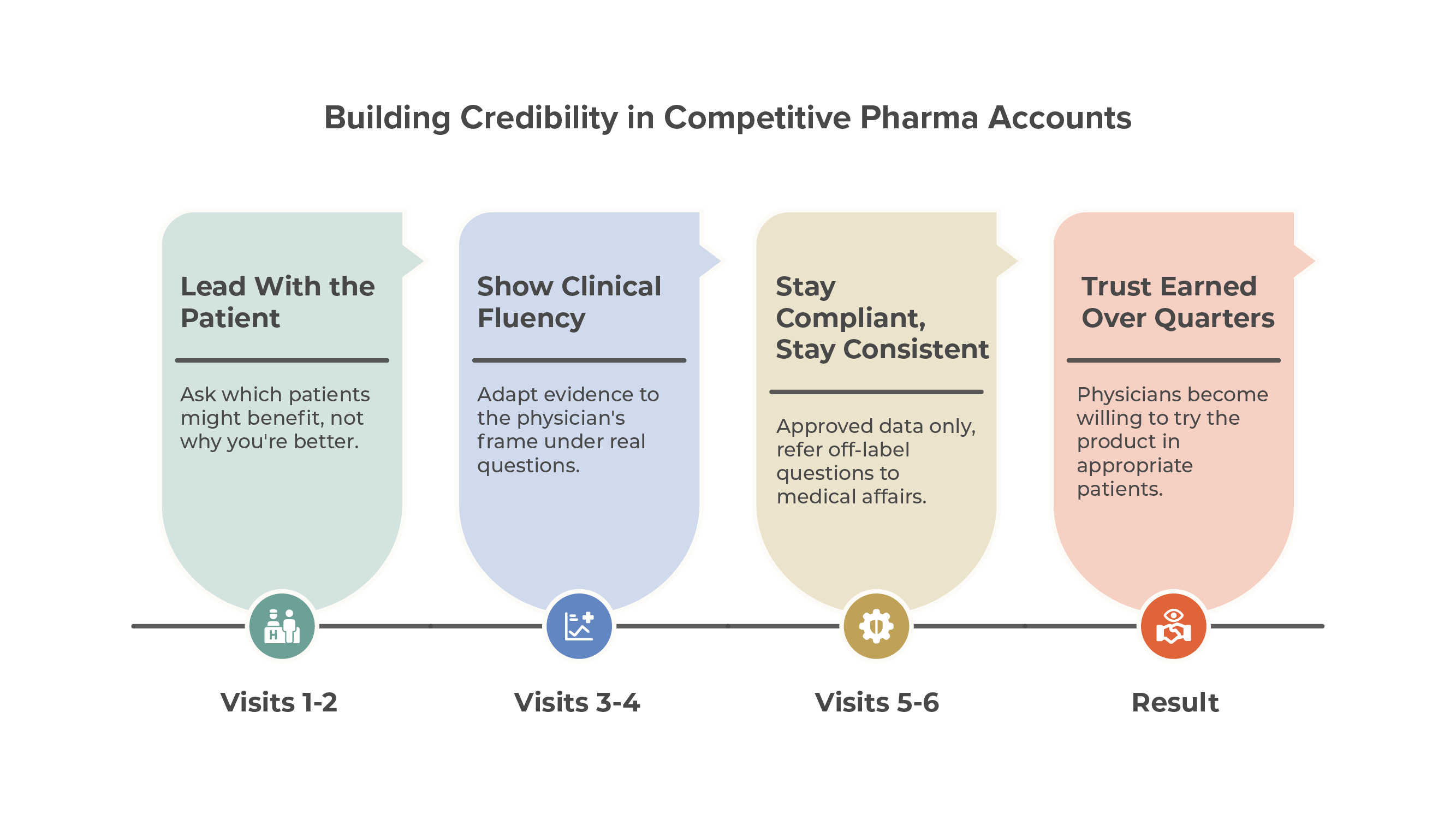
In competitive pharma markets, individual conversations rarely shift established prescribing behavior. Credibility is built over repeated interactions, each of which demonstrates clinical knowledge, accurate messaging, and genuine interest in the physician's patients.
A rep who visits a competitive account six times with consistent clinical credibility and professional conduct is building something that competitive language never builds: trust. Physicians who trust a representative's clinical judgment are more likely to try a product in appropriate patients, even when their existing prescribing patterns favor another option.
Competitive account strategy is measured in quarters, not single visits, and every visit should leave the physician with accurate clinical information and a slightly stronger impression of the representative's professional judgment; consistency over time matters more than cleverness in any single conversation.
Key Takeaways
Lead with the patient and clinical relevance, not the product comparison. The framing determines whether the conversation opens or closes.
Clinical fluency means adapting your evidence to the physician's clinical frame, not reciting it.
Practice the difficult scenarios: the loyal competitor prescriber, the comparison question, the skeptical specialist.
Compliance in competitive conversations means responding with approved data, not competitive language.
Credibility in competitive accounts is built over multiple visits, not captured in a single conversation.
How Does SmartWinnr Prepare Reps for Competitive HCP Conversations?
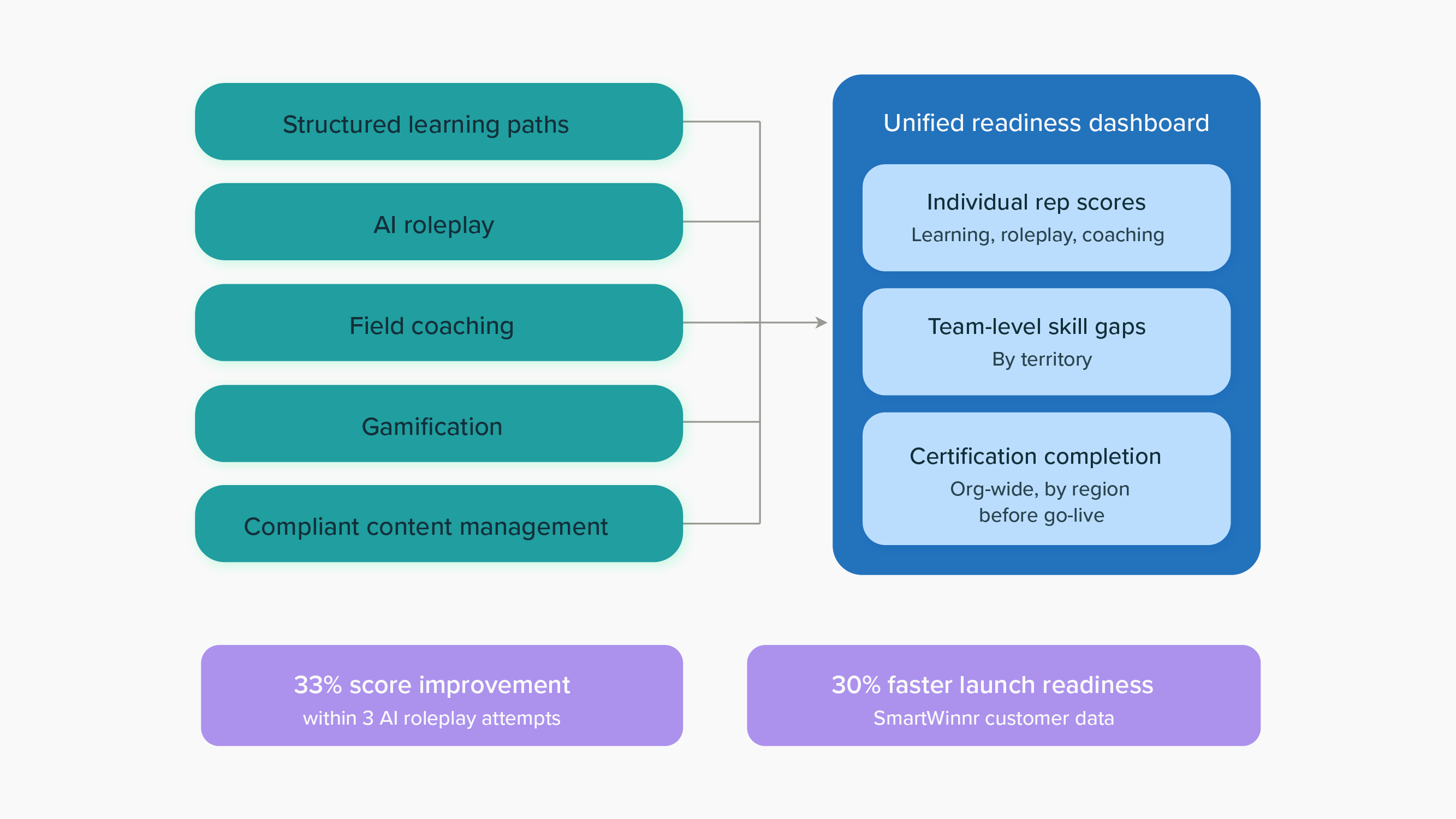
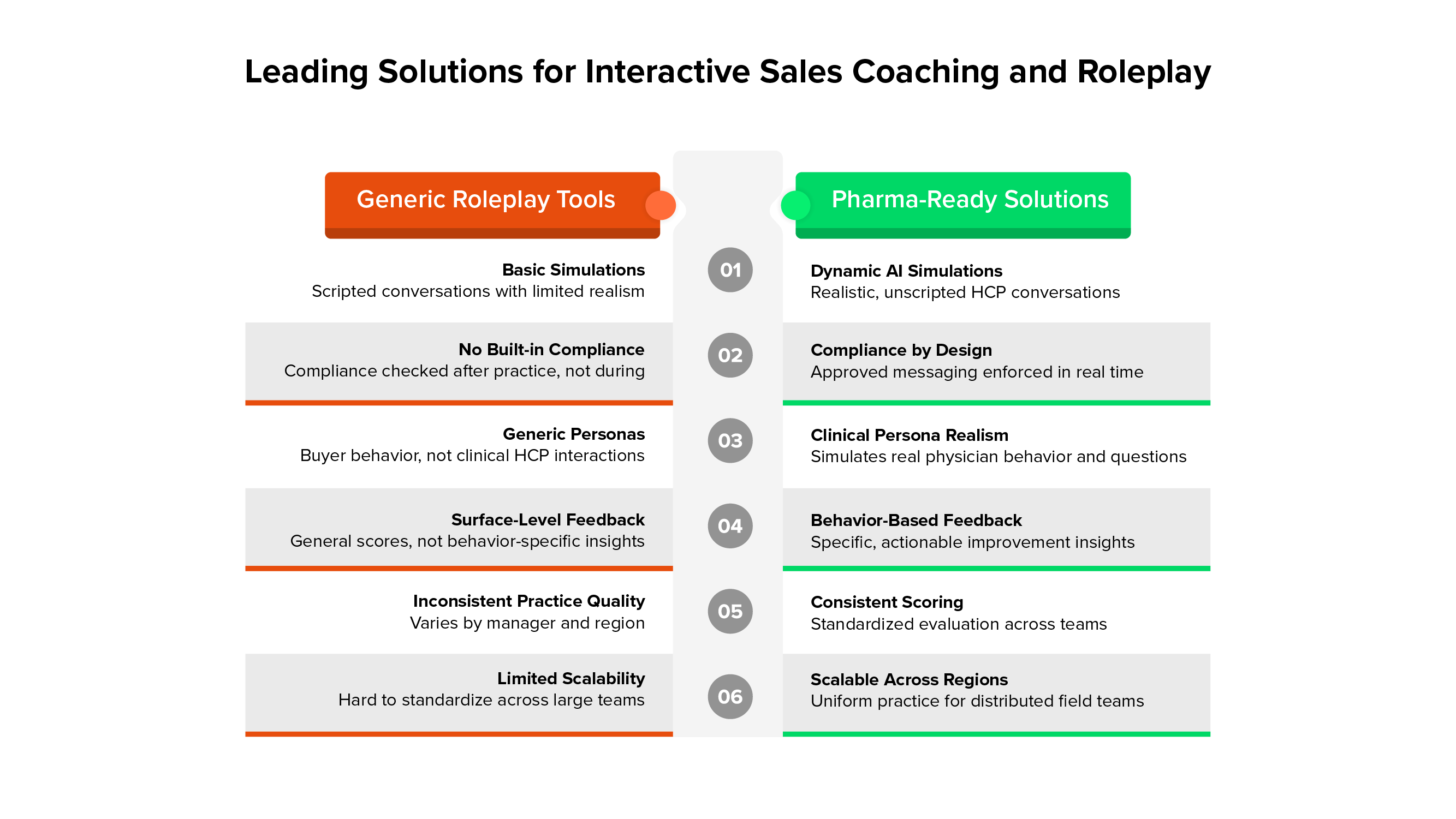
Competitive readiness comes from structured practice, not just content knowledge, and that practice needs to happen before reps face the actual moment with a physician. AI Roleplay lets reps practice the specific competitive scenarios they face in their therapeutic area, skeptical specialists raising head-to-head questions, HCPs quoting competitor data, and access objections, with feedback calibrated to approved messaging standards, keeping responses within compliance guardrails rather than optimizing for persuasiveness alone.
Common competitive objection handling patterns can be catalogued and practiced through structured simulation, and scenarios go beyond scripted responses to develop the scientific literacy reps need to hold a credible clinical conversation with an experienced specialist. Dashboards track which reps are practicing competitive scenarios and where response gaps appear, enabling targeted coaching before launch or territory entry, and manager coaching frameworks help district managers reinforce competitive conversation skills through field observation and follow-up. SmartWinnr is built to turn competitive readiness from a one-time training event into an ongoing practice discipline.
Request a demo to understand how SmartWinnr supports pharma sales readiness through AI Roleplay, coaching, and compliant skill reinforcement.
Frequently Asked Questions
Why does leading with product comparison often fail in competitive HCP conversations?
Leading with a direct comparison puts a physician on the defensive about a clinical decision they have already made, rather than opening a genuine conversation. Physicians who prescribe a competing therapy made that choice based on patient outcomes and practical experience, not commercial loyalty. Framing the conversation around patient populations instead of product comparisons keeps the physician engaged rather than defensive.
What does clinical fluency mean in a competitive pharma conversation?
Clinical fluency means being able to adapt your evidence base to the physician's specific clinical frame, not simply reciting data from a registration trial. A rep can know the primary endpoint of a study and still struggle when a physician asks how that efficacy translates to the patients they see most often. This kind of fluency develops through practice in realistic conditions, not through content review alone.
How should reps prepare for the most difficult competitive scenarios?
Reps should practice the scenarios that create the most hesitation, such as a physician with a strong existing preference or a comparison question that edges toward a compliance boundary, not just the conversations that flow smoothly. Simulation platforms configured with competitive objection scenarios approximate the pressure of a real field environment. Debriefing on both what was said and how it was said helps close the gaps that generic practice misses.
What compliance obligations apply to competitive conversations in pharma?
Reps are expected to respond to competitor mentions with factual, approved data rather than comparative or denigrating claims, and to avoid making claims not supported by approved labeling even under competitive pressure. Off-label questions should be referred to medical affairs rather than addressed directly in the field. Competitive content discussed with a physician should also be documented accurately in the CRM.
How long does it take to build credibility in a competitive pharma account?
Credibility in competitive accounts builds over repeated interactions rather than a single conversation, often measured in quarters rather than individual visits. Each visit that demonstrates clinical knowledge, accurate messaging, and genuine interest in the physician's patients adds to that trust. Physicians who trust a rep's clinical judgment become more willing to try a product in appropriate patients over time.
Disclaimer: This content reflects industry practices and does not constitute medical, legal, or regulatory advice.
Last Updated: