

Smart AI Blog Summary
Get a quick blog summary from any of the below LLM's
What You'll Learn
When a health system reviews a new device through value analysis, the account team faces a run of separate conversations. The clinical champion asks for the product, the value analysis lead sets up the review, the value analysis committee decides, supply chain settles the contract, and perioperative or nursing leaders plan the rollout.
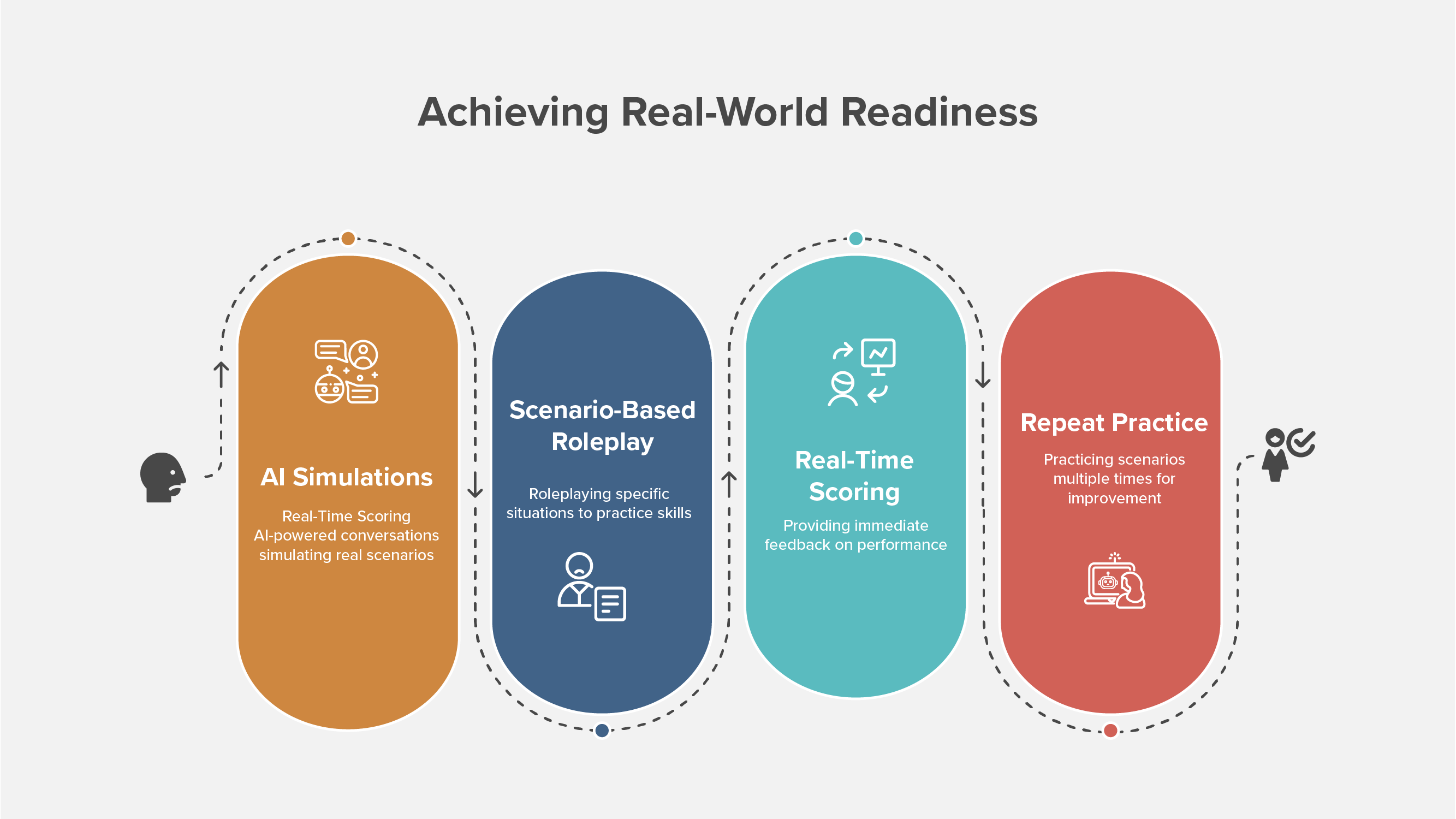
AI Roleplay lets the rep, the clinical specialist and the strategic account manager rehearse those conversations in the order they happen, against one fictional account. The manager reviews the committee rehearsal before the real meeting.
What Does a Value Analysis Committee Decide?
A value analysis committee (VAC) decides which products a hospital or health system adopts and standardizes on, weighing clinical evidence against cost. In a 2024 column in Clinical Orthopaedics and Related Research, David Kalainov, a past co-chair of a health system's orthopedic surgery VAC, gives the committee's primary function as "to adopt and standardize products deemed important for patient care." He lists clinicians, supply chain staff and administrators as typical members, with finance, quality and data analysts on some committees.
The committee meeting is one step on a longer path. Kalainov recommends that the physician proposing a product work with supply chain on cost comparisons, notes that a committee can consider a time-limited trial when patient value is uncertain, and leaves contracting with supply chain once the decision is made.
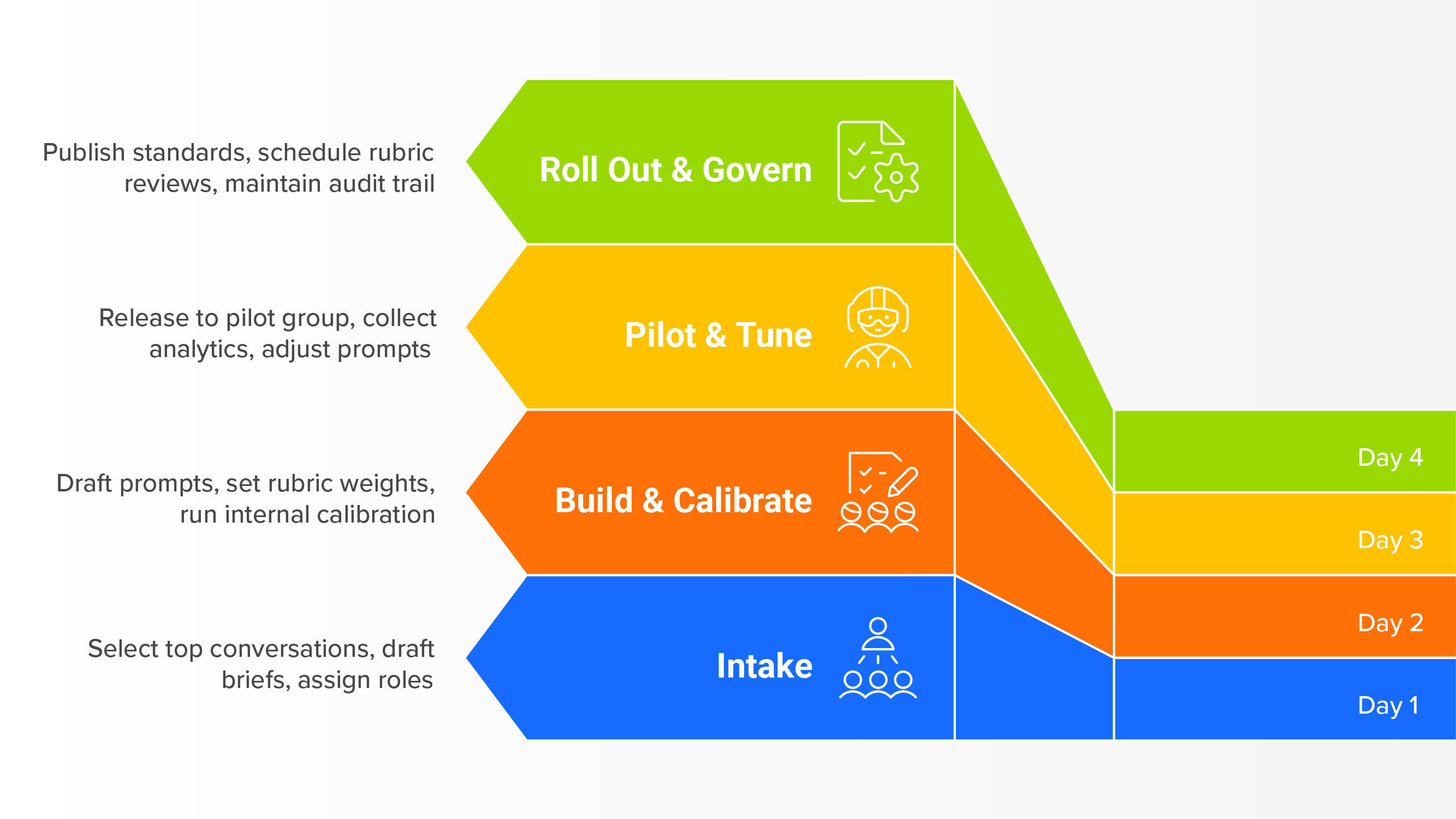
Plan for five steps and name who on your team leads each one. The rep runs the champion conversation and supplies the evidence packet for the champion's submission. The rep and the clinical specialist prepare the committee step together, presenting if the committee invites vendors and briefing the champion if it doesn't. The strategic account manager, who owns pricing and contracts with the system, takes contracting, and the clinical specialist leads implementation and in-service planning.

An illustrative path. Confirm the steps and names with each health system.
Who Does the Account Team Meet Along the Path?
Expect five groups: the clinical champion, the value analysis lead, the committee members, supply chain and contracting, and the perioperative or nursing leaders who will use the device day to day. Treat what each one wants as a question to answer in discovery, and use handling clinical objections in medical device sales for the objections they raise.
Who | Find out before you meet | What the AI persona tests |
|---|---|---|
Clinical champion | The procedures and patient groups the champion wants the device for, and whether they will sponsor the request | Evidence within the device's cleared or approved indications, and what the champion needs for the submission |
Value analysis lead | The submission form, the evidence and cost data the committee expects, the meeting date, and whether vendors present and for how long | A complete evidence packet and a clear timeline |
Committee members | Who votes this cycle, and which products the device would replace or join | A timed presentation or champion briefing, then questions on outcomes, total cost and standardization |
Supply chain and contracting | The GPO or IDN contract in place and the system's pricing process | The strategic account manager's contracting conversation, within approved pricing guidance |
Perioperative or nursing leaders | Staff training, storage, reprocessing and the in-service schedule | An implementation plan the clinical specialist can run |
Which Conversations Should the Team Rehearse, and When?
Rehearse the conversations in the order the path runs, and count the calendar back from the submission deadline and the committee date. Ask the value analysis lead when submissions close, because that date comes first.
The rep rehearses the champion conversation and the evidence packet call with the value analysis lead before the deadline. Two to three weeks before the committee, the rep and the clinical specialist rehearse the timed presentation, or the champion briefing if vendors don't present, and the manager reviews the attempt. They run the committee's questions once more in the final week. After the decision, the strategic account manager rehearses contracting with supply chain, and the clinical specialist rehearses implementation and in-service planning, or the follow-up to a trial or a deferral.

An illustrative calendar for a fictional account. If the committee date moves, move the calendar with it.
How Do You Build the Scenarios?
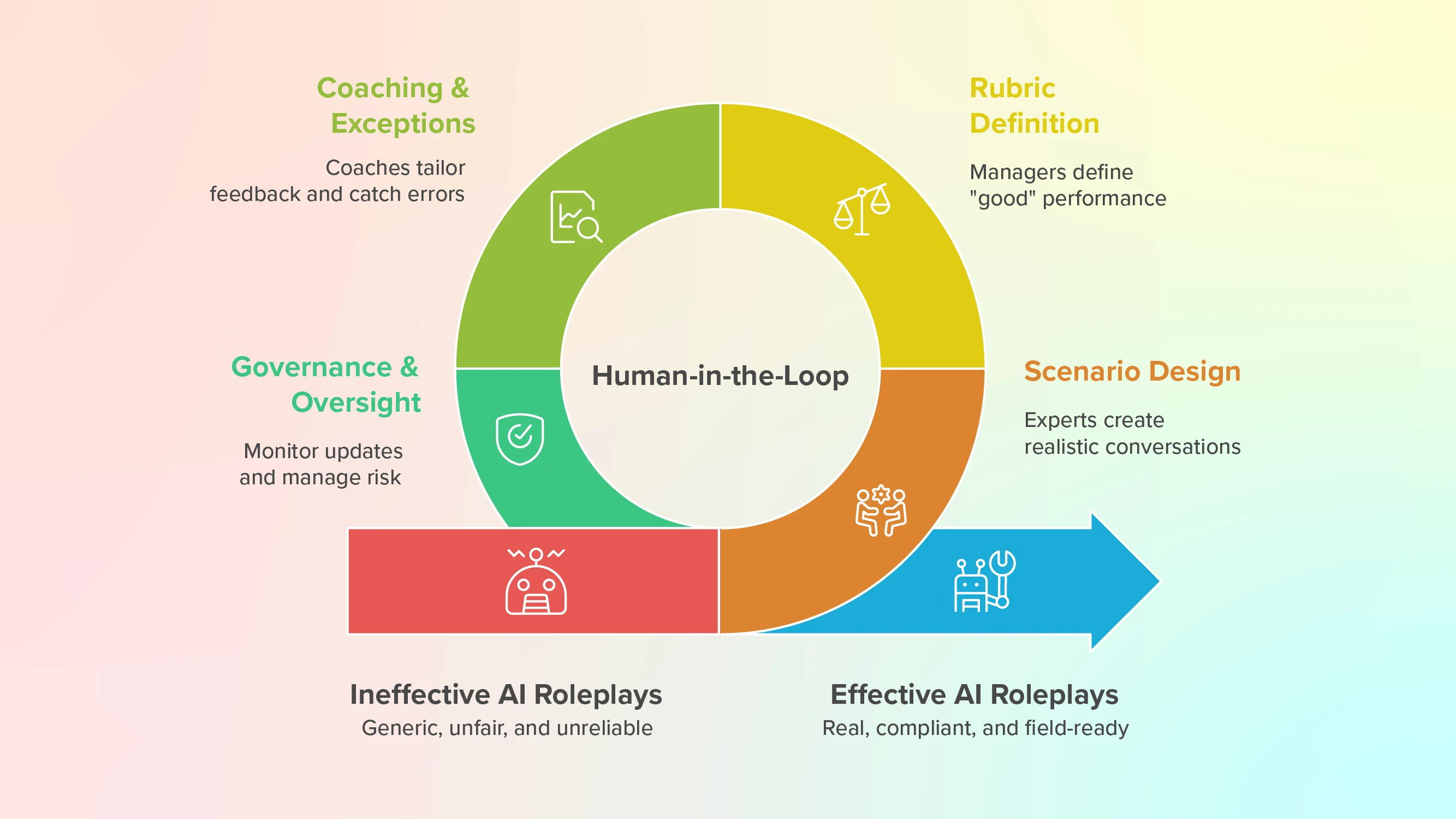
Start from one fictional account brief. Each stakeholder on the path gets an AI persona built from it, with its own weighted rubric. If your team needs single-conversation practice first, AI sales training roleplay scenarios for medical device reps has examples with surgeons, procurement and biomedical engineering.
Keep the brief to one page. It names the type and size of the system, the product the device would replace and the contract it sits on, the champion's request, the submission deadline, the committee date and slot length, the approved materials the team may use and the topics that stay off limits. Build all the personas from this brief, so every conversation works from the same facts.

A fictional account brief in demo data.
Use approved content only, such as the instructions for use, approved clinical summaries, the approved cost model and talk tracks. Keep two pass gates the same across the path:
Claims stay within the device's cleared or approved indications.
No patient information enters the conversation.
Add a third gate that fits the role. In rehearsals for the rep and the clinical specialist, price and contract terms go to the strategic account manager, and cost claims come only from the approved cost model. In the strategic account manager's contracting rehearsal, terms stay within approved pricing guidance.
Score the handoffs as well. When a committee persona asks about price, the rubric checks that the rep says who will follow up and by when. When a persona asks about a use outside the indications, the rep refers it to your clinical or medical affairs team under company policy.
Example: A Committee Rehearsal (Hypothetical)
Imagine an account team bringing a new single-use device for general surgery to the committee of a five-hospital system. The value analysis lead has told the rep that vendors get 10 minutes plus questions.
In the first rehearsal, the rep runs just over 13 minutes and answers a committee persona's question about contract pricing by offering a discount. The rubric flags the discount as a missed pass gate, and the manager flags the time on review. The rep cuts the clinical section to the two outcomes the champion asked about, and the second attempt finishes in 9 minutes, with the pricing question handed to the strategic account manager.

Illustrative feedback in demo data on the first attempt.
The team then rehearses a setback. The committee persona approves only a 60-day trial in two hospitals. The clinical specialist plans in-services for the trial sites, the rep agrees with the champion on what the trial will measure, and the strategic account manager works through the terms for evaluation units and for pricing if the trial converts.
The planner at the end of this guide has a blank account brief and a rehearsal calendar. To see a committee persona set up in SmartWinnr, request a demo.
Who Reviews the Scenarios?
Expect five or six reviewers, though the names and order vary by company: IT security and AI governance, Privacy, Compliance, Legal with the contracting team, your promotional review board and, where training records are quality records, Quality. Confirm the list with your compliance lead, then plan the reviews in this order, with a dry run before promotional review.
Order | Step | What it covers |
|---|---|---|
1 | IT security and AI governance | The vendor, once, before any content reaches it |
2 | Privacy | How rehearsal sessions are stored and who can see them, and that scenarios carry no patient information, including details from cases reps have covered |
3 | Compliance | Scenarios against your policies and, if your company has adopted it, the AdvaMed Code of Ethics |
4 | Legal and the contracting team | Scenarios that touch pricing, GPO contracts, trial terms or capital terms |
5 | Dry run | Trainers and two or three experienced reps test the version you plan to release |
6 | Promotional review board (often called PRC), or your review for internal training material | Persona briefs, required statements, cost and outcome claims and feedback wording, with each approved version kept and dated |
7 | Quality | How completion and certification records are kept |
For patient information, HHS describes the HIPAA Privacy Rule as national standards to protect individuals' medical records and other individually identifiable health information. The AdvaMed Code of Ethics added guidance on protecting patient privacy in a revision effective November 1, 2025. Send changed scenarios back through the review board before release.
How Do Managers Coach the Path?
Most of the manager's work on the path sits around the committee step. Review the rehearsal before the meeting, and debrief the real meeting with the team afterward, against the account brief.
Join the champion meeting as a joint visit. Use the AI Roleplay rubric's criteria on the joint visit form and in the committee debrief, so practice and the field are rated the same way, and add the questions the team couldn't answer to the committee persona for the next account.
In the fictional Demo Health example, the real committee approved the 60-day trial the team had rehearsed, and the debrief turned up two questions nobody could answer.

An illustrative debrief in demo data.
Coach the rep and the clinical specialist from the same clinical foundation, so the committee hears the same facts from both, in their own words. How medical device companies can standardize field messaging across sales and clinical teams explains how to build that foundation.
The cost falls on managers' time in the weeks before a committee date. Block review time in that window and set a turnaround, such as 48 hours.
How Do You Measure Readiness by Stakeholder?
Report readiness for each conversation on the path, by account team, before each committee date. Why readiness signals matter more than activity metrics in medical device sales explains how to choose the signals.
Conversation | Practice measure | Field measure |
|---|---|---|
Champion | Score on the champion persona | Manager rating from the joint visit |
Evidence packet | Score on the value analysis lead persona | Submission accepted without a request for missing information |
Committee step | Score on the committee rehearsal, and time against the slot | Questions the team couldn't answer at the meeting |
Contracting | Strategic account manager's score on the supply chain persona | Terms agreed within approved pricing guidance |
Implementation | Clinical specialist's score on the in-service planning persona | In-services completed before the first case |
Add one check that isn't a score. Before any on-site meeting, confirm that vendor credentials are current for everyone attending, in whichever system the hospital uses, such as GHX Vendormate, Reptrax or symplr.

An illustrative readiness check for one account team, in demo data.
A committee decision also depends on the evidence, the price and the system's own priorities. Report readiness next to committee outcomes, and note what else changed, such as a contract renewal, before anyone credits the practice.
Where Does SmartWinnr Fit?
SmartWinnr runs the rehearsals in AI Roleplay, the manager coaching and the readiness reporting, with personas built from your approved clinical and messaging content.
Path need | In SmartWinnr | Confirm in the demo |
|---|---|---|
Personas for the stakeholders | AI Roleplay with surgeon, nurse and procurement personas, mirroring value analysis committee questions and procurement negotiations | A persona for each step of your path, including the value analysis lead |
Scenarios from approved content | Trainers choose personas and upload talk tracks and clinical PDFs | Your account brief built into each persona |
Scoring and pass gates | Managers set required statements and pass gates, define weighted rubrics and control what the avatar can say; the session flags prohibited or unbalanced claims and stores audit-ready records | A time limit on the committee rehearsal |
Manager coaching | Field Coaching has templates for joint visits, in-service checks, launches or label updates, with shared forms and weighted rubrics | A joint visit and debrief form built on your rubric |
Readiness reporting | Readiness analytics show time to first pass, skill-level scores, keyword coverage and trends by team and region | Results by account team |
SmartWinnr for medical devices is designed for medical device reps and clinical specialists who support cases in high scrutiny settings, and certifies reps against a scored standard with an audit-ready record behind each certification. Account teams and committee dates are structures your team defines, so ask in the demo how results can be grouped by account and by committee date.
Plan Your Rehearsals
Download the value analysis rehearsal planner. It holds a blank account brief, the pass gates, the reviews in order, the path with a lead and a rehearsal date for each step, and a readiness check by stakeholder, on one page. When you're ready to see a committee rehearsal set up in SmartWinnr, request a demo.
Frequently Asked Questions
Should clinical specialists rehearse the whole path?
Have them rehearse the steps they lead or join: the committee's clinical questions, implementation and in-service planning, and any trial the committee approves. Add criteria for device setup and technique to their rubric.
What if the health system has no formal value analysis committee?
Swap the committee persona for whoever decides there, such as a department chair working with a supply chain manager, and keep the other steps. Ask the champion who signs off on new products.
Does the path change for capital equipment?
Add a finance or capital committee persona, a service contract conversation, and biomedical engineering at the implementation step. Ask when the capital budget is set, and count the calendar back from that date as well as the committee date.
Disclaimer: This content reflects industry practices and does not constitute medical, legal, or regulatory advice.
Last Updated: